I’m back from Victoria! While away I had the idea to reflect a little bit on my awards. If I was more organized I would have written my thoughts down on their 10th anniversary. That said, writing this two years late feels on brand.
The first time I made an awards post it was in response to the Ennie’s snubbing Jez Gordon’s art in Death Frost Doom: “that this book wasn’t up for a best art Ennie is why I am even writing this post." You can see all the DNA for the awards right there from the start. I picked three books from the proceeding year. I had a short list of honourable mentions. I act like the awards are a bigger deal than they actually are. I make fun of the Teen Choice Awards of the RPG scene.
I don’t think I had any intention at the time of doing another awards blog post, but people on G+ loved the first one, so my gag became a thing. The second awards post keeps the energy of the first. By this point everything about the awards was in place, including the inconsistent categories and Patrick winning again.
The Ennies have a million categories, with distinctions that often seem dubious. The Diana Jones Award—the awards whose pretentious style I’m trying to ape my awards—has a single winner, picked from a small set of nominees. I prefer this model. I have stuck with my three books only rule because I think making a difficult choice is what makes my acknowledging these books meaningful. Some years I find it quite hard to pick, like this past one, but I force myself to do it all the same. For this reason I think my honourable mentions are actually full of some real juice. So many of these books could have been a winner if not for my mood that day.
It’s funny that early on I already understood the biggest issue with the structure of the awards. Once you are on my radar you typically stay there. The best chance of winning an award is likely having already won one. From the third year running the awards:
Wait—what’s the point of this thing? Patrick’s won something 3 years in a row now. (I actually made an off hand remark about this very situation occurring last year.) We’re half way though 2017 and Veins of the Earth has come and gone, which made picking this years awards tougher. I can see into this award’s future: I can’t imagine not Veins not making my short list next year. That made me second guess my picking Maze of the Blue Medusa for awards this year. There is likely something structurally problematic in how I construct my long list. I’m always going to buy Patrick’s new book: I love what he does. So, he’s always guaranteed a spot in my long list. (Well, until he starts writing dreck.) I pick up all of LotFP’s adventures for the same reason, so they are overrepresented in my long list and have a better chance of making it to my short list. Should I penalize people for making good books, though? As I said last year, every scene needs their Daniel Day Lewis. In 2016 I picked up a lot of games from people i’ve never heard of, for systems I would have never played, so it’s not like i’m knee deep in the same people’s work, but this is still something to keep in mind. At the end of the day this award will always simply be a reflection of what I like. I mean, I named them after myself.
This weakness is also a strength. These awards are idiosyncratic and tied to my tastes. If you like the OSR then these awards will likely speak to you in a way the Ennies never will. They are awards decided by a peer, not randoms with random tastes. And my tastes also aren’t set in stone: they have evolved and changed as the scene I enjoy has changed. Several story games have taken the top spot, and in recent years war games as well. I don’t think my picks are always obvious, which probably keeps things a little interesting for people who are following along at home.
As I note every year, these awards exist in contrast to the Ennies. My awards are aggressively niche. My D&D friends get excited whenever I post my picks, but the people behind Trench Crusade are likely unaware they won such a coveted award this year. The Ennies on the other hand looms large in this scene. Everyone pays attention, even when they don’t care for the awards at all. I was thinking of this while listening to Yochai complain about the Ennies on his podcast about the Ennies. No one made him record this particular show! He brings up my awards as a nice alternative, before jumping back into talking about books him, Brad, and Sam have mostly never heard of. There is likely a vicious cycle here, where the Ennie’s importance encourages people to pay extra attention, and because people pay extra attention they remain important. But if they help people sell more books no harm no foul.
What makes my awards interesting to Yochai—they are from a person he knows whose opinion he is interested to hear—is likely what makes them so incredibly uninteresting for most everyone else: who even is this guy and why do I care what he has to say? Mothership will tell people its won an award from Boing Boing or Polygon because someone reading their website will know who that even is. The size of the audience of those sites provides genuine value. Telling people you’ve won The Ramanan Sivaranjan Excellence in Gaming Best God Damn Book Award three times on the other hand is a fun in-joke.
Like everything on this blog, the awards exist first and foremost for me. They are nice time capsule of my favourite books. It’s interesting to look back and see what stuff remains a favourite, what stuff I’ve moved on from. I do love the undeserved exuberance people have for them all the same.
I just got back from Ottawa for work. I fly out to Victoria tomorrow to enjoy the sights of the West Coast. The summer is rushing by and I have been quite busy. How is it already GenCon?
I feel particularly disconnected from the Ennies this year. I recognized so few games and people in the list of nominations. Maybe that’s how you felt too, why you are reading this post. I am an old man now: the Teen Choice Awards of the RPG industry just aren’t for me.
My job remains more than a little bit unrelenting. As in years past, this business and stress translates into rampant consumerism. Who can resist the joy of buying something to make yourself feel good? Certainly not me! The long list for the awards was the longest it’s been since these awards began. Pruning that down to a short list, and then to the books you see below proved to be an agonizing battle. There are books that almost certainly could have earned a top spot had they arrived at a different point in time. That’s often how it goes sometimes.
As always, there is only one rule when it comes to these awards: the books in contention must have arrived at my doorstep, or digitally in my inbox, during 2025. Let’s fucking go!
Best Grotty British Nonsense: Swyvers by Luke Gearing and David Hoskins
There is something weirdly captivating about Swyvers, Luke Gearing’s game about crap-sack fantasy London. David Hoskins’s illustrations bring this weird world to life. I can’t imagine the book illustrated by anyone else. It’s amazing when you have such a great pairing of words and art. Swyvers is a weird messy game. One day I’ll write more about it. Till then this is me letting you know just how much I enjoyed it.
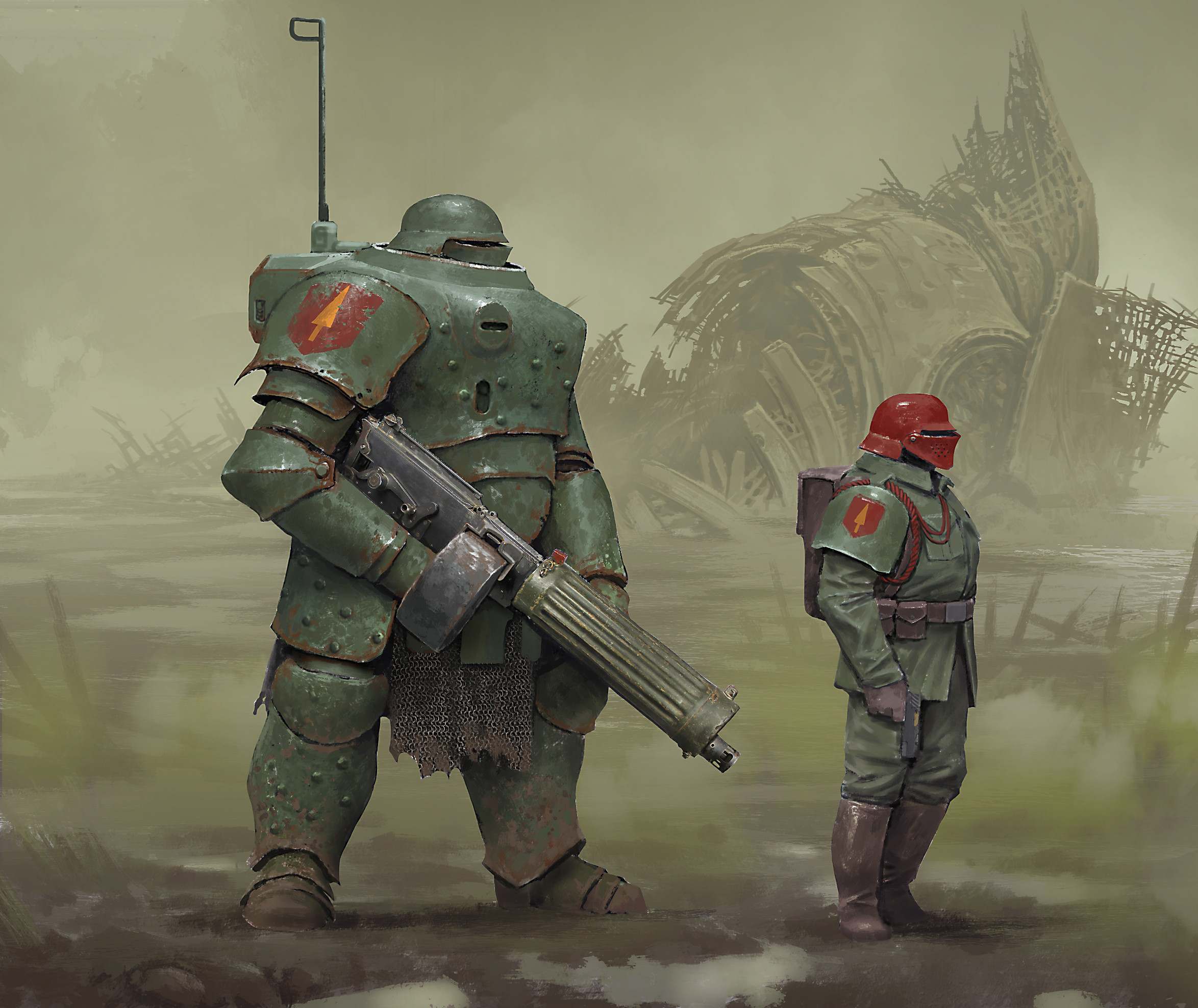
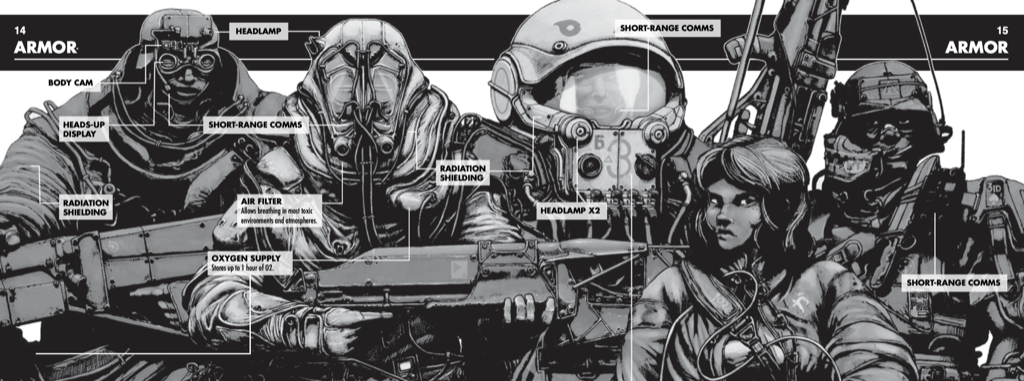
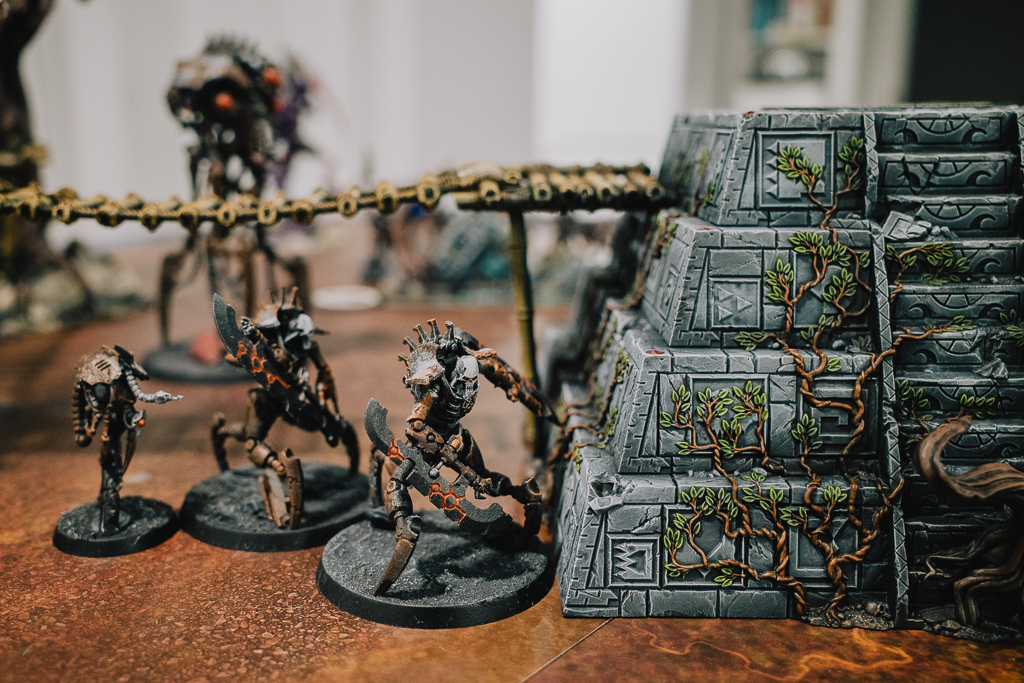
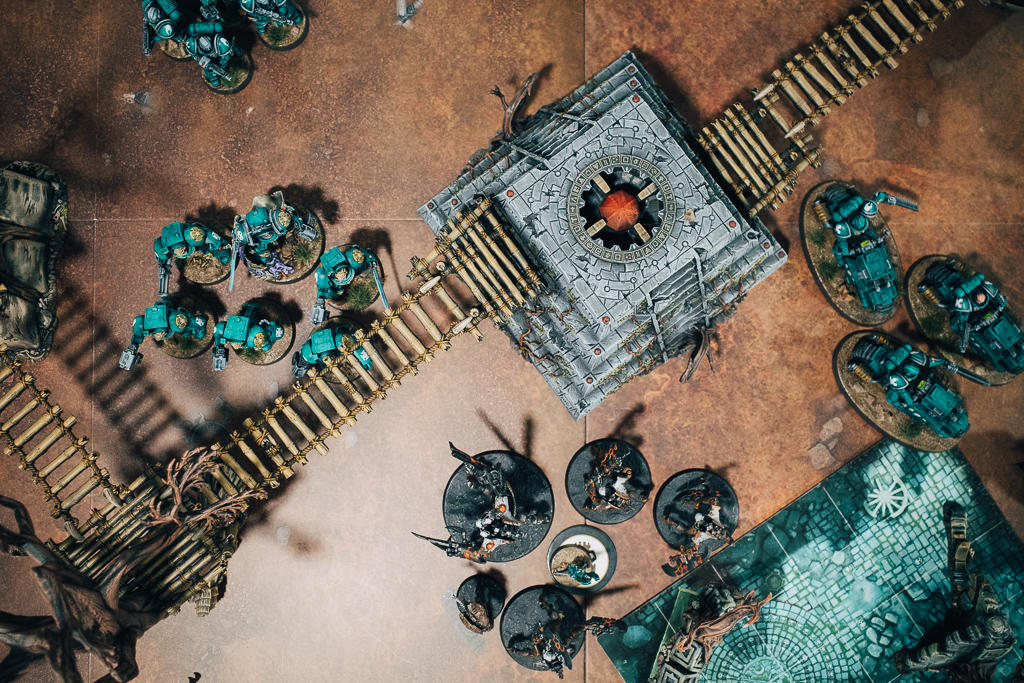
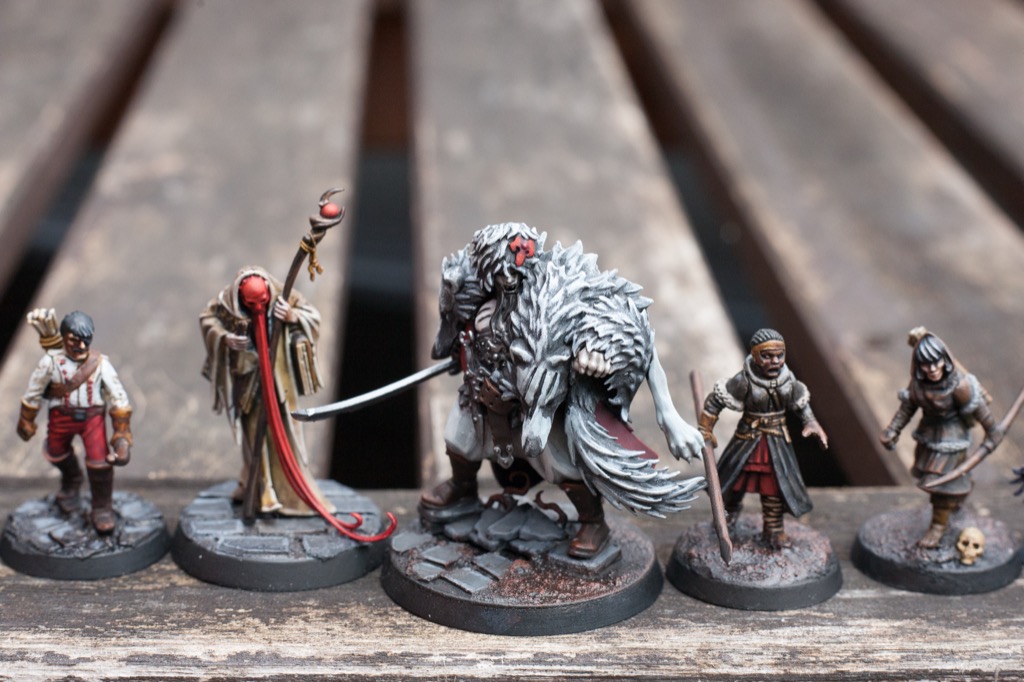
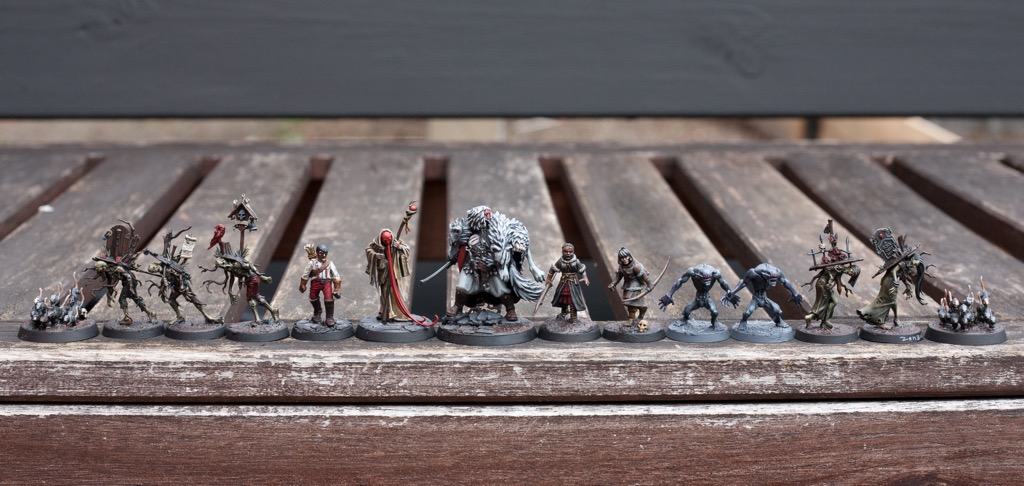
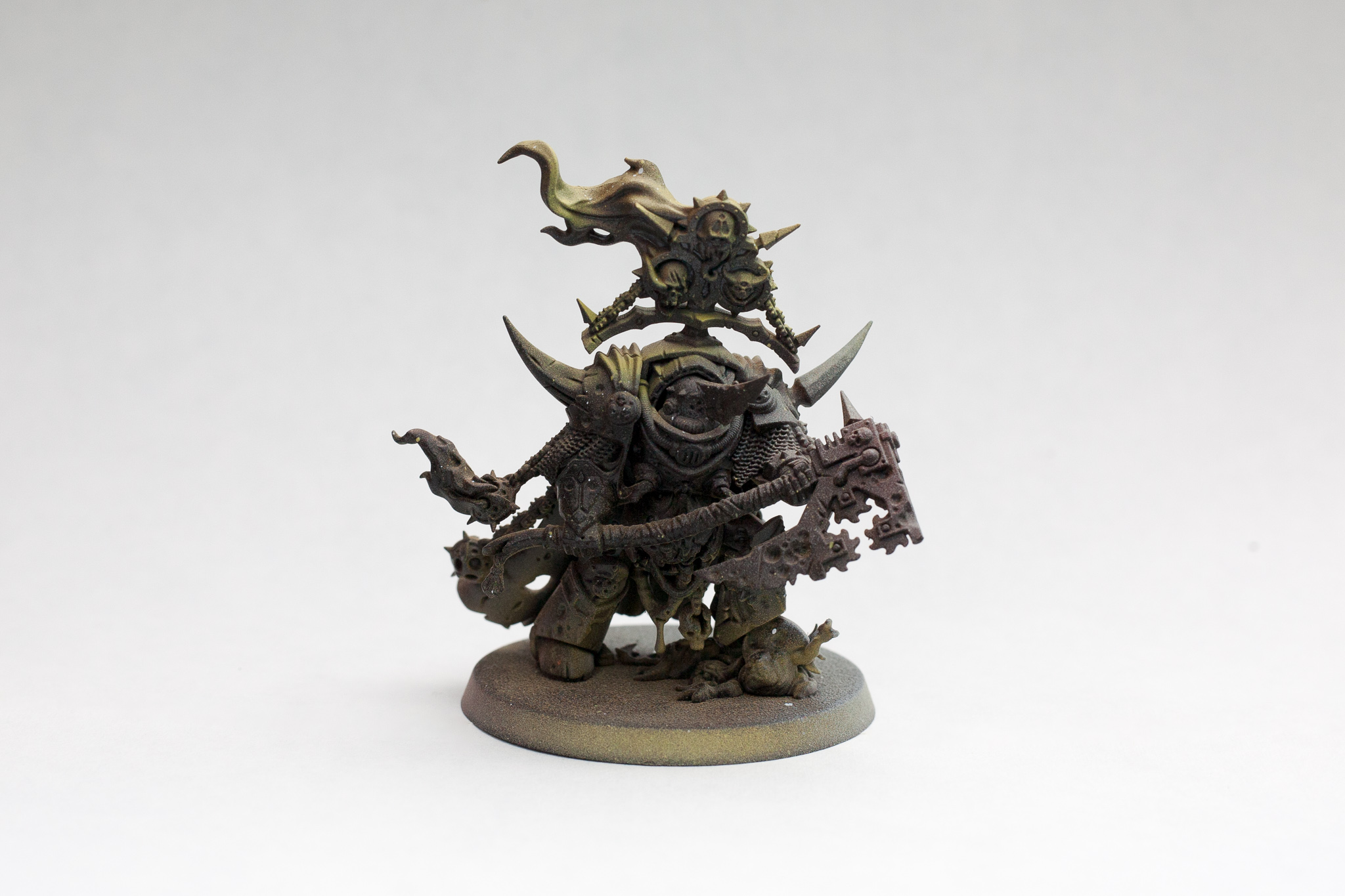
Best Wargame: Trench Crusade by Mike Franchina, James Sherriff, and Tuomas Pirinen
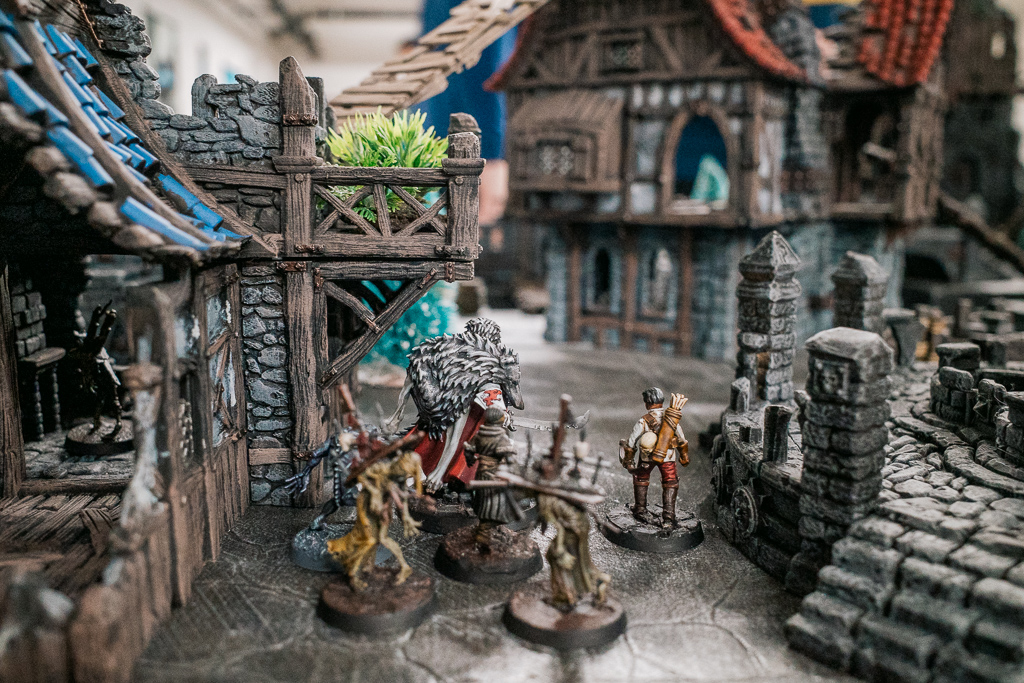
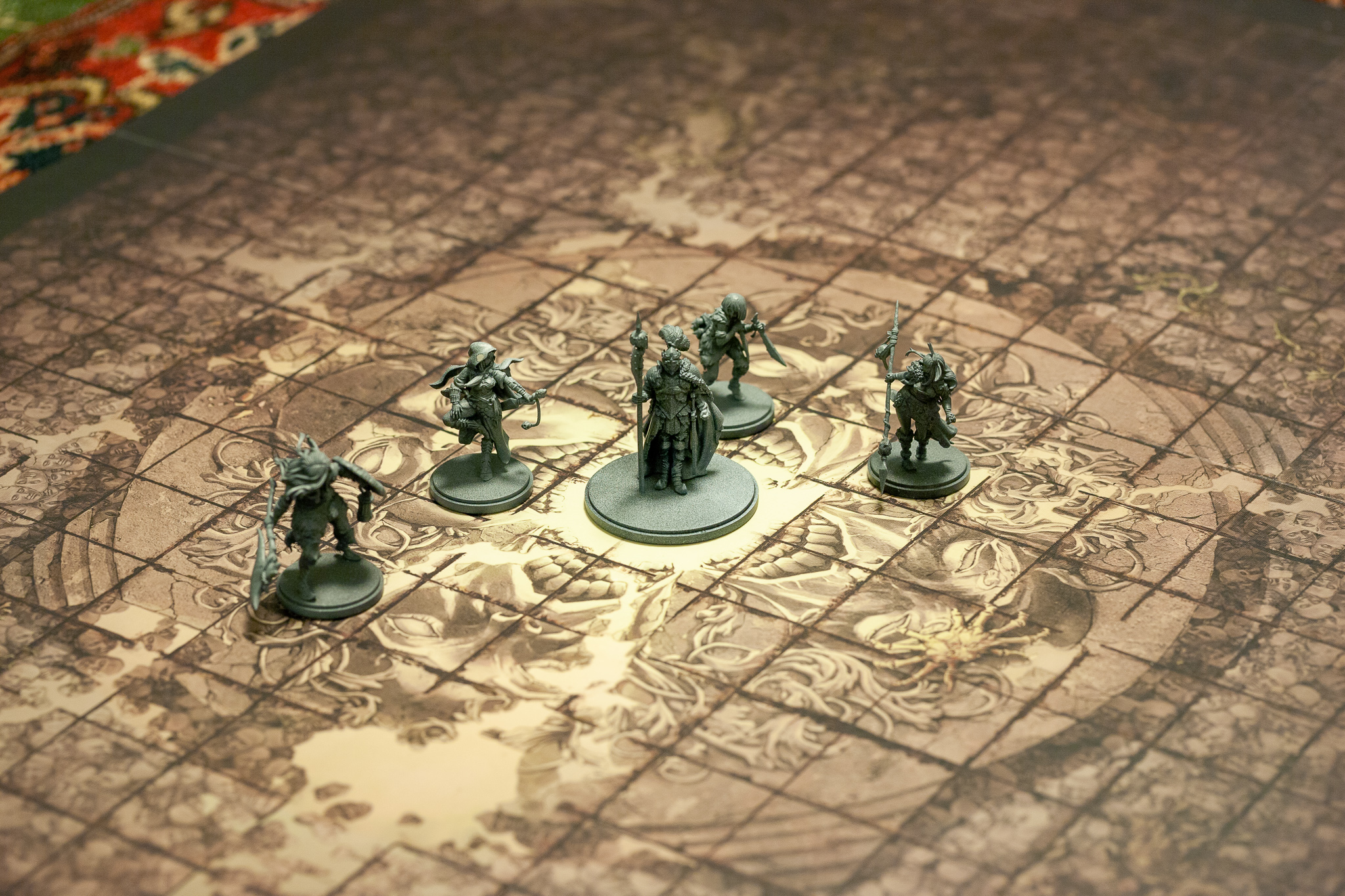
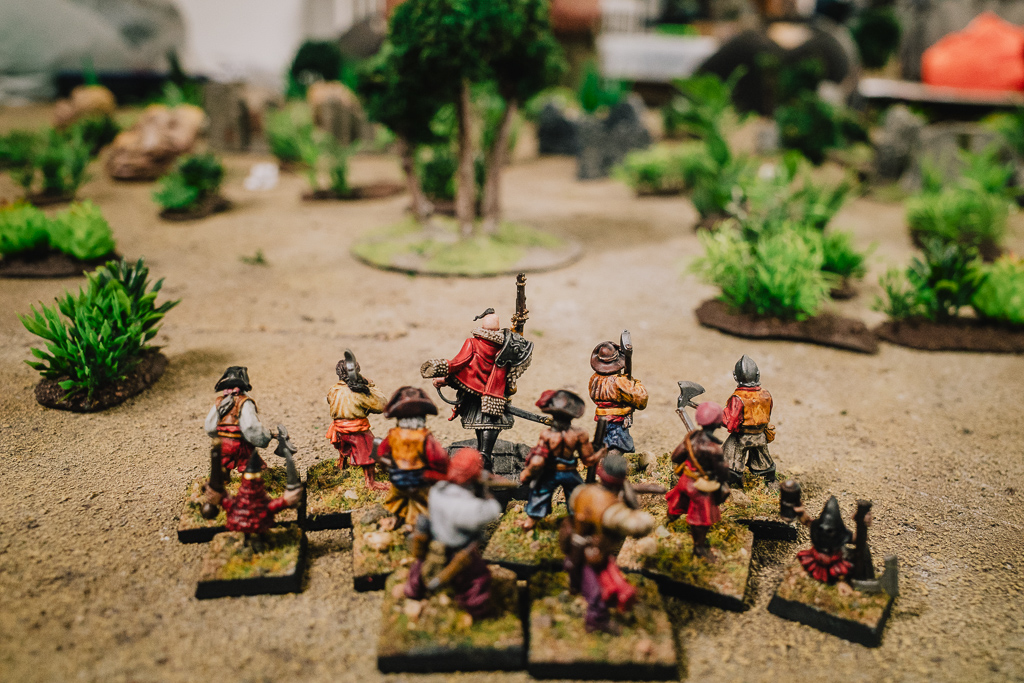
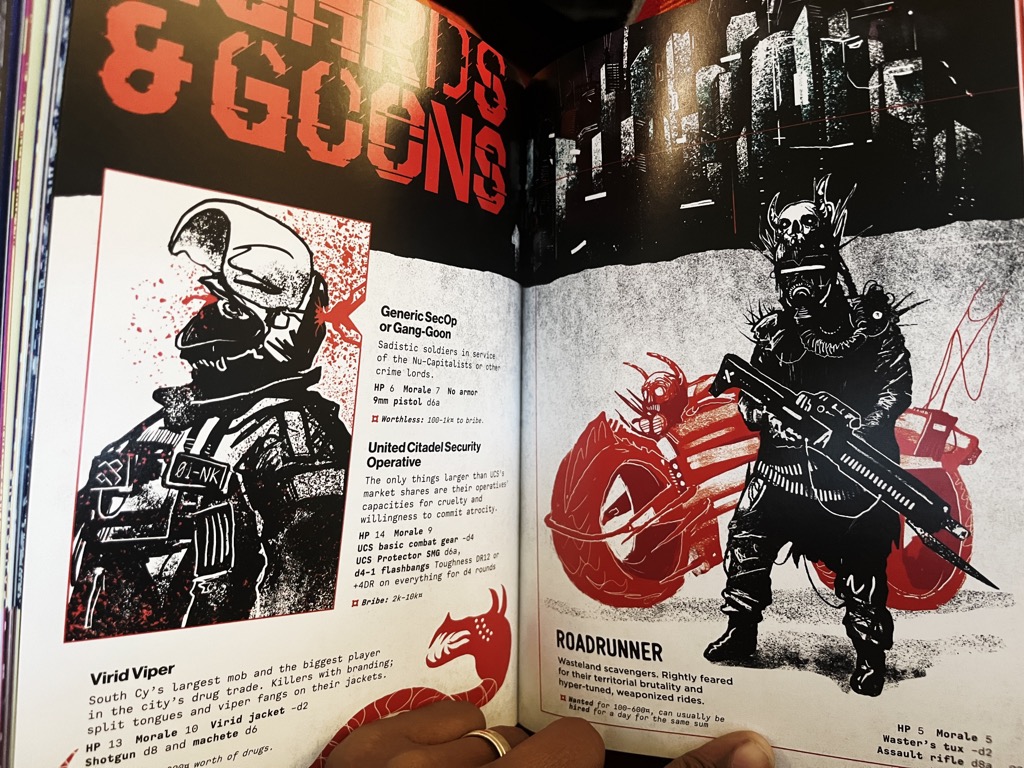
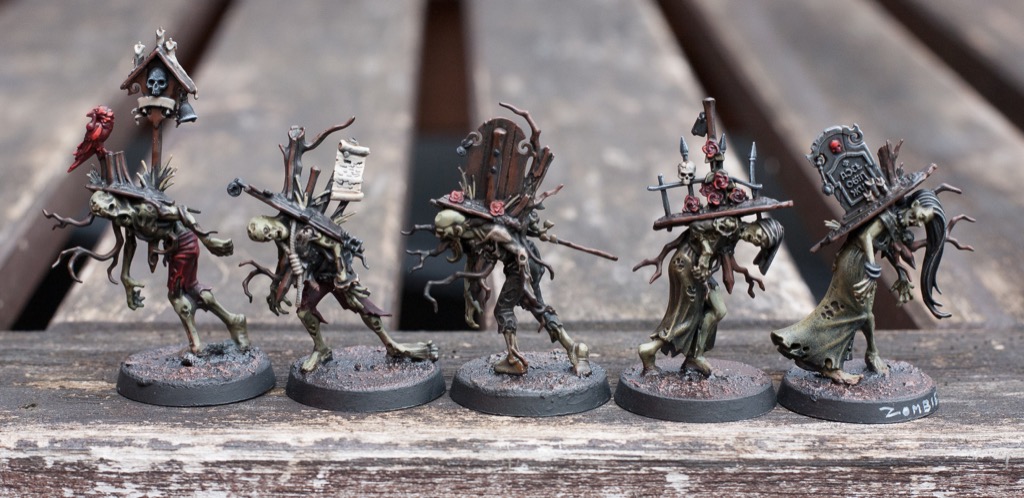
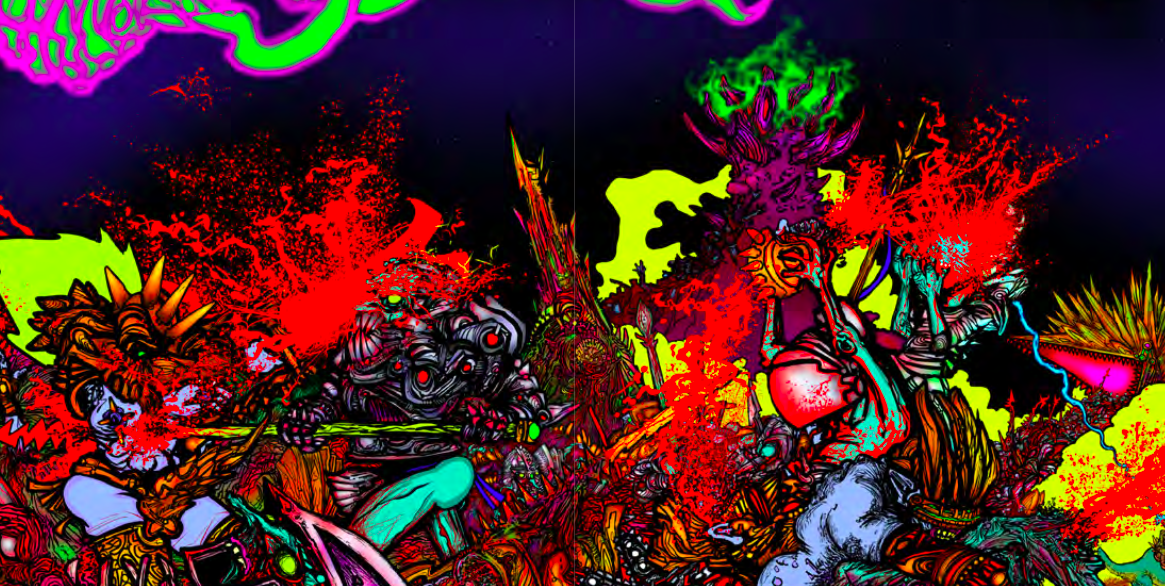
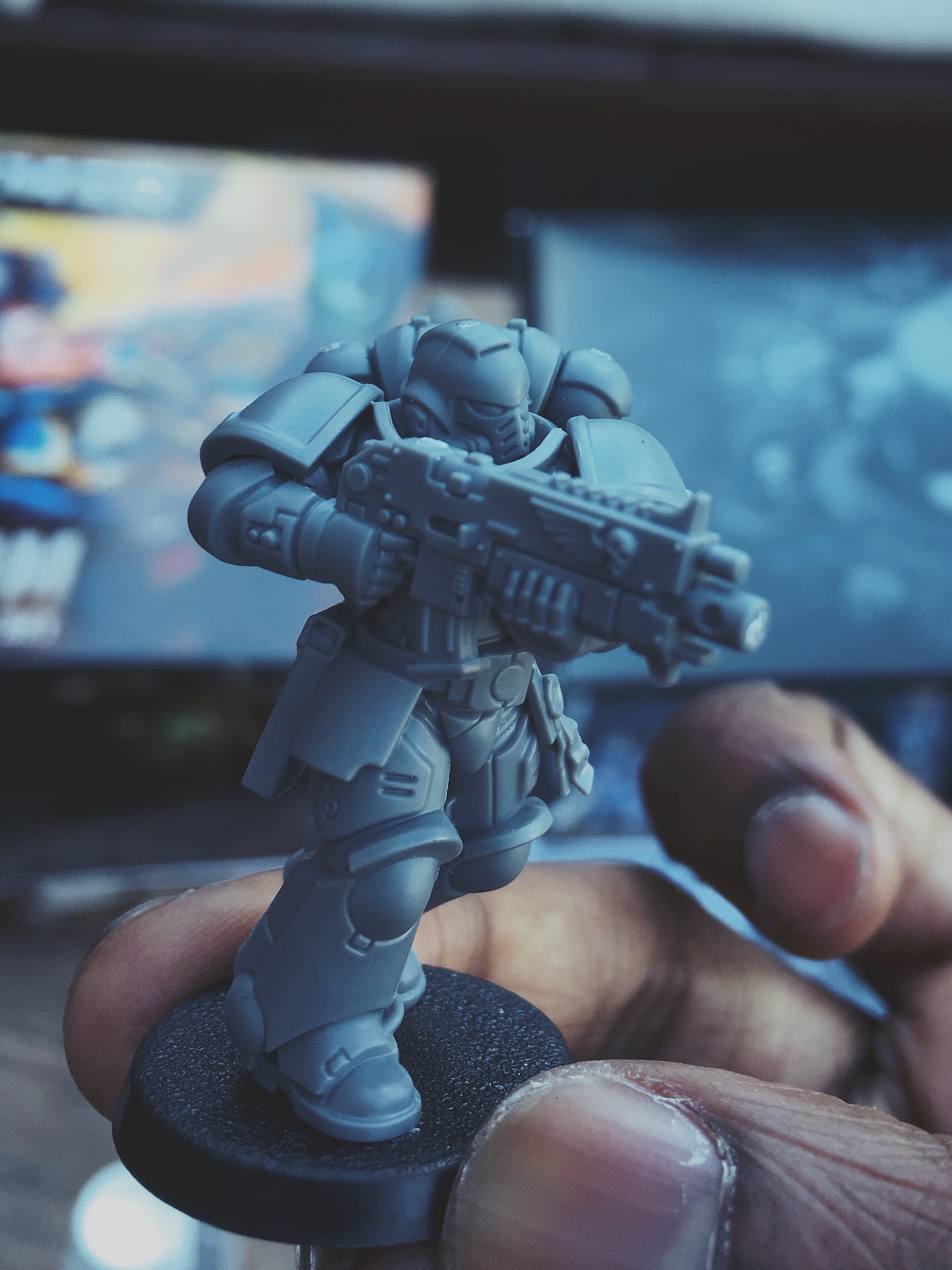
These awards started their life focused on RPGs, but as the years have passed I spend more and more time playing wargames. In that space, Trench Crusade is a revelation. Mike Franchina’s dark vision of a demon infested First World War is weirdly captivating. His art is incredible. The games rulebook is beautiful. The care and attention that has gone into producing the game is visible for all to see. And most important of all, the game itself is fun! Pirinen has done it again.
The Ramanan Sivaranjan Excellence in Gaming Best God Damn Books of 2025: Mythic Bastionland by Chris McDowall, illustrated by Alec Sorensen
If you have paying attention no doubt you could have seen this coming. Mythic Bastionland is seemingly everywhere, its success visible for all to see. I have been a fan of Chris’s games for many years now, but this game feels special, the culmination of a decades long journey. I ran several sessions of Mythic Bastionland for my friends and it was such a joy to play. The campaign was only torpedoed by my terrible work schedule. Mythic Bastionland lives up to all its hype. As always, Alec Sorensen’s artwork elevates the whole affair. What a wonderful game.
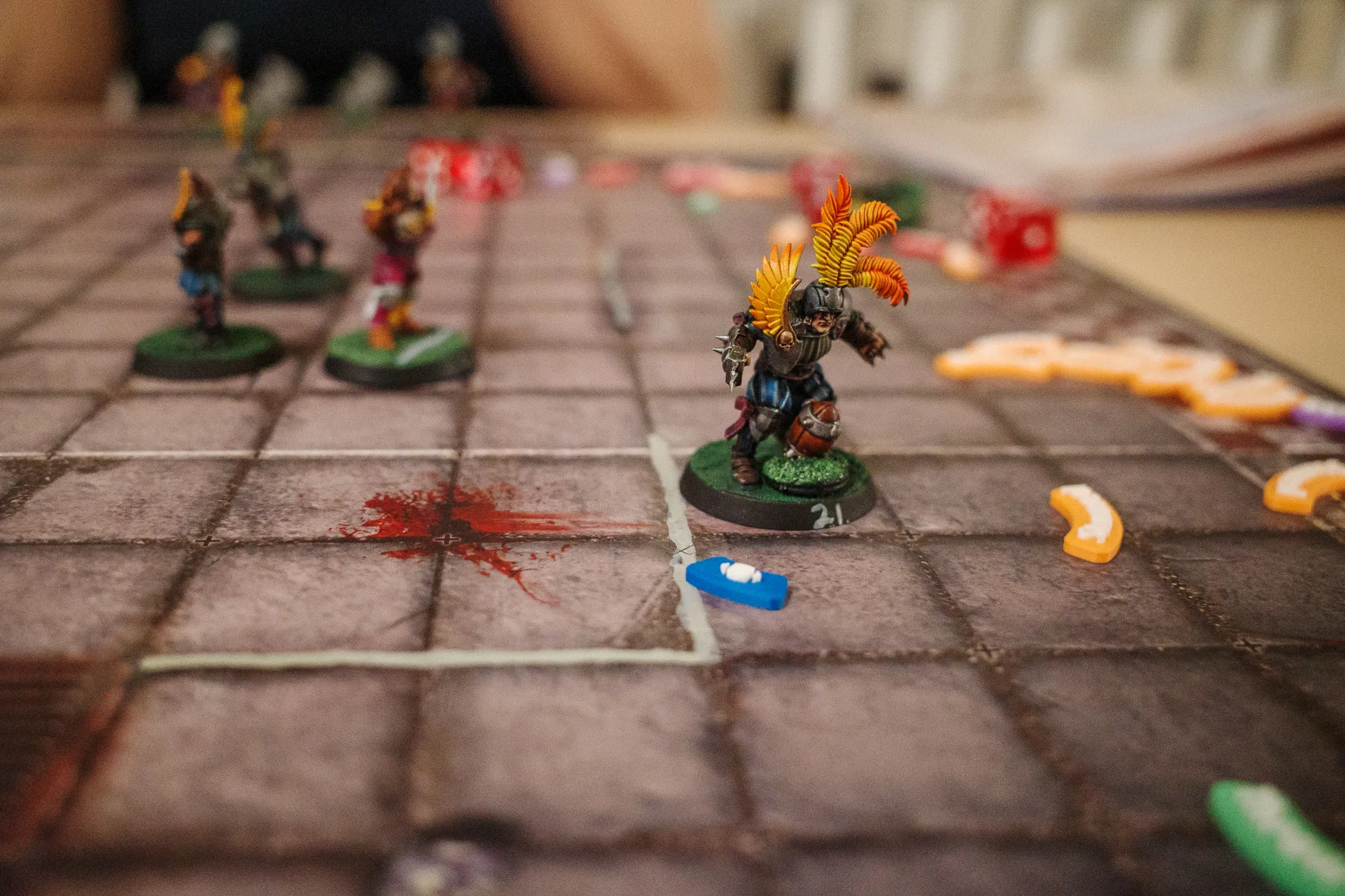
My friends and I have almost wrapped up our first Blood Bowl league. We began with a round robin tournament, playing six rounds of games between the six players in the league. (I think using the power of math we could have figured out a schedule that went through the round robin portion of the league faster, something to do for next time.) We gave everyone 2-3 weeks to meet and play, which people were mostly able to do. As with RPGs, the hardest part to maintaining a long running campaign is scheduling.
My Blansdowne Aggronauts ended the season with 1 win, no draws, and 5 losses. I’m not that good at Blood Bowl.
We ran our league using the Sevens rules, a smaller version of Blood Bowl. We were using the Sevens rules published by the wargaming club Hulls & Angels as the official version of these rules weren’t out at the time we started playing. Reviewing the document you’ll see how slight the changes are to the game. The game is mostly identical, but you play on a smaller pitch, with 7 players a side, rather than 11. There are some tweaked rules for building your teams. Re-rolls are more expensive and harder to come by once the league starts. The idea behind the format is that it is the amateur version of the game.
Sevens is a fantastic format for playing Blood Bowl. My friends who had played the full game were worried we would be missing out playing Sevens. We had originally talked of using the Sevens league as a way for those of us new to Blood Bowl to learn the game before graduating to full eleven man squads. I think everyone agrees the smaller format doesn’t lose any of the fun, while being faster to play.
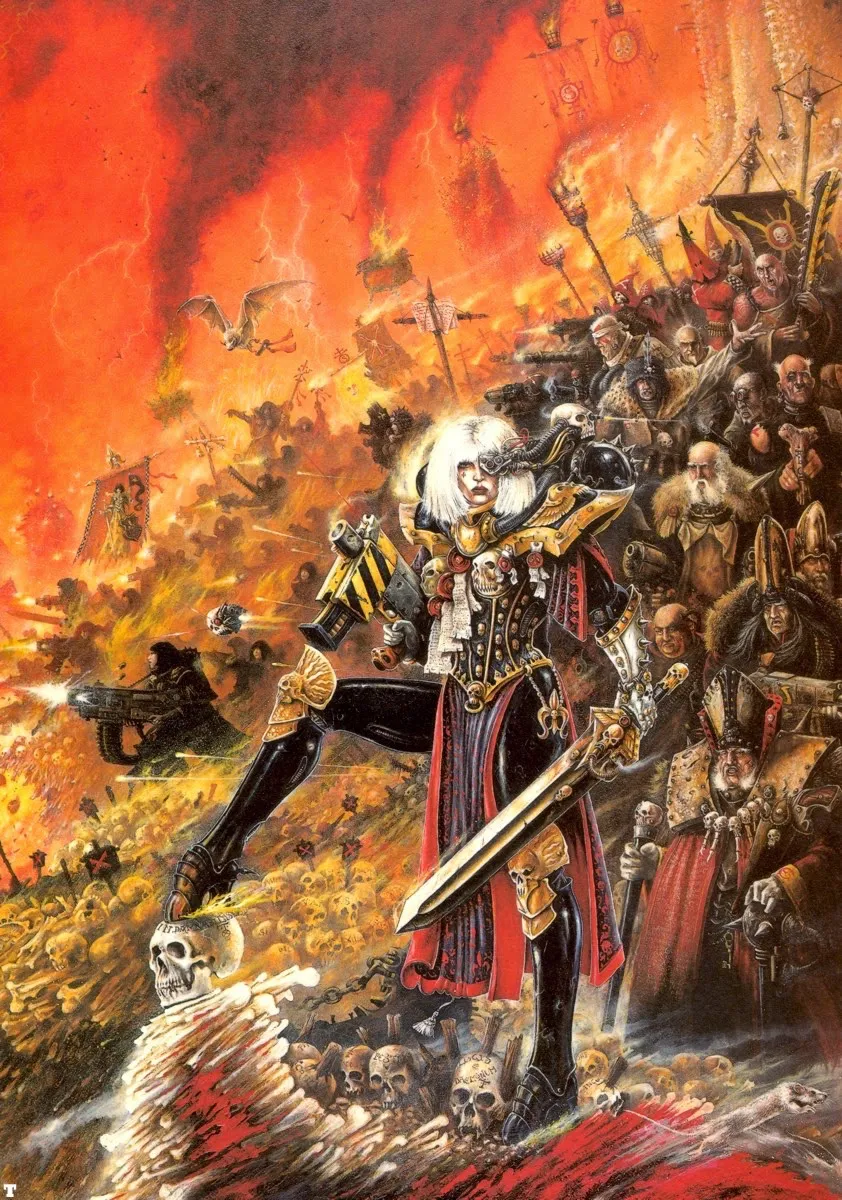
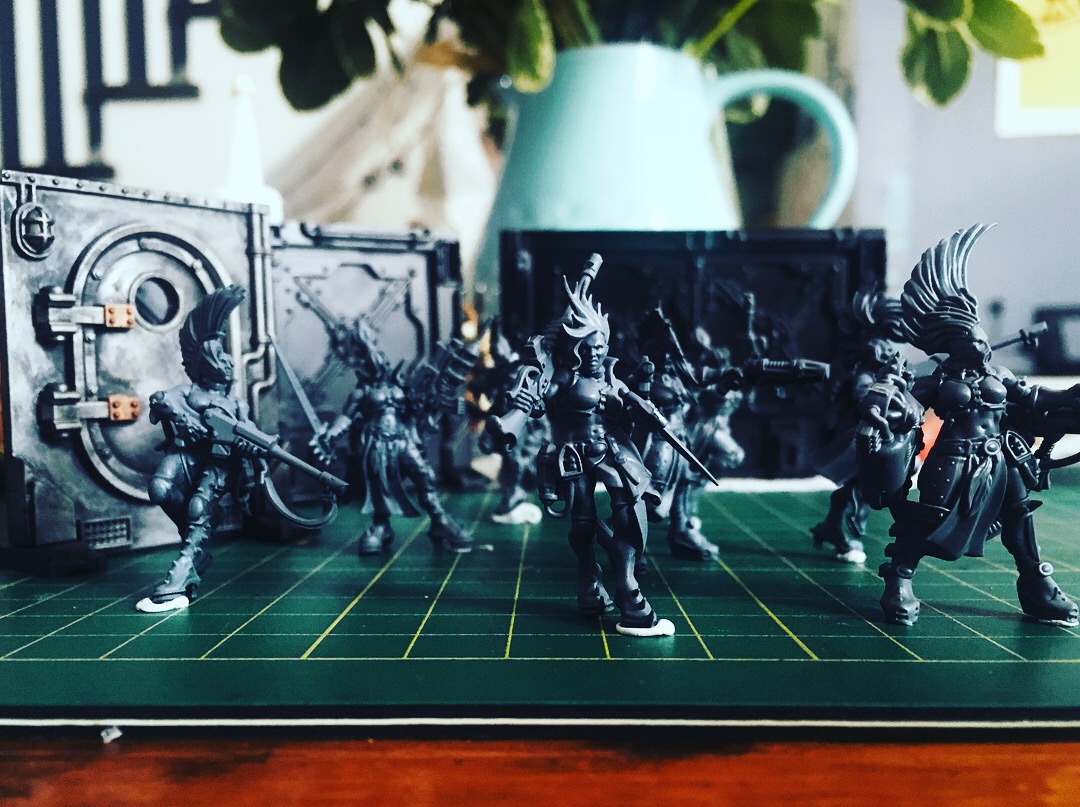
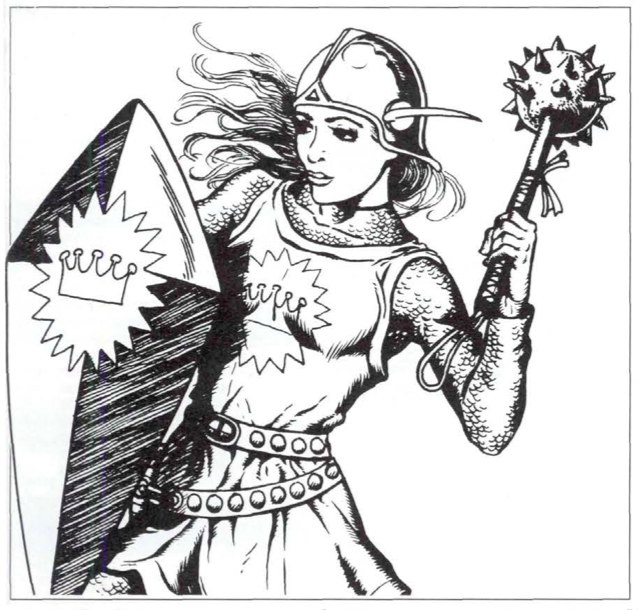
I don’t know if I really understood who Blanche was and his impact and influence until I got into the OSR and every other person was obsessed with the grimdark. As a child I would have encountered his artwork in Fighting Fantasy, alongside some of the other greats of British fantasy illustration, but I don’t know if I was cultured enough to dig into what I was seeing beyond thinking it was cool. Getting into Warhammer exposed me to even more of his art and who he was as a creator. He was an incredible artist. There are so many drawings of his I love, but this one of a Sister of Battle is one of my favourites. What a legend. A real loss.
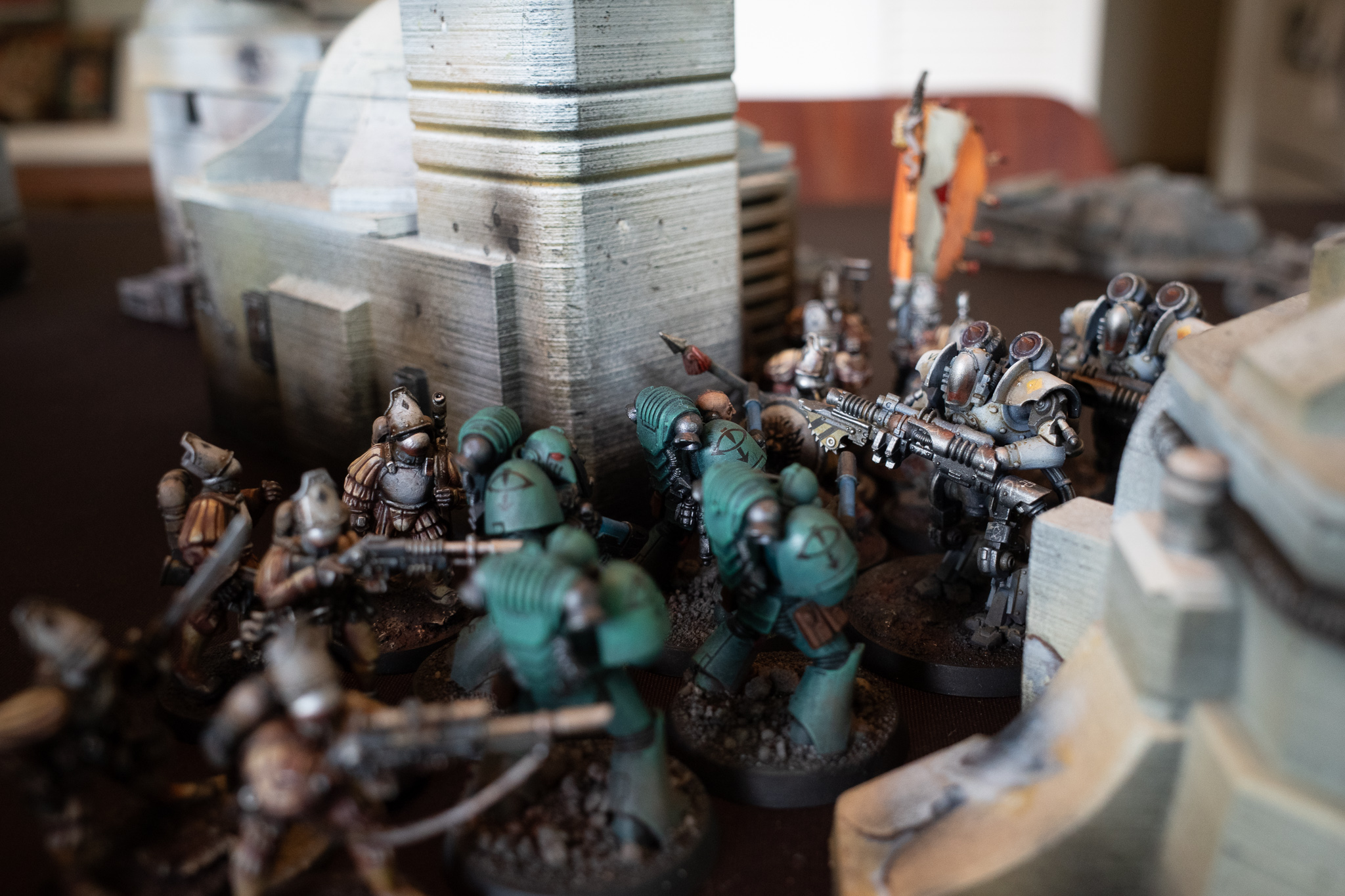
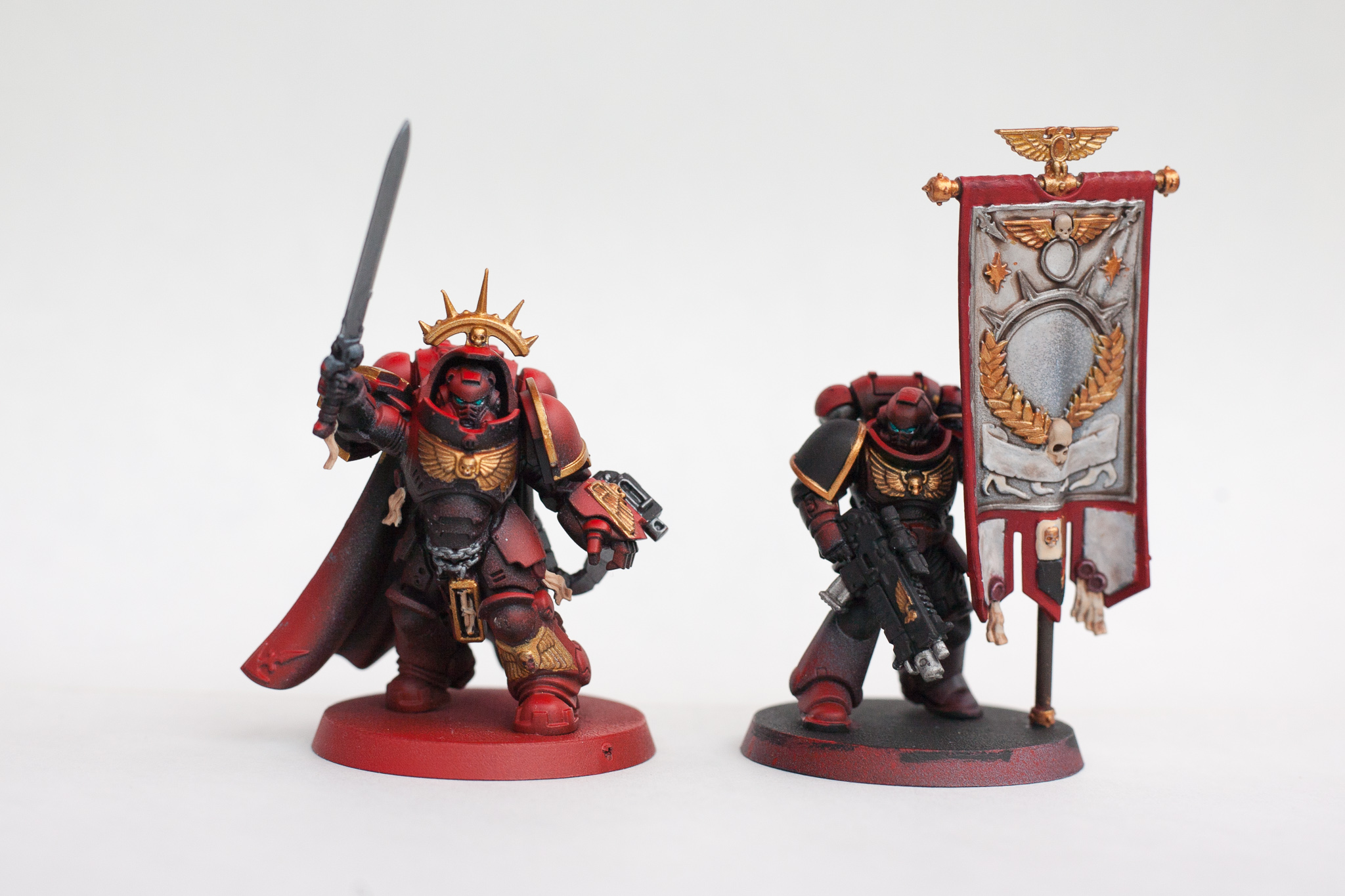
Last summer Games Workshop released the 3rd edition of Horus Heresy. For those keeping score at home, I managed to play three games of 2nd edition before they moved on. I find their urge to constantly churn their rulesets annoying, but that seems to be how it goes with their games. I probably don’t play enough Horus Heresy to justify all the boxes I have bought, but I have bought some boxes. The heart wants what the heart wants: I love those weird looking terminators.
I have managed to play a few games of 3rd edition now with Evan. We discovered that the Honest Wargamer shared some house rules for low point games that are kind of perfect for the amount of models we want to think about. The house rules for this format he has dubbed Squads restricts the game to 750 points, with further restrictions around the sorts of models you can bring, and some small changes to scoring. The house rules pack also includes some sample missions. The tweaks are quite small, but work well to scale the game down.
That said, with Heresy a small game can still feel quite big. My 746 point list was:
Centurion
Tactical Squad (10 models)
Tactical Squad (10 models)
Tactical Support Squad armed with Plasma Guns (10 models)
Contemptor Dreadnought armed with Gravis Chainfist with in‑built Heavy flamer, Gravis Melta Cannon, and a Havoc Launcher.
32 models across 5 units still felt like a lot of minis on the table. Evan’s AdMech included even more models.
We are pretty out of practice playing the game, and unfortunately the rule book doesn’t make the game particularly easy to quickly pick up. The rule book has some of the most dreadful rules writing. So much word soup. Everything feels more complicated than it needs to be. Of course we are playing because there is still a lot to love about the game and how it works. The rules encourage a lot of flavourful situations—once you manage to parse what those rules are trying to say.
It took us a little under 3 hours to get through the game. I can’t imagine how long it’d take us to play a full 3000 points game. A lifetime, presumably. We would probably be better off playing with some experienced players. That’s what made my first experience playing at the tournament work so well.
This is currently the game Evan and I have been focused on playing. There is time for us to figure it all out. I need to name all my guys and figure out the narrative for these games. That’s where the real fun of playing lives.
I spent a little bit of time over the last two days getting ready to play Mythic Bastionland. I made a map over the holidays, but didn’t finish filling it with stuff at the time. I was writing down NPC names, rolling on spark tables, and getting enough notes down so that there was some solidity to the world the players were going to explore. Mythic Bastionland encourages some amount of improvisation with its structure, but if you lean too deeply into that games can start to feel meaningless. (Chris has a small blurb about this risk in the book as well.) There was more I wanted to prep before this game, but my personal brand is not doing that extra work. Honestly it all worked out.
I asked some friends I hadn’t played games with in a while if anyone was free to play, people from back when G+ was a thing:
A few of us had played the game when it was being play tested, but no one had played recently, so it was all new to all of us.
The engine of the game is exploration. Mythic Bastionland is a game about exploring the wilderness, travelling from hex to hex in search of adventure. A day is divided into three phases: morning, afternoon, night. You roll for a wilderness complication at the end of each phase of the day. On a 1 you encounter an omen for a random myth in the realm. On a 2-3 you encounter the omen of the nearest myth. On a 4-6 you’ll stumble upon the landmark inside the hex, if one exists. As you move through the world you should expect the myths causing trouble in the land to bubble up. The game should create situations for the players to resolve.
In theory, half the time the players should be bumping into something weird like they are exploring the Southern Reach. This session the players rolled too well: they encountered an omen for a myth with their first wilderness exploration roll, and then never rolled a 1-3 for the rest of the session. Sometimes that’s how it goes. The result was a quieter session, but I used that as a chance to better introduce the world they were exploring.
It can be tempting to try and inject some drama into a game when the dice and your notes say otherwise, but I generally like to play things straight. You need quiet sessions or moments so that there is real contrast when the drama does arrive. I am not a fan of trying to manicure a perfect story up front. It’s almost always more satisfying when these things happen organically.
We played for 2 hours, ending our session in one of the holdings. I actually had good notes for the holdings, having rolled up many NPCs and other drama about the places. (This was easy thanks to all the spark tables and online generators.) I forgot to roll for the local mood when the party arrived at the town. A lesson for next time. That might have been the only rule I forgot today.
[Update] When I shared my experience with running the game online, I mentioned that I had the players rolling the wilderness event rolls. This is normally how I play. I like to have the players roll the hazard dice. In this game that’s likely not the right approach. Knowing that you have encountered an omen seems fine to me, I normally run games where I try and be clear and telegraph what’s happening. But knowing it’s a random omen versus the nearest one maybe tells the players a little too much about what’s going on. That knowledge may make the myths and omens feels a bit less mysterious.
The plan is to play for the next few weeks. An enjoyable start to a new campaign.
I have written about keying dungeons in the past, when discussing Dwimmermount, and when talking about Deep Carbon Observatory. This topic seems to be in the news again, after Ben shared an enjoyable video of his dislike of Goodman Games’ house style for their modules.1DCC RPG is quite text heavy, and uses simple two column layouts reminiscent of old TSR modules. They are essentially the best version of an old TSR module. I love many of the DCC RPG adventures, but I don’t love all the walls of text. On the flip side, I am not a big fan of the Old School Essentials house style Ben advocates for either. I find the excessive bolded text and bullet points harder to parse than straight forwards sentences. I also think it’s much more enjoyable to read plain prose.
All the room keying hacks you see really aren’t necessary if your room keys are short and quick to read.
You should start room descriptions with the things players will notice right away. Don’t bury the lede.
You should cut anything extraneous. You could take the time to list out all the torture devices found in the torture room, but I would only bother if there is some value in letting the GM and players know about the particulars. A GM can likely ad-lib there is a rack and iron maiden if those things are simply there to provide colour.2
To me, there is more value in trying to write something short and evocative, than try and turn it into a deconstructed sandwich.
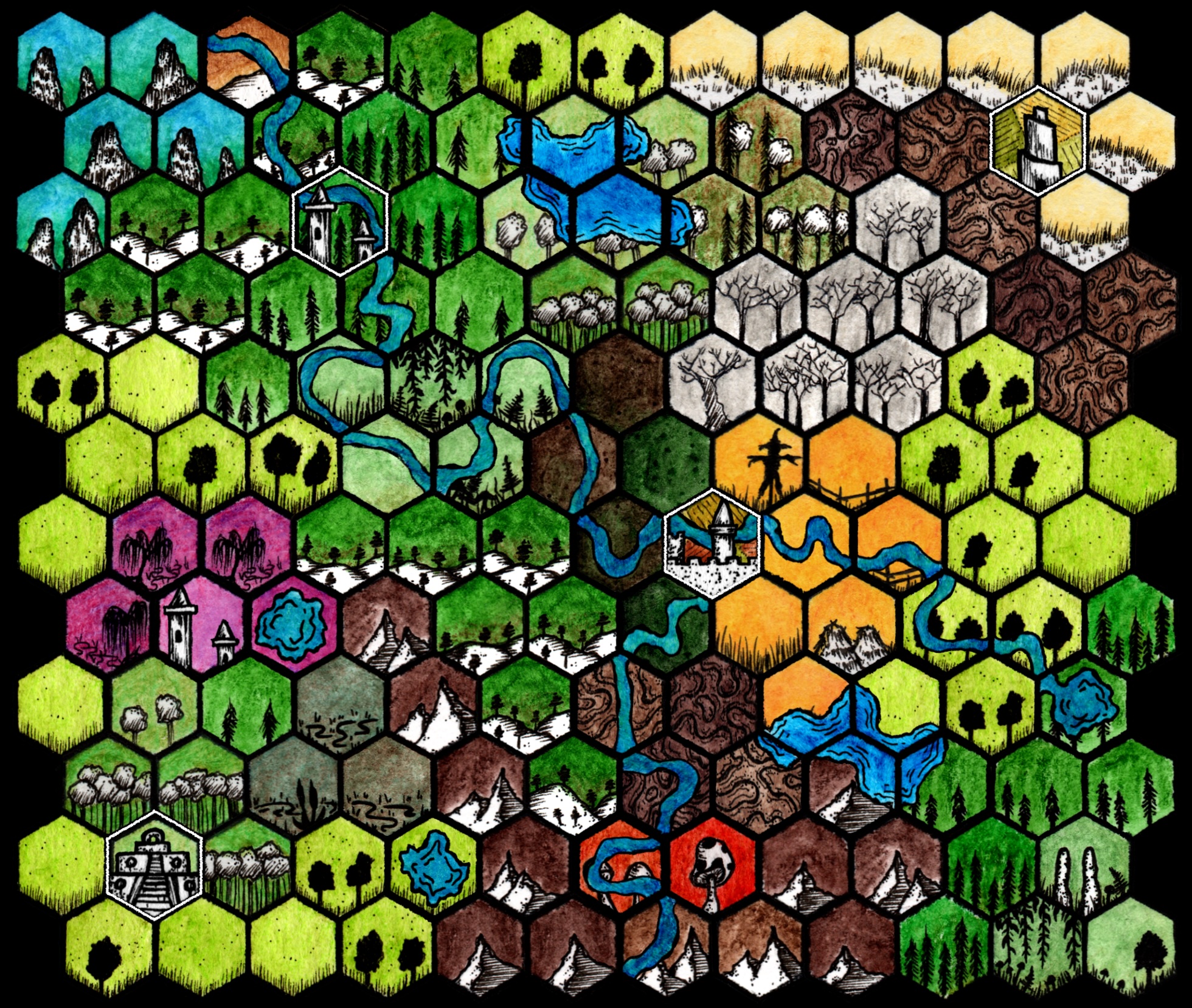
Long time readers may recall I had started an Arthurian Dark Souls sort of setting I never finished called Misericorde. A year or so later Chris started sharing his work for Mythic Bastionland, and it was more or less exactly what I wanted to do, but better in basically every way. (I mean, for starters, he finished it all.) So anyway, I want to play Mythic Bastionland. The first step is making a realm.
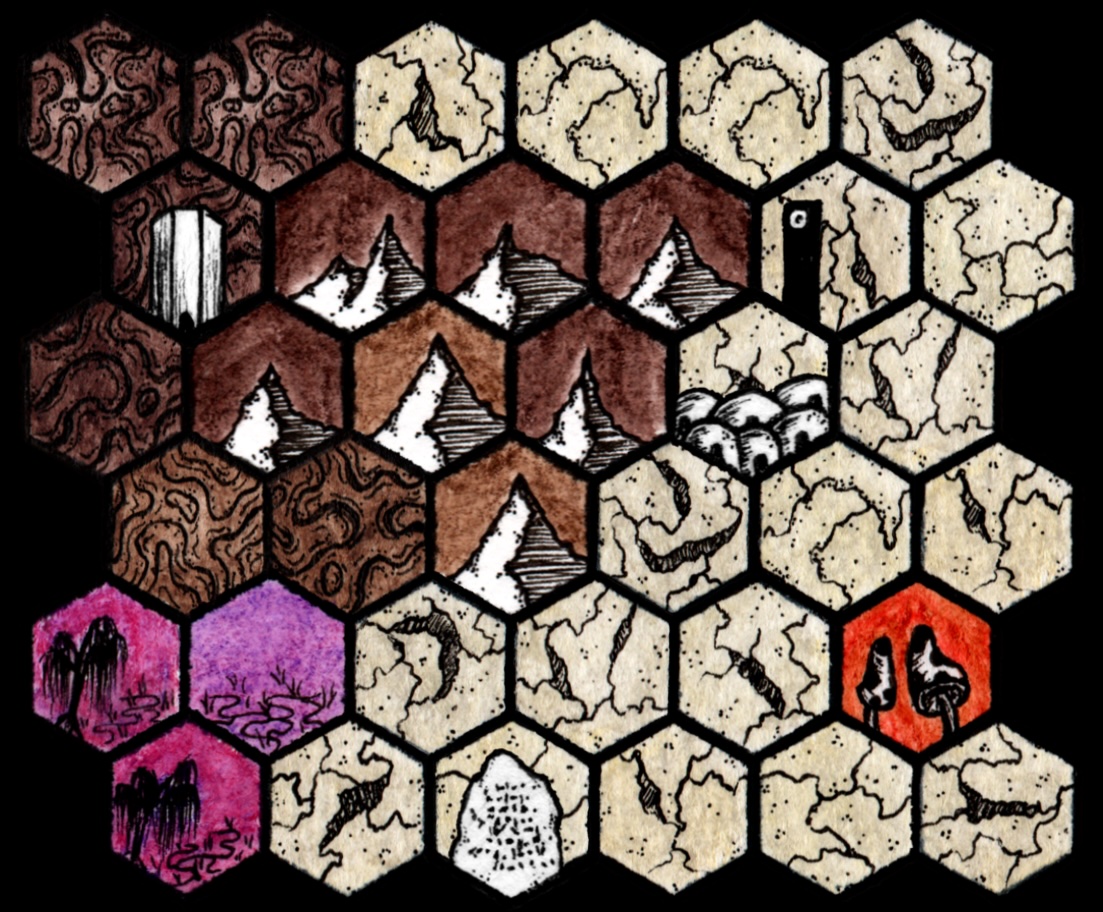
I started by making a map in Hex Kit, a fun activity in and of itself. I decided to start a fresh map rather than continue off the one I had made a few years ago. In my head this campaign could be a prequel to the game I had thought of running, where the king is dead and knights wander the wilderness as transformed monstrosities. I can come back to that idea later, perhaps informed by how this Mythic Bastionland campaign unfolds.
With the map done, I got to populating the realm with some holdings and landmarks. I followed Chris’s advice and examples. The system works! I enjoy the act of building something out of random seeds, trying to figure out how everything could fit together. My first ruler was interested in gambling. So was my second. And so was my third. I thought of re-rolling, but the fact that three of the four leaders in the land are gamblers feels like the seed of a story. These sorts of connections bubble up as you work through the tables. I think our brains are just wired find a way to make everything make sense.
I need to actually play Mythic Bastionland, so will try and avoid being overly effusive, but even in this lonely fun of prepping the game it feels like Chris has made something really spectacular. I don’t consider myself particularly creative, but the book will make sure you can build something weird and interesting. Making a realm and figuring out what’s going on before the players show up was fun. Will it all work in play? I gotta assume so, since everyone else can’t shut up about how great the game is. Stay tuned!
Another excellent resource is the Mythic Bastionland Referee Companion. All the spark tables are available online, and it can roll on all the tables for you in one go, which can speed up the process of building a realm. I just used the book, but I can see how this could be useful. It’s cool seeing other people making digital tools for RPGs. ↩︎
The past year ended up being the biggest year of blogging on this site. At the start of the year I shared my thoughts on blogging in the post Blogging is Forever, a reminder that social media is transient and you should own and control the writing you care about. I was posting fairly consistently throughout the year, but kicked things into high gear in November. This is almost certainly motivated by seeing Elmcat’s blogging map. It’s incredible seeing the web of people that contribute to this scene. The map is a nice reminder of what makes blogging fun and cool. I visited my brother in the UK at the end of November, and blogged more or less every day through to the New Year.
I had wanted to get my Carcosa session recaps back online for some time, and decided to do that for the month of December, using it as an opportunity to talk about running the campaign at the same time. After posting them all I finally wrote a post I had intended to write back when the campaign concluded: Advice for Running a Hexcrawl, A Decade Too Late.
There was one post I wanted to write before the clock ticked over to 2026 that I didn’t manage to get in under the wire: a comparison of Carcosa with Mythic Bastionland. I feel like there is something to say about both those games, I just need to think a bit more about what exactly.
Hopefully 2026 continues the trend of more blogging: for myself and for all the other people I see starting blogs and returning to their old ones. 2025 feels like it was a big year for blogging.
Back in 2024 I decided to track all of my purchasing and painting of minis. This was an attempt to buy less and paint more. It was a nominal success. This year, not so much. Whenever my life becomes too busy I find I channel my hobby output into pure consumerism. I ended up buying box sets that will certainly be fun to paint, but that remain unpainted (and often unbuilt!) as we come to the end of the year: Kill Team’s new Tomb World set, the Horus Heresy 3rd Edition Starter Set, the Dark Oath Slaves to Darkness army box, and the Fangs of the Bloodqueen box. Those last two I really only bought because Meeple Mart was having an “everything needs to go” sale. I ended up with 161 new models between those boxes and a few other small purchases. That’s a lot of new models!
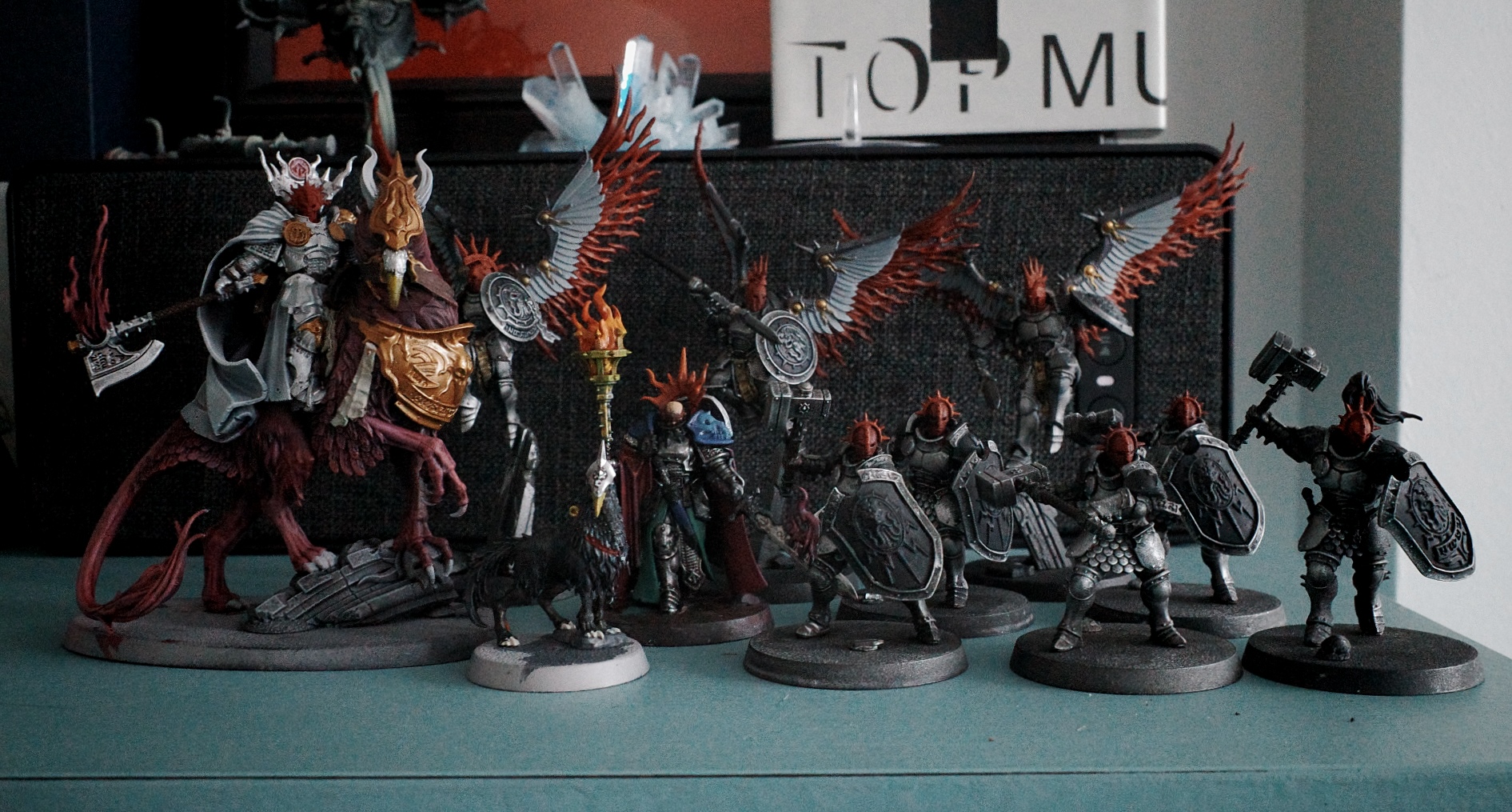
My painting happened in small bursts: the Stormcast at the start of the year so I could play Spearhead; my Trench Crusade Heretic Legion in the spring, when the minis arrived; some orks from Slade, which I thought I might use for Space Gits; the rest of the Stormiest in the summer to finish painting the Skaventide box; the Wildercorps Hunters so I could use them for a Warcry game. I managed to play a lot of games this year, but nothing that required me to do a lot of painting. I played lots of Spearhead and Warcry, but primarily using minis I had already painted.
I’m disappointed with how the year ended when it came to my painting. It’s a hobby I really enjoy, so I should make more time for it when I can. It’s often easier to play video games or watch TV, which are also enjoyable activities, but ones I probably put more time into than I should.
My goal to start 2026 is to start painting the Darkwater boxed set. The game looks like a lot of fun, and I managed to get a good chunk of them primed when the weather in December was a little bit warm. My friends and I have started playing Blood Bowl, so I’ll need to get my team primed and painted as well. Hopefully getting those things out of the way will serve as some motivation to keep going.
This isn’t the focus of your article, but it feels really good to see someone saying that their longest campaign lasted 23 sessions over roughly a year and a half. Way too many people seem to believe that the average gamer plays every week, without stopping, for years. — @vaskrag.bsky.social
It’s true! We can’t all be James. Those 23 sessions felt long and epic, and become more mythic in my head as time passes. The most successful campaign I have participated in was Pahvelorn. We managed to play weekly for the course of year and change. Even then we were imperfect, and that game hit 46 sessions before things petered out. When I ran Gradient Descent we started off strong, the first 7 sessions happened weekly, but the following 5 happened over the next 4 months! I have many stalled out campaigns under my belt. One day I’ll post about running Silent Titan, or Deep Carbon Observatory. Those games were fun, and we played for weeks … until we didn’t. There is nothing wrong trying and failing to get a game going. I appreciate when people speak plainly about their failures, along with their successes.
I always laugh when people talk about whether games support high level play, that this or that mechanic is broken past this or that level. Who are these people that play games that go long enough any of that matters? I can probably count on one hand how many characters I’ve played that have made it past level 3.
It can be challenging to keep a steady schedule, but I really do believe that the ability to do so is what leads to these campaigns that last for years and years. The game becomes a part of your life, you schedule around it the same way you might schedule around a soccer league. To quote myself:
Games stall out because people can’t get their schedules to match. Picking a schedule and sticking to it is really the only “mechanic” you need for long term play. This is The Fundamental Theorem of Gaming.
Masters of Carcosa is the longest campaign I have run. My friends and I played 23 sessions, starting at the end of 2014, ending near the start of 2016. The game began after Brendan took a break from running Pahvelorn, likely to focus on his PhD. I hadn’t run a game since I was a kid! Playing in Brendan’s Pahvelorn campaign was hugely inspirational, and has informed how I have run games since. With Pahvelorn we were exploring a megadungeon, with the occasional trips out to explore the larger world. I wanted to run a hex crawl, but wasn’t completely sure how to start. In 2014 it didn’t feel like there nearly as many resources available compared to talking about dungeon delving.
My plan was to run a game set in the world of [Carcosa][], a gonzo setting by Geoffrey McKinney, originally published as a small zine, in the style of old Judge’s Guild hex crawls. I was running from the fancier version put out by LotFP, which featured Rich Longmore’s incredible art. We learn about the setting via hex descriptions like the following:
Village of 240 Yellow Men ruled by “the Fullness of Benedictions,” a chaotic 10th-level Fighter.
2 B’yakhee.
On a natural stone outcrop is a 2 high statue of Hastur,
made of an indestructible dull black stone. In front of it is a human skeleton. If anyone touches the statue, he will be cursed to carry the 40 pound statue with him always. The only way to lift the curse is to give the statue to a willing recipient, but no one wants the vile thing.
The book was pretty polarizing for lots of reasons, one being how phoned-in some of the hex descriptions are. I loved it all the same. You would be surprised how far “2 B’yakhee” can take you in a session. I enjoyed improvising off the small hard facts presented in the book and my own notes.
At the time I wrote a second review of Carcosa, after having run the campaign for few sessions. It’s interesting to look at the review now, as it focuses almost exclusively on how I went about setting up the campaign we would play. But how do you even run a hex crawl?
Sandbox play is long term play. A hex crawl is about exploring the world, and that’s hard to do in an interesting or meaningful way in a handful of sessions. If there is one lesson to be learned about running a sandbox, it’s that whatever rules & mechanics nonsense you come up with to make your game go, none of it will matter if you don’t actually play. I was inconsistent when it came to scheduling the game, and it was likely the biggest reason we finally stopped playing. Players would regularly miss sessions because they thought we were playing the following week, miss a game because I had to push it out a week at the last minute and they already had plans, etc. People will tell you that this or that game isn’t suited for long term play. “Mothership is only good for one-shots.” Bull shit. Games don’t stall out because the levelling mechanics aren’t interesting enough, or because high level fighters become too dominant, or the wizard knows too many spells. Games stall out because people can’t get their schedules to match. Picking a schedule and sticking to it is really the only “mechanic” you need for long term play. This is the fundamental theorem of gaming.
Related to the above, running an open-table will make it easy to keep a game going when people lead busy lives and can’t commit to regular play. For those unfamiliar, an open-table simply means there are no fixed set of players participating in the game. Session to session you’ll have a different roster of players playing. Masters of Carcosa had 16 players over its 23 sessions. Eric made every single session save 1, and the one he missed was over scheduling confusion, my mistake. Gus, Nick, and Dion were other core players, making most games. If we had kept playing Chris likely would have become another core player. Everyone else played a few games and moved on with their lives, dropping in and out. Brendan would require us to return to a home base at the end of each session, and I had the same rule for my own game. The players always returned to a safe settlement at the end of each session, which made the juggling of players work in the fiction. (Mind you, I think it’s best not to be too fussed about how Dwarf Icefingers suddenly appeared when he wasn’t in the dungeon last session.)
You shouldn’t prepare too much to start. Chgowiz says this best in his classic blog post Just Three Hexes, but this blog post didn’t exist when I started playing. Lucky for me, not prepping enough is how I live my whole life. I drew a mini campaign map focused on a smaller section of Carcosa, where I expected the game to begin before the players ventured off into the wider world. The players never left. They didn’t even explore all the hexes in my mini-map! A small region can provide years of play.
There is lonely fun to be had in prep, and you can often find ways to repurpose work you’ve done that will clearly never find the light of day, but it takes a lot of energy to keep a game going for a long time, so best to spend your time wisely. Prepping too much before you’ve even played a game feels like writing an elaborate backstory for your player character before a campaign begins. Good advice for players remains good advice for game masters: let things evolve over time.
You shouldn’t front load too much. When you finish a session, take copious notes. I would write recaps of each session, so I would remember what took place. Anything important for the future I would add as notes for the given hex. A throw away NPC can suddenly become crucially important. This is a more dynamic and interesting way to run a game—both for yourself and your players. You just need enough hard facts for the choices the players take to be meaningful. You can always build upon these facts as the game moves along.
When I shared the invites for my games on Google+ I would include rumours, things the players were made newly aware of, and reminders of loose threads from previous sessions. I maintained a Google+ post of all the open threads and rumours, so they wouldn’t forget about a weirdo they met in the wilderness, or a dungeon they might want to go back and explore. There was no overarching “plot” for the campaign. Everything that happened was player driven. For that to work you need a world without enough juice that there are different avenues for the players to pursue. In Masters of Carcosa the players were obsessed with destroying the Jale Slavers. There is a parallel universe where the campaign instead focused on exploring the Putrescent Pits of the Amoeboid Gods.
I would seed information about the world and its machinations wherever I could. NPCs would tell the players about nearby settlements, or factions they encountered in the wilderness. The players would find letters on dead bodies, discussing what was happening in the wider world. In one Sages in town would trade information for gold, or send the players on little quests. I made an effort to try and always reinforce that there was a lot going on completely divorced from the players and their immediate actions.
I have written on this topic in the past, but it’s a mistake to be too coy about what’s going on in the world, what your factions are up to. There is a fine balance here. Some of the fun situations that occurred during the campaign came from my players being unaware of what was happening off camera. They set one of the villains of the game free in the first session. Many sessions later the same villain returned to recapture the base he was imprisoned within. Later still the players would liberate that base, unaware they had set this all in motion until after they had succeeded. A different faction was exploring the dungeon the players had no interest in exploring. They would find the occasional missive or hear a story about the cult looting in their place, but only if they travelled to areas where such news would be more likely to be found. I had another faction messing around in the region, Snake Men who had travelled forward in time to save their people. I was so secretive about their machinations the players never really knew they existed, just brushing up against the aftermath of their actions. If we had played longer, perhaps this would have made for a good reveal. Or perhaps the lack of information would continue to make it too difficult for players to make any meaningful choices about how to engage with them. Sometimes it’s fine for things to be a little gamey. I eventually moved to sharing what was happening off camera in my Carcosa-style recaps that featured hex descriptions and encounter tables.
I enjoyed being as surprised as my players when it came to what would happen during a session. I made extensive use of random tables to make the game go. This was perhaps partly an artifact of how terse Carcosa is, partly due to my own terse notes, and partly just my own preferences for how I like to run games. With wilderness exploration this feels like the most effective way to drive the game without relying on laborious prep. Groups of hexes would share a unique encounter table. The area around the players starting base began with: slavers and escaped slaves, a merchant caravan and their guards, bandits, Spawn of Shub-Nigguraths, and a unique spherical hunter robot that captures people in the wilderness to take back to its base. This table already tells a story about what’s happening in the region.
My secret sauce was expanding on these tables as we played the game. If an encounter with bandits was memorable, and they didn’t kill them all, they would return as a future entry on the encounter table. When the players desecrated a space alien tomb, stealing some armour, I added the Space Alien Strike Force who were trying to track down the culprits to the encounter table. This group ended up becoming an important mini-faction in the game, and close allies of the players. On multiple occasions the players released giant Spawn of Shub-Nigguraths, worshiped as gods, into the wilderness. Of course I added them to the encounter tables. It made the world feel alive when the players would bump into old friends or enemies, keep running up against factions they hated, or have to run away from giant god-monsters.
Players actions should impact their place within the world. If they are dirt bags to the slavers (as they should be) then the slavers will be dirt bags to them. I had a reputation system to track how the players were regarded by the various factions. I would give the players positive or negative reaction rolls modifiers based on their reputation, which was based on their actions in the game. I would stop rolling if it felt like their actions had firmly placed them on a faction’s good or bad side.
Factions should have their own goals, sometimes at odds with the players, sometimes at odds with other factions. They make progress towards their goals unless actively impeded by the PCs. The world should feel like it’s moving independently of the players. I was running things so long ago it didn’t feel like there was an obvious system to steal. Nowadays I would just use the rules from Mausritter. There doesn’t feel like much else to say here, they are so simple and good.
I decided from the start that in the barren wastes of Carcosa travelling through any hex would be as difficult as travelling through any other. I didn’t want to fuss around with different travel times for different types of hexes. In Carcosa they all felt roughly the same. Brendan had written a post called Solipsistic Hexes that may have been some of the inspiration for this choice. A decade later, Mythic Bastionland takes the same approach. There are interesting choices to be had if your setting has roads, or varied terrain that encourages particular routes through the wilderness, but I think you can get far just having hard barriers the players need to navigate around. In my Carcosa game I had huge valleys, mountains, toxic rivers, etc, to block the player’s way.
The rules for how I ran wilderness exploration were quite short:
There are 4 wilderness actions: move, camp, hunt & forage for food, and explore. Characters may take two actions during the day, and one at night.
The DM’s map of Carcosa is divided up into 10 mile hexes. There are no short simple trips through the wilderness. The world of Carcosa lacks proper roads, with much of the planet a rocky badland. Moving allows players to travel from hex to the next. (Some hexes, like those covered in mountains or filled with swamps, may require characters use more than one move action to get through.)
Characters generally rest at night by Camping. Skipping a camp action puts the characters at a -2 for all rolls during the following day.
Hunting and Foraging for Food can be done to attempt to find food (rations) in the wild.
Exploring will reveal a random unknown location within the hex. The players may instead attempt to find a specific location they know is somewhere in the hex. If the location is well hidden, doing so requires the character with the highest wisdom score roll under their wisdom.
Re-reading this now, it isn’t that far and away from what Chris would settle on in Mythic Bastionland. It’s a shame he hadn’t written his game at the time, I could have just started from his work. After each action the players would roll an overloaded encounter die to see what complications arise. I settled on encounters on the 1 & 2, a complication on a 3, lost on a 4, and safe on a 5 or 6. These rolls ended up being a big driver of action in the game, because as noted above, each region had their own wilderness encounter tables, and they tied back into the game world.
And that was the game! The players would plan out goals for the session. Wander off into the wilderness. Get lost. Fight bandits. Rescue slaves. This was all driven from this loose process and framework for play. I started with almost nothing, and figured it out as I went along. You shouldn’t let a fear of doing it wrong stop you from playing. It’s honestly pretty hard to play wrong.
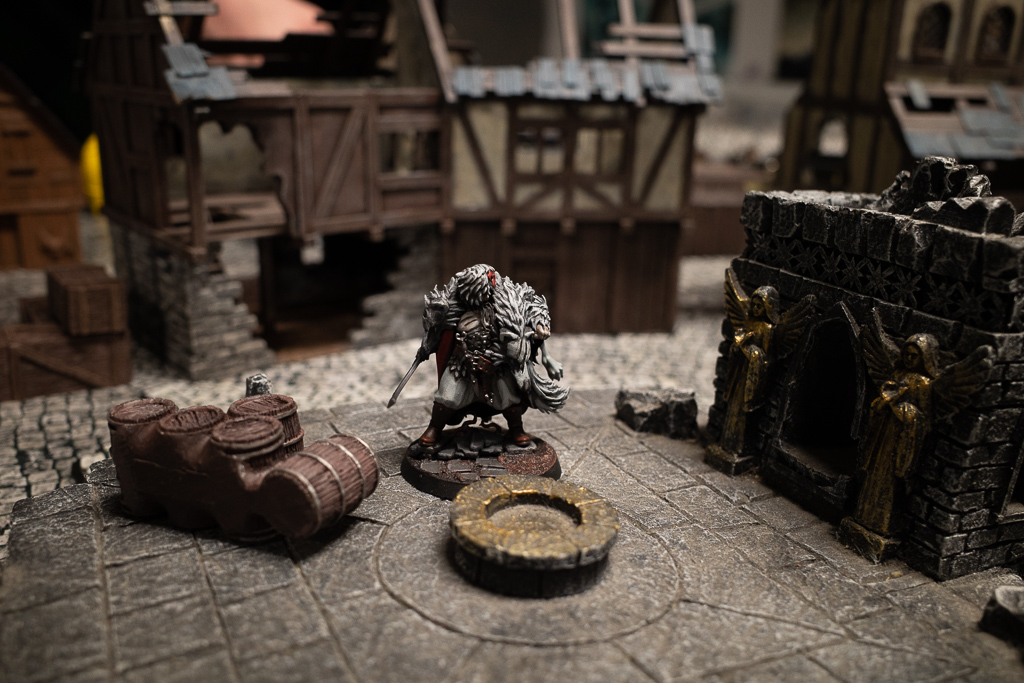
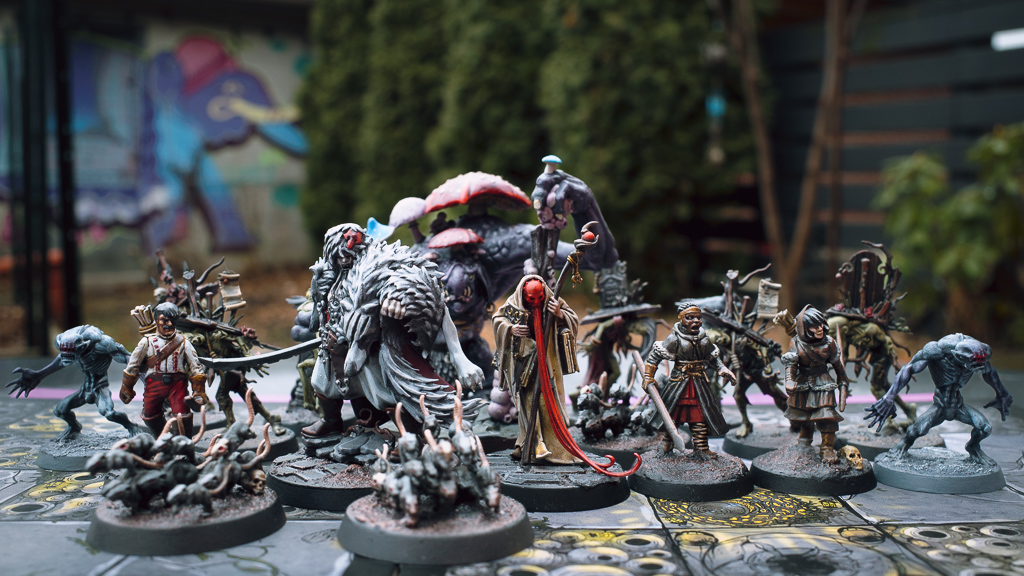
I came close to going the whole year without playing a single game of Mordheim, but a visiting gamer from Vancouver put the call out to see if anyone in our Mordheim league was free to play while he was in town. Of course I said yes. Another regular from the store’s Mordheim posse joined in, alongside someone who had never played a game of Mordehim before. We had planned to play 2-3 games, but we all forgot that multi player games usually take a while. We got through one, but it was a fun one.
I used my undead warband again. They are the team I feel most comfortable playing. After the last campaign my vampire leader, Lord Volchyakrov, was killed. I was tempted to try and paint a new vampire before this game, but didn’t have the time. I have to assume the necromancer Gallean the Mad helped bring the vampire back to un-life. As usual, I prioritized bodies over equipment. My warband consisted of my vampire, a necromancer, and 3 dregs, who were accompanied by 2 ghouls, 7 zombies, and a dire wolf. (Though in my case my dire wolves are dire rats.) I actually have wolf models now I should build and paint. Maybe before the next big league or campaign takes place.
We played a pretty crazy scenario, themed for the holidays. There were 6 building that contained presents for us to steal. Each building was guarded by d3 peasants armed with spears. All the units in your warband were carrying a torch they could use to set these buildings on fire, after they had fist been explored (and then number of peasants inside had been determined). The game ends when all the buildings are burned down, or the last team routs. The session had some real old-school D&D energy. It felt very violent and chaotic.
The peasants proved to be surprisingly tough. In true Mordheim fashion, one peasant held off my dreg and a zombie for basically the entire game. Another peasant single handedly held off a team of dwarven slayers. That old man was only killed when my team set his home on fire and it collapsed upon him. (Killing a few dwarfs in the process.)
I hadn’t played Mordheim in ages, but I quickly remembered how it all worked. The game has lots of little edge cases, but its core is quite simple. Our new player, who had only played 40K, really loved how evocative the game and its rules were. It really is the gold standard for narrative gaming. (Though perhaps Trench Crusade will soon carry that torch?)
Hopefully we’re manage to get another game (or more) in before the holidays season is over.
I am usually in and out of London to see my brother. In past years I’ve returned to Toronto disappointed to learn if I had planned my trip a little bit better I would have been in the city for Dragonmeet. So this year I planned better: I booked a trip around the weekend Dragonmeet was taking place.
Dragonmeet is one of the big RPG conventions that takes place in London. Smaller and more indie that the bigger UK Game Expo. I was in attendance for the first Dragonmeet at its new home, the totally soulless Excel convention centre. Past attendees told me they missed tight narrow hallways of the hotel in Hammersmith that used to be the conventions home. Breakout in Toronto feels like it might be a bigger convention, but Dragonmeet has a far bigger OSR presence. I got to see all my G+ bros!
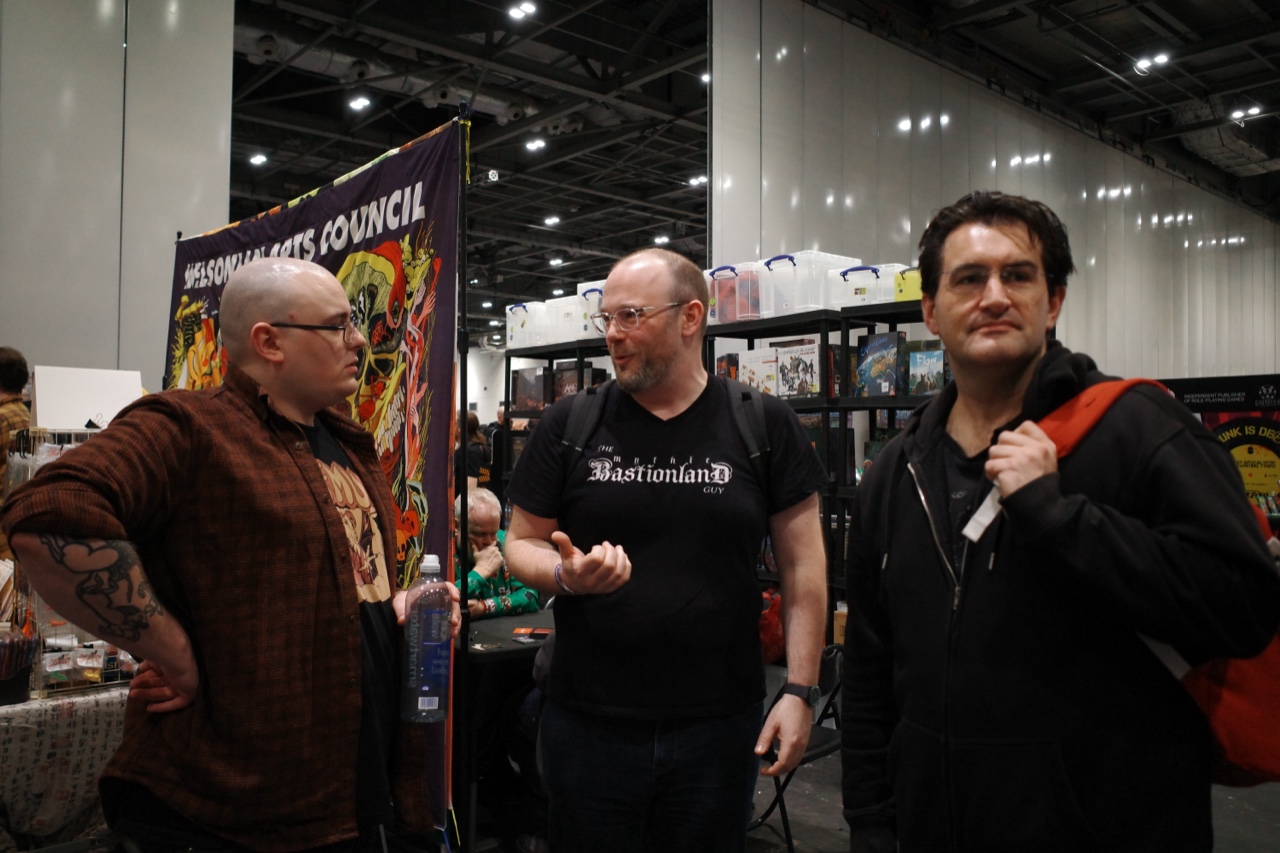
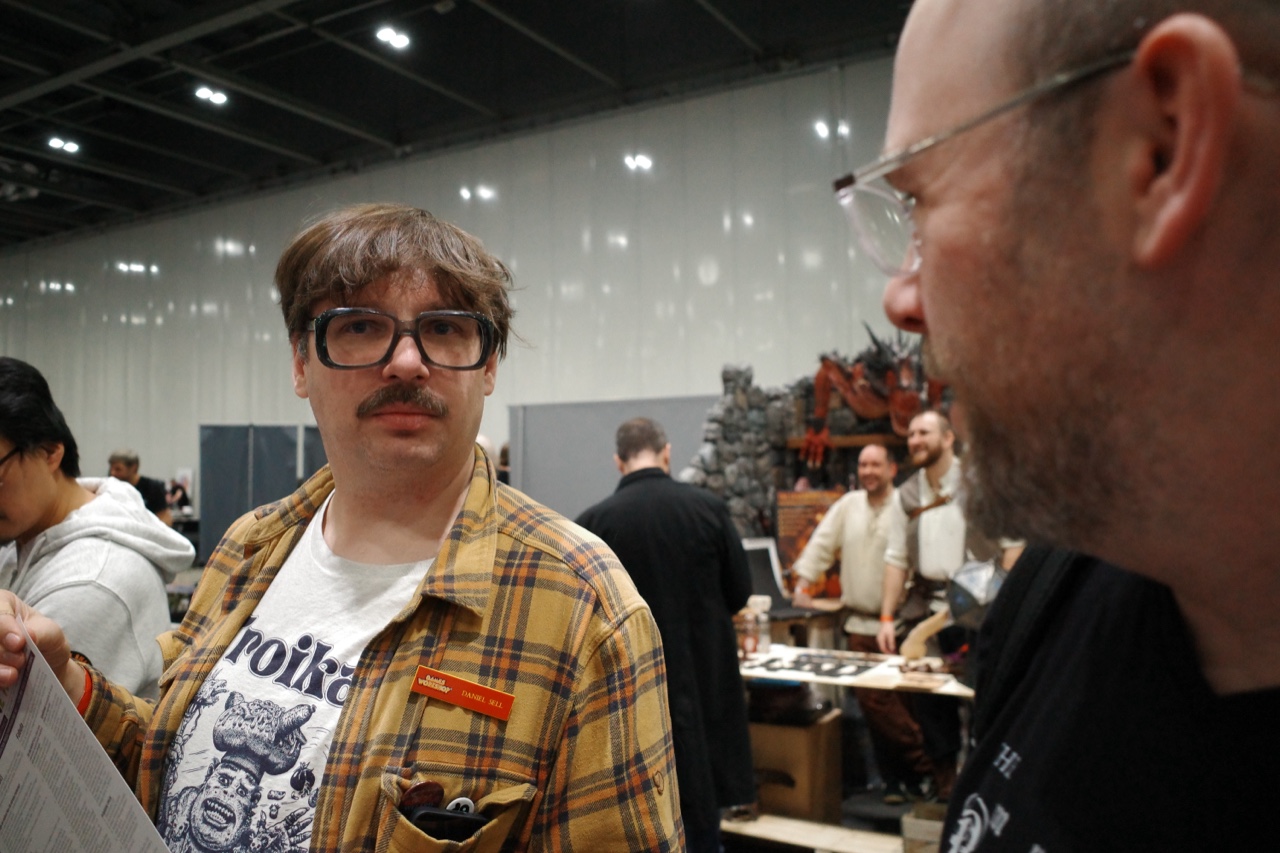
Dragonmeet has far more vendors that Breakout. Apparently it was twice as big as past years. They had two big rooms of the Excel centre filled with stands. The vast majority of vendors in attendance were indie. It was nice being able to wander around and see people I know in attendance. I was excited to finally meet the infamous Grey Wizard. Paolo and Eric were sharing space together, the first people I saw when I arrived. Just a little past them was Zach from Soul Muppet Games. I got to see their cowboy game in the flesh, and am now wondering I made the wrong call not grabbing a copy. The book was gigantic and looked cool. Daniel was working the Igloo Tree & Melsonia Arts Council, which was where I also finally met Luke Gearing. We discussed the whacky world of Over/Under.
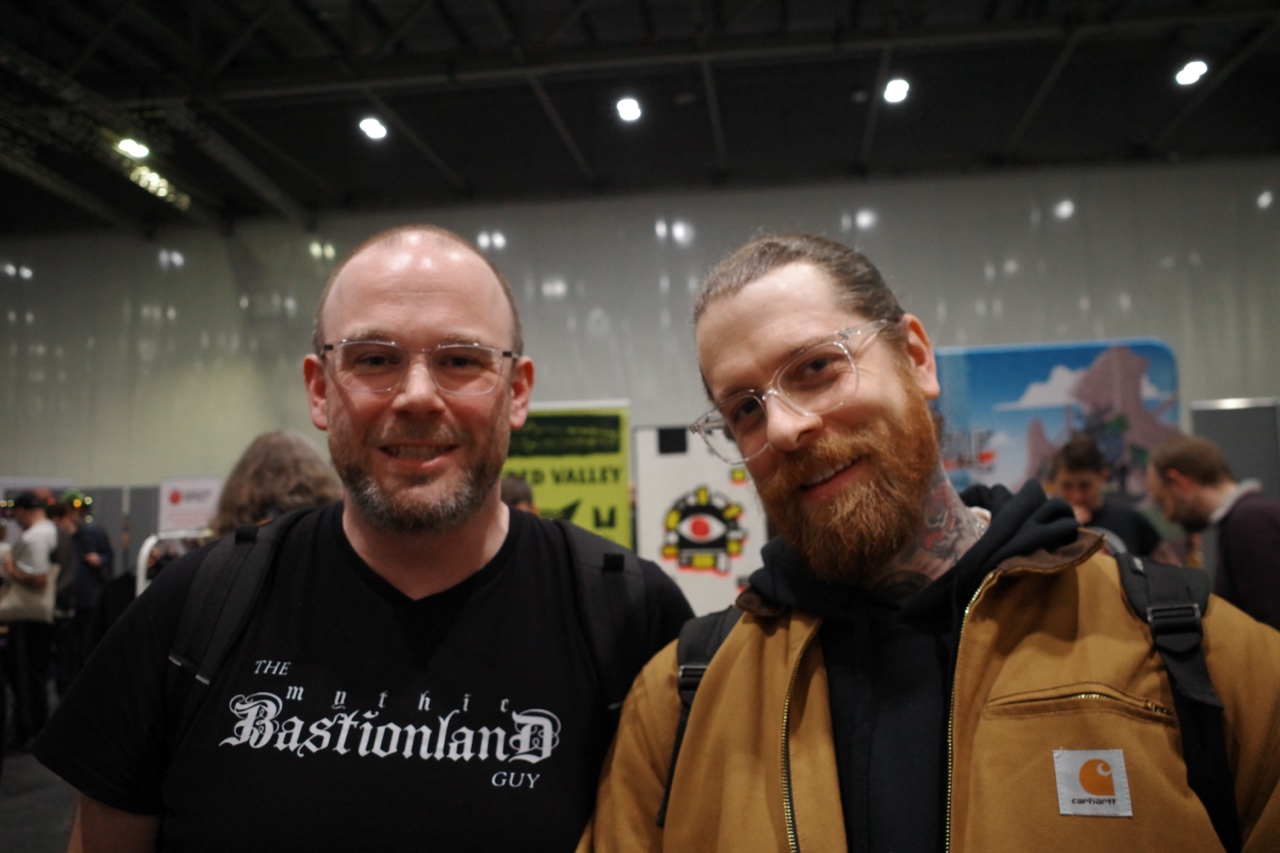
I was mostly hanging out with my Warhammer World posse of Chris and Patrick, wandering the convention with the two of them, watching people muscle Patrick out of the way to tell Chris Bastionland changed their lives. James Young was there with some of his gamer crew, and we would stop and chat whenever we saw him again. David Black arrived a little after lunch with his wife, and joined us for a short while. I stumbled upon Johan Nohr. Next to him was Chris Bissette! I saw so many people I’m already starting to forget them all. The whole convention was the fun experience of wandering a little bit and seeing someone you know.
Would love to come back for Dragonmeet again, certainly a good reason to find yourself in London. Salute in April is the other convention that seems exciting, and is conveniently in the Spring. Paolo’s LasagnaCon in August is probably the most tempting—if only for the food.
I participated—and I use that term most loosely—in Sam’s epic online play-by-post “war-game”Over/Under is officially over. I look forward to all the dissertations about the game in the years to come. There were thousands of players, no doubt everyone experienced the games in ways that are unique to them. I would engage as I did at the start, showing up when I see we’ve all been tagged and posting a salute emojis. I also had a small running personal gag of joining people’s semi-private threads (like the Tempest’s Master of Arms’s office) and excusing myself when people started having private conversations. Other people went all in, playing the game non-stop for basically a month.
I jokingly described the game to friends as follows: [Over/Under] was basically a giant free form LARP, where everyone was gay for each other. And then deep in the background … a war-game—way, way deep. Obviously there was lots going on, but it’s wild just how much the game seems to have gotten away from its creator’s original vision. I picture myself as the player Sam likely imagined: I would check in a few minutes a day; vote when I needed to vote on the bosses initiatives; post random in-game messages here and there. There wasn’t really anything to do if you weren’t a boss. The players that dominated the game went a completly different route. They filled the giant void left by Sam with so much stuff. There were gambling dens, bars, tabloids, cage fights, new unofficial factions, Ponzi schemes … and lots and lots of doomed romance. The mod announcements as the game progressed were mostly about the doomed romance.
It’s kind of incredible this game worked at all. Lots of cooperation from lots of people to essentially not break Kayfabe. Early in the game someone set one of the bars on fire. One of the few times I was around to help with something happening in the game. Except, you couldn’t actually set a bar on fire in the game, restrain or injure another player, etc. Everyone just had to agree, this is what’s happening, let’s see how it all plays out.
Despite morphing into this free-form RPG LARP thing, it does feel like there is something essentially OSR about this whole affair: the void left by the rules was the game. I am curious if the game would have worked if Sam had tried to provide mechanical incentives for the plebeians on the side-lines, versus just the bosses. I don’t think you get the magic of this game without the rules void. Is Over/Under the best argument for System Doesn’t Matter™? Someone else can make that case!
My house rules for death and dying in D&D are buried in a post about my house rules for my Carcosa campaign. That was the first time I used them, but they continue to be what I use when playing D&D-a-likes:
If your hit points drop below or are equal to zero make a Save vs. Death Ray and Poison: success indicates your character is merely unconscious, completely incapacitated until they can get a full week of rest; failure indicates your character is oh-so dead. If you roll a natural 20 on your saving throw roll, your character not only survives, but is invigorated by his near death. In this case your character re-rolls their HP for the session—the “hulkamaniac” rule.
This is easily generalized for any system with saves and hit points. Mothership and DCC RPG have similar rules for death and dying.
I normally re-roll hit points per session, something I picked up from Brendan. (I would say this is an atypical reading of how OD&D explains hit dice, but one I am a fan of—poor rolls for your HP seem less punishing. Carcosa did something similar and more bananas with HP/HD as well for that matter, but I ignored those rules.) If this isn’t how you play, I would return people who roll a natural 20 on their save back to the game with their max HP.
If you want to also include the possibility of permanent scars and dismemberment I would make a table keyed on how much you made your death save by. But I don’t usually play with those sorts of tables. I prefer the simplicity of you’re dead or you’re not.
Sucks Terry Bollea (Hulk Hogan) turned out to be such a dick.
My friend Warren messaged me a few days ago. “Ram,” he said, “reminder to write the Rammies, Ennies are in 2 days.”
Wait, what? The year zooms by and I’m always caught on the back foot. Even with the warning I didn’t really have time to get any of my thoughts down until … well right now. This post wasn’t written before the Ennies began, it will show up some time in the middle of their show. Oh well. I don’t really care about what the Ennies have to say one way or the other, and you shouldn’t either, but I won’t fault someone for loving the Teen Choice Awards of the RPG industry. Someone had to fill that void, why not ENworld? So much voting!
At the Ramanan Sivaranjan Awards for Excellence in gaming there is only one voter: me! There is only one rule when it comes to these awards: the books in contention must have arrived at my doorstep, or digitally in my inbox, during 2024. I had to think a little bit hard about these rules this year, as my copies of Swyvers and Gardens of Ynn arrived safe and sound at my brother’s door in the UK. I’ll see those books in a couple weeks, and so they will be in the running next year. Till then …
Best Game: Break!! by Reynaldo Madriñan and Carlo Tartaglia
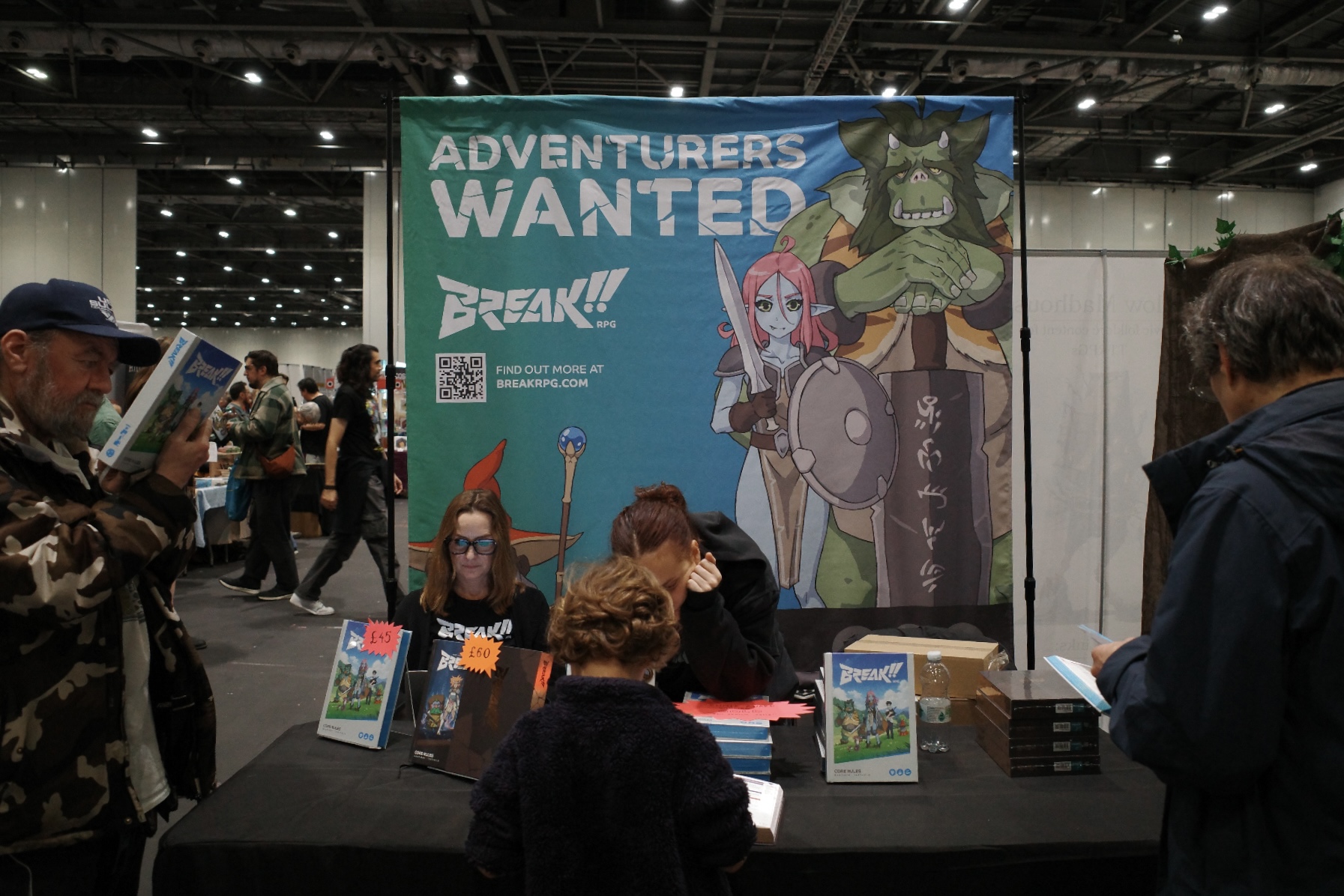
I waited, along with many friends, many years for this book. And then it finally arrived. I wasn’t always sure it would. But Rey and Carlo took their time and made something special. In the time between me first seeing Rey and GreyWiz working on Break!! to its eventual release it became a big chonky game. It’s not really the sort of game I play anymore. Character creation is 200 pages of this book! Come on, man. Of course, that also doubles as a lot of world building. Break!! has such an imaginative setting, a natural extension of Reynaldo’s Baroviania game. Reading the book it draws you it. Drew me in. I am prepping an inevitable game. Break!! feels well suited to eat 5Es lunch. The character creation is so detailed, there are lots of options and abilities and all that. Lots of ways to customize characters and gear to your liking. The vibes for the game are so perfect. Kitchen sink fantasy that feels very much its own. Carlo’s art is incredible. I would watch the Break!! Saturday morning cartoon. Perhaps one day we will get one.
Best Setting: Gackling Moon by Patrick Stuart & Tom K. Kemp
Some motherfucking OSR nonsense from the man himself Patrick Stuart. Gackling Moon began its life on Patrick’s blog. For those not familiar, the book describes the Moonlands, a bizarre place for adventure. The book features art by Tom Kemp and feels like you are reading an in world artifact you would pick up at a museum exhibit about the region. This feels like Patrick’s take on the 2e Gazetteer as literary fiction. In many ways this is probably stretching the limits of what counts as a gaming book. There is so much creativity jammed into Gackling Moon, but actually turning that into an adventure to play is left as an exercise for the reader. Maps, stats, everything is absent. That the book features random tables is really the only explicit nod to gaming. But I disagree with those who would argue this isn’t a gaming book: everything was clearly written with an eye to how it would play on a table. This approach feels like less of a stretch—a gazetteer for a fantasy world—than the stat-less monster manual that was Fire on the Velvet Horizon. (That book is amazing, by the way.) There is clear precedent for this style of fiction. Tom Kemp’s art is such a perfect match for the book, and contributes to the feeling this is the companion book to some gallery or museum exhibit. Gackling Moon is maximally creative. Often quite funny. More people should check it out.
The Ramanan Sivaranjan Excellence in Gaming Best God Damn Books of 2024: The Mothership Boxed Set by Sean McCoy & Friends.
A weird pick: Mothership has already won this coveted spot, but this boxed set is actually really fucking good. The game has matured in that time, lots of tweaks here and there. I’m less interested in those changes and more interested in what I would consider the centrepiece of this boxed set, it’s Warden’s Manual. I love this book! Mothership’s Warden’s Manual is exactly what I want from a “DMG”: practical concrete advice on getting the game you bought to the table. How do you prep? What do you do in your first session? Etc. It’s all the juice. This boxed set made me want to run the game again. And I did! The box conveniently includes an adventure, Another Bug Hunt, which I enjoyed running for my friends. Mothership has grown into a real behemoth since I first wrote about it. This game is probably someone’s first RPG, the Kickstarter raised so much money and had so many backers. What a lucky person.
Honourable Mentions
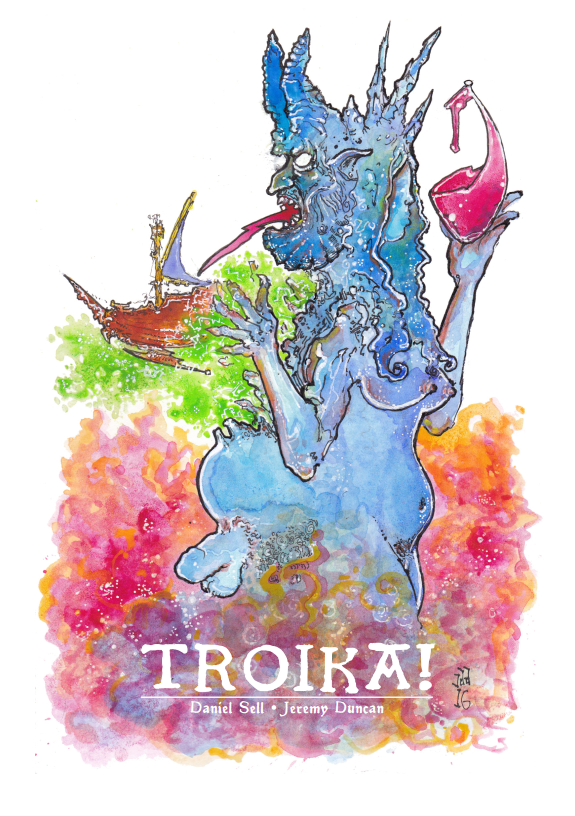
I say this every year, but this year was a particularly competitive one. We had another beautiful boxed set with Wulfwald by Lee Reynoldson, Owe My Soul to the Company Store by Luther Gutekunst & R. Devlin, Knave 2e by Ben Milton & Peter Mullen, the nazi killing romp that is EAT THE RIECH by Grant Howitt & Will Kirkby and my new favourite rank & flank war-game, Hobgoblin by Mike Hutchinson. I am a big fan of the first entrants to Troika 1:5 series, Whalgravaak’s Warehouse by Andrew Walter and The Hand of God by Mike Knee and Andrew Walter. I’m really looking forward to the adventures to follow.
Mothership’s play loop is pretty free-form and loose, like a lot of OSR games: describe a situation and have a conversation with your players till the situation is resolved. This loop is illustrated on page 27-28 of the Warden Manual in a neat and tidy spread. I like to run games this way as well, but I find left to my own devices my games drift towards some all vibes no rules FKR-ish nonsense.1 Forcing some structure on myself is helpful.
When I ran Gradient Descent using 0e Mothership, and Another Bug Hunt using the current rules, I never felt like I was really taking advantage of the stress and panic system. I don’t call for rolls that much, so there is less chance for people to gain stress through failure. I also don’t have a good habit for just doling stress out because it makes fictional sense.2 Folding gaining stress into the act of exploration seems like a reasonable approach for play. Here is a small update to my earlier attempt at moving the Hazard Die to Mothership:
Hazard Die
When exploring a dangerous environment roll a d10 each time the players perform a notable action (i.e. move between locations, carefully search a space, attempt to hack a computer, etc).
Encounter: roll on a random encounter table. Gain 1 stress. Environment: something about the players immediate surroundings change: lights go out, gravity fails, doors lock, etc. Perhaps there are hints of a future encounter. Gain 1 stress. Exhaustion: the characters are hungry or fatigued. They must rest or gain 1 stress. Expiration: batteries die, oxygen runs dangerously low, etc.
Easement: a moment of calm, the players may lose 1 stress, but never reducing it below the value they started the session with.
Mothership has real Alien vibes. In a horror games it feels like the general mood should always be “it’s quiet, too quiet.” Mothership’s typical 10% chance of a random encounter seems inline with that, so I left it alone. I merged what Brendan calls Percept & Locality into a single entry named Environment. I think the general intention is the same: hints at future badness. The big change from my previous table is that Encounter and Environment results tick up a players stress. As players explore a location they will slowly accrue stress.
The other results are unchanged from my previous iteration. Exhaustion forces players to pause unless they accept 1 stress. This result is only meaningful if strict time records are being kept. In Another Bug Hunt infected characters will eventually turn into bugs after enough time has passed: make sure you track that shit! If characters are being chased, this is another result that will likely result in them gaining stress as they can’t stop to chill out. In Mothership you don’t have torches, but there are lots of electronics that have a chance to break down. Expiration is the place for those failures to happen. Since we are doling out stress I thought there should be a chance for players to lose some of the exploration based stress they have earned.
Is this good? I’d have to play and see. With these sorts of rules you want to get the mouth feel just right. Maybe a violent encounter should result in d5 stress. Maybe this is way too much stress and your characters become broken husks without also tweaking the stress relief rules. I will report back.
The way I play is nonsense, not FKR, which I think is a very cool and interesting scene. ↩︎
How to dole out stress just because feels like something to dig into more. You don’t want to do so in a way that feels arbitrary, or takes away from the agency of the players. ↩︎
I reject the premise of his query: the OSR is and always has been experimental! That’s the whole point. The “R” stands for Renaissance. Of course I complained, like a maniac, and Thomas followed up his thinking on the matter:
The term OSR has a kind of nostalgic or backwards-looking bent to it. While that never applied to all individuals, it applied to some/enough. I think it’s natural for folks who break from that orientation to use different terms.
I agree that the OSR began with retroclones and people trying to reproduce the original D&D games, but that’s certainly the least interesting part of the OSR at this point.1 People quickly moved on from Retroclones. LotFP is 15 years old. DCC RPG is over a decade old. Troika is going to celebrate its 10th birthday this year. All games directly inspired by something older, pushed in new directions.
Old School Hack came out at the same time as LotFP. If it came out today people would call it “Post-OSR”, but it was released into the maelstrom because the OSR has always been more than just retroclones. Many of the replies to Thomas’s inquiry pointed him to Into the Odd, an important and influential game. Also one that’s a decade old and came out of the OSR scene on G+. Maze Rats is another example of an old influential OSR game that moves well past the world of 3D6 down the line. These games would go on to inspire games like the superlative Mausritter.
OSR modules have almost always been fresh and interesting, where a lot of the excitement in the scene has lived. Deep Carbon Observatory is over a decade old now. Brilliant writing, art, and fun to play! LotFP’s modules (boo, hiss, I know) didn’t attempt to ape TSR trade dress or vibes: they charted their own unique course. Think about how good Scenic Dunnsmouth is! On the flipside, DCC RPG modules prove you can do what TSR was doing, but better in every single way. In the Woods is ten years old now and remains one of the most beautiful games/adventures to come out of the OSR. Another example of something people would call Post-OSR if it came out today.
Reynaldo and Grey Wizard worked on Break!! for what must be a decade. A game that came out of the OSR scene, and certainly has OSR sensibilities, but feels innovative and fresh. Luke Gearing’s Swyvers is another game in this same vein. Its system feels decidedly retro, but somehow the whole game feels new—I guess because it is.
This is a lot of words to not actually answer Thomas’s question about “what’s new” and I have to apologize for that. I feel irrationally compelled to correct people when I see them parrot a definition of the OSR that I could imagine coming from the lips of the most reprobate members of this scene. Probably because it erases me, my friends, and our experience. The OSR didn’t begin and end with AD&D.
I would have called it the smallest part of the OSR, but then OSE came out and seems more popular than ever. I also shouldn’t malign the retroclones, that undercuts how big a deal they were at the time, and also misses the point that they existed so people could share their bananas adventures. I suspect most of the people that were really into OSRIC already owned AD&D 1e. ↩︎
The Bloggies have me thinking about blogging. As you well know, I am pro-blogging. I think everyone should write and share their thoughts. My personal blog has been chugging along for over 20 years! Social media is transient: blogs are forever. There is value in writing stuff down.
It is easy to feel like a topic has already been discussed, that it’s common knowledge. But common to who? My ideas about gaming are informed by the books and blogs I have read, the games I’ve played, and the friends I have made along the way. I talked to people on Google+ a long time ago and left with a sense of what I want from RPGs. There are lots of new blogs that are clearly great, but that I don’t find that interesting because they feel like they talk about topics I’m done with. But so what! Not everything needs to be for everyone. There is always someone new who will come along and not know what’s up. Maybe they find some obscure Goblin Punch post from a decade ago. More likely they read stuff being shared right now.
Clayton won the Bloggies with his post on puzzle monsters. He dubbed this idea the 1HP monster, riffing off an older forum post from stras. This is one of my favourite parts about an active blog scene. People taking ideas and running with them, learning from one and other. Clayton’s post also introduces stras’s decade old post to a new generation of gamers.
This blog is full of all sorts of posts of varying quality, and of varying interest to other people. I have a blog post about converting all the to-hit and AC scores in OD&D from descending to ascending AC, not because I thought it was revelatory, but because I didn’t want to have to work it out again. Sharing is caring, but the post was for me. There are lots of reasons to put stuff online. Perhaps the best is writing for yourself.
G+ died in slow motion. There were redesigns people hated. Tweaks and changes throughout its life, as Google tried to make it work the way they wanted. The site was shuttered in April 2019. The social network was never the hit Google wanted, but it was a weirdly popular RPG space—certainly the epicentre of the best parts of the OSR for a period of time. People never stopped posting, right up until the end.
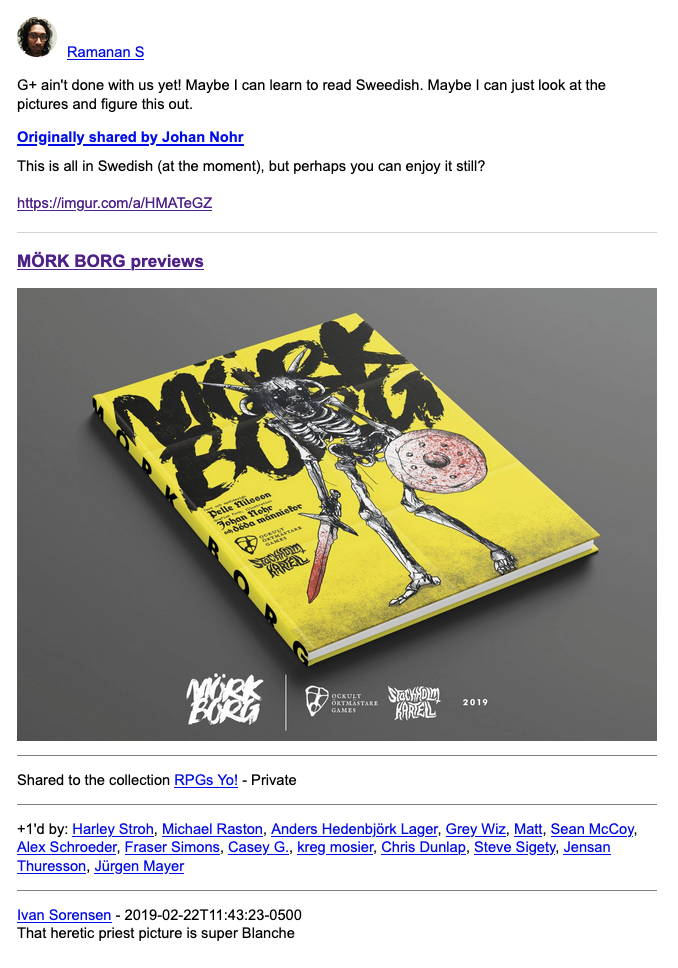
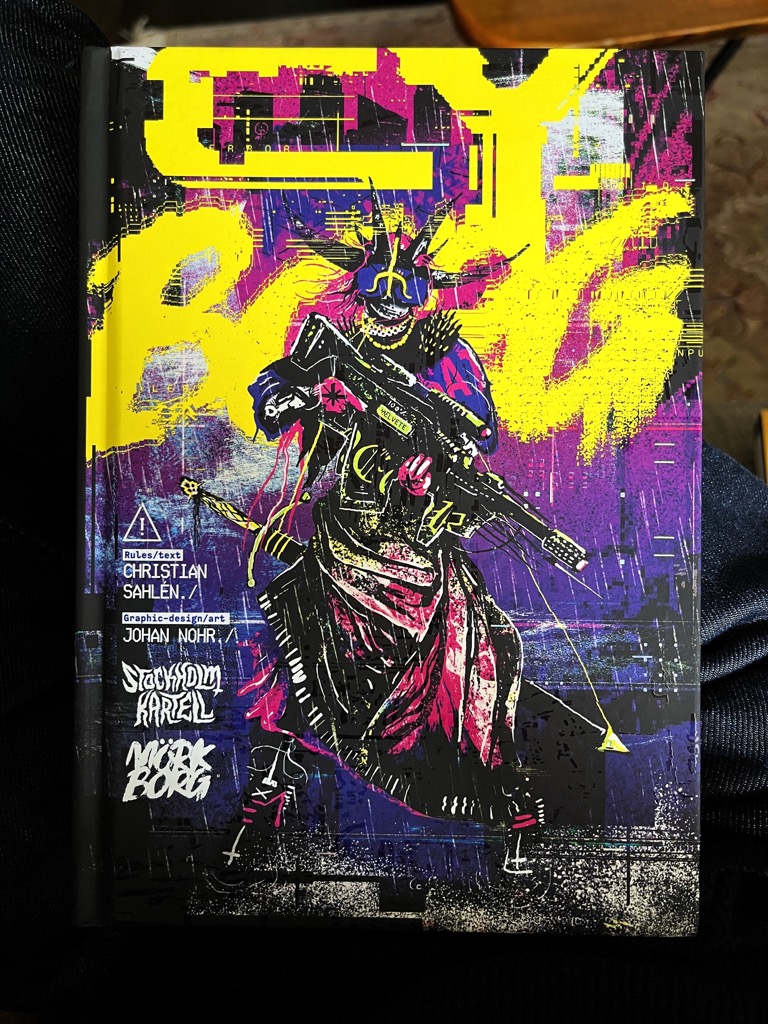
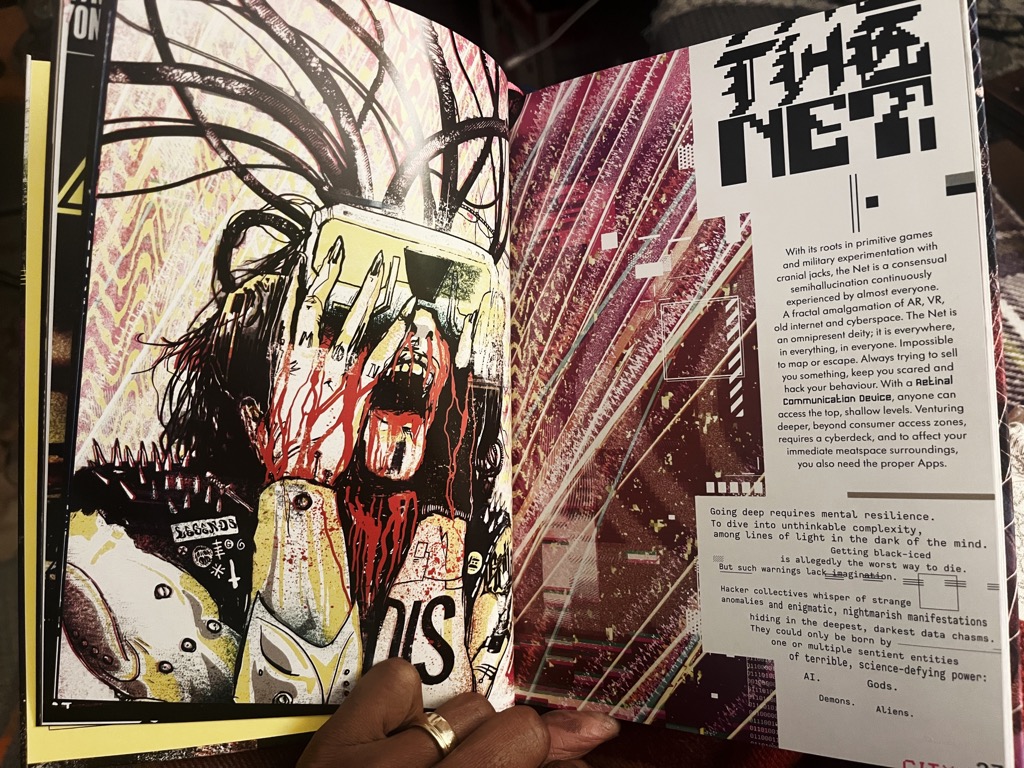
I remember seeing pictures of Mörk Borg in the dying days of G+ and knowing I wanted it despite not knowing what it even was. Despite it being written in Swedish.
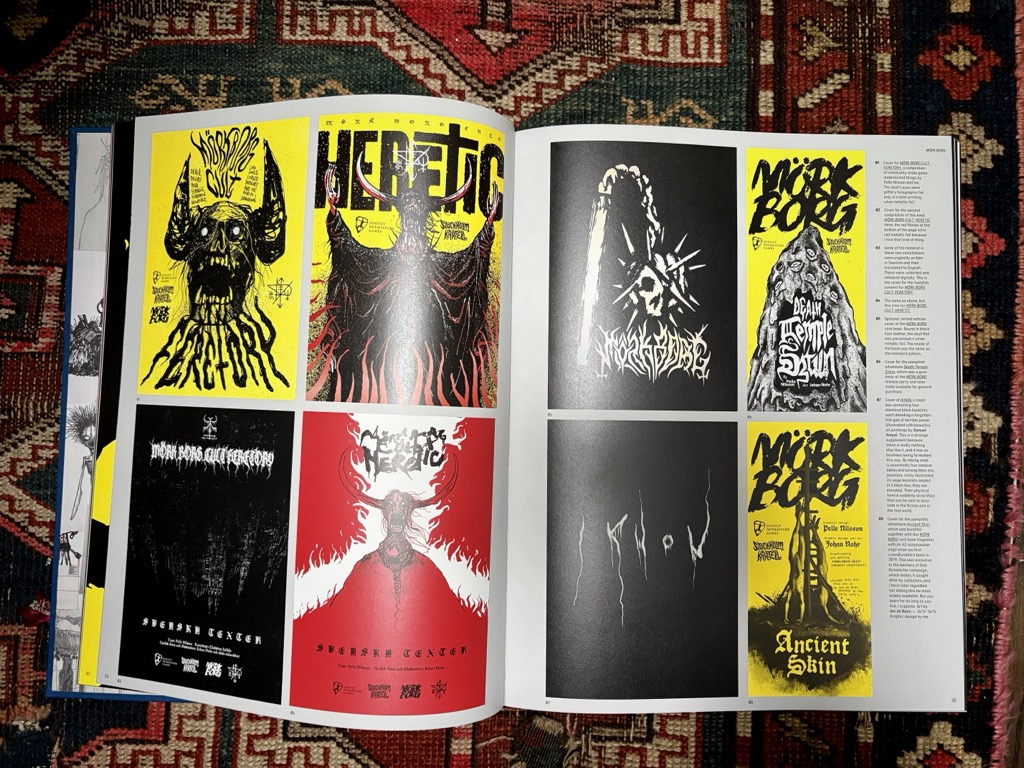
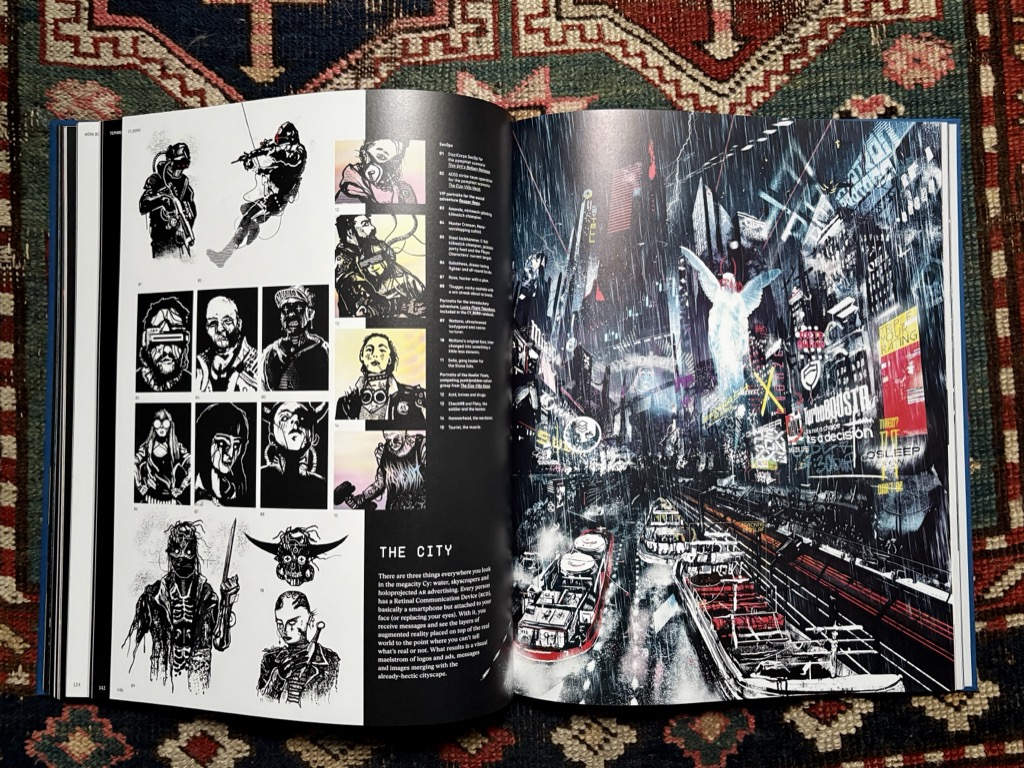
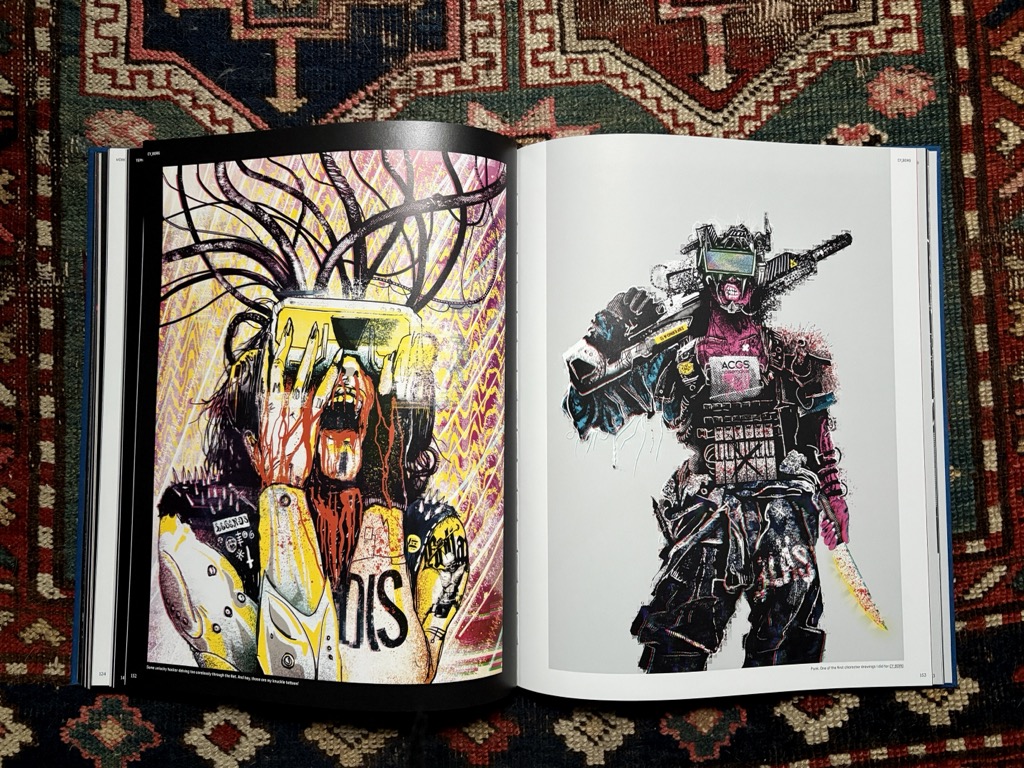
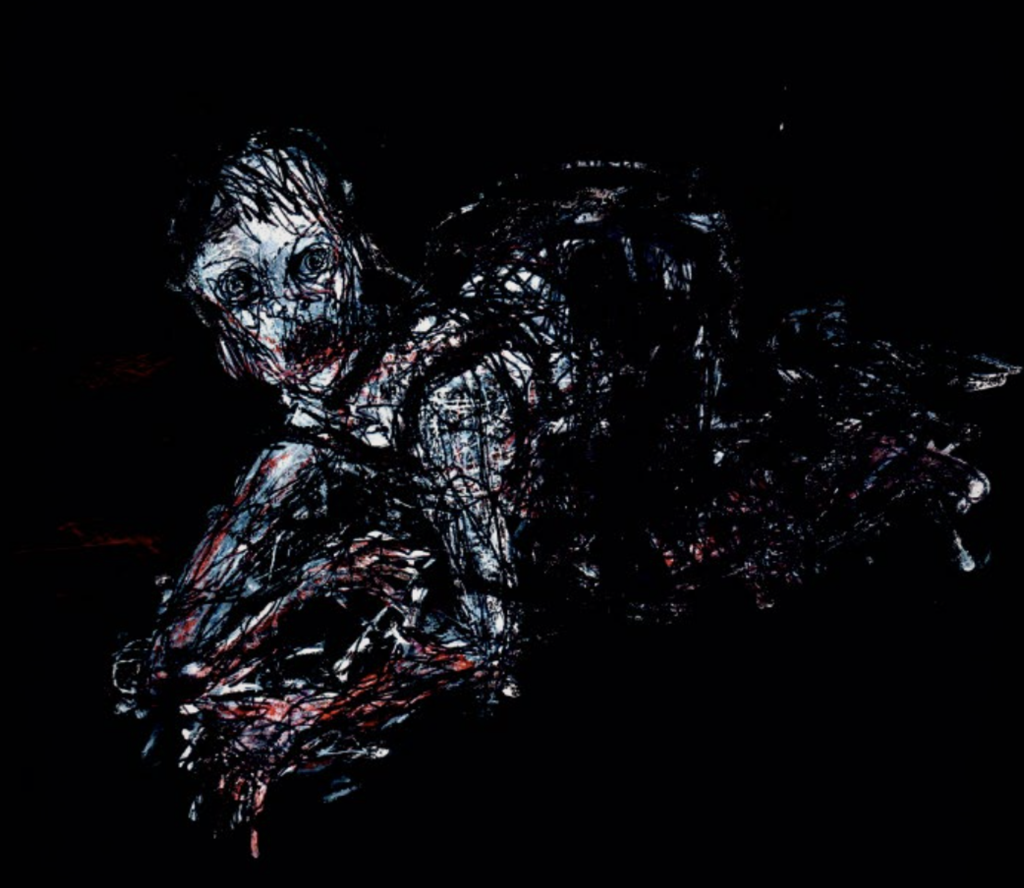
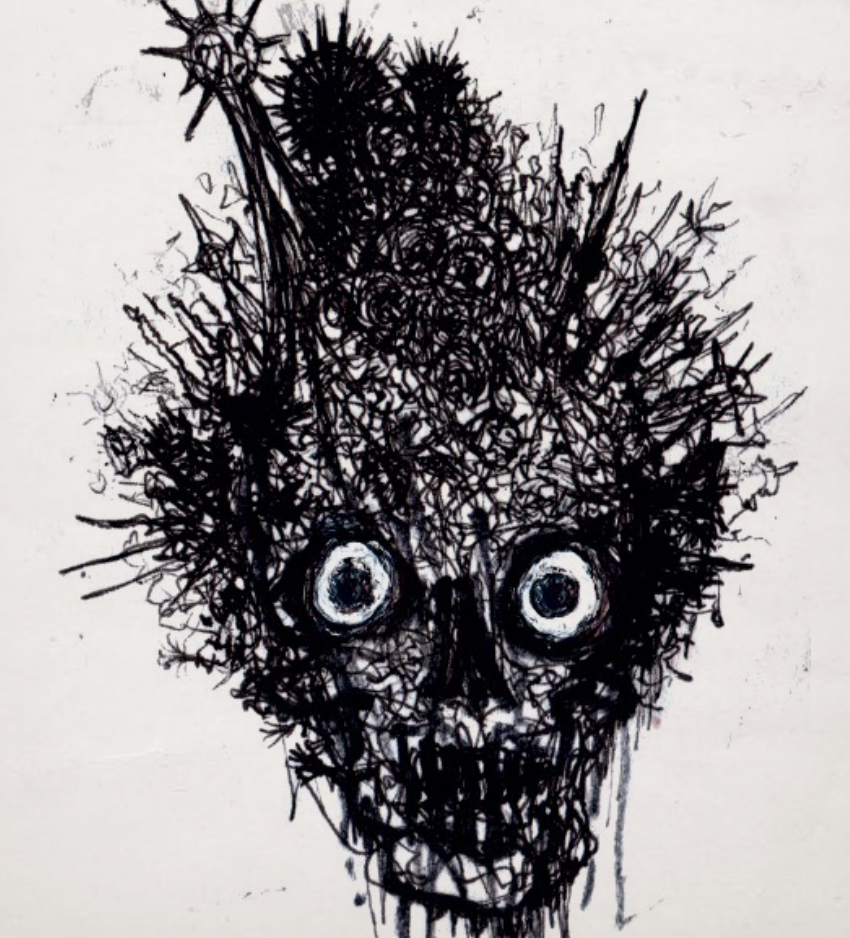
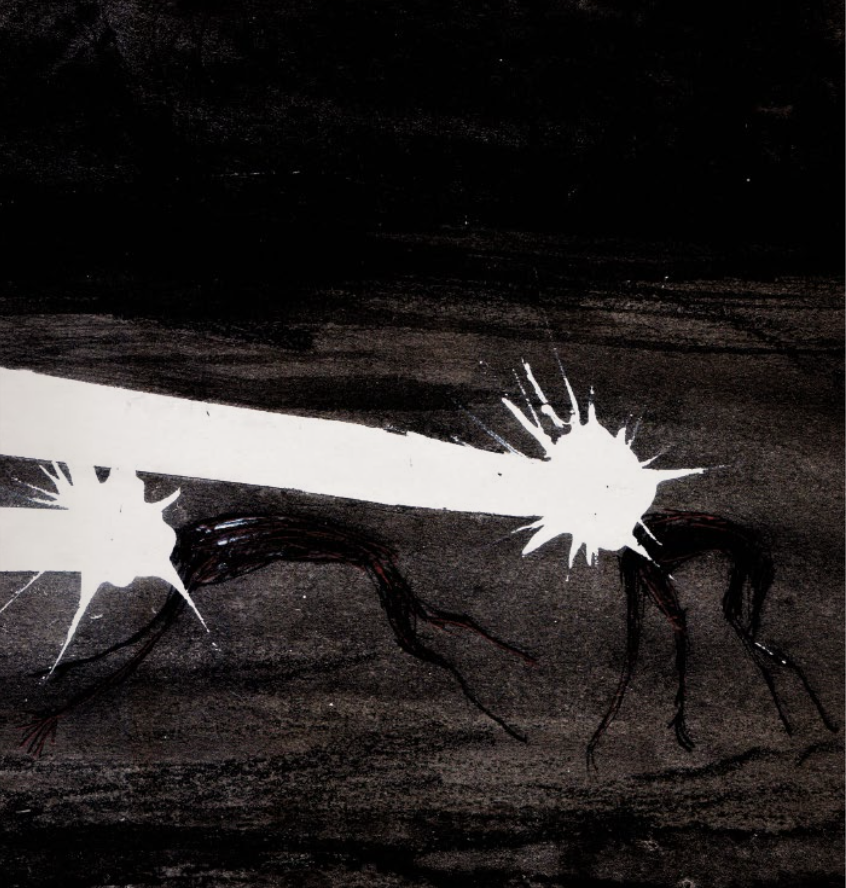
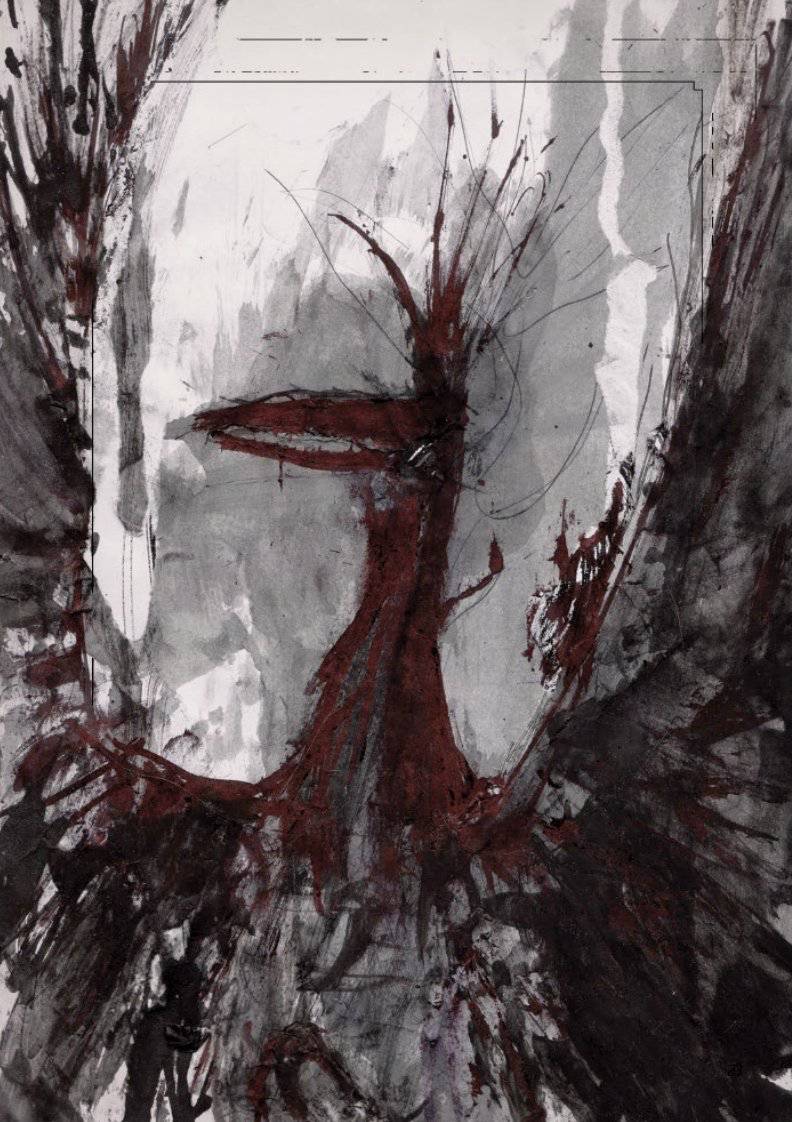
There is lots of love about Mörk Borg, but I believe a large part of its success is due to the bananas art and graphic design of Johan Nohr. Clayton Notestine has written at length about what makes Mörk Borg’s graphic design so fantastic, so I don’t have to. I get annoyed when people are dismissive of Mörk Borg’s graphic design. You can flip to the back of the book and see the adventure Johan laid out: neat, tidy and functional. Clearly he could have made the whole book like that if he wanted to. The excitement on the page is a choice. I digress.
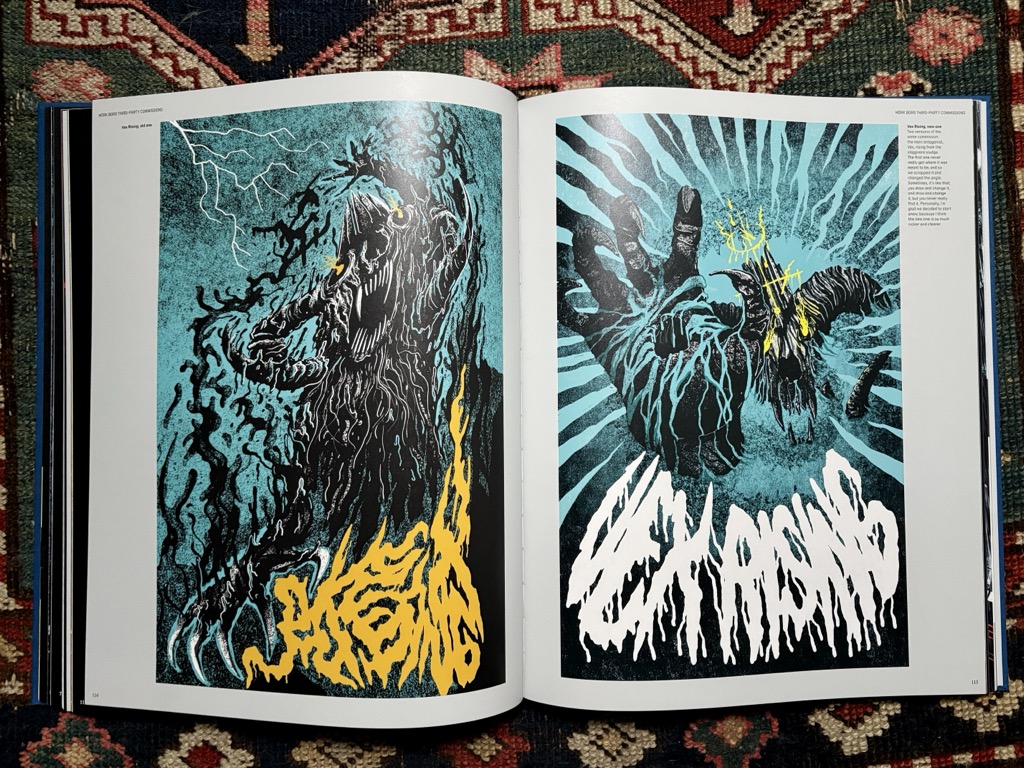
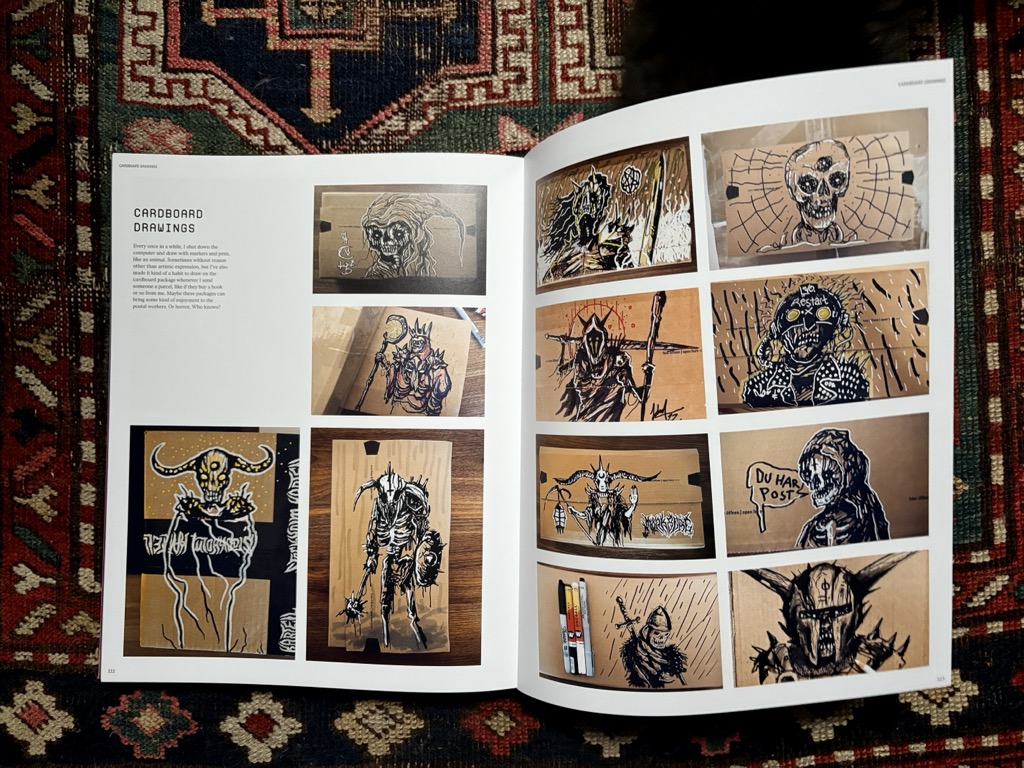
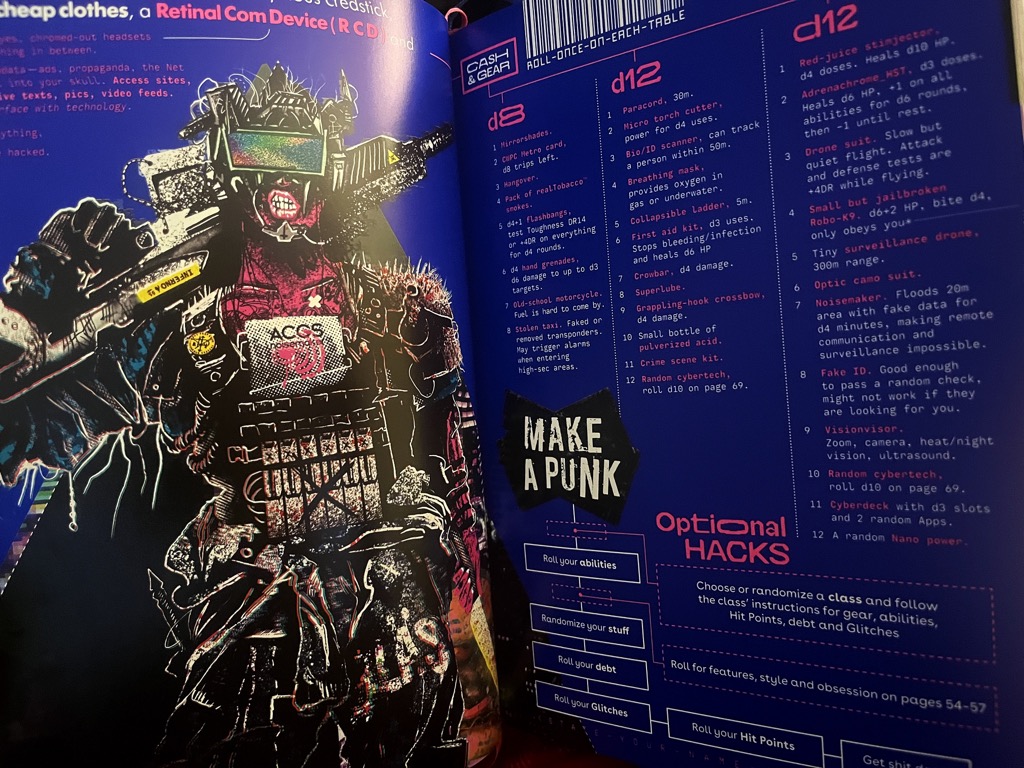
Johan has produced a lot of art for the RPG scene since my first encounters with his work. He did the graphic design and art for Into the Odd’s fancy edition, showing the world he isn’t a one trick pony. He did the graphic design for CY_BORG, showing the world he can make something that feels cohesive with Mörk Borg, while managing to be its own thing. He’s painted countless covers, pictures of dogs, pictures on cardboard. The man keeps himself busy.
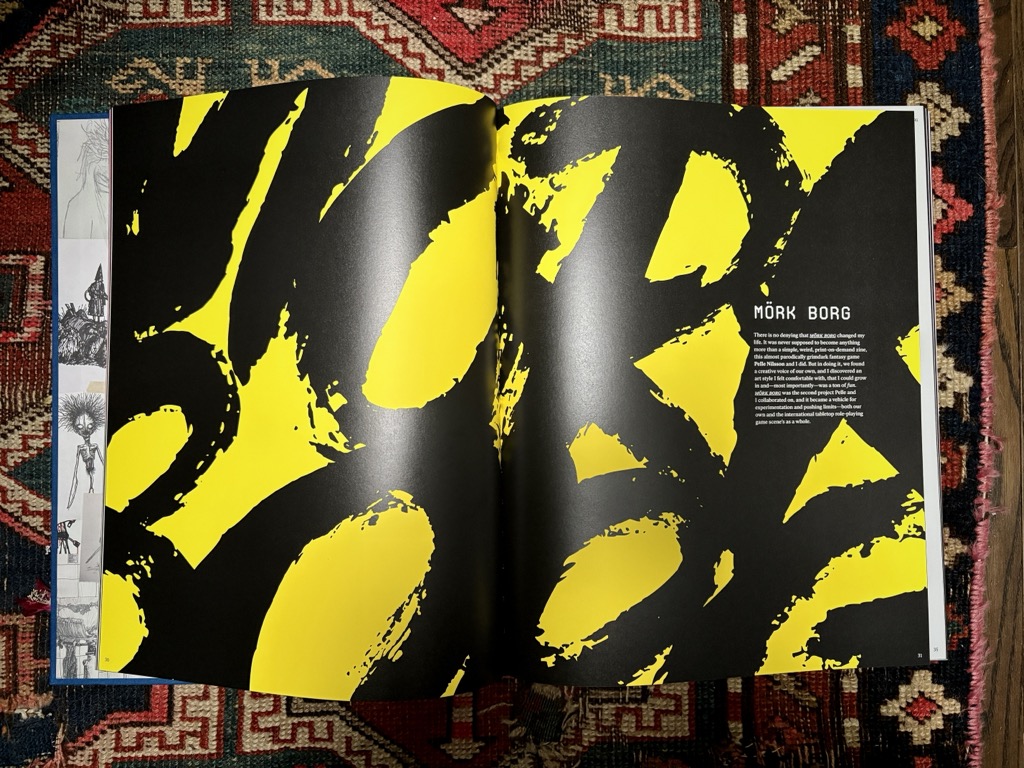
Art by Nohr is a chonky coffee table art book, collecting work from 2006 to 2023. The book was published via one of those kickstarters I backed without really thinking about any of the costs. I paid so much money to ship this book to my actual house. A heart breaking amount. If you know me you know I don’t ship fucking nothing to my house, shipping makes me crazy. I have books waiting for me across the globe, one day I’ll see them. But this book I was too hyped for.
The book is massive and beautiful. The sort of book you want to lay flat on your dining table and flip through slowly. As I write this post it’s sitting next to me, but I find I don’t actually have anything interesting to say. I love the intensity of Johan’s art. It’s interesting to see 20 years of work in one place. What else is worth talking about? The book is sitting on a shelf next to art books for Anders Zorn, Mary Cassatt and Helen McNicoll, and Denyse Thomasos. He keeps them good company.
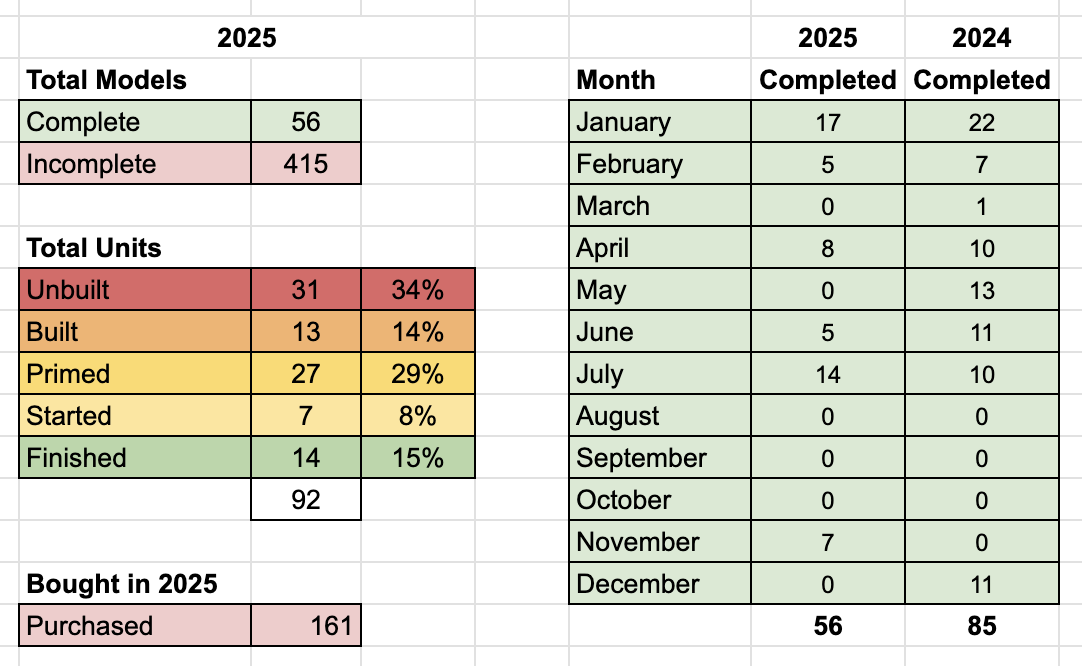
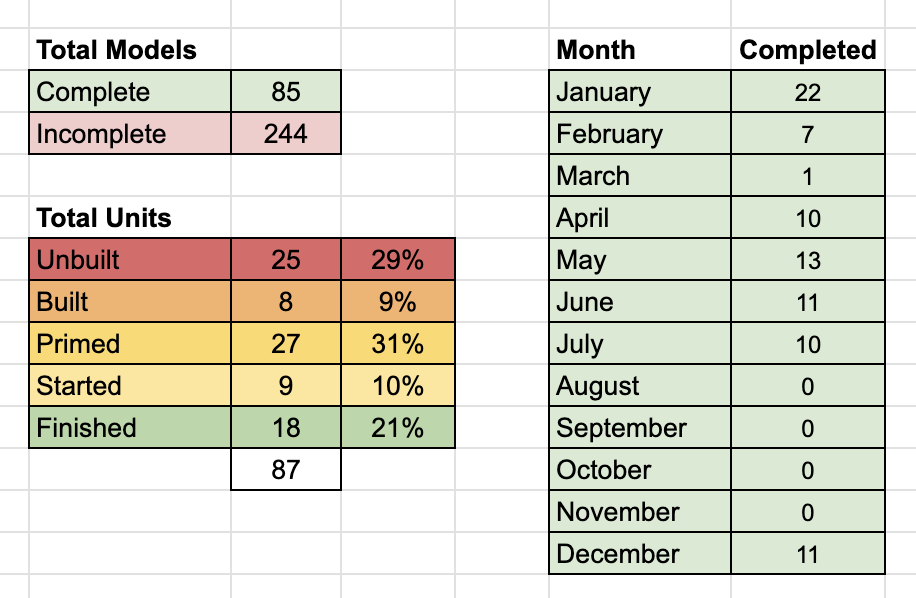
One of my goals for 2024 was to buy fewer minis, and paint more of the minis I already owned. I made a big spreadsheet of all the warhammer that litters my house: some real “if you can’t measure it, you can’t manage it” energy. That saying is a bit dubious, but I do think there was value in seeing what my pile of shame looked like concretely. I would move units up and down my list, trying to plan out a rough order for painting.
It’s interesting to look at these numbers now. January was my most productive month, and the first half of the year much better for output than the second. You can guess when I went back to work by looking at how many minis I painted each month. A final push in December was made possible my the holidays.
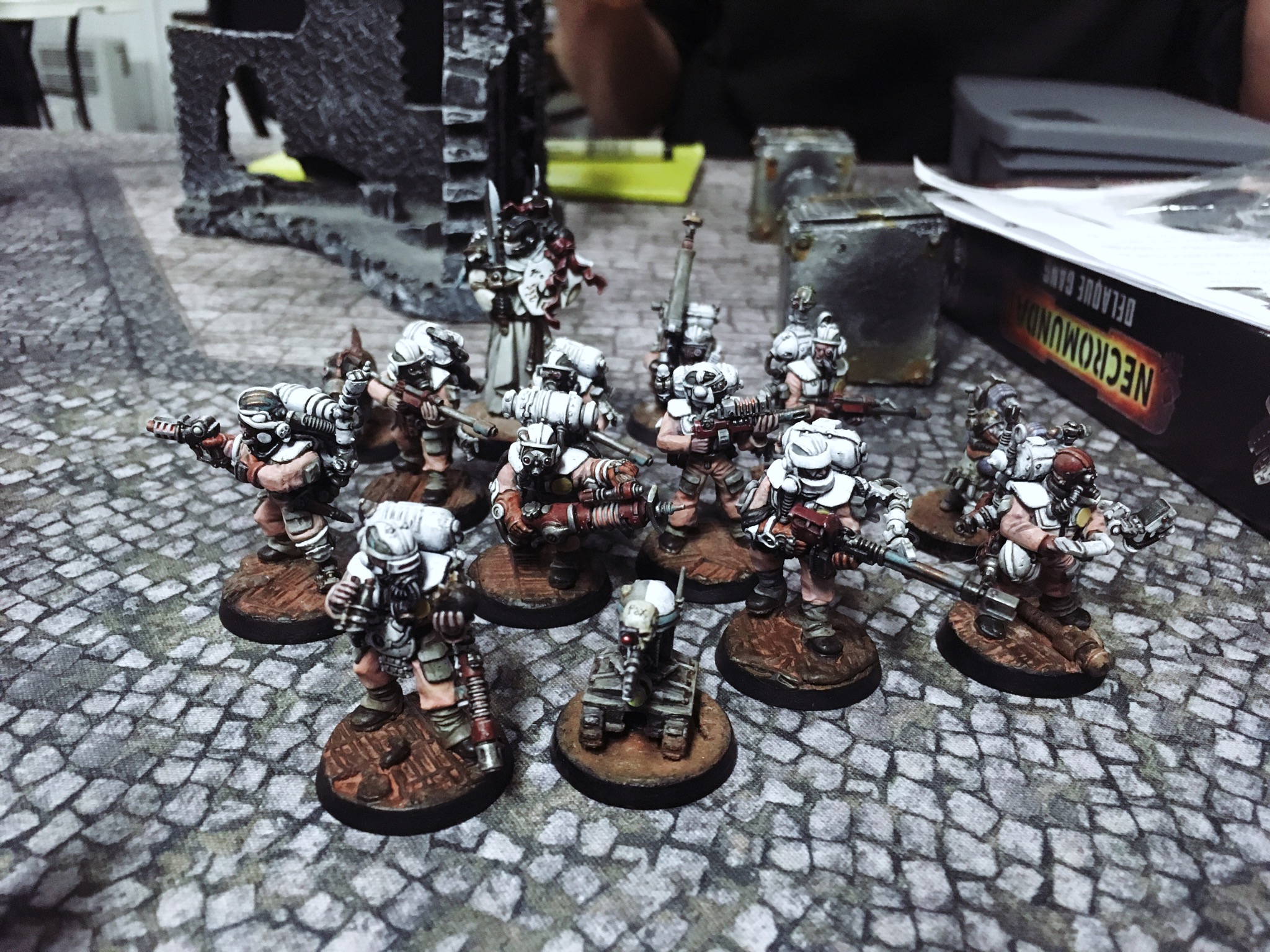
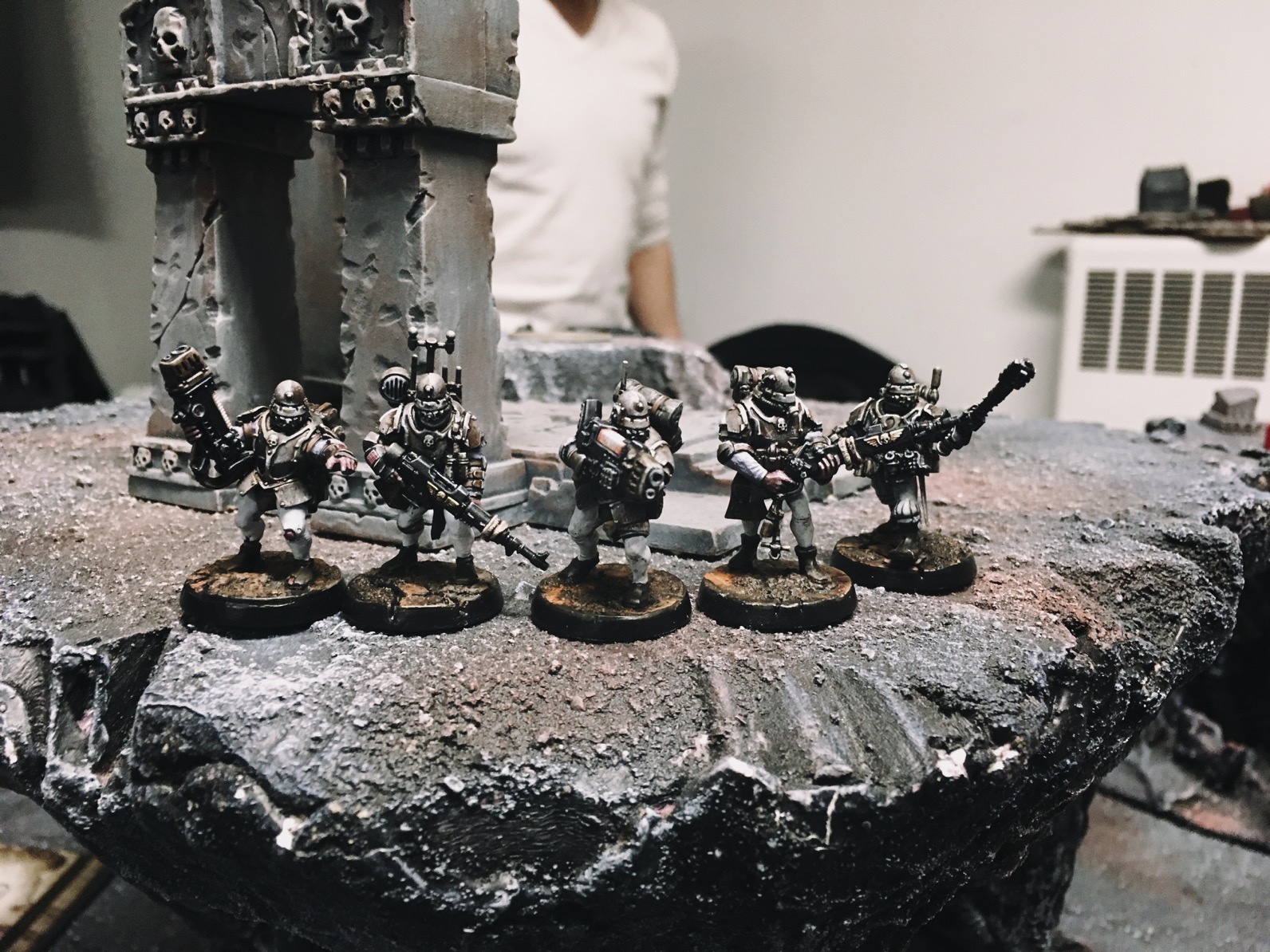
Looking at the models I painted, it’s clear the best motivator for myself when it comes to painting is getting models on the table for gaming. At the start of the year I was playing a lot of 40K, and was painting units to add some variety to my Necron army. A Horus Heresy tournament in April got me painting models for my Sons of Horus army. A return to Mordheim in spring had me wrapping up the undead minis from Cursed City. A Necromunda campaign in the summer got me to repaint my Escher gang, and add a few extra models into the mix. If you’re trying to paint more, play more.
I’ve been playing Age of Sigmar Spearhead recently, when I can find the time, using a partially painted crew of Stormcast Eternals. I hate playing with unpainted minis. I was trying hard to finish them before the clock ticked over to 2025. I’m so close! They’ll be my first minis for 2025.
The other goal for all this tracking was to minimize how much of a consumer I was in 2025: I wanted to buy less minis. I didn’t track the dates I bought new minis, but if I did, you could also guess when I went back to work based on when those purchases happened. As I have mentioned before, I find when I’m most busy and stressed is when I’m buying the most gaming material. Instead of playing, the hobby just becomes an act of consumption.
I’m not sure tracking anything led to the two outcomes I wanted. Regardless, it’s nice to see what I accomplished over the year. I love painting. I need to make the time to do it.
Once again my friend Paul T. drops a blog post as comments in the discord server we use to organize our #TorontOSR meetups. As you are no doubt aware, I hate when interesting posts are lost to the ether of the Internet. So enjoy this discussion of campaign design, which makes the case for the infamous negadungeon, which he calls anti-dungeons below. Paul argues that existence of true crap-sack environments for the players to explore adds real tension to a campaign, makes the choices players make when they explore more meaningful.
If we imagine a dungeon where every room is roughly the same — e.g. each room has an Orc or some other 1 HD enemy, and 50 gp — we can say that the dungeon is “balanced” (for the sake of this example). But it has very little texture. The game might still be fun — how much gold can you collect before you overreach and snuff it? — but it’s fairly monotonous. The choice of room you go into matters very little — you could go through the dungeon in any direction, and it wouldn’t really matter. Just leave after you’ve pushed your luck far enough, and that’s the only choice to be made, really. Over the long term, you’d get bored of play rather quickly; it has fairly little depth.
But if there are some rooms that are huge scores, and some that are total deathtraps, which should be avoided, now the dungeon has a lot more surprise, tension, and variability. Suddenly it really matters which way you go and which rooms you explore, and in what order. You start worrying about how to, if possible, look ahead, scout, do some reconnaissance, etc.
There is more variability, more tension and excitement, and much more difference in terms of how the game can go and what comes of it. You could step into the dungeon and walk into a deathtrap, finding nothing, and losing many men. Or you could bypass that room and find the treasure and walk out victorious. The gamble is heightened, the tension is through the roof, and players really have to think (and their cleverness is rewarded a lot more). It adds new dimensions to the game.
You can imagine this applying to larger areas of the dungeon — groups of rooms, themed areas, or levels. The upper caves are dangerous but not profitable; the crypt is a well of wealth. Once the players learn this, they can take advantage of it, so it becomes a question of how and when they can manage to figure it out (hopefully before they die!).
Now we scale this even higher, and apply it to dungeons. This gives texture to the whole campaign, overall. Aesthetically, thematically, etc — e.g. the premise of your campaign is that there are Dwarven tombs around, and those are full of wealth, but goblin-holes also exist, and they rarely have much in them but death and offal.
Of course, it does matter a great deal what your social contract is and what kind of timescale you’re playing on. Old-school D&D has the potential to be played at variable depth, and can become an incredibly deep game — but at the cost of increased commitment, patience, and so on.
If I’m doing a one-shot for some friends, I’d never pull out an anti-dungeon. But if we have a larger campaign setting, long scale, and other priorities [as you would find in a West Marches campaign], it might be a great tradeoff for the group if there was a lot of texture in this sense, on a larger scale.
I don’t know many people who are currently using anti-dungeons (except for horror-themed one-shots), but I do know a similar example: Eero, in his campaign, has a rule, which is that any adventure hook has a 1 in 6 chance of being a fake, a lie, or a trap. When he generates adventure hooks, he rolls a die for each. If it’s a 1, it is something like this. The “treasure map” actually leads you into a dead end canyon, where you’ll be surrounded and robbed by bandits. The “missing princess” is long dead, and you’ll be press-ganged into working in the mines, instead. And so on. If you were just playing for one night, and you rolled a 1, that would likely be frustrating and unsatisfying for most people (although there are many/some who really enjoy this kind of thing, as well, whether sincerely or perversely).However, add that to a sandbox campaign setting, and dynamics emerge.
When you know that every adventure has an expected payout perfectly relative to its difficulty, like the rooms in the dungeon, it almost doesn’t matter what you choose. The GM gives you an adventure hook, you strap on your armour and you go in. But if some rooms are jackpots and others are deathtraps… and the same goes for dungeons or adventures, then suddenly you have to get a lot more discerning and more clever. The game takes on new dimensions. You might learn you need to investigate an adventure hook, find clever ways to pursue it without putting yourself in danger, do proper reconaissance or background research, and come up with new ways to approach any apparent problem. There’s an added layer of richness there. Where before your game was all, “hey, there’s a Dwarven mine under the mountain? Ok, let’s go loot it, boys”, now instead it becomes something more like, “well, shit. What do we know about Dwarven mines? Where is this information coming from? Do we know anything about the history of the region? Who else knows about it? Can we interview people who live in the area? Were Dwarves known for hoarding gold, by any chance?” Etc. You have to evaluate and strategize at a higher level; the game takes on a different kind of depth.
This has effects on the kinds of campaigns and settings you might be able to come up with or play in, as well. It can allow you to have a much more anti-ludic orientation in developing your setting or campaign, as well as the kinds of things that happen within it.
Let’s say you know there’s a farm out by the forest, and the farmer is under a curse; anyone who stays in his home turns into an undead, mindless, ravenous creature. Over the years, he has dug a pit under his farmstead, where he keeps all the ravenous undead. If something happened to him or the enclosure, it could endanger the whole area.
If your game presumes that all adventures have payoffs, you can’t even include this in your game; you’d have to finagle some reason why there’s an appropriate amount of gold there, as well (or whatever your game demands). The players can see a rumour of a missing person and zombies and go, “ok, cool, sounds like an adventure, let’s do it!”
But if you like the idea of a living, breathing, more real, more textured, anti-ludic setting and game, you totally can place this cursed farmstead in it: there is nothing to be gained by visiting this place, but it can exist in your setting, and that can lead to a more interesting and variable setting.
After all, you don’t know where the game will go - as Brendan says, every trap is also a weapon. Perhaps the PCs will become the foes of a local band of brigands, and they can lure them onto the farmstead and unleash the undead. Or one is a budding necromancer, and can learn to control them and make them into his own army. Or whatever; the possibilities open up a lot.
[So there is one reason for anti-dungeons.] The game expands and takes on new dimensions; many more and many different outcomes are possible. Some of your play might be unrewarding to the PCs or unsatisfying or dangerous, and players have to be more careful, but now all kinds of things might happen which wouldn’t in your “correct” setting where each adventure has a guaranteed payoff.
This is an update to an earlier blog post I wrote on rules and OSR games, which was published in the zine Mixed Success, which you should also check out.
Playing four sessions of Thor Olavsrud & Luke Crane’s Torchbearer had me thinking about how we engage with the rules of the games we play. Torchbearer is a machine that produces a story of grotty dungeon exploration. Its rules are highly procedural. Torchbearer’s mechanics will push the story of your session towards death and dismemberment. Smart players will work together to avoid this grimdark fate. There is no playing this game without understanding its rules, and there is no playing the game effectively without understanding them deeply. This isn’t a game where you can just ‘wing it’—both as players or as the game master. Torchbearer stands in contrast to the games I normally play: games so rules-lite you might describe them as rules-optional.
Torchbearer is a modern ruleset for playing a very old-school sort of game: dungeon crawling adventures most commonly associated with Dungeons & Dragons (D&D). That’s what originally drew me to the game. I’ve been playing RPGs on and off since the 90s, but since returning the hobby a little over a decade ago now I have been most drawn to the games coming out of the Old School Renaissance (OSR). The OSR is a gaming movement focused on player agency, problem solving, and simple open-ended rule sets inspired by old editions of D&D and games from that period of time. Torchbearer is a very different take on a genre I love, it’s a game that is far more baroque and that feels more purposeful. I’d argue the messy games you may remember from your youth are purposeful in their own way.
My favourite edition of D&D is the original version of the game published in 1974 (OD&D). In OD&D, players start the game with a single d6 of hit points, and weapons in the game typically do a single d6 of damage. Hopefully you can see that your heroes won’t be long for this world if you end up in a fight and simply start rolling dice: your dungeon delving adventure will trend towards death and disappointment as your character is cut down by goblins, kobolds, and orcs. The odds aren’t in the player’s favour, so play becomes about fictional positioning to avoid leaving things to chance. Clever play is all about stacking the odds in your favour, and your best odds occur when you aren’t rolling any dice.
This style of play will only work if there is a shared understanding between the players that the person running the game will do so in a fair and impartial manner. In Torchbearer the rules force this impartiality: players will push and bend them to create the advantage they need to succeed. In an OSR game this is usually accomplished diegetically: there are no mechanics for dropping chandeliers on your enemies, tripping colossal monsters, etc. The players need to convince the game master their actions are meaningful, and collectively decide what the benefits should be. In both cases the savvy player is trying to manufacture certainty.1 While you might be able to get far in an OSR game being completely oblivious to its rules, you won’t get far if you don’t attempt to play smart. Your games will likely feel boring or flat as your character is cut down again and again.
Games like Torchbearer have rules and mechanics that drive the action of the game. They are active participants in producing a story through play. The rules of OSR games can feel more passive in this regard. It’s easier than you think to play sessions of D&D where you don’t roll any dice. The rules found in OSR games are often focused on modeling failure states. In other words, they come into play when you fuck up.
In this way, OSR play feels like it’s about engaging with the negative space of the rules. The rules layout the guardrails for play: “this is a game about exploration and adventure.” You might need to Save vs. Magic, it’s written on your character sheet. You might need to fight a monster, you have hit points and to-hit bonuses. The game tells you what it’s about, where you need to worry, and play then is about trying not to worry. OSR play isn’t simply playing pretend because the game frames what your pretend looks like—like all good role playing games.
Games that work well provide support for play through their rules, GM advice, player advice, etc. This is true regardless of the model of play as described above. When making a game, especially a rules lite game, you should think about how players will approach the rules of play, and if there is enough there to encourage forward movement and interest. It’s easy to look at a game like D&D, realize you always ignore encumbrance rules, and drop them. And in that way keep stripping things back till you’re left with a system that is some variation of “just roll high on a d20”. Or conversely build a game up with the bare minimum you need to play, not realizing it all works because of the years of context sitting in your head. If you inadvertently create a game missing key rules needed for play, or leave these rules as an exercise for the reader, you veer into the world of Fuck You Design.2
Many OSR games work because they rely on their players having internalized all the norms and tropes of the game. Torchbearer tries to encode those tropes into the games rules, producing a game that is far heavier, but more self contained. I often play games with people who don’t know the rules of the game we’re playing. When they need to roll dice someone else will let them know. This works because on some level they do understand the goals of the game, and are navigating its edges. The games I enjoy are simpler, for me. If they fall flat for you, i’m sure there are several blog posts you can read, movies you can watch, doorstop-fantasy books you can consume, and new friends you can make to help get you up to speed. It’s simple.
I should note that in a game focused on narrative and story, savvy play could look quite different: failure is often more interesting than success! A player might be happy to have their character die, it might be the satisfying end to their arc in the story being told by their gaming group. ↩︎
“Fuck-you design uses the OSR’s imaginative, DIY ethos as justification for big honking holes in its design structure. Specifically, it leaves gaps around important processes or concepts whose real-world counterparts are abstract, complex, or nonexistent.” — Alex Chalk ↩︎
Work was mind numbingly busy, and then I hopped on a plane to the East Coast. I saw people posting about the Ennies and realized those assholes hosted their awards before I announced the winners of the Ramanan Sivaranjan Awards for Excellence in Gaming. What’s up with that?
This is the 10th year for the Ramanan Sivaranjan Awards for Excellence in Gaming. While these awards improve like a good scotch, the Ennies continue to be … well, the Ennies. There is nothing wrong with being the Teen Choice Awards of the RPG industry, of course. Someone’s got to do it! I just want something different. Maybe you do too.
As always, there is only one rule when it comes to these awards: the books in contention must have arrived at my doorstep, or digitally in my inbox, during 2023. As I noted last year:
… while Trophy, which arrived at my home in January, should clinch some awards at the Ennies this year, it will need to wait till next year to fight for its spot as The Ramanan Sivaranjan Award for Excellence in Gaming winner. If I had backed it digitally, I’d have included it for contention this year. Simple, right?
In the business, we call this foreshadowing. I hope you enjoy my picks.
Best Gaming Supplement: Hull Breach , brought to life by Ian Yusem.
Hull Breach is a fantastic anthology of material for Mothership: adventures, monsters, advice, etc. With its fanciful layout and polish, its closest analog might be the popular zine, Knock, from The Merry Mushmen. Hull Breach goes a little further in its approach to anthology. Ian has tried to tie various articles together to suggest their use for campaign play. Everything is neatly indexed and cross referenced. You can see he wanted this to be the companion to Mothership 1e: unfurl the mission accomplished banner.
Best Necromunda RPG: Gangs of Titan City by Nick Spence, Ben Brown, and Zachary Cox.
Gangs of Titan City is the Necromunda RPG no one was asking for, but clearly should exist. Like Zach’s other works it is an odd amalgam of RPG ideas. You can see the influence of powered by the apocalypse games and the OSR to produce something new. This game feels so weird and niche I would love to see it find a wider audience. There is a strong emphasis on tools for the GM to use to make a session of gaming go. Some of that story game influence, I suppose. The only thing this book is missing is advice on playing with your Necromunda minis. A real missed opportunity. Finally, Dai Sugars did the layout so you know this book is hot and good.
The Ramanan Sivaranjan Excellence in Gaming Best God Damn Books of 2023: Trophy Gold by Jesse Ross.
I have already enumerated the ways I think Trophy Gold is amazing. Everything I picked up during the rest of 2023 was really in a battle to unseat this champion of a game. It was all my friends and I would chat about when it came to RPGs for a good while. Jesse Ross has made something compelling with Trophy Gold. The game really manages to be this impressive amalgam of OSR and Story Gaming. It doesn’t feel like it should work, but does! The book itself is beautiful. The Gauntlet, aka Jason Cordova, did an amazing job turning the small digital zines that were Trophy from the Gauntlet Codex into something special. The three Trophy Books: Dark, Gold and Loom are some of the nicest RPG books I own. Jesse did the art and layout as well as the writing: the triple threat! 1
Honourable Mentions
Keeping this list of shout outs short this year was a challenge: there was a lot I loved, and a few games here were real contenders for awards. Much love to Brindlewood Bay by Jason Cordova, Sword Weirdos by Casey Garske, The Doomed by Chris McDowall, The Black Sword Hack by Alexandre ‘Kobayashi’ Jeannette, CY_BORG by Christian Sahlén and Johan Nohr, NooFutra by Scrap Princess, Barkeep on the Borderlands by Prismatic Wasteland, and Warped Beyond Recognition by Quadra. I am annoyed at myself for not having played Brindlewood Bay yet: what did I even do with my time off? Be better than me, check this game out, and give it a go!
My name appears in the credits of Trophy Gold, I ended up writing a small part of one of the adventures featured later in the book. I also made what is probably as close as the game will get to an official character generator. You’ll have to believe me when I say this isn’t an obama giving himself the nobel peace prize moment. This win is all Jesse! ↩︎
I’m enjoying the latest iteration of Warhammer 40,000. With the release of its 10th Edition, the designers created a smaller scale game mode they dubbed Combat Patrol. The armies you play are all built from the models in the start collecting boxes they sell. There is no list building. The units (sometimes) have simpler rules than the corresponding unit in the full game. Most armies only have 5 or so units in their list. This all comes together to produce a game that is simple to play. I’ve played many games of Combat Patrol at this point. If you are trying to learn the game, I can’t recommend this format enough: it’s really well done.
What if you want some variety? Warhammer 40K is a game that’s designed with bigger games in mind, so simply making smaller lists can lead to weird situations. Play on Tabletop, a Canadian Warhammer YouTube Channel, has been running a tournament where they pit 500 point lists against one another. To try and avoid some unfortunate pairings have added a small set of additional restrictions when building lists for these 500 point games:
You must have at least one character.
You cannot include any epic heroes.
The maximum toughness of any unit is 9.
You must have two units with the infantry keyword, excluding characters.
They are playing a tournament, and the additional caveat for their games is the winner keeps playing their list till they are beaten. This feels like another, more organic, approach to balance. Challengers will know what they are facing, and try and build a list with that in mind. They also need to keep in mind their list will be frozen in amber if they win.
I’m a big fan of smaller scale games of 40K. I’m curious what other attempts at playing 40K in sub-1000 point lists might look like.
Since I last wrote about Mordheim I have played through two 10-game campaigns. The first was with the Undead warband feature in my last post about the game, Volchyakrov’s Wolves. The second campaign was set in Games Workshop’s Lustria setting, their take on Amazon adventures. I played a Pirate warband, the Motley Crew. After playing several games of Mordheim I can now see its appeal. Mordheim does narrative war gaming incredible well. It is the model and inspiration for so many games that follow.
Mordheim is meant to be played as a campaign, and those campaigns begin with the creation of a warband. You start with a leader and recruit a few heroes and henchmen to join them. In most cases, your starting crew will feel underpowered. The dregs in my undead warband were incredibly crap out of the gate, as were the cabin boys of my pirates. The expectation of the game is your crew’s power will grow over the course of a campaign. (Though injury and death is a very real threat.) You’ll want as many heroes as you can take, as they can explore Mordheim after each game in search of treasure. You should round out your warband with henchmen only after recruiting a full compliment of heroes. I would prioritize bodies over equipment for your first games. Mordheim is a game that rewards ganging up on your foes.
The rules of the game are old-school: roll to hit, roll to wound, roll to save, roll to determine injury, etc, etc. Like a lot of Games Workshop games, there is often a lot of rolling to accomplish nothing. The saving grace of Mordheim is you are generally rolling 1-2 dice, rather than 10-20. Once you’re familiar with your warband the game will play fairly quickly. The core rules of the game aren’t that long: and there are some good cheat sheets out there. The rules aren’t always as clearly written as one would hope, but in the year 2024 we have 25 years of discussion to help us fill in any gaps.
Games are split into a recovery phase, movement phase, a shooting phase, and a hand-to-hand combat phase. You need to set up all your charges and reposition all your models before getting into the nitty gritty of combat. Shooting can be effective, but this feels like a game where your crews are meant to get stuck into one another. Most models have one wound. When they lose that wound, you’ll roll to see if you’ve knocked them down, stunned them, or taken them out of action. You don’t need to roll to hit a knocked down model, and if you attack a stunned model it’s automatically taken out of action. Ganging up is the name of the game. My (pretty useless) zombies ended up being surprisingly effective in that first campaign. My pirate crew consisted of a lot of mediocre men, but would often get the kill through teamwork. Most games will end with a warband routing. When you lose 25% of your team you’ll need to make rout tests, rolling under your leader’s leadership skill. You can also choose to voluntarily concede at this point. You want to avoid making injury rolls, so taking the loss may still put you ahead in the grand scheme of a campaign.
After a game you run through a post-game sequence, the beating heart of Mordheim. To start, you will check if downed models are dead, injured, or totally fine. There is a lot of flavour in the injury tables for heroes. Your out of action model might end up in a pit fight, sold to slavers, or other such nonsense. My vampire lost an inch of movement and can’t run because of leg injuries. Your models will gain experience, and in turn gain levels. The initially useless cabin boys in my pirate warband were quite effective by the end of the game. Your heroes can explore Mordheim, rolling on big tables to figure out if they discover anything exciting beyond the Wyrdstone that’s central to the game. Finally you will use the income you’ve earned to buy new equipment for your crew, recruit more models, and get ready for your next game.
The mechanics and gameplay are a small part of what makes the game really compelling. John Blanche did all the art. The various warbands are all very flavourful. This is a seriously vibes-forward game. The game lends itself to maximum creativity. There are lots of beautiful warbands and fan art out there if you go looking.
2022 was a slog from beginning to end. I was glad to be done with that year. Whenever my mood is sour I end up spending too much money: they call it retail therapy. My longlist of RPG books going into these awards was very long. My shortlist was anything but short. This has been another year where zeroing in on my final picks was a struggle.
The Ramanan Sivaranjan Awards for Excellence in Gaming exist to highlight truly standout RPG books. They sit in contrast to the Ennies, the teen choice awards of the RPG industry. In this way I am the Pepsi to the Ennies Coke-a-Cola, since they never talk about me, but I always talk about them. But honestly, we all know who the real thing is when it comes to matters of taste.
The books in contention arrived at my doorstep, or digitally in my inbox, during 2022. That’s a long while ago now, I know, but that’s really my only rule with these awards and I will stick with it. So, while Trophy, which arrived at my home in January, should clinch some awards at the Ennies this year, it will need to wait till next year to fight for its spot as Ramanan Sivaranjan Award for Excellence in Gaming winner. If I had backed it digitally, I’d have included it for contention this year. Simple, right?
Anyway, what are we fucking around for: you want to know who won.
Best Gaming Supplement: Gig Economy by Colin Sproule
I love this unassuming booklet. Gig Economy is 200 weird little NPCs to people your world with: retainers, rival adventures, townsfolk. There are no wasted words: everything is short and to the point. You can pick a random person and read what their deal is in seconds: great if you need someone mid-session. Each NPC has personality, some equipment, and a name. What else do you need? Nothing, that’s what.
Best Attempt at Distilling 800 Blog Posts into a Game: Errant by Ava Islam
Errant is chonky book, the sort of book I would normally ignore because it’s so chonky. Ava Islam has tried to jam all of the OSR into one game. There is advice and rules for almost anything you can imagine happening in a game of D&D. Ava has documented her journey through the OSR, from a novice game master to one with plenty of experience and advice to share. I think for people who find the OSR opaque, confusing, or off-putting, Errant might be the game they are looking for: something that tries to be far more self-contained.
The Ramanan Sivaranjan Excellence in Gaming Best God Damn Books of 2022: Into the Odd Remastered by Chris McDowall, with art and graphic design by Johan Nohr.
Chris McDowall’s Into the Odd feels like a real masterpiece. In the years since its release Into the Odd feels like it’s become an impactful and influential game, a classic of the OSR. You can see the games influences in many modern OSR games. I had ignored this game when it first came out, more obsessed with OD&D and LotFP. I’m glad we all have a second chance to revisit and enjoy this game. Into the Odd Remastered is a beautiful book. Johan Nohr is a champion of graphic design, and this book highlights his versatility. (Of course, anyone paying attention to MORK BORG should have been able to see he’s a man of talent.) The collage art found throughout the book captures the weird aesthetic of Into the Odd perfectly. I can’t recommend this book enough.
The #TorontOSR posse met up recently and Paul ran a game of D&D for us using his tweaks and house rules. When I run games, I have players re-roll their hit points at the start of each session. This is something I picked up from Brendan. This mitigates how overly impactful a poor dice roll when rolling your hit points can be. Paul takes this idea further, with a scheme that reminds me of the hit dice mechanics from Carcosa, but a little less bananas.
When your character is healthy and unhurt, you don’t have a Hit Point total, just your Hit Dice. When you get attacked, hit, wounded, or otherwise in danger of dying, roll your Hit Dice. Keep the best result. That’s your HP total, from which you subtract the damage taken. So, a character only has an HP total when they are wounded. When you heal again, erase your HP total. Next time you get hurt, that’s when you’ll roll your Hit Dice again.
Some people in my game call this “quantum hit points”. Getting hit is always scary - you never really know how many hit points you have! And it evens out over time, so characters are never effectively crippled by starting the game with a really bad HP roll (Imagine being that 2nd level Fighter who rolled a ‘1’ at first level, and again at second level! Ouch!).
You get a new Hit Die every level. (Roughly speaking; there are some exceptions.) Following the old idea of the Hero and the Superhero (from Chainmail, and/or Arneson), at level 4 you get to keep two Hit Dice (you’re now a Hero!), and at level 8, you get to keep three Hit Dice (you’re a Superhero!).
But we can also do some fun things, like a long-term crippling injury: this means you lose a Hit Die for good. I’ve used this for “gambling away parts of your soul”, as well, when I adapted the “ghost” in the Tower of the Stargazer to something more to my liking than pausing D&D to play Chess for an hour. — Paul T, July 5th, 2023
I loved this essay by Tim Colwill about the Warhammer 40,000, its not-so-slow march towards bland corporatism, and being ineffectual at dealing with people who love the fascism of the setting: Satire Without Purpose Will Wander In Dark Places.1
Games Workshop has painted itself into a corner over the years, as they have made the Space Marines the heroes of their setting. That doesn’t make any sense if the Imperium of Man is meant to be a cautionary tale about facism. It’s hard to beleive this is their intention when most everything they produce undercuts this message, the Black Library novels being the biggest and most obvious culprit here.
“Everything is bad” is an inherently conservative worldview and as such provides endless, consequence-free opportunities for authors to avoid discussing exactly why things are bad in the first place, who is responsible for them being bad, and what can be done about it.
Tim points out that “everything is bad in 40K” is a weak defense of the setting, but I do think it’s a viable way forward if they fully commited. To paraphrase Rick Priestley, Warhammer 40,000 doesn’t need to be serious business. The setting exists so people can pretend to blow each other up with guns and tanks and monsters. They don’t need to dress that up, but they do need to make sure that in ’not-dressing it up’ they don’t endorse the reprehensible.
Tim ends the essay with a warning about the neo-nazis that will be cheering the new Warhammer TV shows alongside you. This is another area of the essay I don’t think quite lands: there is no controlling other people’s interests. Even if Games Workshop does an amazing job cleaning up its house, Warhammer is still a fun hobby. It’ll attract all sorts of people. Obviously no one wants to support a company that is actively courting a terrible fan base, but if being a part of the OSR has taught me anything, it’s that sometimes really crap people will like the same stuff as you.
Polygon’s review of 10th Edition 40K is a good companion peice to this article, with its focus on Games Workshop’s shift to removing people the credits of their games and videos, making them feel inhuman and corporate. ↩︎
I was looking for minis at the Sword and Board when I spotted a copy of CY_BORG sitting on a shelf. I’ve been waiting for this book to show up locally since it was first announced: I hate paying for shipping. I’m honestly not that interested in Cyberpunk as a genre, but I am very interested in most everything Johan Nohr is involved in. Mork Borg has some of the best art and graphic design you’ll see in an RPG book. Paired up with Christian Sahlén, the duo have created quite the book.
Like Mork Borg the world of CY_BORG is shared as short vignettes. There is detail and flavour to jump off from, but it’s far from overwhelming and very open ended. You can take the world in your own direction.
Borrowing from Mork Borg there is also a campaign calamity mechanic where things progressively get worse as the game moves along, ending with a world ending event. In CY_BORG we have news headlines instead of omens.
Like Mork Borg the default is simple characters who will mostly be defined by their gear. You also have optional classes if you want more specificity (and mechanics). I like this approach. I also like all the pink.
A good bestiary will double as world building. The creatures shared in this book tell a story about the world. Most creatures note how much it costs to bribe them, for example.
Adventures are a great thing to include in your game: they help tell the reader what the game is all about in a way that’s useful and practical. You can read about the sorts of games one might play with these rules. The included adventure has the players helping an indebted neighbourhood. They must break into a casino and destroy the records of their debt, stored in an “offline database”. Like Mork Borg, the layout of the adventures shifts to something far more utilitarian and practical, while still having some style.
My friend Emmy wrote a much longer, better, review of this book, if you want to read something with some more substance. I found the Ben Milton looked at the book as well: you can watch him flip through the whole book. I had similar feelings to the two of them when reading this game’s rule 0: “Player Characters cannot be loyal to or have sympathy for the corps, the cops, or the capitalist system. They might find themselves reluctantly forced to do missions for them or their minions. But make no mistake—they are the enemy.” There’s nothing to disagree with here, but these sorts of declarations always feel a bit dorky. If you as a player aren’t making this choice, it’s kind of a meaingless action on everyone’s part. More so, you could probably play an interesting game, one where you learn something about the world and the dark nature of capitalism, playing dirtbag cops, corporate goons, etc. All of that said, the sorts of people that will get overly upset about this rule are probably the sorts of people you want keep out of a healthy gaming community, and in that way this rule is doing the work it needs to.
I really enjoyed reading CY_BORG. I am keen to get this to the table. The art and writing really pull you in. It feels like an easy game to get into: the rules will be familiar, and there is a lot in the book to help get you going with your game.
This was originally a series of tweets, but Twitter isn’t long for this world. I thought it best to post something more permanent over here.
I was in England over the last couple weeks to visit my brother. As has become somewhat of a tradition, I met up with Patrick at Warhammer World in Notthingham. This time we were also joined by Chris. He drove down from Manchester, so was able to cart us off to Bryan Ansell’s retirement project, The Foundry. Ansell turned part of his home (I think) into this storefront and museum for OldHammer style miniatures. I picked up some pirates I may try and use in the next Mordheim league. The minuatures they had on display were really quite amazing. The store is small, but very dense. There are so many metal minis, it’s kind of overwhelming.
We also did the tour of Warhammer World exhibition space. There are lots of dioramas on display that are really quite incredible. It’s well worth checking out if you’re in the UK and love Warhammer. I hadn’t been since 2017, and there were lots of new minis and dioramas for me to enjoy, and even the old ones continue to impress.
This winter the Sword & Board is running a Mordheim campaign. Mordheim is a beloved skirmish game made by Games Workshop many years ago. Players each control a warband exploring the ruins of the Mordheim, collecting the remnants of the meteor that destroy the city, Wrydstone. The game is famous for its John Blanche art, flavourful setting, and its rich detailed campaign system. As you play Mordheim your warband will grow in power game, end up maimed, likely both. I have wanted to play Mordheim for ages, and this league presents the perfect chance to do so.
To start, I needed a warband. I wanted to reuse as much stuff as I owned as possible, and settled on playing Undead. This gave me the chance to continue painting my minis from the Cursed City board game, and build a few extra people using kits and bits I owned. I ended up painting more minis than I need to start, but I have options depending on the direction the campaign takes my team.
Khaimpo the Wretched finds himself in the employ of the Vampire Lord Volchyakrov, exploring the ruins of Mordheim. He is joined by the mercenaries Vrouwer Koning, Humeurige Van Dame and the coward Peters Van der Peters: the dregs of proper society. Zombies, Dire Rats and degenerate Ghouls round out this decrepit warband.
I’ve played one practice game of Mordheim, which was a lot of fun. The rules are … old school: there are tables, lots of dice rolling, and rules scattered throughout the book. Warcry feels like it’s the stronger game, but people aren’t playing Mordheim for its tight game design. Mordhiem is a narrative game, and its the story of this campaign I’m looking forward to seeing unfold.
Getting ready to play Mordheim has been a lot of fun. I enjoy painting, and having the activity be focused around play makes me enjoy it all the more. It can be easy to lose steam with bigger painting projects. Skirmish games present a nice opportunity to build, paint, and play quickly. They are a great way to get into the hobby.
The Ennies are today? Well, this year has certainly zoomed by. I should say what I have to say before the Teen Choice Awards of the RPG scene monopolize the conversation. When I looked back on the games of 2021 I found an odd mix of stuff. The quality of material coming out nowadays is quite amazing. We are really spoiled right now when it comes to indie RPGs. Someone needs to tell you about them: why not me?
The Ramanan Sivaranjan Awards for Excellence in Gaming exist to highlight truly standout RPG books. Unlike previous years I had a strong sense from the start what books I’d end up picking. As usual there are some real gems in my honourable mentions, so don’t sleep on those either!
The books in contention arrived at my doorstep, or digitally in my inbox, during 2021. That’s a long while ago now, I know, but that’s really my only rule with these awards and I will stick with it. Will the categories be the same as last year? Read on to find out!
Gus continues to put out some of the best adventures in the OSR. He’s spent the last however many years really going full-on nerd when it comes to dungeon crawling, and his adventures are all the better for his deep thinking on this topic. There is much to love about Gus’s Tomb Robbers of the Crystal Frontier. As with Prison of the Hated Pretender, an honourable mention from last year, there is the occasional editorial note for new (or old!) DMs to better understand how to go about running these sorts of adventures. I love these snippets. The book features great art, also by Gus. He also did the layout. A real renaissance man!
If you’ve been burned by Games Workshop and their bloated and expensive rule sets then Space Weirdos will be a breath of fresh air. Space Weirdos is a nice and simple skirmish war game. I watched the game come together over the course of the pandemic, Casey sharing early drafts in my not so secret 40K discord server. I play tested it a few times over the course of the pandemic. Thanks to ZineQuest he did a very DIY print run, commissioned a cool cover, and added some solo rules. The game feels like it’s gained a lot of traction over the course of 2022, finding a nice audience of fans. If you have a handful of minis and some time you can and should be playing this game.
The Ramanan Sivaranjan Excellence in Gaming Best God Damn Books of 2021: Cartel by Mark Diaz Truman
Hold up: this isn’t an OSR game. Yeah I know, but the heart wants what the heart wants. I picked up the ashcan version of Cartel at the end of 2016. Over the following years Mark would develop the game into something really compelling. A scandalous game about the cartels and the drug war that has you playing the compromised people that make it all go: drug kingpins, petty gangsters, corrupt cops, complicit spouses, etc. The best Powered by the Apocalypse games feel like engines propelling the players forward, and I would say Cartel is one of the best Powered by the Apocalypse games. I’ve played the game several times now, and each time has left me wanting to play more. This game has likely been overshadowed by the success of Magpie’s other games, but it’s too good to ignore. I really love Cartel, and hope more people check it out.
There are three books that make up Original Dungeons & Dragons. Book 2: Monsters and Treasure, as the name implies, is all about monsters and treasure. OD&D isn’t a particularly mechanically complex game, so monsters can be described quite simply, mostly via prose rather than complex stat blocks. As monster manuals go this one is a bit all over the place. Some monsters have a brief description. Others ask you to look things up in Chainmail and make some corrections. Many simply suggest some lose mechanics for interacting with the creature.
Gygax rightly assumes you know what a bandit is and doesn’t waste any words explaining the obvious to you. Instead he spends a lot of time explaining the fighting composition of a group of bandits.
Although Bandits are normal men, they will have leaders who are super-normal fighters, magical types or clerical types. For every 30 bandits there will be one 4th-level Fighting-Man; for every 50 bandits there will be in addition one 5th- or 6th-level fighter …
I’m not sure that’s much better. I sincerely love the OD&D monster booklet, though! It is charming. The collection of creatures hints at the world of the game, but the game itself is a bit hands off in telling you much about itself.
The treasure tables and descriptions of treasure are similarly terse, and mostly quite dry.
[Ring of] Protection: A ring which serves as +1 armor would, giving this bonus to defensive capabilities and to saving throws.
Into this fruitful void left by Gygax steps the man himself Luke Gearing. The cheekily named Volume 2: Monster & is Gearing’s take on an OD&D monster manual. Luke leans even harder into the minimalism of OD&D, giving us a book that is far more flavourful. It’s basically all flavour. His take on Cockatrice reads like a poem, likely because this is basically a book of poetry:
Featherless Bird
armoured with iron scale
and useless wings purloined from bats
stretched wide to embrace the world.
There are stats for each creature, though they are as minimal as those found in OD&D’s book of monsters. A Cockatrice is: HD 5, AC as Plate, damage 1d6, physical contact causes petrifaction. If you need Luke to tell you anything else about a Cockatrice this is probably not the book for you. If you want a picture of a Cockatrice you’ll be doubly disappointed!
Luke’s bandits are described as follows:
1d6 relatives to grieve,
close enough to know who did it.
But who is in charge! Luke isn’t trying to solve that problem with this bestiary. This is a book about transmitting feeling and mood.
I believe the best game books fold worldbuilding into everything they do. As terse as this book is, you get a strong sense of the implied world these monsters fit within. The implication throughout the book is that most monsters are men who have twisted themselves in pursuit of power, or have been twisted by men into the monstrous, with some fantastic beasts to round it all out. I like this take on the creatures of OD&D. It aligns nicely with what I am trying to do in my recent Gygax 75 project.
If you enjoy this take on the dragon you’ll enjoy this book. If you think this is some total art-house nonsense—and honestly, it kind of is—you will be disappointed: avoid this book, it’ll just piss you off. I for one enjoyed this unusual take. We already have Monsters & Treasure, Monster Manual, The Fiend Folio, etc. No one needs to tell that story again.
Many months later Luke completed his take on Book 2 of OD&D, releasing &&&&&&&&& Treasure. The book opens with treasure tables with clearer names than Gygax’s Type A, B, C, etc, so that’s already a bit of a win. Then we get section after section of treasure, starting with coins:
Hoards of coins do not occur under normal conditions.
Coins are hoarded as things begin falling apart.
Hoards which are found were never claimed by their originator.
The book opens with 12 different types on coinage one might find. Luke manages to make hordes of coins interesting, an impressive feat. Then we get trade goods, artifacts, maps, and what takes up the bulk of the book, magic items. Unlike Volume 2: Monsters &, which is essentially the art-house version of the OD&D monster manual, &&&&&&&&& Treasure is all original content, its connection to the original treasure book far looser. I really enjoyed everything he’s come up with here. It’s quite inspired.
The world building and implied setting is perhaps even stronger in this second book. (Maybe because it’s also longer and wordier?) There is an undercurrent of sadness, displacement, and history that runs throughout.
Old Key: When property must be abandoned there is much to consider. Many plan on returning, and keep a key. They are passed down generations, against the day of their return. Every key is an unfulfilled promise, a rusted chain of custody. Their tales cipher maps and directions to the promised places, even if young ears and old tongues do not recognise them as such.
If stolen, pursuit is inevitable.
Worth 5sp.
A ring that lets you cast fireball is rendered like so:
The Witness: A ring made from a petrified tree, smoothed and carved. Uncomfortably chunky on the finger. The tree saw the stars fall, and could speak it into being again. Once per day, the caster may evoke the ring to cast Fireball and extinguish a star.
I find myself wanting to quote more and more of the items in this book. I feel like any random one I read is enjoyable.
What else is there to say? If you want a very simple OD&D monster manual because the original one puts you to sleep, Luke’s got you covered. But its not illustrated and very minimal! You need to be ready to use your imagination or you will be disappointed. I also think Luke should have included a table with all the monster stats, like Monsters and Treasure: that is the best part of that book! But, i’m not sure it would fit with the aesthetic of this one.
&&&&&&&&& Treasure needs no caveats: it is a well executed book of treasure. Also barely illustrated, but the writing is really what you’re here for, and it delivers. I loved this book. If you were only going to buy one of these books, the treasure one is what i’d grab. But why would you do that? They are Volume 2: Monsters & Treasure.
I updated this blog post for the zine Mixed Success, which you should also check out. The essay published in the zine is now republished on this blog as Negative Space Reprise — RAM 2024
I just finished playing four sessions of Torchbearer. Jesse ran the game for a small group of us. I will write more about Torchbearer later, it was a very interesting game. Today I simply wanted to write about rules and how players engage with them.
In OSR play, I think it quite common that players are doing their utmost to avoid engaging with the rules of play! They often exist to model some sort of failure state: saving throws, combat, etc. The odds are in the house’s favour, so play becomes about fictional positioning to avoid leaving things to chance. OSR games are about overcoming challenges, and clever play in this space is all about stacking the odds in your favour. Of course, the best odds are the ones where you aren’t rolling any dice.
I play with people who regularly don’t know the rules of the game we’re playing. If they need to know something the expectation is the DM will tell them. Torchbearer sits in stark contrast to all of this. You need to know the rules as a player and as a GM to play effectively. It’s an interesting game of resource management. Just like B/X, but you have even more to manage besides your food, light, time. You also have to worry about your conditions, checks, etc. Playing the game is about engaging with the rules. Clever play comes from understanding the mechanics and bending the game to your favour.
When chatting after our last session of Torchbearer I brought up some of the above and one of the player’s thought it so odd: you are just playing pretend, the game is rudderless. Players choices don’t mean anything, because nothing really means anything. A fair assessment, for sure. But I suppose how I have described things above isn’t the whole story.
OSR play feels like it’s about engaging with the negative space of the rules. The rules layout the guardrails for play. This is a game about exploration and adventure. You might need to Save vs. Magic, it’s written on your character sheet. You might need to fight a monster, you have hit points and to hit bonuses. The game tells you what it’s about, and where you need to worry, and play then is about trying not to worry. OSR play isn’t simply playing pretend because the game frames what your pretend looks like—like all role playing games.
Games that work well provide support for play through their rules, GM advice, player advice, etc. This is true regardless of the model of play as described above. When making a game, especially a rules lite game, you should think about how players will approach the rules of play, and if there is enough there to encourage forward movement and interest.
In a plot twist of sorts, the #TorontOSR has been playing more narrative games of late. (You can call us #StorYYZ, of course.) We recently wrapped up a 4 session arc of Cartel, which prompted some interesting discussion in our Discord. In a double plot twist, Paul T, who you may recognize from storygames.com, was the person who ran the game. He has somehow been sucked into the #TorontOSR, and joins us often, like some sort of ethnographer. Paul writes way too much and just throws it into the ether. A waste! So I have taken his words and shared them below (with his permission, of course). The conversational tone below is because it was part of a conversation. I thought this was an interesting view into how to think about playing so-called story games. The emphasis below is my own: this was maybe the idea that jumped out at me the most.
Choosing Left or Right
In any game, there are important decisions to be made, which push things forward to move us towards escalation and resolution. Part of player skill in these endeavours is a) being able to identify which decisions are important, which are arbitrary, and which are both, and then b) making them so the game can move forward.
In an OSR game, very often that’s “do we go left or right here?” Good players know when it’s a meaningful decision and when it’s an arbitrary one (so you can just flip a coin or whatever), and play accordingly. Move the game forward—it doesn’t go anywhere unless you choose a corridor, bub.
In a dramatic game, though, those spatial decisions often/generally don’t have any weight or importance. What really matters is morality, theme, and character drive. That’s where the game doesn’t do anything if the players don’t move. Especially if we’re trying to play on a short time frame (as happens if you play a handful of 2 hour sessions online: it’s basically an extended one-shot). So it’s important to identify those crucial points, and make a strong move on them. Strong means dramatic, important, or resonant.
In an OSR game, failing to choose left or right when there’s no real info to go on will just stall the game. In a dramatic game, similarly failure to decide whether you hate your mother or whether you want to poison or sleep with your rival will stall the game. The GM has tools to push things along, but the game doesn’t really “go” until the players take strong positions on those things.
And often, like left or right (especially in a short-form game), they are arbitrary, so you can go with your gut. However, it’s important to pick one, make it strong, and make your choice quickly.
There are two main ways this happens in dramatic games:
The player thinks about the story as an author, picking something that excites them or the people around them.
We set up a pregnant situation, usually with the player heavily involved and bought in emotionally, and then in play the player can think as the character and react passionately and instinctively. Follow your gut and react powerfully from the mindset of the character.
You know when you’re playing a character and suddenly you just know that they hate this new person who appeared? You don’t even know why, it’s just clear as day to you? That’s the feeling. The second way is generally more exciting (for me, anyway) because it’s visceral, but it requires some setup. You build a situation with that potential energy in it already, get excited about it, and then dive into character and play from the gut. This means driven, passionate characters, and a situation which puts pressure on them.
This is very exciting in play! A form of unconscious authoring which is both powerful and moving. However, when the conditions for it do not exist (as often happens in more short-term play), you have to make a choice: help the game move ahead by making the first move.
A good player in this style often makes bold moves like this. It can be complex or nuanced, or it can be simple, like announcing that you feel a certain way when an NPC is introduced (“Oh, a noble! I hate all nobles, and, by extension, hate this guy with a totally irrational passion”). It’s like playing White in Chess - there’s no battle yet, but you’ve got to advance a pawn and start one.
Next time you see a movie or TV show, note how the writers do this. Why’s Batman so angry? A criminal killed his parents.
In our Cartel game, I was happy when Sofia and Alvaro took a strong stance and made a move by choosing to kill her husband and his boss in order to take over the family. That’s what allowed us to reach a sense of conclusion and forward motion. Nice!
That’s an angle on it, anyway. Questions, comments, criticism are all welcome if anyone wants to discuss! — Paul T, March 24th, 2022
I bought two games that feel like they exist in sharp contrast to one another. The first was Skorne, an OSR/FKR game. It was a $3 PDF I printed at home and folded into a zine. The second is probably the most famous Belonging Outside Belonging game at this point, Wanderhome, which arrived at my door in its fancy coffee table book form.
One player is SKORNE the devil prince: commander of demon rulers and their armies. The other players are renegades, part of mankind’s insurrection against the darkness that reigns. Overthrow the evil Tyrants. Free chained captives. Fight to the last man.
That’s all Skorne has to say about what kind of game you’ll be playing. What else is there to say, I suppose? I already know what I’ll do with this game. Anything else the author has to say is wasted words.
To be honest, it feels rare that an OSR game tells you explicitly what it’s even about. LotFP’s Rules and Magic opens like so:
Roll 3d6 for each ability score (Charisma, Constitution, Dexterity, Intelligence, Strength, Wisdom), in order, and record them on your character sheet.
The book jumps right into the action.1 Of course, I never struggled trying to understand what I was going to do when I picked up that rule book. I knew, somewhere deep in my brain.
Wanderhome, though. What the hell even is this game? I asked my friends:
So is the source of conflict in Wanderhome dealing with nature and the traits of the people you meet? Am I thinking about this all wrong? Like some totally different paradigm I need to get my head around.
A friend replied to tell me the obvious: it’s a game about going places and meeting people. Whether there is conflict or tension is besides the point. The funny thing is, Wanderhome tells you as much right from the start. Again and again, really. The introduction is long and poetic and detailed. The art is beautiful and evocative. You can picture the Miyazaki movie unfurl in your head.2 Still, I found myself thinking, “but why?”, in a way I never do with D&D-a-likes because I have so deeply internalized what those games want you to do. Someone reading Wanderhome without any of the baggage of playing other RPGs will likely intuit what it’s about with ease.
The easy thing to do when you come across a game outside your comfort zone is to dismiss it out of hand: “how is this even a game?” Personal preference turns into condemnation. I try and make an effort to understand where games are coming from. The experience of playing games further afield from my tastes has at times been revelatory. Approaching a game on its own terms with an open mind doesn’t mean you’ll end up liking it. There are many games I read and bounce right off. That’s fine, not all games need to be for me, not should they.
I’m looking forward to playing both of this games. I’m sure i’ll have much more to say.
LotFP’s rulebook starts this way because it was originally part of a trio of books, a Tutorial Book that would introduce players to the game, and a Referee Book that further solidfies LotFP’s approach to gaming. Divorced of its siblings when turned into a hardcover, the Rules and Magic book ends up feeling almost aggressive or exciting: this is how you make a character let’s go! Something I really love about that rulebook, actually. ↩︎
Miyazaki minus all the violence that exists in his movies: ha! ↩︎
In 1975 Gary Gygax wrote an article describing a simple approach to creating a campaign world over 5 weeks, which you could then expand upon through play: like God intended. Ray Otus took this article and expanded on its ideas to create a structured work book with concrete steps for each week and his own example of creating a small campaign setting. Recently Dungeon Possum posted about his plans to go through this process. This got me interested in doing the same. I am keen to create a basic-ass fantasy setting. I normally gravitate towards Gonzo He-Man nonsense. Playing Dark Souls and Demon Souls over the last year has me interested in Arthurian fantasy—by way of a confused Japanese man. And so that’s what I will go with. We’ll call it Misericorde for now, until I figure out the names for things in this setting.
Every so often Nate will pop into the discord we’re both in to chat about his super-high level D&D 5e game: it’s totally bananas and inspiring. He made this off hand remark about the Red Dragon in his game:
The red dragon Vlaurung lives in a palace in space and is the consort of Tiamat.
One of my favourite parts of Dark Sun was that there was a singular Dragon: it made the monster more mythic in my mind. Sean felt the same way about making monsters unique:
I feel like almost any game could be made better by taking the monster manual and just writing The before every monster.
And then Brendan reminded us that he figured this all out many years ago: Sui Generia.
Some creatures feel like they maybe aren’t as nice a fit for this treatment, your D&D mooks: kobolds, orcs, goblins, etc. Alex suggested “the Goblins being a single band of six (6) named assholes is as good as if not better than a monolithic Goblin.” Chris followed up, “I feel like you could have The Kobold, but still have a Kobold society that he’s built down in the mines with stolen children or whatever and the kids all paint themselves blue and make shitty traps or whatever else kobolds do.” I love it.
This feels like such a simple and compelling way to create a unique setting from a collection of very common elements. You could pick 10 of your favourite monsters and create a unique world for you and your friends. These conversations always have me thinking about running OD&D again.
I didn’t want this conversation to disappear into the ether that is random peple on a random discord, so here we are. Blogs are for remembering.
Patrick and Scrap are currently running a Kickstarter for the follow-up adventure to Deep Carbon Observatory, Demon-Bone Sarcophagus, so now seems as good a time as any to talk about their work. I like seeing them succeed. When I first reviewed Deep Carbon Observatory I had the following to say about Scrap’s work:
Scrap Princess’ illustrations contribute to the overall tone of the book. I find her work is so frenzied and terrifying. Maybe that’s not the right word, but there is something about how she draws that I find really visceral. I don’t know anyone else that draws like her.
All these years later, I still don’t know anyone who draws like her. How does she even draw?
A few years later she would draw another favourite picture of mine, a picture of madness from Veins of the Earth. (Such an incredible book.) The picture feels like an evolution of the giant. I asked Scrap if that was her intention and she said, “Nope. (Other than its horrible and in a cave?)”
People will often denigrate Scrap’s art as scribbles. Which, on the one hand, sure, but there is clearly more going on. I don’t scribble this good. These eyes are piercing. The line work of her drawings feels frantic. It has an energy that feels charged. On Twitter, Warren D summed things up nicely: “I always emotionally respond to Scrap’s art before I finish consciously visually processing it; ‘feel’ it before I ‘see’ it. Most WotC art I see quickly and feel nothing.”
Fire on the Velvet Horizon is likely peak scribbling Scrap, but maybe also highlights what you can capture in such minimalist drawings. The history of that project is interesting. While Vein of the Earth was stuck in the miasma of layout and production, Scrap and Patrick worked on this monster book. Scrap mailed Patrick drawings and sketches, and he would turn them into monsters.
The thing about Velvet Horizon that gets overlooked, constantly, is that I chose a wide range of drawings to send to Patrick, and that variety included extremely loose sketches, more developed drawings, stuff I thought was bad, stuff I thought was good. Then whatever he responded to , he responded to, and that drawing would then go into the book. However there’s like a few entries where what he responded to was such a bizarrely small and brief drawing that I chose to draw a new drawing to go on that page, but I believe in every case the responded-to drawing is also on there too. There’s a few where the drawing responded to was something in the margins or on the back of another drawing, and I hadn’t even expected those scribbles to be up for consideration. That was all part of the experiment of that book.
I asked Scrap if she was like Picasso and could draw perfectly but decided that was boring. She laughed in my face. (Well, virtually.) She then went on to say:
Trying to get the hang of basics does inform my scribble style. It’s been an ongoing process of trying to draw conventionally or at least do the basics, turning out bad ugly drawings, but in the process of improving that skill, my gestural style improves as well.
Why does she draw the way she does? We can just ask her:
What has made my drawing looking like how it does is that I really struggle with the basics, especially anything informed by methodicalness and close observation. At some point in high school me and a friend were drawing our own illustrations on a print out of fairly broken fighting game rpg someone had downloaded from the early internet. I was trying to draw conventionally and it was turning out bad, and he was just going for it doing these crazy scribbles and they turned out amazing. Even when they didn’t look like what they were meant to , they still were hilarious. It was at that point that I realized if I just cut loose and scribbled and then tried to turn it into something , it would have much better results.
Veins on the Earth and her later books feature a bigger variety of types of art, but everything she does is always more abstract and impressionistic than your typical RPG drawing. The Blink Dogs and the Anitpheonix from that book are a couple of my favourite examples of her not-scribbling style.
Scrap isn’t active on social media, but that doesn’t mean we should Forget about D.R.E. This post mostly exists to share some of her art, and maybe introduce her to people who weren’t around on G+ when she was more active in “the scene”. To get back to where we started, enjoy this picture from their latest Kickstarter.
The Ennies are in September? I need to remember to not set my clock to the Teen Choice Awards of the RPG scene. Fear not, the awards you care about are beholden to no gaming convention, large or small. 2021 zooms by and was honestly kind of a garbage year as well. These are still dark times, but perhaps a little brighter, thanks to the power of science at the very least. And certainly in terms of RPG books 2021 is shaping up to be another good year. But I’m getting ahead of myself.
The Ramanan Sivaranjan Awards for Excellence in Gaming are here to make sure we stop and take notice of those books that were published so long ago you might ask yourself, “Why is Ramanan talking about them now?” Each year I create my short list of contenders, the books I think stood out over the entirety of the previous calendar year. Then I argue with the selection committee for months about which 3 books are those most notable in a field where there are many notable books. There aren’t many rules for these awards, but if there is one, it’s that there can only be 3 books.
“Players don’t need to read the rules if they don’t want to. They are simple enough to be learned during play.” Chris McDowall gets right to the heart of it with his followup to Into the Odd. Electric Bastionland is minimalist and terse. D&D stripped to the bone. The game is described in a handful of pages. The rest of the book is setting by way of backgrounds. They are funny and flavourful. The book concludes with advice for running the game: equally well done. The sort of gaming advice you can pick up and take with you elsewhere. Direct and to the point. Pragmatic. It’s quite impressive. The book like the game is beautiful. Alec Sorenson has done an incredible job bringing the setting to life.
I was a member of Luka’s Patreon at its inception. He would post his art on G+ and I liked looking at all his drawings so it seemed like a natural thing to do. He would mail out updates to his setting, which I might skim, but would mostly file away to read later. Except that later never came until the book arrived at my door. What a wonderful and imaginative setting. I feel like you can flip to any random page and be presented with some amazing science-fantasy. Like all good OSR visionaries, Luka did all the writing, art and design for the book. Incredible, right?
The Ramanan Sivaranjan Excellence in Gaming Best God Damn Books of 2020: Gradient Descent by Luke Gearing, Nick Tofanni, Jarrett Crader, and Sean McCoy.
I am in the middle of writing a review of this adventure. I ran it the moment it came out, and again as part of a longer campaign. In a year when I was so demotivated when it came to tabletop gaming, Gradient Descent got me out of my rut, excited to play, and then facilitated my playing by making an adventure that was so simple to run. The braintrust at Mothership HQ asks the question, “Can you fit a megadungeon in a small zine?” Yes, apparently you can. Luke Gearing has delivered the goods. Sean McCoy has done a fantastic job of presenting such a complex space in a way that you can run straight from the zine. Really strong graphic and information design continues to be the most standout feature of the Mothership line. Jarrett Crader did the editing on the book, I assume no small feat given how dense the book is. Finally Nick Tofani’s art is wonderfully moody, often creepy. A perfect fit for this module, I would share it with my players often. Gradient Descent is the good stuff.
Honourable Mentions
Lots of love to Prison of the Hated Pretender by Gus L; Pound of Flesh by Sean McCoy, Donn Stroud, and Luke Gearing; Ordure Fantasy by Michael Raston; Acid Death Fantasy also by Luke Gearing (WTF); Stygian Library Remastered by Emmy Allen; Sunken by Mike Martens; and Lorn Song of the Bachelor by Zedeck Siew. Prison of the Hated Pretender is the best introductory adventure to OSR play, and I was happy to see it revised and updated. Gus has been releasing modules at a real tear in 2021, and I’m excited to see what he puts out next.
Kingdom Death is a game where you can be playing spectacularly, and then roll a 1 on a random table and lose your star survivor. Frustrating, certainly, it’s happened to me! But, it can also be memorable and fun. I remember with much amusement Evan losing our best survivor to a bad roll on the Dark Dentist settlement event during our first campaign. Coming at the game with the mindset of an RPG player I find the randomness of the game’s story events enjoyable. When it works well, it brings the setting to life. But, if you are coming at this game with the perspective of a more serious board game player, these events are likely going to frustrate or feel half-baked.
A lot of the meta-game in Kingdom Death seems tied to mitigating and minimizing how the randomness of the game might effect you. The more you play your meta-knowledge about the game increases. You know what weapons to bring on a particular hunt that will work well against a particular monster. You know which survivors you’ll need to bring because they might be effective against some nemesis you’re facing. People learn what settlement events exist and groom survivors to handle them or take the fall as need be. You know what story events are coming up and what you might need to prepare to avoid dire results. Kingdom Death becomes a game of minimizing risk divorced from any ‘story’ that might be emerging through play.
In the past I’d have argued approaching the game with this mindset feels like it’s missing the point. The random death and destruction all feeds into the aesthetics of the game. The game is bleak. Your characters all end up maimed or dead. There is a steady level of attrition and death the game wants you to experience: and it is trying very hard to make sure you experience it!
The thing is, Kingdom Death is really hard. There is a real tension between the RPG side of the game and the tactical board game side. To really succeed in the game you do need to meta-game. You fight each monsters several times, and while the fights will generally be quiet different, you will always learn something useful to help you next time you face them. Beyond that, you need to be so careful with how you spend your resources as you only have so many Lantern Years to build up your settlement and survivors before tougher Nemesis monsters show up to try and take you down a peg. There is no winning this game without a lot of really serious strategizing. You certainly won’t make it far if you aren’t trying to make the optimal choice each step of the way. The game design feels like it encourages this behaviour. Some of the final fights are so tough if you haven’t been on the ball the entire time you’ll likely lose.
I have been playing my recent solo campaigns with a real eye to win. But I will still lose a survivor on the hunt and shake my fists and message my friends to lament their death. It’s still fun! It all shapes the story of my settlement. But, I know not everyone agrees here. When people criticize this game from a game design and mechanics perspective, this feels like the area they hone in on: “The hunt table is too random and stupid.”
But if you don’t mind being eaten by a giant worm once in a while, I think this game is pretty great.
I am wondering if I should set up Kingdom Death and play a campaign. I just can’t imagine running all four characters. On the other hand this seems like the ideal time to play. - Me, March 28th, 2020.
Almost exactly a year prior my friends and I met and started a new campaign. I hadn’t opened the box since, having other things to occupy myself and my time. But now it was March and everyone was trapped at home. I was trapped with an expensive-as-all-hell board game designed so it could be played solo. This was my time! Two weeks later I laid out the game on the floor of my office and started playing.
The previous campaign my friends and I played ended in tragedy during Lantern Year 11, the few survivors of Lion’s Fall succumbing (ironically) to a White Lion. We played that campaign over 2 years, give or take, meeting every few weeks and then months. 11 sessions over the course of 2 years is a very leisurely pace. In April I was playing daily, making it to Lantern Year 20 in about two weeks! This was frantic!
My pace slowed down slightly. I beat the previous big boss of the game, the Watcher in May. I beat the final version of The Butcher, one of the tougher nemesis monsters shortly after. And then I paused and went outside. It was the summer. (I mean, I also played a ton of GRIMLITE, honestly.)
But I wasn’t done. In October the weather was getting colder, and the siren song of this game returned. My settlement was quite decimated after facing the Watcher and the Butcher. I had a handful of survivors, old and battered, and a handful of survivors too young and fresh faced to face the monsters I needed to fight. Each fight was now hours of careful strategy, usually ending in death. My settlement was marching to its end. I messaged some friends:
Lantern Year 27: A plague infects the settlement and we need to fight the Level 3 Kingsman. So this is likely the end of the road for this group. What a journey!
I had one survivor left. She was killed on the first turn: 5 hits, 3 to her body. Rough.
I am in the middle of a new campaign now. I added some of the expansions I picked up during the Kickstarter. Some extra variety and new monsters too face seemed like it would be fun. In hindsight I regret not picking up more expansions during the Kickstarter. I had avoided the Gorm, another monster you can fight in your first lantern year, and so a good alternative to the White Lion, because I thought the model looked so goofy. A mistake! That content would have been so useful now, as I find myself playing so much of this game.
Kingdom Death takes up a comical amount of space. Playing on the floor is back breaking, and i’m not sure why I’ve not just moved things down to a table ages ago. (I suppose being able to leave things set up if I like is nice) I started off with paper character sheets and a settlement record, as usual, but quickly found the setup unwieldy. Enter Scribe stage right, an electronic record keeper for the game. I don’t think I’d have been able to play as much as I did without it. I use Scribe plus physical gear grids to play and things work relatively well. Playing the game alone is still a challenge. It’s hard to keep track of everything each survivor can do, for example, but overall things work well.
One thing you lose playing alone is the having no one to commiserate with over terrible dice rolls, or cheer with when you manage to pull of something epic. The game is so swingy and punishing, its fun to experience that with others. Playing alone has felt more like playing a fancy board game than playing my earlier campaign with a group, that felt like a mix of game and RPG. In our first campaign we lost Evan’s character, our best surivour, to the dark dentist due to a bad dice roll. It was really funny, his character’s skull became a helmet we would wear for the rest of the campaign. A good moment, but not sound strategy!
Since I wrote my last review Kingdom Death has only gotten even more difficult to purchase. A shame. Though it sounds like a big re-print is coming in 2021. To quote myself once more:
It seems obnoxious to recommend people go buy a game famous for both being very expensive and also always out of stock. That said, you should find this game. I suspect if you like the junk I like—D&D, Dark Souls, fun, etc—then you’ll like this game.
I feel this even more acutely now. This board game is very expensive, an honest to god money hole. But, I think it’s worth that money if you are into these sorts of tactical boardgames. It’s such an interesting and compelling game, one that still feels fresh as I ready myself for my 58th game.
Scott Malthouse, the author of Romance of the Perilous Land, started a cute thing on Twitter where he encouraged people to share retro gaming books from Britain with the hashtag #BOSR—British OSR. It’s fun seeing pictures of old Games Workshop books and art, Fighting Fantasy, Russ Nicholson art, etc. I posted a picture Grail Quest, a serious #BOSR deep cut. But, what if the #BOSR was the Brazilian OSR?
I’m not sure how I stumbled on the OSR scene in Brazil, but it’s there and it feels like it’s having a moment. I think I started following the artist and designer Diogo on Twitter first. He’s made several games and will share his work in progress artwork. He also shares the works of other people in the scene, and slowly I have found more artists and designers working out of Brazil making games, or doing graphic design and art.
I picked up Pacts and Blades first, by Lucas Romlin. A minimalist RPG for you to play Moorcockian inspired fantasy stories. I don’t think I need more RPGs, but this one has stunning graphic design, and makes effective use of public domain art and paintings. Lucas tweeted about his friend Guilherme Gontijo’s game Into the Bronze. Gontijo was the graphic designer for Pacts and Blades, and this game shared its sharp design. I saw he was using Hex Kit to make funky maps and was obviously intrigued. Into the Bronze is a complete reimagining of Into the Odd as a game for playing Sumerian’s during the Bronze Age He has lots of games that look interesting, but I must pace myself!
The next thing I picked up was Escape from Station 52, a solo card game, by Emanoel Melo. I don’t think my printer is nice enough to print the cards, but it looked cool. Again, I’m not sure who shared the game with me, but I shared it joking I could get far just tweeting about Brazilian games. Emanoel tagged their friends in a reply, and I learned of the artist’s Bakto and Alex Damaceno. Alex is redoing Keep on the Bordlands, one page at a time, and the results look amazing.
Alex shared the work their friend Victor Amorim was doing, calling it Hollow Knight crossed with Into the Odd. I love Hollow Knight, and know many other gamers that enjoy that video game, so I let them know this game called Carapace exists. A friend replied, “Carapace has the most direct built in RPG goal I’ve ever seen (without being something like Lady Blackbird): you are getting Marble to build a cannon to shoot a Marble Titan.” It’s true!
Who knows what I am missing. I don’t speak Portuguese. There is likely a whole world of Brazilian gaming I haven’t seen or found yet. Still, it is interesting for me in Toronto to have this small window into what’s happening far from my home. Hopefully for you too.
Normally I start off with some jab at the Ennies, but this year is too garbage to take cheap shots at anyone, least of all the Teen Choice Awards of the RPG scene. No, we should be positive and celebrate when we can. These are dark times.
The Ramanan Sivaranjan Awards for Excellence in Gaming exist to highlight truly standout RPG books. Each year it is a battle to whittle down my long list of books to a short list, and that short list down to the 3 books that will claim the accolades and fame. These choices are never easy. The arguments I have with myself are fierce. Still, this work must be done, because for reasons I can’t remember anymore I decided I’d only call out 3 books each year.
The books in contention arrived at my doorstep, or digitally in my inbox, during 2019. Before the Pandemic. A life time ago! Other than that it’s really the Wild West with these awards. Will the categories be the same as last year? Read on to find out!
Is it appropriate to give an award to someone I play D&D with here in Toronto? Of course it is: this book is great.1 Michael has collected all the one page dungeons he has made over the years—the ones with the cool isometric maps—redone the layout to make them all the more wonderful, and thrown in a bunch of extra tables and setting material and monsters and so much more to round out what would already have been an excellent book. This thing is dense and full of adventure. Great for campaigns or gaming emergencies!
Best Settings and Adventure: Patrick Stuart and Dirk Detweiler Leichty for Silent Titans (with layout by Christian Kessler and editing by Fiona Maeve Geist)
Silent Titans is really quite incredible. Patrick’s writing, Dirk’s art, and Christian jamming the art and writing together have resulted in a really stunning book: pretty enough for a coffee table! The world Patrick describes and Dirk illustrates in his abstract style is so thoroughly weird and unique. I was worried it was perhaps too weird: how do you even run this thing? But no, that was a foolish concern! I’ve been running this adventure straight from the book! It’s worked out great. The world we were promised.
The Ramanan Sivaranjan Excellence in Gaming Best God Damn Books of 2019: Zombie World by Brendan Conway and Mark Diaz Truman
It had to be Zombie World. I love this game! I’ve been obsessed with it for ages now. Zombie World is not really a book, I suppose. Like a game from days of yore, it came in a box with cards and markers and play mats. No matter! Zombie World is such a simple and well executed game. At its core it’s just another Powered by the Apocalypse game, but somehow all the bits and bobs that make the game come together so perfectly. It’s the most OSR Powered by the Apocalypse game. You heard it here first! I’ve ran it a handful of times and it was so effortless and enjoyable. Zombie World is the game you should all be playing. Yes, you!
Honourable Mentions
All my love to Mork Borg by Pelle Nilsson and Johan Nohr; Girl Underground by Lauren McManamon and Jesse Ross; Dirk’s Mystery Zine (that would became Super Blood Harvest) by Dirk Detweiler Leichty; The Demon Collective Volume 1 by David Shugars, Camilla Greer, Comrade Pollux, and Mabel Harper and Fungi of the Far Realms Alex Clements and Shuyi Zhang. Mork Borg has a special place in my heart for being such a wonderful OSR throwback, but with some fucking blinding and beautiful graphic design.
I fought the urge to give all the awards to Warcry. Games Workshop didn’t disappoint. Chef’s Kiss Emoji. Painting miniatures is keeping me sane while the world implodes.
I’m not sure you will ever get impartial judging with these awards. Is that something people even want? I assume not. We already have the Ennies where we decide awards using the power of aggregation. ↩︎
I used to try and get my awards published before the Ennies announced their winners. I was worried a book I liked winning an Ennie would take away from my also giving that book an award. But then I thought, “the Ennies are really stupid: they should be racing to beat me.”
Just when I think the Ennies are getting their shit together they go and nominate Dirk for best cartography, but not for best art? And then both Troika (Best Game of 2018) and Silent Titans (short-listed for 2019) don’t win anything? Come on! I do see more names I know getting the recognition they deserve, but the Teen Choice Awards of the RPG industry will never truly provide what I am looking for.
The Ramanan Sivaranjan Awards for Excellence in Gaming continue to be a beacon of shining light in the darkness that is the table-top role playing game scene. The judges have deliberated at length about the merits and artistic achievement of each book, agonizing discussions that run for months on end. No votes or pandering: voting gets you Trump and Brexit.
The books in contention were all bought by myself in 2018, or fulfilled as Kickstarter rewards or pre-orders that year. Basically, if I didn’t have it in 2018 then it’s not on my long list for these awards. That’s basically it. I know what you’re saying: “Ram, 2018 was so fucking long ago.” Look man, I don’t make up the rules. (Actually, what you’re probably wondering is why the 2019 awards are for books I grabbed in 2018. Now that’s a good question.)
David Black’s simple rules for playing D&D, the eponymous Black Hack, felt like a real part of the zeitgeist with its initial release. People have always been hacking up their games of D&D, but now all of a sudden those hacks became This Hack or That Hack. The second edition of the Black Hack takes everything that made the first edition so great and refines it neatly. The game is still clear and concise, but with some refinements that makes the game stand out a bit on its own. The new book is a lovely hardback, with enough tables to keep you gaming for some time. This is the good stuff.
I was, to put it lightly, maximum hyped for the release of Operation Unfathomable. Jason Sholtis would share all his illustrations on G+, presumably as he wrapped them up, and I would +1 those posts so hard. It felt like he was drawing for ages and ages. And then there was a Kickstarter and finally a book. True joy. In many ways this book exists in contrast to the Veins of the Earth (Best Setting of 2018). Both books present the horrors of the Underdark, but Operation Unfathomable has a sort of goofy cartoon charm that I love. There is time travel and laser guns and bug monsters: all the good stuff. That we have two glorious visions of the Mythical Underworld, each bizarre and unique in their execution, is a testament to the creativity within the OSR. Jason’s adventure is a good introduction to what could be a longer jaunt in the underworld. (His players apparently said no thank you to the terrors of the deep, forcing him to develop the next overland adventure he plans to publish.)
The Ramanan Sivaranjan Excellence in Gaming Best God Damn Books of 2018: Mothership & Dead Planet by Sean McCoy, Donn Stroud, and Fiona Maeve Geist
Technically, these are two different books. I don’t give no fucks. I got both zines at the same time, I read them at the same time, and I fell in love with them at the same time. With Dead Planet and Mothership we are given a sufficiently creepy scenario to freak your players out with, and the rules you’d need to run a sufficiently creepy science-fiction horror game. They are both short zines: an excellent format for games. Both books really stand out because of their graphic design. Sean has said he took his inspiration from magazines rather than books, and I think the approach works well. Mother Ship and Dead Planet are so visually engaging as you flip through them. Dead Planet in particular is a very colourful affair, but that colour is used to great effect. Mothership reminds me of Alien, while Dead Planet reminds me a bit more of that crossed with Warhammer 40,000. What’s not to love?
My love of Warhammer continues unabated, and I would be remiss if I didn’t give Kill Team a shout out. So much of my last year has been spent playing games of Kill Team or building and painting miniatures in preparation for those games. Warhammer has helped keep me sane. Warcry is out right now, so 2019 RPG authors you are once again on notice.
Do you feel like one of your things with your adventures is not really explaining what’s up till the end? And even then maybe not really. — Me!
I have been reading Silent Titans. I am so hyped for the physical book, but I have the PDF right here right now and I’m not made of stone. I love Patrick’s work. He has made some of my favourite RPG books. So, I started reading. I have so much I want to say about this book, so I’ll start with something simple.
Patrick’s books all have this element of the mysterious to them. One thing I found particularly interesting about Deep Carbon Observatory is that it just begins with a bang. There isn’t any attempt to orient the reader with the larger picture. There is no overview of the adventure. There isn’t even an introduction! You are in Carrowmore and everything is shitty. As you read the adventure you learn more about what’s going on. The adventure reveals itself to the reader in a way that mirrors how it reveals itself to the players. The very end of Deep Carbon Observatory has the closet thing you’ll find to an overview of the module.
Silent Titans is very similar. The book’s opening is as dramatic as that of Deep Carbon Observatory. The players and the reader are both dropped right into the action. What the fuck is even happening? If you are the player, you play to find out. If you’re the GM, you read. There isn’t a summary or a quick start guide. There is just this book full of Patrick’s writing. Terse—for a change—but still evocative.
The book moves on to describe a town, what will likely be the PCs home base. Then some different locations and people the PCs might encounter. And then he’s talking about a Titan. I know it’s a Titan because the book is called Silent Titans. But that’s really it. There isn’t some detour to discuss Titans, the history of Titans, nothing. You are now on a Titan and it’s go time.
You must read this book carefully. It’s so terse it feels incredibly dense. So much is packed into each sentence. It’s an engaging read because as the reader you don’t know what’s coming. (And because Patrick writes well, of course.) There is a mystery to everything that’s going on, and just like the players the reader can enjoy discovering that mystery as well.
Patrick manages to make books that are engaging on and off the table.
Is this the best way to make a module? It can’t be, right? I feel like common wisdom is overviews and repeating information and cheat sheets and this and that. This book is so intense and takes real effort to process compared to other modules I’ve bought.
But it’s also intensely creative and interesting. Would the book lose some of that if Patrick had a big flow chart at the front of the book mapping everything out?
Probably.
I like to introduce stuff at the same rate that players find it out. Really that’s all the DM needs to know anyway. — Patrick!
[ed. I fucked up and accidently deleted this post. This is it mostly recovered. One day maybe i’ll fix all the links. God damn it. — Me, July 18th 2019 ]
For a little over a year I ran a biweekly OD&D game set in the doomed world of Carcosa. My goal was to play up the more silly and gonzo setting elements of Carcosa: the aliens, mutant dinosaurs, etc. Carcosa was the first setting I encountered that some how managed to communicate what it was all about, while leaving so much up to the individual GM to figure out.
One day I will make a zine for my Carcosa game, and when I do it’ll open with these quotes.
I have always been reticent about answering questions about Carcosa. There is no Single Ideal Carcosa to which other referees’ Carcosas must conform. I tried with Carcosa to lightly sketch (but in lurid colors) a weird world of nightmare. I want to awaken feelings of the weird and of horror and of awe with Carcosa, such that the referee can then use Carcosa to satisfy within himself and his players the deep desire for darkness and the weird.
I shudder to think of rules lawyers or canon lawyers playing their tricks with my books. The books are meant for the opposite use, the use of creative and imaginative referees who basically say when reading my books, “Ah, I see what you’re trying to do here. Let me finish all your sentences for you.” I never want to effectively tell a referee to sit down and shut up. — Geoffrey McKinney on ODD74
Of course anyone can do anything he likes with Carcosa. There is no One True Wayism about Carcosa, nor is there an “Official” Carcosa. My attitude towards my creations is that of Gary towards D&D in 1974, not Gary towards AD&D in 1982. — Geoffrey McKinney on Dragonsfoot
My words do not even pretend to be Official Carcosa. There is no such thing as “Official” Carcosa. There is only YOUR Carcosa. Do with it as you will, and may the Old Ones mutate your thoughts into an indescribable campaign. — Geoffrey McKinney on Dragonsfoot
That was a proper game of 40K, but many of the games Evan and I have played have been with model counts far closer to skirmish games. I was excited when Games Workshop first announced Kill Team, official skirmish rules for 40K. The game sounded like exactly the sort of thing I was looking for: a bigger focus on narrative gaming with rules that are straightforward and modern.
I picked up the Kill Team boxed set a few days after it launched. My original plan was to get the rule book, but I am a sucker for these boxed sets. The game comes with a lot of terrain and sprues for two kitbash friendly units I have been interested in: Genestealer Cult Neophyte Hybrids and Skitarii Rangers/Vanguard. I have wanted that cultist box for a while. It seems like the base for a lot of interesting modelling projects.
We played one game of Kill Team to test out the rules, playing a simple mission that continued on from the 40K mission mentioned earlier. I made a small Space Marine list from the miniatures I had on hand for our first game and made up a mission that picked up where our last 40K game left off. The mission tweaked the ambush mission from the core Kill Team rule book.
After that game there was a big gap in our gaming. I started building a new Kill Team mixing the sprue that came in the boxed set together, dubbing the models the Skitarii Dravidian. (The Skitarii Rangers in the squad are all named after Tamil numerals.) Evan started work building new Imperial Guardsmen out of some sprues our friend Gus sent him some time ago. These two forces served as the inspiration for a narrative campaign we are trying to get going: The War of the Intolerable Question
Like a glittering toxic icicle, Shentech’s manufactorum needle hangs above the infamous hive world of Necromunda, just outside the jurisdiction of Lord Helmawr. No one goes there, and no one leaves–but the manufactorum isn’t idle.
Once a year, a single, battered, yellow canister grav-chutes to a disused landing pad in the spires of Hive Primus. Marked with the Shentech seal, the canister is claimed as salvage, assayed by Helmawr’s inspectors as pharmaceutical compounds, then sold to the waiting Shen agent for a tidy profit. What happens then, precisely how this compound is employed, is a secret of the Navigator House. Or it was until recently, when a report from an Astartes Kill Team on Salmagundi showed the same Shentech canisters present on the planet of the Blbliarchs. The compound was being used somehow in their hypno-savant training.
It was yet another link between Salmagundi and their recidivist employers, the Navigators of House Shen. For the Custodes, the revelation of the compound offered a tantalizing opportunity to smash one of House Shen’s few verifiable assets–and destroy or damage the capacities of their legal team in the process.
The Custodes mobilized one of their many assets on Necromunda: a zealous and crudely innovative local church of the God-Machine. Well-equipped and motivated to learn the secrets of the Needle and stamp out any techno-heresy they might find there, the ops team was shuttled to orbit for the assault.
Debris and dust filling the landing bays showed the station had been inviolate for centuries. Beyond the airlock were dignitaries of the Needle’s degenerate laborii tribes, long-limbed and twisted parodies of their dutiful, hive-dwelling counterparts, planetside. The language was barely comprehensible but the invaders knew instantly that their smash-and-grab mission was going to be more challenging than they’d thought: the laborii were many; and might cling impudently to life. What was worse–the station possessed its own dedicated security detail–somewhere deep in the needle, a force of vat-spawned guardians were rising from their dormant state. The worshippers of the machine god made camp as the sour notes of an ancient klaxon wailed.
There are two forces in play to start, Evan’s vat grown soldiers tasked with defending the manufactorum and my rag-tag Skitarii elimination clade who have invaded. Perhaps in later games we will introduce other units or factions—if we build anything interesting or someone else ends up joining our games. We know there is one weird faction on the station itself to start, the Labourii. Evan came up with 6 regions in the station, and I helped expand them all so they each had 2 areas you can interact with if you win the mission. These provide some additional hooks for the game. We also press-ganged our online friends into helping us come up with a d66 table of events to have happen after each mission.
We have played 2 missions so far, a little bit hodgepodge as we settle into the game and try and figure out how to best run a campaign. It’s been fun to build and paint something with a concrete goal and purpose in mind. I’m thinking about other models that would fit in with the theme of this campaign to build as well.
Kill Team is a fun system. It’s quite simple: if you are familiar with 8th Edition Warhammer 40K you’ll understand most of what’s going on. The turn structure mirrors 40K, but besides the movement phase, all other actions are done in an “I go, you go” fashion. List building is much simpler, as the set of models available for you to use is so small. The game seems like a good introduction to Warhammer 40K, which I assume is quite purposeful on Games Workshop’s part.
I have been digging into Necromunda to get ideas for our campaign. Necromunda offers up a slightly more complex skirmish ruleset, but one that I think suffers from its mix of old and new style rules. With Kill Team there is no arguing about whether a unit is hit by an explosion’s template or not, for example. Necromunda’s advantage is a much richer campaign system, more interesting lists of weapons for your units, more complex rules for injuries and experience, etc.
I’m hopeful Evan and I can get something interesting going with this Kill Team game. Let’s see.
This title sounds extra nerdy because it is extra nerdy, but this is a nerdy hobby and being extra nerdy can sometimes be good. Assuming you aren’t already using a feed reader of some sort, here are some things you should do now.
A feed reader will check for updates from your blogs, grab them all, and display them as one long stream of posts. It’s very convenient.
I’ll update the file daily or something, as people add more blogs to that Google Doc. If you are already using Feedly or some other feed reader they are normally smart enough that you can import an OPML file and it’ll figure out what’s a duplicate. I’ve re-imported this file a few times to test and it seems to work out fine. If you want your blog or another blog to be part of this giant OPML file, simply add it to the original Google Doc: my scripts will eventually find the change and update the OPML file.
Now that I am basically a full on war gamer I was happy to see that OSR superstar Emmy Allen’s latest endeavour was a skirmish game. The Dolorous Stroke is inspired by Inquisitor, the Lord of the Rings skirmish game, Arthurian stories, and Dark Age Of Sigmar / AoS28 kit bashed miniatures. I am down for all of that.
I have a few miniatures from Kingdom Death that might work in this sort of setting. I could likely make a neat Dark Souls inspired knightly retinue. The game has a really lovely implied setting—which I will now ignore for the rest of this post. I have a ton of Warhammer 40,000 miniatures, and I’d really like to use them with these rules.
Emmy provides a ton of advice in her game about how to make your characters. For each stat she outlines what reasonable numbers should be. She provides various examples for different types of characters so you can get a sense of what a scholar knight or a monk or an acrobat might be. Using a model’s stats from 40K as a guide it shouldn’t be too difficult to use the rules of The Dolorous Stroke to play games set in the Grim Darkness of the Far Future.
In 40K we have the following stats for a character: Movement, Weapon Skill, Ballistics Skill, Strength, Toughness, Attacks, Wounds, Saves, Leadership. We can use these as a guide to creating characters for The Dolorous Stroke, whose attributes are: Speed, Accuracy, Prowess, Strength, Toughness, Wits, and Education.
Movement maps to Speed and we can more or less use the value as written. 6” movement in 40K is quite common, but in Emmy’s game it seems like 5” is closer to the norm. You should probably subtract 1” from most 40K characters Movement attribute to get your new Speed score. (Note that this may make some characters—like Plague Marines—particularly slow.)
Ballistics Skill maps to Accuracy and Weapons Skill to Prowess. In Warhammer you roll over your skills on a d6. A Ballistics Skill of 3+ (like that of a Space Marine) would be equivalent, more or less, to an Accuracy of 6. Here we use Emmy’s advice that you are usually trying to roll low on a d8. The way you roll with your Prowess stat in combat differs from how your Weapons Skill is used in 40K, but I think it’s reasonable to map scores the same way.
BS/WS
Rough Accuracy/Prowess
2+
7+
3+
6
4+
5
5+
3-4
6+
1-2
Strength and Toughness serve the same purpose in both 40K and The Dolorous Stroke, though the way the numbers are used differ. Emmy suggests you use the value of 4 or 5 for a typical human. In 40K most human characters have a Strength and Toughness of 3. Space Marines have a toughness of 4. Plague Marines a toughness of 5. Numbers of 6 or higher are usually reserved for giant robots, tanks, dreadnoughts, etc. I think I would map things as follows:
40K S/T
TDS S/T
2
2-3
3
4-5
4
6-7
5
7-8
6
8-9
7+
10
Characters that have multiple attacks in 40k (an Attacks score greater than 1) should be given combat abilities in The Dolorous Stroke that highlight the fact they are proficient fighters. Characters with high Leadership scores may also deserve some skills to highlight that—like the aptly named Leadership skill for example.
A characters Saves attribute in 40K is usually an indication of how good their armour is, or some hint at their natural resilience. Space Marines generally have a score of 3+, with Terminator Armoured characters or heroes being given 2+ saves. The lighter armour of a Guardsmen is usually a 5+ save. These numbers can be used as a guide when deciding the bonuses of the armour in The Dolorous Stroke. I would treat a Guardsmen as having +1 armour (Light Armour) while a Space Marine would be +3 (Heavy Armour and a Helment).
The last two attributes in The Dolorous Stroke, Wit and Education, don’t map to anything in 40K. You should likely use your judgement here, based on how you imagine your particular character.
All characters in The Dolorous Stroke can take at most 7 hits before they die (as you lose 2 Blood cards per hit). You will likely die sooner because of injuries or other circumstances. To represent characters who have more wounds in 40K, you may want to give them skills that limit the ways they lose blood or take injuries.
I would treat Psyker’s in 40K as Magic-Users in The Dolorous Stroke. You can re-skin existing spells or make up new ones as required. In 40K a Psyker risks danger when they manifest powers from the Warp. I would tweak spell casting in Dolorous Strike so that drawing an Ace or a King results in possible peril from the warp. The most straight forward thing to do is have the Psyker lose some number of Blood cards. If the Psyker dies you should have the units around them affected by the turmoil of the Warp. Maybe they explode. Maybe a demon erupts from their body.
I would simply re-skin existing weapons in The Dolorous Stroke for your 40K characters, using their existing Weapon Profiles from 40K as a guide. You can represent weapons that do more damage in 40K by having them result in the loss of more Blood cards. The Dolorous Stroke is straightforward enough that coming up with bespoke weapons should be easy enough.
I haven’t actually tried using any of these suggestions in a game. I haven’t even played The Dolorous Stroke yet! At first glance it looks to be a very cool game, and I suspect a lot of people will be talking about it sooner rather than later. I’ll report back if these ideas work out or not. (Or, maybe you can tell me if they worked for you.)
Are the Ennies good now? I certainly recognize more of the books and people that get nominated. I’m not sure that’s a sign they are good, or just a sign that the scene I love is getting the broader recognition it deserves. With that recognition comes a shit show of grief as the older darlings of these awards lament being cast aside for new D&D stupidness.1 I suppose that’s the problem with being the Teen Choice Awards of RPGs: teenagers are fickle creatures.
The Ramanan Sivaranjan Awards for Excellence in Gaming are my answer to the Ennies. They are a reflection of my singular tastes. Are my tastes good? Yes. Yes they are, obviously. (Why else are you reading this dumb blog post?) These are all books I love for inscrutable reasons that are mine alone. Maybe you will like them too.
To be considered for an award a book must have been purchased by me in the previous calendar year. The books mentioned are all from 2017. Maybe you’ve blocked that year out. It was a pretty shitty one. Anyway, that’s basically the only rule here. Most everything else is made up as I go.
Best Game: Daniel Sell and Jeremy Duncan for Troika
There is something captivating about Troika. Daniel has managed to capture the weirdness of 80s UK fantasy in this love letter to Advanced Fighting Fantasy. Troika is a simple game with delightful art by Jeremy Duncan. Much of the book is filled with backgrounds for characters, and this is where the weird British fantasy is at its strongest. If you just want to play D&D, you can steal these backgrounds along with Troika’s superlative initiative rules and take your game to the next level.
Best Setting Book: Patrick Stuart & Scrap Princess for Veins of the Earth (with layout by Jez Gordon)
The most expensive book I own, perhaps. One of the most beautiful. It’s comically thick. Scrap Princess’s art falls on almost every page, which has been typeset with care by Jez Gordon. Patrick’s writing is excellent, as usual. This is best book Patrick and Scrap have done. It’s such an imaginative retelling of one of the most common parts of D&D: the mythic underworld. Everything in this book feels new and fresh. Patrick’s Olm and Knotsmen should become as iconic as the Drow and Ithilids of D&D. This book includes some of Scrap’s best artwork. She manages to hint at the horror that exists in the darkness of Patrick’s underworld. There is so much going on in this book it can be overwhelming. It’s a delight to read and re-read. Patrick is such a fountain of creativity I look forward to what he will produce next.
Best God Damn Book of 2017: Jacob Hurst, Gabriel Hernandez, Evan Peterson and Donnie Garcia for The Dark of Hot Springs Island
The Dark of Hot Springs Island is exactly the sort of book I love: it’s well written, well laid out, the art is great, and the book itself is pretty fucking fancy. The Dark of Hot Springs Island is a refreshing take on how you write and publish a hex crawl, and perhaps adventures in general. Many recent hex crawls look to take a lot of inspiration from Carcosa (itself taking inspiration from old Judges Guild modules). They are terse and compact. You are expected to divine a lot about the world by reading the descriptions and making connections between them.2 In contrast to something like Carcosa, Hurst presents his world with far more clarity and verbosity. Jacob has thought hard about what work a DM would need to do to run his adventure, and figured out how to make that task easier. There are tables and useful locations and advice throughout the book. It’s very clear how to use the book to run the setting presented, something many books don’t do well. This is what I found most compelling about the book, and why I ended up picking it over Veins of the Earth.3 This book is engineered to encourage the sort of emergent story telling people enjoy about OSR games.4
Honourable Mentions
All my love to Adam Poots for making Kingdom Death Monster, Fever Swamp by Luke Gearing, Maze Rats by Ben Milton, Fleshscape by Emanuele Galletto, Bluebeards Bride by Whitney Beltrán, Marissa Kelly, and Sarah Richardson, and the Chromatic Soup zines by Evlyn Moreau. Fever Swamp in particular was on the cusp of taking one of the top spots. It’s a lovely dense little adventure that looks like a weird children’s book. But, like the Highlander, there can be only three.
I also have to give an extra special shout out to Games Workshop for their Dark Imperium boxed set. Warhammer 40K has me enraptured. I was tempted to pivot these awards so they were just selections of the best miniatures of 2017. RPG nerds of 2018: you are in competition with Necromunda and Kill Team. Don’t fuck it up.
Just so we’re all on the same page: I love these sorts of books. ↩︎
The drafts of this post has had the two books trade spots several times as I got closer to my deadline to publish. They are very different books I love in very different ways. Veins of the earth is unbelievably creative. It’s so good I want to eat it. But, at the end of the day, the idiot part of me will always love a book that holds my hand when playing D&D. Also, how many times does Patrick need to win the top spot? The man needs to share the love. ↩︎
The companion players guide is also fantastic and deserves a shout out for being one of the few times I’ve read enjoyable game fiction. ↩︎
I bought the new edition of Necromunda, Game Workshops miniatures skirmish game about gangs in the 41st millennium. How did I even get here?
I don’t imagine anyone else I know buying any of this stuffs, so I might just treat this starter set like a (god damn expensive) board game and leave it at that. I think there are enough people in Toronto I can scam into playing with me. (Evan being the most obvious.) When I asked my wife if she’d play Warhammer 40K if I bought the boxed set she said “no”, but the way she said it was, “no—you fucking idiot of course I won’t play it.” My cousin lives down the road and is a gamer nerd. Will report back on just how dumb a purchase this was in a few months.
These were my thoughts after opening the box to Warhammer 40,000: Dark Imperium, the new boxed set for the Warhammer 40K game. This was a year ago, give or take. It was a gift to myself for having to deal with a crazy client upgrade at work. I don’t really remember why I was so fixated on this particular boxed set. I had seen it the week before, and in a moment of stress went off to buy my own copy.
I don’t imagine anyone else I know buying any of this stuffs …
I was wrong. Warhammer is like smoking. You never really quit.
Evan helped me get started with painting, and then quickly fell back into the game. He still had a Tau army, which we played our first game of this new edition with. He then sold it off for store credit at the shop so he could start a new Adeptus Mechanicus & Imperial Guard army. (His units are all kit bashed and crazy—really quite amazing.) We would meet to play games of 40K every few months, depending on our schedules.
What’s funny is that people who don’t live near me also got sucked back into Warhammer, likely due to my incessant posting in my secret Warhammer 40K G+ thread. I chat with Patrick (from False Machine) often about Warhammer 40K, and in the time we started talking he went from sitting on the side lines to buying and painting up a cool Rainbow Warriors Space Marine army. I’m not sure if I should feel good or bad about that. A few other G+ gamers will chime in to talk about Warhammer. 8th Edition looks to have helped get a lot of people back into the game.
… I might just treat this starter set like an (god damn expensive) board game and leave it at that …
I was wrong. Warhammer is a giant money hole.
Between Dark Imperium and Necromunda there has been a lot of minis. I ended up enjoying the building and painting part of the hobby much more than I thought I would. So, I quickly started spending money so I would have more things to paint. (And eventually started spending money when I had things half painted. Like some sort of idiot.)
… Will report back on just how dumb a purchase this was in a few months.
I mean, Warhammer is expensive, so in that regards it was stupid to decide to get into the hobby. On the other hand, I do build and paint and play with the miniatures. Warhammer more or less supplanted much of the gaming I did in 2017 and thus far in 2018. It has become my nerdy hobby of note. I have come to love Warhammer a lot. So, a year later I’m going to say this wasn’t a dumb purchase.
I’ve written up several play reports now of the games Evan and I have played at the Sword and Board, from our modest skirmish sized battles to a big 3-person game with my wife’s friend Devlin. 8th Edition is an excellent version of the game. It’s quite straight forward compared to what I remember playing when I was a kid—though I might just not remember Warhammer Fantasy very well. I have heard complaints the game is too random and not strategic enough, which is likely fair, but I wouldn’t say that’s had much impact on how much fun i’ve had playing. There have been so many fun and funny moments in the games I’ve played so far.
One thing that falls outside the usual discussions of gaming style is the amount of distance any given group or player has towards the game in question—which I think is a shame because I think a giant part of the fun is the distance and, one way or another, I feel like the design of, say, Vampire, D&D-as-marketed-to-adults, D&D-as-marketed-to-kids, Rifts, and Dogs In the Vineyard all imply different levels of distance. Or, perhaps more accurately, the way they’re talked about implies different levels of distance.
…
I suspect that when a lot of people say they don’t purposefully want to inject heavy “relevant” themes into their games it’s not necessarily because they play to escape reality, but because—like me—when they play they never escape reality, and so any “theme” always remains at a distance. Injecting a theme which one was genuinely conflicted about into this style of play would be, in some way—for this kind of player—trivializing it. — Zak Smith—from a 7 year old blog post1
As I mentioned in my post about Cartel, “These Apocalypse World games are at their best when they help the players navigate what might be unfamiliar territory for them.” These games also seem at their most challenging when they push into areas you don’t expect games to go. To my surprise, I found Night Witches—a game about sexism, death, hopelessness and sometimes hope during WWII—really compelling. It’s not the sort of game I normally play. More so, when I first picked it up it struck me as an odd subject to turn into a game. Acting out the lives of women in this hopeless situation seemed like it could be disrespectful.
Playing Night Witches made me rethink some of my thoughts around these “serious” games. Night Witches seems engineered to push the stories it tells in a particular direction.2 This can help keep serious matters serious. As I mentioned in my review, it’s quite likely your campaign of Night Witches will feel unrelenting and nihilistic, punctuated by brief moments of joy when you shoot down some Nazis. The gears of the game turn a certain way. The game feels respectful of the story it is helping you tell.
Velvet Glove is an Apocalypse World hack where you and your friends play a group of racialized teenage girls living in 1970s segregated small-city America—phew. (I picked it up because it sounded interesting and had a cool cover. I have fast become a fan of these overly specific Apocalypse World hacks.3) I’d say it has some thematic overlap with Night Witches. When I first saw Velvet Glove I had the same sort of knee-jerk reaction I did to Night Witches: should I be playing this game? I’ve played plenty of women in my D&D games4, but in the sorts of games I end up playing in the fact you are a playing man or a women is often immaterial. Or, at the very least, I usually play the same sort of genderless adventure person. Not that i’m adverse to playing a game where I’m asked to take on the role of a racialized women, but can I do that experience justice.
Night Witches feels like the safer game to play because we are so far removed from the experiences of a WWII Russian fighter pilot. You can invest a lot into the people you play in that game and feel safe knowing you probably won’t be called out for “doing it wrong”. There is a distance between you and the women you’re playing. Velvet Glove hits a lot closer to home. The racism and sexism it’s talking about are very much alive today. It’s likely you know people who deal with the problems Velvet Glove touches upon. As such, playing the characters in Velvet Glove feels like it could be more fraught or difficult. The challenge for game designers making these sorts of games is trying to introduce enough structure to the game that you gently nudge the emergent story in a particular direction. (It’s one way to try and understand and criticize these games.)
Velvet Glove and Cartel feel like they come from a similar headspace. They both seem to be a way to talk about how people make hard choices when put in positions where they have limited options. (And perhaps more obviously they both feature protagonists that aren’t White.) Of course, the games diverge in some obvious ways as well. The crimes and delinquency of your teenage girl gang will pale in comparison to the crimes of the cartels. It’s a totally different world. It’s easier to sympathize and empathize with the characters in Velvet Glove. Mark Diaz Truman likely wants us to feel the same way about the characters of Cartel, but for most people that will be a much bigger leap. Mark could have chosen many different topics to tell his story about Mexicans, but he settled on the drug war. (It’s interesting, complex, and exciting, after all.) He outlines both the struggle and ambition of the game he wants to make in an interview he did recently with Brie Sheldon:
Cartel issues a fundamental challenge to the gaming industry through its mere existence: it forces a mostly white audience to consider what it means to be Mexican, without the distance of metaphor or time. In many ways, my game design has been an effort to live up to that challenge, to take seriously the idea that white folks who might not have close relationships with Mexican people might sit down and play through a few days in their lives, not as a joke or a farce… but as a compelling drama.
When I saw this interview with Mark this passage caught my eye. (It’s what prompted this post.) Games can lean on the distance of time or the distance of metaphor to help make players feel comfortable playing roles that they might otherwise be uncomfortable playing. (For example, Night Witches uses time, and Monster Hearts uses metaphor.) It feels like Mark is touching on something similar to Zak’s comment above. Half the D&D games I play are filled with amoral murder machines straight out of a Jack Vance novel. These games don’t often feel edgy or complicated because you are so far removed from the characters you are playing.
You can’t mention Cartel without someone else jumping in to tell you glamourizing the Mexican cartels is despicable.5 This looks to be the most common complaint about the game. The archetypes the playbooks of the game represent aren’t distant or fantastic: they are grounded in reality.6 Mark could tell his story about the Mexican drug trade using allegory (the cartel are the dark elves or some such nonsense), or he could push his story backwards or forwards in time (Cartel: 2120). As players you might be able to avoid dwelling too much on the reality of what you’re playing. But this seems contrary to everything Mark wants to do with his game. His goal—as he notes often—is to push people to play roles that might be uncomfortable for them. He wants people playing Mexicans.
When talking about his game Mark often talks about the Wire. One of my favourite characters on that show is Bodie, a real fan favourite. The thing is, that dude shot Wallace in the first season! It’s one of the most heart breaking scenes in the show. The Wire isn’t glamourizing anything about the drug trade. I’m not sure Mark can produce the Wire of Powered by the Apocalypse World hacks—that’s a high bar to reach!—but it’s not inconceivable that you can produce something very good about violence and drugs and all that bad stuff. There is value in understanding the systems that produce the situation in Mexico today. To pretend it’s all bad people being bad is stupid and simple. There are all sorts of ways to tell that story. Mark chose to make a game.
“You play members of the cartel” may actually be sufficient to make some folks sick to their stomach, no matter what Mark has done to make it clear these characters aren’t good guys. That’s a legit critique.
So … I don’t think that’s a legit critique.
The fact anyone is making a game about the cartels is going to offend some people on principle. If you don’t want to play that game that seems like a totally reasonable response. I can imagine a lot of games I wouldn’t want to play. You probably can too. While I am sure Mark can convince people their understanding of his game is incorrect, no one obligated to engage with Mark to understand where he’s coming from. It’s perfectly fine to think a game is gross and leave it at that. Games aren’t for everyone and this game is likely no exception. But your distaste for a game isn’t a critique: that’s just a personal preference.
All of the games I’ve mentioned in this post could be offensive to people. Sometimes you might agree with what the person finds offensive. Other times not so much. (Some people are moaning about sex fluid elves right now when talking about 5e, after all.)
An argument can be made that no game can do this particular subject justice. And an argument can be made that this particular game isn’t doing its subject justice. But someone needs to make those arguments. My random thoughts above are one way to talk about games like these. There are probably other, better ways, as well. (I mean, what do I know? I play D&D!)
All of these games exist because people didn’t pick up and go home for fear of offending someone. This is likely true of most compelling art.
If I wrote this article now I probably wouldn’t have started with a quote from Zak. But here we are. I still think it is a good quote. Buyer beware, anyway.↩︎
I do think as players we are ultimately responsible for whether we are trivializing someones experience or not when playing a game. Jason Morningstar isn’t there to tell us off. He can only do so much. ↩︎
The scene around Apocalypse World is interesting in that it seems to produce these games that can only be described as “very specific.” Not to take away from Apocalypse World—which is god damn fun—but its premise is reasonably pedestrian: it’s the end of the world, we’re all fucked! (And fucking each other.) But from that game you end up with “it’s like D&D, but everyone is a Russian fighter pilot from the all women 588th Night Bomber Regiment” or “it’s like D&D, but everyone is a confused queer teenage monster” or “it’s like D&D, but everyone is a teenage girls battling white male hegemony”. That seems like such a leap! The brain trust on Google+ had a lot of good thoughts about why this might be the case.↩︎
My random character generator generates women 50% of the time. It also spits out disabled characters 25% of the time. Don’t say I’m not doing anything for representation in the OSR. ↩︎
Which is true: you shouldn’t glamourize gang violence. ↩︎
In a Reddit Ask Me Anything someone showed up to ask (with much sarcasm) whether the game would include moves for disposing of bodies in acid, something the cartels do. Mark replied the game already does. Ha! ↩︎
When I ran my Carcosa game it was centred around a few “safe” home bases. Players would adventure in the wilderness and return to a town at the end of each session. Initially there was only one such town, but as the game moved on they became friendly with other villages and fortifications. The players themselves were part of the “Rainbow Connection”, a travelling troupe of adventuring actors. This whole set up made it easy for players to drop in and out as needed. I wanted a similar set up for adventuring in the Veins of the Earth.
To start, Hans M. and Ian B. suggested a route I had considered myself: peppering the veins with the occasional friendly town equivalent—a gnomen village for example. This would let you run the game like you might any other overland wilderness adventure. My main issue with this approach is that it seems like I’d want people exploring the Underdark to venture further and further into the darkness. I struggled to get people to explore in my Carcosa game because much of the action was centred around their home town. Ian suggested having players being involved in setting up supply caches and building these safe places in the Underdark. That might work, though I think i’d prefer something weirder for my Veins of the Earth game.
The always epic Daniel Dean offered up some straight up Veins of the Earth:
Tiny hands grip you and carry you in the night and leave something in your stead, sometimes another person they have taken sometimes a valuable or inscrutable token, like a trade rat. When and if you are returned it is in similar circumstances, you are here but something is gone, and you have no memory of the time between then and now.
Joshua B’s suggestion reminds me of the above, though its execution is different:
In the grim darkness of the Veins there is only survival. Sometimes people get separated, and wander the darkness, silent and cold, until finally regaining light and companionship.
In a similar vein Dan D. suggests the party travels with a “pack mule”:
Your pack mule is a giant spider that wraps people up in silk cocoons for transit and sometimes forgets to let them out.
This could be fun: you could make the giant spider part of the game proper or something more meta. Perhaps the party needs to protect the creature at all times, or it’s simply something that shows up at the end of each session to gobble the players up.
These ideas could be turned into something gamier, which Brendan suggests:
If regular settlement areas kills the bleak vibe too much, maybe figure out some sort of symbolic save point thing akin to Dark Souls bonfires with just enough fictional logic to not be distracting. Something like pure springs.
Patrick chimes in and expands on Brendan’s idea with a suggestion I like, and might be what I end up using in my game:
A particular kind of dark is ‘safe’ for the Party, maybe they have a contract or agreement with that particular quality of dark so people in it can find each other or rest safely, expeditions are between patches or volumes of that kind of dark. Other darks may be enemies and could be dark-elemental politics.
You could probably mix and match these suggestions nicely as well. Players would be venturing towards the next safe darkness. If they make, great. If they fail, they are gobbled up by a spider or snatched up by the tiny hands, and will need to deal with the complications that come from that.
There are more suggestions in the original thread, but these are my favourite. I think they highlight the general approaches one can take: from reproducing the overland in the underworld to something more “gamey”.
I spent this past weekend at BreakoutCon here in Toronto. I think Kate, Rob, and their posse have done an amazing job with this gaming convention. Everyone is nice, friendly, and welcoming. (A reflection of the founders themselves, no doubt.) I didn’t get to spend as much time at the convention as I would have liked, but with the time I had I got to play some games and meet some people—what else could you want?
On Friday I played it safe and signed up for two games I had some experience with: Lamentations of the Flame Princess and Apocalypse World. I began my day with Fraser Simons and his friend Yoshi. I had missed Fraser last year, so we made it a point to try and actually meet up: it worked. A beer and an overpriced meal down I was off to play LotFP.
When I saw Sarah Richardson was running a game of Lamentations of the Flame Princess I quickly signed up. Her RPG Bluebeards Bride is really dark and full of horror, so I assumed she’d be a natural fit for running an LotFP game. She dubbed the adventure she ran “Blood Spattered Bride”: it was a D&D take on her Storygame. We played the former wives of Bluebeard who had escaped from his home and returned to exact our revenge. It all felt like a good grindhouse movie, bouncing between creepy and ultraviolent. She’s an excellent dungeon master. The game was a great way to start the convention.
With no delay I moved on to my next game, Apocalypse World. I was joined by my cousin Jana, Yoshi (the dude I met earlier in the day), and another guy named Matt. A really great group. My cousin is always the rogue that robs the party when he plays D&D, so was happy to discover that PvP is a big part of Apocalypse World. He was playing the brainer, and ended up with puppet string holds over most everyone in our base by the end of the game. (This came in handy when Yoshi and an NPC were fighting over control of our holding.) The game came to a pretty satisfying conclusion, but there were so many weird mysteries we didn’t get to wrap up. It was one of those games I wish we had another session to play. So shout out to our MC, Lauren!
I ended up swapping out of a second Apocalypse World game I signed up for to play a new game, Ross Rifles. The session I was a part of was run by one its creators, Daniel Kwan. It’s a Powered by the Apocalypse game set during the First World War. The players are all soldiers in the Canadian army. I really liked the game, and have lots more to say about—which I put in another post!
I didn’t have enough time to play a second game: I had to leave for the ballet in a few hours. Instead I spent my time loitering around and chatting with people. I had lunch with Fraser and John Wilson, who I had met the previous year. I had a beer with Catherine Ramen, who I learned is the author of the game Red Carnations on a Black Grave. I bumped into Michael, his friend, and his son, and we wandered around and I spent some money. We then found my cousin and Yoshi and all talked about Kickstarters and printing books and other RPG nonsense. I ended my con chatting with Jana and Yoshi before heading off to meet my wife to watch a ballet. It was a nice few hours.
BreakoutCon is the best. You should check it out next year if you didn’t this year. It’s likely the biggest gaming convention in Toronto: big, but not too big.
I played far fewer RPGs in 2017 than I have in previous years. In the beginning of the year I ran a couple sessions of World of the Lost, and I played in a few random games locally and online, but I can probably count all the RPG’ing I did on two hands. This is something I hope to fix in 2018.
I did get into war gaming in a big way, starting with Warhammer in the summer and ending with Kingdom Death by the end of the year. These two games have kept me happy and entertained over the last 6 months. I expect that both Warhammer and Kingdom Death will remain regular fixtures in my life this year—if only because I’ve spent so much money on them both. I’ve found it much easier to meet and play both games, as neither requires anyone prep anything. (Well, besides all that modeling and painting, I suppose.) I still want to figure out how to mix up my Warhammer games with my RPG elements.
My RPG purchasing is still dominated by OSR books. This year many of those books came from individuals new to publishing, or whose imprints are quite small. I’m continually impressed by what people manage to produce. Daniel Sell went from making small zines to publishing two (really nice) hard cover books. Jacob Hurst also transitioned from zines to fancy books with the release of the two books that describe the Hot Spring Isles. LotFP only produced one new book, but what a book it was: we got Veins of the Earth! The indie scene puts the big publishers to shame with what they manage to accomplish.
The competition for my time and attention (and money) grows fierce as indie publishers and amateur authors continue to push out better books than the big names in RPGs. We are in the middle of an RPG golden age. I found it particularly challenging this year to narrow down the list of books I wanted to call out, and harder still to pick the three for that most special of distinctions.
This award exists in contrast to the Ennies, the RPG scene’s Teen Choice Awards. The Ennies are lovely, i’m sure, but they are very much a product of letting a bunch of randoms vote on what’s good. Sometimes they pick what you like and you think, “man, these awards are great.” Sometimes they pick something you’ve never heard of and you think, “what is even the point of this thing?”1
To be considered for an award a book must have been purchased by me in the previous calendar year. So the books below are all from 2016. (Remember 2016? All the famous people died and Americans elected Trump for their president.) That’s basically the only rule.
Jeremy Duncan was tasked with finishing up the art for a book originally done by Gwar’s David Brokie. That’s no easy feat. Brokie’s cover is amazing, but Duncan’s interior art ratchets everything Brokie was doing up to 11. I had previously described the art as “bright, colourful, messy, detailed, crude, psychedelic, cartoonish, gory and intense,” and reviewing the book today I feel the same way. It’s so vibrant and unique. I just picked a random image from the book for this blog post. I could have grabbed any. They are all so totally nuts.
This felt like a quiet release for Lamentations of the Flame Princess. It was stretch goal for another adventure James Raggi published, No Salvation for Witches. While I liked NSWF just fine, I loved World of the Lost more in every way. It seems a shame it hasn’t garnered more attention and praise. World of the Lost is such a well engineered hex crawl. The book is so well organized. The layout is fantastic. Everything about the book is in service of a really interesting and evocative setting. It’s full of useful random tables and generators. Running an adventure from this book is easy. This is such a solid release it’s a shame its print run was so small.
The Ramanan Sivaranjan Excellence in Gaming Best God Damn Book of 2016: Patrick Stuart & Zak Smith for Maze of the Blue Medusa
I thought picking Maze of the Blue Medusa for this award would be easier than it turned out to be. There were so many great books in 2016. World of the Lost and Towers Two were both out before Maze of the Blue Medusa and both captivating in their own way. By the end of the year there were several more books that stood out, most notably Broodmother Sky Fortress. But the heart wants what the heart wants.
I love Maze of the Blue Medusa. The writing from Patrick is excellent. Like his other works it feels like a mix of game text and post-modern fiction. You can read Maze of the Blue Medusa and enjoy it as a book full of lovely writing, or use the book as it was intended to run a crazy adventure. The layout of Maze of the Blue Medusa is stellar.2 Everything about how the book has been put together is designed to help orient the dungeon master in the dungeon. Zak’s map that brought the project to fruition is beautiful, and the art of the map is scattered throughout the book. Finally, the book itself feeds into my love of a well made book. Satyr Press made the nicest book I bought in 2016. Easily. Maze of the Blue Medusa is everything I love about RPGs in one place.
Wait—what’s the point of this thing? Patrick’s won something 3 years in a row now. (I actually made an off hand remark about this very situation occurring last year.) We’re half way though 2017 and Veins of the Earth has come and gone, which made picking this years awards tougher. I can see into this award’s future: I can’t imagine not Veins not making my short list next year. That made me second guess my picking Maze of the Blue Medusa for awards this year. There is likely something structurally problematic in how I construct my long list. I’m always going to buy Patrick’s new book: I love what he does. So, he’s always guaranteed a spot in my long list. (Well, until he starts writing dreck.) I pick up all of LotFP’s adventures for the same reason, so they are overrepresented in my long list and have a better chance of making it to my short list. Should I penalize people for making good books, though? As I said last year, every scene needs their Daniel Day Lewis. In 2016 I picked up a lot of games from people i’ve never heard of, for systems I would have never played, so it’s not like i’m knee deep in the same people’s work, but this is still something to keep in mind. At the end of the day this award will always simply be a reflection of what I like. I mean, I named them after myself. ↩︎
I still think the rooms are a bit too wordy, but you can’t praise someone for their prose and then complain there is too much of it. ↩︎
Previously I had made a half hearted attempt at painting my Reaper Bones miniatures. I found Reaper’s meagre advice on the subject and my attempts at painting lacking. I painted a handful of minis before putting this new hobby aside. (We call that half-assing it in Canada.) A couple years later and I find myself with with 53 new miniatures to paint. That’s a lot of plastic. I don’t know why I thought things would be different this time.
Painting your miniatures seems to be an important part of the Warhammer scene. Tournaments often require your miniatures are painted to a particular standard. People don’t want to play someone whose minis are all grey plastic. (I suppose painting helps identify what’s what on the table.) My Warhammer minis looked amazing and cost me enough money I didn’t want to fuck them up. This was a real quandary. Conveniently, my friend Evan is an amazing painter and spent his youth as a Warhammer nerd. He offered to come over and help me get started.1
Evan came over one Sunday with a bag full of spray paint and we got to work priming. Games Workshop has a house style that is very structured in how you go about painting minis: prime, shade, layer, layer, layer, highlight, highlight, highlight, etc. Their magazines are full of minis that are so vivid and detailed, they often look like cartoons. Evan suggested a different approach: paint as much as you can with spray paint because ain’t nobody got time to paint that 4th layer of anything.
We started with the Space Marines. They were primed with black spray paint. Once dried, we did a light coat of grey sprayed from above, and then followed that with red painted in much the same way. This left the minis looking like they were being lit by moonlight, or emerging from the shadows.2 They were interesting without anyone having to take out a brush. The Death Guard followed. With the base coating done, I was left to figure out what to do with all the details.
At first, I just painted everything that was supposed to be black, black. This turned out to be easier than I thought. Emboldened I started painting parts of their armour metallic. And so on and so forth. I’d pop into The Sword and Board to pick up paints I was lacking and work on some new detail. I realize now that paint is to Warhammer what booster packs are to Magic: The Gathering—a cheap way to throw money down a hole.3
Painting a miniature is quiet and relaxing work.4 You need to be patient to produce a mini that looks good. Over the last couple weeks, I’ve managed to make my way through most of my Space Marine army. Some units are “done”. Others are quite close. I don’t think I’ll win any contests, but they are painted to a standard I didn’t think I’d be able to accomplish. I didn’t think I would enjoy painting, but here we are.
And so Evan was pulled back into Warhammer himself. ↩︎
Quite literally in the case of my bottle of Agrax Earthshade: I have spilt it three times since buying it last week. ↩︎
While painting I find it hard to do anything besides focus on the task at hand: keeping my hands steady. I’ve found painting a good way to clear my mind. ↩︎
I hadn’t given Warhammer much thought since junior high. Back then my friend had bought a starter set and some minis for an orc and goblin army. We played elves and humans versus orcs and goblins for several weeks, but ultimately that all petered out—no one else had the money for miniatures at the time. By the end of junior high we all got into magic and that became our (somewhat cheaper) money hole of choice. All throughout high school I would joke about wanting a Blood Thirster for my single unit Chaos army, but that was the extent of my interest in Warhammer.
Last week I walked into The Sword and Board and bought the new Warhammer 40,000 starter set, Dark Inperium.1 This is their first product that introduces the new 8th edition of the game. I saw the set the week prior and it had been on my mind since. I’m not sure why. It’s a very cool looking box, I suppose. To quote Patrick Stuart, “The thirst is real.”
Dark Imperium was expensive ($190 CAD!), but in the grand scheme of Games Workshop a good deal. The set comes with 53 miniatures that make up two armies, a Space Marine Imperium army and a Death Guard Chaos army. It also comes with everything else you need to play: the new hardcover rule book for 40K, two mini “codex” books that describe the armies that come in the set, a smaller card stock printing of the core rules, some dice and a range ruler. Everything about the set is nice and fancy.
As a beginner boxed set goes this one is crazy. You open up the box and are presented with another box. It features a cool picture of a space marine on its cover: amazing. But wait, that box is full of sprues! Like, a terrifying amount. What the shit? The rule book opens with a very short introduction to the Warhammer hobby and then it’s like 150 pages of lore: “in the grim darkness of the far future there is only war,” and all that nonsense. The rules for actual Warhammer 40K are buried 2/3rds into the book. (They are a modest 12 or so pages out of this almost 300 page book.) There are instructions for how to make the models in a separate booklet, though nothing about the finer points of modelling. There isn’t any advice on painting. There isn’t any sort of quick start guide to get you going with the game. Perhaps that makes sense: there isn’t anything quick about this hobby. Probably best not to give anyone any false impressions.
I made the first model sitting on my deck, a space marine. That model, along with the other space marines, were fairly straight forward to assemble. All the models seem well thought out in how they are sculpted and disassembled for manufacture. There are little nubs all over to make fitting everything easy. The models are generally designed so that they hide seams and joints when put together. I’m curious how much the aesthetics of Warhammer are shaped by the nature of these little gaming pieces.2
It took me a week of modelling here and there to get all the minis built.3 They are sitting on a bookshelf now waiting to be painted. I’ll report back when they are painted or I’ve played a game. Hopefully that’s soon—so this purchase wasn’t entirely foolish.
An impulsive purchase. (Of course.) I had to wake up at 8:00 AM that day to help one of our clients upgrade their install of the software I work on, and it was this really complicated sort of gong show that lasted 5-6 hours. So, it was a bit after lunch time when it was all done, and I just felt like buying something to calm myself down and feel good. It was a real “treat yourself” moment. I probably should have just had a beer. It’d have been much cheaper. ↩︎
Here is an entry for the 200 Word RPG Challenge. It’s a game to play with my daughter, a serious scaredy cat. Whenever we play D&D she just wants to stay in the town and hang out with her mom or go to birthday parties. I’ve tried to turn that into a story telling game. All you need are a bunch of Shopkins to play. If you don’t know what Shopkins are, lucky you. (All you need to know this: The core mechanic of Shopkins is not knowing which one you’ll get.)
Shopkins Party
Grab four Shopkins for each player in the game and put them in a bag.
The youngest players draws a Shopkin from the bag. Everyone should say, “Happy Birthday!” Today is this Shopkin’s birthday party! On a sheet of paper write down her name. Place the Shopkin on the table: she’s waiting for her friends to arrive.
The player to the right draws another Shopkin from the bag. The first guest has arrived! Write her name down and flip a coin: on heads the guest is one of the birthday girl’s best friends forever; on tails she is a mean bully. Note this down. The players now act out a scene involving the party goers. If the birthday girl stands up to a bully during a scene the bully is now one of her best friends forever.
Continue to draw guests till you have drawn half your Shopkins. The next Shopkin drawn is the birthday girl’s mom. She’s got the cake. Everyone sing Happy Birthday!
Each Shopkin drawn after this point is someone’s mom. They are here to pick up their kid. Make sure they leave with a loot bag!
Players, don’t get too attached to your characters, because the game isn’t about them—the game is about the warren. Individual rabbits are cheap and the continuity of the warren is everything. Death is explicitly on the table and will occur as the fiction demands, so breed early and often. Your kits are your legacy (and the pool from which you will probably draw your next character).
Think of the game as a generational saga rather than an heroic narrative. Although your characters may well be leaders, poets, and scofflaws, they are still at the bottom of the food chain in a world determined to kill them. Perhaps their children can finish what you so bravely started. Generational play is great fun, and having a strong connection to the warren as a living community pays great dividends over time. You’ll start to care about its health and goals, and build a mythology around the exploits of previous generations. And, despite all these lofty assurances, in the end making up a new rabbit takes only minutes. - Marshall Miller, The Warren.
The Warren is a Powered by the Apocalypse game about rabbits—picture Watership Down.1 I’ve tried to play it a few times with my daughter, though without much success. My daughter is a scaredy cat. She doesn’t like games with conflict or danger.2 Most RPGs aren’t particularly interesting without either.
The Warren is full of writing I could imagine being pulled right out of an old-school D&D book. Stories about rabbits are often stories about survival and horror. Watership Down is very much in this vein. Your rabbits struggle against the world, and many will die so others may live. One can picture running some real meat grinder games playing a by the book game of The Warren.
I’ve wanted to run a session of this game with people closer to my age for a while now. Bully Pulpit Games has published several “playsets” (basically very terse setting documents) to help kickstart games of The Warren. They’re all quite good, but sometimes it’s fun to make your own.
Of course anyone can do anything he likes with Carcosa. There is no One True Wayism about Carcosa, nor is there an “Official” Carcosa. My attitude towards my creations is that of Gary towards D&D in 1974, not Gary towards AD&D in 1982. — Geoffrey McKinney on Dragonsfoot
World of Carcosa is a playset for The Warren that is set in the doomed world of Carcosa. If you have been reading this blog you know it’s one of my favourite settings for D&D. I’m not sure what the Venn diagram is for people interested in Carcosa and people interested in a game about rabbits. Perhaps it’s very small. This is for my people!
I haven’t had a chance to run this playset yet. Buyer beware!
A brief recap of one of our games: “I thought my daughter might like a game about rabbits. She was sent out for carrots and narrowly avoided an owl! That was too scary, though, so she decided she’d just play the predators and the rabbit she made is now a turncoat working with the humans after eating a soup that made her evil.” A few weeks later I tried playing with her again: “In this session she is searching for cutie rabbits to also convert to evil. She also travels in an invisible bag carried by her human friend so foxes and owls can’t get her.” ↩︎
Breakout 2017 was a lot of fun. I’m glad I grabbed tickets a million years ago. (I wish I could remember how I heard about it now.) It’d been over a year since I last attended a big gaming event. The weekend was exhausting, but I got to try a bunch of games I’d likely have never played if left to my own devices. I also got to see a bunch of gamers I only know from the internet, and a few friends I don’t see nearly enough.
The organizers of Breakout are indie-gamers so that side of table top gaming was well represented. Lots of indie game designers and players are in attendance. If you want to play indie games this convention has you covered. There was also a really big contingent of people playing D&D 5e Adventurers League. My old DM from back when I was playing 4e public-play is a big part of that scene and was there as well so I got to catch up with him. If you were into boardgames there was an even bigger room full of people playing those. If you are the most hard core of old-school D&D nerds you might find the convention lacking: Rebecca Chenier was the only person running anything old-school. Maybe that’ll change as the convention grows.
This was the biggest gaming convention I’ve been to. Of course, I basically go to none so maybe that’s not saying much. There were lots of people and lots of games, anyway. The old-school D&D conventions in Toronto (OSRCon and OSCon) are much more modest in their scope in comparison. This convention was big, but not overwhelming and annoying the way FanExpo has become.
I ended up playing 4 games while at the convention (2 games of Night Witches, a game of Apocalypse World, and a game of Swords Without Masters), and attended one panel. I spent the rest of my time hanging out and drinking beer. My advice to anyone attending a convention is to not go overboard with the gaming. I ended up with a few gaps in my schedule and it gave me time to relax and chat with the other people there. That’s often just as much fun as gaming.
The convention was well organized and well run. People were friendly. I had a nice time at all my games, and the people playing them were are all really welcoming. You can’t ask for much more than that.
Remember that the purpose of your prep is to give you something interesting to say when the next session starts. Remember that your NPCs are just not that complicated. You’re not holding back for a big reveal. You’re not doling events out like you’re trying to make your Halloween candy last until New Years. All your threats have impulses they should act on and body parts leading them around, so for god sake, have them act!
— Apocalypse World, pg 121, Vincent Baker
I am reading Apocalypse World by Vincent and Meguey Baker, which seems appropriate given the current state of world affairs. Sometimes I find the way it is written annoying, while other times I appreciate its direct and casual manner. On the whole the book is great and the advice scattered throughout can and should be picked up whole hog and used in your most oldest of old school D&D games. Apocalypse World tells you how to run a sandbox game without ever calling it that. The book seems quite revelatory, while managing to not take itself so seriously.
When I was running my Carcosa game I had a lot threats in the wilderness so subtle and so slow moving my players would often not bother investigating to see what was going on, or would get bored of the investigation and move on with their lives. Their biggest enemies were the Jale Slavers, dirt bags who kept on showing up in random encounter rolls, and The Dominant Reflection, an insane Bone Man sorcerer who they had inadvertently set free in the first session, and his cult. These two groups were antagonistic. Trying to deal with them was a clear and obvious goal. After they displaced the The Dominant Reflection the sessions that followed were in an awkward place where they was really only one enemy in play: they were on good terms with most everyone else they interacted with.
In hindsight I should have been far more pushy and straight forward with all the groups I had in play during that game. My Snake-Men from the distant past never once showed up in the game directly because I thought of them as ‘boss monsters’ to be encountered later. The players would see the aftermath of their actions, or stumble upon their army of Carcosan Zombie Men wandering the wilderness, but I never really gave them enough clues to indicate what was going on. Similarly I had a cult North of where the party spent most of their time, but because the party never ventured North after the early sessions this other faction just sort of sat fallow “exploring” a megadungeon the party didn’t care about anyway.
The advice I’ve quoted above seems simple and good. There isn’t much point preparing stuff just to have it sit fallow. Your NPCs Machiavellian plots are probably quite lovely, but I suspect at the table simple and direct action is likely just as much fun to play.
While 2016 might have been one of the shittier years in recent memory, it was seriously killing it when it came to RPG books. I continue to mostly read books coming out of the OSR. My favourite publisher remains Lamentations of the Flame Princess: they had a stellar year. Maze of the Blue Medusa was finally released and it’s so beautiful it’s unreal. Like last year, I did end up buying some “indie” games: Burning Wheel’s fancy new books], and some interesting looking Apocalypse World games, including the original game itself.
I buy a lot of RPGs, but managed to buy nothing from Wizards of the Coast. I feel like they are leaving money on the table by not catering to a wider variety of tastes with their work. They need an indie imprint.
I buy stuff when stressed and it’s clear I was stressed at the tail end of the year. I ended 2016 with far more books than I had planned to buy. My attempts to limit myself to a book a month has been one of my less successful projects.
I had pitched the D&D campaign as Masters of the Universe crossed with Carcosa. Looking back at it now, i’m not sure that’s what I was ever really running. It was often goofy and light hearted, which I like, but without all the Masters of the Universe overtones I was hoping to inject. What I had been running, in hindsight, was a Western. Perhaps this is coloured by my reading a Blood Meridian, but it feels like the line between post apocalypse science fiction and the Wild West is quite fine. You have lawlessness, violence, and a collapse of societal norms and obligations in both. My players spend their time wandering a dangerous wilderness, visiting towns with their own rules of law. They go on missions escorting caravans, and hunt slavers for bounty.
Because I am so chronically underprepared, I went with XP for gold as the means of gaining levels. Rather than simply giving people XP for killing slavers directly, I gave my players gold in the form of a bounty in their home base. The end result is they travel the wastes cutting off heads to prove they have killed a vile Jale slaver. Gruesome, no doubt, but it’s all sort of abstract in the game. No one really dwells on the fact they are carting around a big bag of heads. After reading McCarthy’s book it feels far more dark and grizzly. It’s easy to project one story on top of the other.
Westerns are one of my favourite genres of film, but they aren’t what I had intended to run. When I pick up my Carcosa game again I need to think harder about what themes and tropes made Masters of the Universe the show it was. Also, I need to run a D&D game again.
Rebecca was all, “did you read my adventure about the Feywild?”—more or less—and in my head I was all, “man, I’m not reading an adventure about the Feywild”—more or less. And then I totally read it: when has Rebecca let me down?
The Feywild is called many things by its inhabitants: the Bright, the Truelands, the Everwood, and so on. Only mortal outsiders, and fey who have spent an great deal of time in the mortal world, call it the Feywild. Most fey look at folk who use the word like backwards country bumpkins (imagine calling the ocean the “really big puddle” or a castle the “big stone house”).
For the 100th issue of EN5ider Rebecca wrote an adventure set in the Feywild, the fairy kingdom of the Forgotten Realms. Now, that’s not really my bag, but I was curious to see what Rebecca could do in a few pages: a fair amount. The adventure opens with a brief background of the Fedwild and the adventure. Thankfully Rebecca doesn’t waste page count explaining what a magical fairy kingdom is. (You’re smart, you’ll figure it out.) Instead Rebecca answers a series of useful questions that most GMs would probably ask when picking up any adventure: “How does this adventure begin?”, “How did we get here?”, “Who is this important NPC”, etc. This is a solid way to open any adventure, really.
The adventure takes place in Hedgegrove, the topiary hedge maze town ruled by Princess Dandelion. Rebecca’s drawn a cool looking map of the site, though I’m not sure how easy it would be to use in play. (If I wrote better reviews I’d have played this adventure and told you how it worked out.) The most interesting part of the adventure comes next, the random tables: Random Fey Trade Requests, Random Shops, Fey Oddity (Mutations), and a Random Encounters table. All of these could be plucked up and placed in any campaign that contained a fairy themed site. The remainder of the adventure is spent describing some quests a party can undertake on behalf of Princess Dandelion in order to escape the Feywild.
Though the PCs’ excuses can sway Dandelion’s temperament, she invariable decides to be lenient with them—provided they can complete a grand collection of quests on her behalf.
Now this is the sort of sentence I don’t think you need to write. With most any adventure, any time you find yourself writing out that what the PC’s do doesn’t particularly matter you should just cross that right out. It’ll probably make the adventure better. That’s some free gaming advice for you! It’s also my only real complaint with this adventure.
It was interesting to see what is clearly a very Rebecca adventure in a different context. This adventure is light hearted and whimsical. Rebecca’s been writing a lot for EN5ider recently, so if you are playing 5E you might want to check it out. I’m surprised WotC isn’t doing something similar.
Ennies voting has come and gone. What are these books even? As is often the case I find their picks lacking—in other words I don’t recognize them. The Ennies are the Teen Choice awards of the RPG scene.
What follows are my favourite books of 2015. To qualify for contention your book must have been purchased by myself in 2015 (and ideally published in that year as well, but I honestly don’t give that many fucks about that). Winners were chosen all by myself, based on my feelings about gaming at this moment in time.1 As you read on you might say to yourself, “Ram: these categories are totally different than last years!” Yeah, they are. If you want consistent award categories the Ennies have you covered.
Yoon-Suin: The Purple Lands takes Vornheim’s approach to world building—copious random tables—to an extreme. Rather than describe Yoon-Suin David McGrogan shows the reader how to create their own version of his world. The setting itself is comprised of several regions, each interesting and unique in their own right. Yoon-Suin could have been 4 or 5 books, but instead it is a single epic tome. The scope and vision of the book is incredible, and is as unique as the world it describes.
(I would be remiss if I didn’t call out Matthew Adams and the wonderful art he has provided for the book. One of the few complaints I have with the work is that there isn’t more art from Adams.)
The Perilous Wilds is Dungeon World crossed with all sorts of OSR inspiration. I love hex crawls and wilderness exploration in my D&D. This book is a nice focused look at the subject, coming at the topic from a completely different direction than i’m used to.
There is a fair bit of Basic / Expert D&D in the tone and feel of the book, and also in how the book has been laid out. B/X was very smart when it comes to presenting information, and was seemingly ignored as a design to copy. Well, people copy the trade dress while missing what actually makes it compelling. Perilous Journey’s isn’t so foolish. Almost everything in the book is a tidy spread. It’s a pleasure to flip through and use. A lot of thought has clearly gone into making it useful in a fast improvisational game.
The Ramanan Sivaranjan Excellence in Gaming Best God Damn Book of 2015: Scrap Princess and Patrick Stuart for Fire on the Velvet Horizon
Fire on the Velvet Horizon is unlike any other D&D book I’ve read or seen. It is a monster book without stats, a coffee table book you can use in your D&D game, some sort of new-wave fiction. Stuart’s writing is captivating and thoroughly weird. Each of the pages in the book, produced by hand by Scrap, is a piece of art. There are some stand out examples of her “she’s just scribbling god damn it!” style. Seeing so much of her art in one place, and stuff in colour, it really nice. As I’ve said before, there is nothing else like her artwork.
This book is such a great example of two people following their own artistic vision without letting anyone else get in their way. Fire on the Velvet Horizon has the airs of something art-house, but once you dig in it is clear it was written with an eye to towards the gaming table. The book is thoroughly uncompromising in every way.2
This blog post has been a draft for months now. I knew fairly early on what books I wanted to call out, but it has been agonizing trying to pick one book over another for the big award. That said, in my heart I probably knew who the winners were the moment I read their book. One of the biggest reasons this was a hard choice was that Patrick won an award last year and I was worried these awards were just going to be “Ramanan’s annual blog post where he tells Patrick he’s awesome.” And now the mother fucker wrote Maze of the Blue Medusa so I am already stressed for 2017—pressure is on everyone else. Still, you should win if you are doing good work. Every scene needs their Daniel Day-Lewis. ↩︎
Including how small they were willing to typeset the text. ↩︎
I want to limit myself to calling out three books a year. Maybe that’s dumb, but I think focus is good. I hope people don’t think my Honourable Mentions are also rans. These are all really stand out books in my mind. ↩︎
Paolo sent me a copy of The Cthonic Codex, which I had been meaning to buy a physical copy of for sometime. (I am a fan of pretty handmade books—who isn’t?) I had thought this set described a game in the vein of OD&D, but it is in fact a setting supplement for that iteration of D&D you like the best, describing the strange world of the Hypogea of the Valley of Fire. In The Cthonic Codex world building is done through the descriptions of monsters and spells rather than tedious histories and ethnographic studies. This approach to splat books is of course objectively better.
The first codex is a bestiary full of monsters one may encounter in the Hypogea. The monster descriptions hint at notable figures, events, places, etc, in addition to describing the monster in question. Stats for creatures are given for Paolo’s AFG game, in addition to generic D&D. Creatures are for the most part weird, chimeric, magical sorts of beasts. This booklet hints at things revealed in the subsequent two books. Starting with the bestiary seems backwards, but I think it helps make the initial read through of all the booklets fun.
The second codex is about magic. There is a lot of good stuff in this booklet: new rules for spell casting, making potions, new spells & associated schools of magic, etc. These rules are a nice addition to the game: they give the players reasons to wander the wilderness in search of adventure. (Carcosa’s rituals are similar in that they require players go to this or that hex, or find this or that component, but who wants to cast any of those spells?) There are brief histories about the schools and the world scattered throughout this book. You can picture the sorts of magic users that belong to each of the schools. Like Wonder & Wickedness, I found the spells in this book to be an improvement to those spells presented in traditional D&D. They feel magical rather than “gamey”. You could use this booklet by itself to replace the magic in your D&D game with something a bit more exciting, even if you ignored all the bits and pieces about the game world.
The final codex is my favourite. I suspect it would have the broadest appeal. It’s a hodgepodge of all sorts of stuff, primarily collections of random tables. One of the larger sections is the CHTHONOTRON, which are a collection of tables and rules for generating a large cavernous underworld. This underworld is where adventures in the Hypogea will take place. (I learned while reading this book that hypogea is in fact another way of saying underworld: the more you know!) This Codex is the one that presents the world of the Valley of Fire the clearest, though it is still mostly described via magic items and entries in random adventure tables and the like. The final book shines because it gives the referee and players obvious ways of generating adventure. There are random tables for encounters and events. There’s a table which is subtitled “Exceptional Events and Reasons to Roam.” These are the sorts of things I’d love to see in Carcosa. I think The Cthonic Codex does a better job of being terse, while remaining useful. Carcosa is a bit of a mixed bag in this regard.
There is lots left unsaid in these booklets. As the DM you can decide how you want to use the information within: what’s rumour and gossip, what will be a true fact in your game world. In this way it is similar to Carcosa and other such setting books, with its hands off approach to what is the “official” version of the setting. I like books short and to the point. There is a lot of flavour to The Cthonic Codex, all done without an excessive word count. Commendable.
The day has finally arrived: Original Dungeons and Dragons is available for sale as PDFs. These are PDFs of the booklets that were re-created for the collectors boxed set that came out last year. (There were older scanned versions of these booklets available for sale several years ago, and those PDFs were pretty terrible.)
My biggest gripe with OD&D was not with its rules, writing, or art, but with its cost. The game is now a collectable, and has been for some time. The collectors edition Wizards of the Coast made last year is around $100-$200 depending on where you look.. That’s about $15-$30 per staple bound booklet. (Well, you get a nice box too.) If you want to try and track down the originals you likely can’t find them for that “cheap” unless the books themselves are in a state no collector would want. Original boxed sets are usually several hundred dollars—if you can find one that has survived this long. Forget all that: now you can just print your own!
As I have no doubt mentioned on my blog several times now, OD&D is my favourite edition of D&D. At the time it came out I really can’t imagine using these books to figure out how to play D&D. Lucky for you it’s 2016! It’s easy to back-fill any holes in the rules with rules from the Basic D&D rules produced by Holmes or Moldvay. OD&D is a fun starting point for your own variation of D&D.
As I mentioned in my last post, I ran Fungoid Gardens of the Bone Sorcerer, the sample adventure in Carcosa, over the weekend. Because I was nervous about running a game at a convention, for strangers, I was perhaps more prepared than usual for this game. Going through the process of prepping for the game has caused me to rethink (some) of the opinions I had on what I want from an adventure, and what I should really be doing when I run a game.
I ran Fungoid Gardens of the Bone Sorcerer more or less directly from the book. I think this remains one of the key things I want from any adventure. I have some modules where room descriptions are so long I could never hope to find pertinent information in their walls of poorly organized text. In contrast the Fungoid Gardens of the Bone Sorcerer is neatly laid out, well organized, and terse. I had no trouble quickly parsing out what each room was about while my players were exploring. I’m never going to run anything that requires me to re-write it to use it.
To help speed things up during the game I made a little monster tracker for the dungeon: for each room with a monster I had the monsters stats, and the HP of each monster encountered. I rolled up the number of monsters encountered and the HP ahead of time, for any room where these numbers were random. This is the sort of handout that seems like it should be more common than it is. I can’t imagine when it wouldn’t be useful to a GM.
I also pre-rolled all the random encounters that would happen during the game, and made a similar monster tracker for those. During the game I let players roll a d12 to see which of the pre-generated encounters they hit. (I could have just had them encounter them in sequence, but I also like some surprise at the game table.) This was actually more handy than I thought it would be. Random encounters felt as seamless as expected ones.
The Sorcerer has two apprentices (1st-level Ulfire Sorcerers) who wear chain mail and are armed with swords (and one has a short bow and a quiver of 20 arrows). Neither knows any rituals.
The above is one of the room descriptions from the dungeon. I can read this to myself quickly and not stutter when players walk into the room. Well, until they ask me what else is in here. I don’t think I realized how useful some amount of (interesting) dungeon dressing is till I came across rooms like this while running the adventure. I’m not good at coming up with this sort of thing on the spot. (Or not on the spot, for that matter.) What I ended up describing when I ran the module wasn’t particularly interesting. I think a few extra words about what some of the rooms are like would go a long way to improving this module.
Do these two apprentices like each other? Do they like their master? Are they vain? Are they insane? McKinnon leaves this all up in the air. Like the rest of Carcosa it’s up to you to decide some of the finer details of the adventure. The relationships between everyone in the dungeon isn’t fleshed out. There is a Bone Sorcerer, his two apprentices, and an alchemist all operating within this dungeon, along with a tribe of Deep Ones: what is their deal? Again, a few more words here would again go a long way at the game table.
That said, I do think the approach McKinnon took here is reasonable. There has to be a trade off made when your goal is tweet-sized room descriptions. From reading what’s he has written online, I think he is more interested in providing GMs with skeletons and frameworks for adventure rather than something more richly detailed.
I shudder to think of rules lawyers or canon lawyers playing their tricks with my books. The books are meant for the opposite use, the use of creative and imaginative referees who basically say when reading my books, “Ah, I see what you’re trying to do here. Let me finish all your sentences for you.” I never want to effectively tell a referee to sit down and shut up. — Geoffery McKinnon on ODD74
Still, it does introduce more work for the DM. I made a sheet that listed each NPC and a couple words about them, just so I wouldn’t be ad-libbing when the players encountered someone. This wasn’t much work, and helped flesh out the dungeon a little bit more.
Running a convention game was a good experience, much better than I thought it would be. I had 4 small A5 sheets of paper with some sparse notes, but that was more than enough to help me feel like I was ready for most anything. In my regular game I prep the bare minimum I can get away with and still feel like i’m ready for a game. After running this convention game I can see that just a tiny bit more effort would probably improve my games immensely, and take away a lot of the stress I feel when I run a game.
OSCon 5.5 was a lot of fun. I played in a game in the morning and then ran a game—what!?—in the afternoon. I ended up skipping the evening session, because I was pretty beat after 9-10 hours of gaming. If I was willing to power through into the night I could have play tested Daniel Bishop’s upcoming adventure, which I am quite sure would have been a fun session. There are so many old-school gamers in the city and I often forget they aren’t all on G+ gossiping about games: it’s nice to meet new faces; it’s always nice to play in person.
My first game was with Galen F, who ran The Idea from Space, a Lamentations of the Flame Princess adventure. Galen began our game by informing us we were off on a quest to save a duke, likely located on an island off the Southern tip of South America. We arrived on the island to find the wreckage of his ship. My fellow adventurer suggested we torch the boat, just in case it was filled with monsters, and then fish out any melted gold from the debris. That really set the tone for everything that would follow. We did eventually find the duke—who we killed before we realized he was the duke. We managed to save two of his entourage, who we returned to Spain—where they probably spread the terrible scourge that had afflicted them on the island. The chaotic Elf in our party called it a win, and who am I to disagree. It was fun to play.
I had skimmed through this module when it first came out, but it arrived in a box containing A Red and Pleasant Land, Death Frost Doom, and Tower of the Star Gazer, so it was kind of easy to ignore. I remember at the time thinking it was goofy. I’m sure if I had read and reviewed the adventure at that time I would have said it was dumb and you should skip it. Now having played it I can see my impressions of the module were off: it is kind of goofy, but it in a good way. The adventure features two neat factions for the players to interact with and takes place on a small island that was fun to explore. I really should make more of an effort to review things I’ve actually played or ran myself: otherwise what are you really saying?
My session after lunch went well, I think. I always feel a sense of dread and panic when I run a game, so I prepared far more for this game then I do for my regular bi-weekly game—something I should probably rectify. I had notes for all the creatures, I pre-rolled their HP, I wrote out a couple words for each NPC of note, I pre-rolled all the wandering monster encounters. In hindsight I should have printed out the map and cut it up, because it was a pain in the ass to both describe and draw. Otherwise I felt the work I did beforehand helped things run smoothly.
I ran Fungoid Garden of the Bone Sorcerer using OD&D. The hook for the session was as follows:
Your lords are all dead: a strange people from a strange land. Dirt? Or was it Earth? Whatever the name, their home sounded wonderful. Your natural Carcosan xenophobia has been cast aside for a greater purpose: to escape this wretched world.
In a rocky defile, a cool steady breeze issues from a wide crack in the earth. Within lie the Fungoid Gardens of the Bone Sorcerer. Why would your former leaders ever want to come here?
The players each had a rumours as to why were they were supposed to be here. Two ended up with rumours about how to find a portal back to Earth (within the Fungoid Garden), while the third received a rumour saying everything about portals is nonsense as the reason they were here was to kill the sorcerer once and for all. After the session one of the players remarked he could imagine the game like an 80s cartoon or procedural: each episode featuring the party finding another possible way back home, but always failing.
My regular Carcosa group played a test run of the adventure, which felt like it lacked some oomph. For a variety of reasons this second play through at the convention felt like it went much better. Because of the route the party took through the dungeon they ended up meeting NPCs and creatures in a useful order. Because I usually play that Bone men are indistinguishable from one another to people outside of their race, Michael Prescot’s character was able to impersonate the eponymous Bone Sorcerer twice—once before they killed him and once after. And yeah, the fact they killed him also seemed like a good way to get closure in an adventure titled Fungoid Garden of the Bone Sorcerer.
The space the convention took place in was quite nice. In previous years it was sometimes hard to play because of all the noise from the other tables. That wasn’t a problem this year thanks to the ample space. Like an idiot I only took a photo when half the tables had packed up for lunch, though.
OSCon is a great successor to OSRCon. Stephen and Boris managed to get a bunch of people out again, numbers back in line with the earlier OSRCons. With the space they had rented i’m sure they were hoping for more, but for their first go at things I thought they did an amazing job. I’m hoping they run the convention again next year. It’s probably far too much work for such a small convention, but i’m glad someone’s taking the time to do it.
At the start of the year I had a goal to buy no more than one RGP book a month. This is less about money and more about actually making sure I have the time to really sit and enjoy the books I buy: it’s easy to collect RPG books for the sake of collecting. Anyway, I didn’t really come close to my goal. (I actually did worse than the previous year I tried this experiment.)
The bulk of what I buy continues to be books from the OSR for use with D&D, but there were a few exceptions. I grabbed Ryuutama’s PDF when it was put up for sale, and then quickly upgraded to a hardcover. The game looks like an SNES manual, and doesn’t remind me of any other RPG I’ve played. I backed The Warren on Kickstarter because I thought Bully Pulpit’s previous game Night Witches was well done. That book arrived at the end of the year and looks to be the game about rabbits I didn’t know I wanted to play. I finally bought Dungeon World, after enjoying Perilous Wilds so much.
There are lots of cool zines and small modules being put out by individuals in the OSR now. A Pernicious Pamphlet and In the Woods are stand out examples of this sort of work. I am hoping to make a zine from bits and pieces of my Carcosa game this coming year.
I only bought one book from Wizards of the Coast. The stuff they put out isn’t really of interest to me. I wish they had an indie-imprint doing more interesting work. Out of the Abyss is an enjoyable read, but it’s also large and cumbersome, and I can’t imagine actually using the book to run a game.
If you were curious what books are in the running for The Ramanan Sivaranjan Awards for Excellence in Gaming for 2015, here you go:
RPG
Date
Category
Format
1
Beyond the Wall
January
OSR
PDF
2
Sol
February
???
Print
3
The Stygian Garden of Abelia Prem
February
LotFP
PDF
4
Yoon-Suin: The Purple Lands
February
OSR
PDF
5
Infernal Realms‡
February
P&P
PDF
6
The Pale Lady¥
February
LotFP
PDF
7
Kingdom
March
Indie
PDF
8
Microscope
March
Indie
PDF
9
Fire on the Velvet Horizon
April
OSR
Print
10
Perilous Journeys
April
DW
Print
11
Ryuutama
June
Japan
Print
12
A Thousand Dead Babies†
June
OSR
PDF
13
Hark! A Wizard!†
June
OSR
PDF
14
Neoclassical Geek Revival†
June
OSR
PDF
15
Rampaging Monster†
June
OSR
PDF
16
Scourge of the Tikbalang†
June
OSR
PDF
17
Trail of Stone and Sorrow†
June
OSR
PDF
18
Gem Prison of Zardax†
June
OSR
Print
19
Beyond the Wall - Further Afield
July
OSR
PDF
20
The Warren
August
SG
Print
21
A Pernicious Pamphlet
September
OSR
PDF
22
Out of the Abyss
September
WotC
Print
23
The Hell House Beckons
October
OSR
PDF
24
In the Woods
October
OSR
PDF
25
The Price of Evil
October
OSR
PDF
26
False Readings
November
OSR
PDF
27
Cthonic Codex‡
November
OSR
PDF
28
Obscene Serpent Religion
December
OSR
PDF
29
Dungeon World
December
DW
PDF
‡ Gifts from authors
¥ Bonus Kickstarter reward
† I won all of Zzarchov’s modules, including the then unreleased Gem Prison of Zardax, which I own as a giant pile of paper
Man-at-Arms tells viewers they’ll all make mistakes, but to “try, try again” and remain confident.
Orko tells viewers some strangers are dangerous, so never accept gifts from or talk to any.
Man-at-Arms tells viewers He-Man’s brain helped more than his muscles in that problem, and that brains can and should be exercised.
He-Man tells viewers to be cautious, whether or not a public safety official is around.
Teela tells viewers caring adoptive parents deserve the same love caring biological parents get.
Man-at-Arms tells viewers to first consider whether any practical jokes they play on friends may cause accidental serious injury.
Orko tells viewers animals should not be treated as tools, but with kindness and respect.
He-Man tells viewers drugs can not make their problems go away, and will often cause more.
Teela tells viewers to admit their mistakes rather than lying to cover them up.
Teela tells viewers they should question everything that does not seem right, but “Don’t judge a book by its cover”.
Teela tells viewers they should obey their parents, who have their best interests at heart when disallowing fun things.
Teela tell viewers to check with a doctor before physical exercise, and to start off slow.
He-Man tells viewers courage is not so much about braving danger as it is about sticking to personal principles in times of temptation.
Orko tells viewers to not eat any strange fruit they find, no matter how alluring, as it might be poisonous.
Adam tells viewers to share big problems with someone who cares, rather than feeling ashamed to ask for help.
Adam tells viewers money can make others act nicely toward them, but it can not buy a true friend.
Zodac tells viewers to protect their ecosystem from wasteful and dangerous pollution.
He-Man reminds viewers what Prince Adam said after “Daimar the Demon”; if a problem is too much, ask for help from someone you trust.
He-Man tell viewers attention seeking attracts a bad kind of attention, while being polite and helpful makes people like you.
Teela tells viewers music can help them feel better, and suggests singing, humming or whistling when sad.
Teela tells viewers they may get away with a bad deed for a while, but it will eventually be punished.
Teela tells viewers cooperation makes a job easier, and by respecting others’ contrary opinions, they may learn something.
Man-at-Arms tell viewers to resist the impulse to do something their wiser parent says is dangerous.
Orko tells viewers to appreciate the greatest magic of all during their daily life, which is life itself.
He-Man tell viewers anyone can change their bad habits, and the first step is telling themselves, “I can.”
Orko tells viewers parental love is the strongest love there is, and suggests telling their parents “I love you”.
Orko tells viewers to have three meals each day, and to not overeat.
He-Man tells viewers books are a viable entertainment alternative to television.
Man-at-Arms tells viewers they owe much to the adventurers through history, bravely facing unknown dangers so we may follow safely.
Sorceress tells viewers they all have the Starchild’s invisible power to bring people together; it is called love and is invoked through being kind and gentle.
Teela tells viewers to respect trees along with all life, and be a happier person for it.
Orko tells viewers to avoid heavy eating or exercise before sleep, which should be at the same time each day.
Zodac tells viewers it is just as important to know when to use great power as when to not.
Orko tells viewers to admit their mistakes and deal with them, rather than run away.
He-Man tells viewers to enjoy nature, but to leave things where they are.
He-Man tell viewers of the Magna Carta, which they praise as the first step toward social equality, or “the way it should be”.
Man tells viewers that while headbutting walls and doors looks like fun, it is actually quite dangerous.
Adam tells viewers to stay out of abandoned buildings, where they could be hurt or trapped.
Orko tell viewers repetition and rehearsal are key to remembering things like lines.
Man-At-Arms tell viewers to honor their promises, to say what they mean and mean what they say.
Orko tells viewers they do not need talent or possessions, they are special just for being themselves and real friends will know it.
Teela tells viewers nightmares are no more real than fairy tales, and suggests talking about them with someone.
He-Man tells viewers museums are storehouses of knowledge, and knowledge is a power more precious than gold or jewels.
Teela tells viewers fear is a common and natural warning of danger, and to heed it without shame or guilt.
Man-at-Arms tell viewers that accepting responsibility can instantly turn a boy to a man.
He-Man tells viewers not to blindly follow orders from leaders who may be irresponsibly selfish, but consider what is right and wrong for themselves.
Man-at-Arms tells viewers to judge people on their behaviour, not their appearance.
Man-at-Arms tells viewers to accept and learn from their mistakes, rather than beat themselves up about them.
Orko tells viewers carelessness is dangerous, and to “play it safe”.
He-Man tells viewers to not let the spirit of competition lead to injuries or anger in games, and to “play it safe”.
Teela tells viewers beauty is skin deep, that ugly people are often the “most beautiful to know” and those who look beautiful can be ugly inside.
He-Man tells viewers a symbol like a sword can’t make a leader, but intelligence, respect for others and an unselfish desire to do good can.
Adam tells viewers historical figures were once real people, like them.
He-Man tells viewers the threat of drowning is very real, and to never swim alone.
He-Man tells viewers it takes more courage to not fight when someone calls them a coward.
Orko tells viewers to not boast when playing games, to be a good winner and a good loser.
He-Man tells viewers everybody deserves a second chance, but if they keep getting into trouble, they might not be worth keeping around.
Teela tells viewers than being calm and reasonable during arguments, rather than angry, is the best way to solve a problem.
Teela tells viewers their parents are their best friends, since they help and care through illness and other bad times.
Orko tells viewers to not fear others for looking different, but to appreciate their thoughts and actions.
Adam tell viewers to not discriminate by race or religion, rather by actions.
Orko tell viewers patience can keep them from rushing into trouble.
Teela tells viewers to accept responsibility for their mistakes, and not shift the blame onto others.
again tell viewers “Don’t judge a book by its cover”.
Teela tell viewers the “Golden Rule” of treating others the way you’d like them to treat you.
Orko tells viewers to ask for help with their problems, rather than just feeling sorry for themselves.
Orko tell viewers there are vast quantities and varieties of entertainment and information in books.
He-Man tells viewers to help their fellow humans when they see a problem too big for one alone.
Teela tell viewers that, while human progress will inevitably destroy many trees, it is important to leave some areas of wilderness for everyone to enjoy.
Fisto tells viewers to lend a hand when they see others struggling with a task, and to not be too proud to ask for the same.
Teela tell viewers meeting responsibilities for a workload breeds dependability, the “first step to becoming a winner”.
Orko tells viewers to not discount old people, who often have much wisdom to combine with the vitality of youth, resulting in a better time for everyone.
He-Man tells viewers everyone makes mistakes, and everyone deserves a second chance (as he did in “The Golden Discs of Knowledge”).
He-Man tells viewers treating an animal with respect and kindness is far more fun than forcing it to fight.
Man tell viewers to keep calm in arguments with friends, lest they say something hurtful they’ll later regret.
Man-at-Arms tell viewers the best and quickest way to end a battle is an act of compassion, not of revenge.
Teela tells viewers to not “let a few bad apples spoil the bunch”; that is, not blame or judge a group of people for an individual member’s actions.
Man-At-Arms tell viewers play is just as important as work, but to always consider the safety rules of any game.
Cringer tell viewers to trust their instincts, whether feeling fear or courage.
Teela tell viewers a good idea can come from an unexpected place, so to keep an open mind.
He-Man tells viewers fears which might be called phobias can often be healthy and normal deterrents from dangers like fire, water or heights.
Adam tells viewers accepting a dare is oten a foolish path to trouble, and they should do what they feel is right, regardless of peer pressure.
Orko tells viewers a lie not only hurts others, but themselves; lying to cover lies and forgetting which were already told makes a small lie into a big one.
Adam tells viewers cooperation can make a tedious or impossible task much easier and even fun.
Teela tells viewers to let those who’ve been kind and helpful to them know how much that means.
Squinch tells viewers their maximum level of ability isn’t as important as their effort to work at that level.
Teela tells viewers to consider the victim’s safety and feelings before playing a practical joke.
Orko tells viewers to not take a rumor about someone at face value, and ask for their side of the story before judging.
Teela tells viewers to not jump to conclusions; a somewhat bird-like creature lands on her shoulder and repeats this twice.
Man-At-Arms tells viewers not to touch or especially ingest anything labeled with a face like Skeletor’s; just like Skeletor, they spell bad news.
He-Man tells viewers books are the closest thing they have to a working time machine, while holding three fiction books: Moby Dick, Huckleberry Finn and The Time Machine.
Orko tells viewers those with living grandparents are especially lucky.
Orko tell viewers if they practice hard at anything they want to do well, the results will eventually surprise them.
Orko tell viewers revenge just leads to more revenge, and to forgive rather than continue the cycle.
He-Man tells viewers to treat envy not with theft, but by asking politely to share; they might even make a friend.
Orko tell viewers their parents punish them to teach right from wrong, not because they like it.
Man-At-Arms tells viewers imagination and intelligence are more wonderful than physical strength, and to exercise their brains along with their muscles.
Man-At-Arms tells viewers to listen to their conscience, and if they’re still confused after that, ask someone they trust.
Adam tells viewers to not gamble with things that aren’t theirs.
Man-at-Arms tells viewers to not feel bad for failure, as long as they did the best job they could do.
Orko tells viewers not to make up stories or exaggerate, lest nobody trust even their true stories.
Man-At-Arms tells viewers to generally be safe, and specifically, to wear a seat belt and not play with fire.
Man-At-Arms tells viewers there is no such thing as absolute good or evil in any group. Orko suggests judging people on their actions, more than appearance or even words.
Teela tells viewers drugs can make them sick, dead or dangerous, and to check with someone they love before taking any.
Teela tells viewers there’s often no time to think about helping a friend, they just have to do it; it may come back to them in an unexpected reward.
Man-At-Arms tells viewers to be good winners, showing mercy and respect to defeated opponents.
He-Man tells viewers of the unstoppable progression of time and its effect of change.
Man-At-Arms tells viewers to resist gluttony and greed.
Orko tell viewers sometimes fairy tales come true. The king says acting beautiful matters more than looking ugly.
Orko tells viewers to leave potentially dangerous practical jokes to the pros, like him.
Marlena tells viewers helping others helps themselves, by making them feel good.
Orko tell viewers not to exaggerate in anecdotes, as it can lead to wildly inaccurate gossip and difficulty in discerning truth.
Man-At-Arms tells viewers that people with different abilities can combine them into an ability greater than the sum of its parts, and this can make many jobs much easier.
Teela tells viewers to be careful when running or climbing, and that it’s more important to get somewhere at all than get there fast.
Adam tells viewers it’s fun to lose and to pretend, but that there’s a line between make-believe and outright lying they shouldn’t cross.
Orko tell viewers not to take gifts from strangers, or keep any secrets they ask you to keep from parents.
Teela tells viewers violence isn’t the best answer to any problem, as it only causes more problems.
He-Man tells viewers doing chores keeps a house running smoothly, even if they seem pointless or boring.
Man-At-Arms tells viewers they can’t win if they don’t try, so to keep persisting even when it looks hopeless.
Ricky tells viewers that having an genuine interest in something makes it seem less like work.
Man-At-Arms tells viewers to weigh out all the evidence and consider the sources before jumping to conclusions.
There are 124 episodes of He-Man, sadly three were missing lessons. I was planning on concluding my session re-caps with words of wisdom from He-Man.
What does that even mean? I’m not sure. There is generally a constant stream of this stuff online, if you go looking for it. I normally don’t, but somehow it still finds me. This annoyed me more than other similar posts, for no particularly good reason. I guess this stuff gets tired after a while.
The OSR isn’t all fat White dudes. I didn’t think that needed to be said, but maybe it does? (Spoilers: it includes at least one skinny Brown dude.)
Anyway, my pro-tip to you all remains the same: stop giving a fuck about the games people play. I promise you, no one else cares. No one.
Update 2015-09-10: I could have written this post about a million different things I’ve seen online since the first one from 2012. In the grand scheme of things the image above barely rates as obnoxious compared to what’s come before. Still, yesterday it annoyed me.
I had a brief conversation with Ettin on Twitter. He thinks my take away from his snark was incorrect. I’m not sure the point he was trying to make was much better, but sure. Later he had this to say: “If your problem is a tweet about your community but your pals obsessing over TLs of people who blocked them is OK I have some bad news.” That’s fair: trawling someones timeline is annoying, and that’s how I ended up seeing this. I am sure I say dumb stuff often, and having that thrown back in my face days or weeks or years later would probably get tired. That said, it doesn’t make what I originally said any less dumb. Calling people in the OSR garbage is something I think is shitty. I don’t think you can really massage that. Of course, Ettin is entitled to his opinions.
Update 2016-01-31: … but Ettin is probably a troll and his opinions are likely dumb.
Overall I am quite happy with how Kickstarter has been treating me. Most of my recent Kickstarters have delivered without a hitch. Reaper Bones managed to ship a bajillion minis without breaking a sweat. Goodman Games shipped Peril on the Purple Planet and The Chained Coffin more or less when they said they would, with lots of bonus goodies. I’ve got the PDF of The Stygian Garden of Abelia Prem without any fuss. Overall, projects seem to be better run and handled now.
It wouldn’t be a Kickstarter update if I didn’t mention i’m still waiting for books from LotFP. That said, James Raggi has sent me so many random adventures and bonus books the wait doesn’t feel particularly onerous. Of the 4 books funded in the LotFP Summer Adventure Campaign, each has grown in scope and awesomeness. As I’ve mentioned before, more project creators should follow Raggi’s lead with respect to how he handles projects that are off the rails.
In contrast to LotFP, we have Brave Halfling Publishing. I don’t have anything to say here that hasn’t already been said elsewhere.
Champions of Zed arrived, finally, about 3 years after it was funded. If there is one Kickstarter I regret backing this would be it. I don’t want to belittle someone’s hard work, but this project feels so thoroughly half-assed.
Every year the Ennie’s come and go and I have no idea what half the games are about or how they even got nominated in the first please let alone win an award. Well no, I do know: these awards aren’t for me. The Ennies are a reflection of what people on EN World are into: stuff i’m not interested in. The Ennies feel like the Teen Choice awards of the RPG scene.
The Ramanan Sivaranjan Awards for Excellence in Gaming on the other hand are the sort of recognition a game publishers should feel proud to put on their CV. To that end, here are my picks for the best books of 2014, a half year late because why not. Winners were picked by myself, based on my mood this summer day. To qualify for contention your book must have been purchased by myself in 2014—I don’t give a shit when it was published.
Deep Carbon Observatory was by far the most affecting game book I read in 2014. The writing is beautiful, poetic and thoroughly unrelenting its bleakness. The fact it also happens to be a D&D adventure is a nice bonus.
The water of the river is ripe with life, over-full with predators and fish of every kind. Pike and strange pale squid flit to and fro. Cuttlefish can barely be seen; camouflage flows across their pigmented skin like paint.
Upriver, in the distance, rises a column of smoke or grey cloud. The only other signs to mark the sky are carrion birds. Columns of their moving forms make black signals in the grey air, sketching spirals over the accumulated dead.
That’s how you paint a scene! And that’s just random text from a random page. The whole adventure is full of that.
This book feels new, different, and completely unique. It is so much more than a simple module.
That’s what i’m fucking talking about. That this book wasn’t up for a best art Ennie is why I am even writing this post.
Jez Gordon’s illustrations for Death Frost Doom are so completely on point, a perfect companion to the writing in the book. His stark high contrast black and white illustrations have been featured in a few books now, but the style really comes together in Death Frost Doom. The art capture the mood of the module perfectly.
The Ramanan Sivaranjan Excellence in Gaming Best God Damn Book of 2014: Zak S, A Red and Pleasant Land.
I have written at length about A Red and Pleasant Land so I won’t repeat myself here. This book was several years in the making and it shows. No one involved half assed anything. This book is 100% whole-assing. This is how you do it, people. (Jez Gordon should get some more recognition for the fantastic layout work he did on the book.)
Everything about the book is on point: great writing, great art, great layout, and even the god damn book as a real live thing is great. It’s one of the nicest books I own period, never mind gaming books.
I’m curious to see if anything coming out in 2015 can knock this book of its throne. Your arm’s too short to box with God.
No matter how well they do, at some point the PCs are discovered, captured, and brought before Hamanu. – Dragon’s Crown, pg. 33
Oh, the railroad. At some point adventures from TSR transitioned from open-ended affairs to highly structured stories. Some people place the blame squarely on the shoulders of Tracey and Laura Hickman, though this seems a bit unfair. With all the tournament modules that came out in the late 70s and early 80s, it seems like there was always an element of highly structured play available as part of the experience of D&D.
I don’t think railroad games are inherently terrible, but making players play the railroad portions out is definitely stupid. If the adventure you are playing only makes sense if certain situations happen you are probably better off being upfront about that and simply narrating what needs to take place. Otherwise you are wasting everyone’s time.
Freedom, another Dark Sun adventure is even worse when it comes to railroading.
Because the PCs must be captured, the Part One encounters are unfair. One or more PCs will be prisoners after each encounter. No player actions short of the miraculous will save the PCs from eventual capture, arrest, or enslavement.
Why not just start the adventure with the players captured? I can see how organically you could slowly end up sending the PCs to the slave pits: it’s a harsh setting after all. Something about the way this is presented seems obnoxious. But look, there are even dumber examples of railroading in the adventure:
For the purposes of Freedom, you do not want the PCs to escape unless a specific encounter calls for escape. The players, on the other hand, will certainly try to escape. All their attempts should fail. Still the players must believe they had a fair chance to succeed. The following tactics let you program fair failure for the PCs, both thwarting and rewarding their escape attempts. – Freedom, part 2 introduction
Who green lit this module? Freedom is such a spectacularly bad adventure.
I found City by the Silt Sea refreshing because it felt different than most of the other 90s-era D&D books I had read. There are probably lots of modules like this one, though it feels like at the time they were few and far between.
Though the adventure is presented in a particular order, each encounter is designed to stand alone. Like building blocks they form an interesting whole while piled together, but how you stack them is left to each DM. – City by the Silt Sea, pg 5
There has been lots written about railroads in the OSR blogosphere. Most recently, Justin Alexander covered this topic quite well: The Railroading Manifesto.
I recently backed the two Kickstarters that resulted in small boxed sets from Goodman Games. As part of the first Kickstarter I ended up picking up a modules I was missing from their DCC RPG line. I have continued to collect the modules they have been putting out, despite the fact I don’t play DCC RPG or really use modules when gaming. In this fashion I am a bit of an idiot.1
DCC RPG 80: Intrigue at the Courts of Chaos opens with player characters being whisked away to said courts. There is nothing they can do to avoid their fate, but you paid good money for this module so the least they can do it shut up and take their loss of agency like proper friends. Once at the eponymous Courts of Chaos the players negotiate with the various lords of Chaos to determine whether to undertake a quest to retrieve a MacGuffin artifact—well, sort of:
Give the party time to debate the merits and drawbacks of serving the Host, but realistically, unless they choose to martyr themselves for their beliefs, they have little choice but to agree—if temporarily—to accept the Host’s demands.
Well, that seems kind of lame. The “dungeon” the MacGuffin is located within is basically a spoke of 5 rooms, where players are required to visit each room and solve a puzzle to get to the final room and their goal. I thought the presentation of both the lawful plane and the chaos plane was a little bit uninspired. I wasn’t too impressed with this module, though the art is great. I know other people have actually ran it and had a lot of fun, so keep that in mind when I complain about it.
DCC RPG 81: The One Who Watches From Below is a more traditional dungeon crawl. Characters explore a cave that happens to be sitting on top of a temple dedicated to an Elder God. There are eyeballs throughout the adventure, all used to good effect. As usual, the cover art is pretty fantastic.
The adventure features one of the most creative curses I’ve read, which also happens to involve eyeballs. The requirements placed on cursed players would probably make this a tricky module to run online, via a video chat. In person I think playing the curse would be a lot of fun. This is probably one of the better dungeon crawls put out by DCC RPG. Or maybe I just like this curse a lot.
DCC RPG 82: Bride of the Black Manse is another example of Goodman Games branching out from their usual fare. The adventure takes place in a manor home, and is meant to be played over 4 hours of real time. Inspiration for the adventure comes from Fritz Leiber’s The Howling Tower, Edgar Allen Poe’s The Fall of the House of Usher, and Stanley Kubrick’s The Shining. This looks like it’d be a fun module to run. The manse is a small setting, but it changes as the hours tick by in the real world. Players will need to be mindful of how much time they are wasting while playing.
I still have mixed feelings about the DCC RPG line. Many of the modules feel like they have the same underlying structure, which is usually quite linear. This set of modules was interesting because for the most part they are each unique in their own way. Anyway, these Goodman games modules are probably worth the price of admission for the Doug Kovacs covers.
Zak Smith wrote an interesting article on consumerism in gaming. I think in many hobbies there is always a subset of people who participate in the hobby simply by buying things. With photography I knew a lot of photographers who were more into buying lenses and cameras than they were in learning how to take good pictures. Similarly there are people who seemingly buy gaming books, but don’t really use them to much effect, or produce their own gaming work. ↩︎
Fire on the Velvet Horizon is a monster book, but that description seems reductive. Scrap Princess and Patrick Stuart have produced something very avante garde and truly unique. A monster book yes, but one filled with monsters you would have never dreamed up, written and illustrated by two very talented people.
100 monsters are described within the book. They are presented one per page or two page spread. Each page was laid out by hand by Scrap Princess. The book looks like a punk rock zine. Art is done in Scrap’s frantic scribbled style. Scrap Princess would send the artwork to Patrick as it was completed, and he would describe the monster. Scrap’s art is often quite abstract, so it’s interesting to see how Patrick interpreted particular drawings. Scrap and Patrick live on opposite sides of the globe, so I also enjoy this collaboration as an example of how the Internet is amazing.
Pictured above is Scrap’s introduction to her new book. The book is systemless. There are no stats for any of the monsters found in Fire on the Velvet Horizon. Each monster is described in great details, but it’s up to the reader to turn the monsters into something more specific for their game. I’ve seen several complaints about the lack of stats in the book, but I agree with Scrap here: stats seem like the ‘easy’ part of designing a monster. (AC 16, MV 90’, 5 HD, ML 8: Done!) This book is 100 adventure, at least. In some cases whole campaigns. Its scope seems bigger than a list of things your players can hit.
I do have one complaint about the book, but it is also a compliment: the layout is crazy! It’s hard to read. At least, harder than a book needs to be. But, the layout is also part of the art. I don’t think it’d be the same book if you had fat margins and blocks of text set to the golden ratio with a nice serif font recreating text from the 16th century. Each page is beautiful so if I need to hold the book a little closer to my face or take off my glasses to read, it’s not the end of the world.
I have barely made my way into the book. Like False Machine I find it hard to read, mostly because it requires (and deserves) your attention and I am easily distracted. The descriptions of the monsters are dense, engaging, and interesting. The descriptions often unfold like stories, with little twists at the end. They are clearly written with an eye for how they would fit in a game. Some monsters are more bonkers than others, but they all have features that would make for fun game play.
The book is most certainly not meant as a table reference. Putting aside the messy zine aesthetic, the writing doesn’t lend itself to quick reference. This is a book to digest slowly. As I have been going through the book I have been noting the monsters I think would fit in my Carcosa game, and then making a small OD&D entry for them that I could use during a game. This seems like the best approach to using the book.
So yeah, this book is good and you should buy it. Patrick and Scrap are making the books no one else is making. This is one of the best examples of what the DIY D&D scene can produce.
Dwimmermount is a beast of a book: several hundred pages long and packed full of pulpy science-fantasy. The dungeon was developed and written by James Maliszewski of Grognardia fame, but edited and published by Tavis Alison and Alexander Macris from Autarch. Dungeon of Signs has a thorough review well worth reading. I agree with much of what Gus has to say about the book.
Translating sparsely worded notes into something that not only makes sense to others but is thoroughly usable by them is harder than it looks, particularly when one has, as I have, come to appreciate firsthand the benefits of sparseness. Having run many levels of Dwimmermount numerous times with groups of different gamers has taught me to find liberation in a certain degree of vagueness, as it gives me flexibility to tailor the dungeon to whoever is currently sitting at the table with me.
There was clearly a disconnect between James and Autarch when it comes to the level of detail expected of a D&D module. The introduction to Dwimmermount touches on this. Autarch finished the book, and so had the final say when it came to the descriptions of the rooms in the dungeon. They are often quite long. Many people seem quite happy with this outcome. I find the level of detail a bit overwhelming. Often times rooms describe things that really don’t need to be spelled out. I prefer terser descriptions: it’s easier to parse out what’s important.
Level 3B begins as follows in the printed version of the book:
In the south-west corner of this room is a tall fountain constructed of white alabaster. The fountain’s surface is decorated with arcane symbols, while the fountain’s basin is visibly discolored, being darker, almost blackish, in places. Covering the basin is a vitreum canopy.
At present, the fountain is not working. If the Power Generator (Room 10) is turned on, the fountain can be activated from the Control Room (Room 3). If activated, the fountain begins to circulate azoth. The vitreum canopy covering the fountain protects spectators from being splashed by the toxic quintessence, but equally prevents them from gathering it. The hemisphere is immune to damage from weapons and similar physical attacks, but if it takes more than 50 points of damage from spells or magical effects, the material will shatter and allow direct access to the fountain itself. 7 gallons of azoth can then be collected per minute, up to a maximum of 1,200 gallons, although this can only be safely done by a character in an environment suit. See Appendix F, Azoth (p. 379), for more details on the properties of azoth.
The areonite pipes that feed the fountain are too small for humanoid creatures to traverse, and highly toxic besides. If the characters somehow get into the azoth pipes themselves (e.g. by diminution), see Chapter 6, Overview of the Dungeon, p. 77, for details on where they might travel.
The room is currently occupied by four throghrin, who guard the steps from Rukruk’s Throne Room (Room 34) on The Reliquary (Level 2B) from interlopers on this level.
Throghrin (4) [AL C, MV 120’ (40’), AC 6, HD 3, HP 13, 12 (×2), 10, #AT 1, DG 1d8 (battle axes), SV F3, ML 10]
The throghrin keep a chest containing 3,000 sp near the steps. If hard-pressed by attackers from this level, the throghrin will abandon this treasure and retreat upstairs, hoping the chest will distract intruders long enough for them to gather reinforcements.
That’s pretty meaty. Who is going to get through that sitting at a table? This is one of my big complaints with a lot of the Goodman Games modules as well. A lot of room descriptions are interesting, but also far too long. Actually, this is probably a fair complaint of most modules published today.
James’ draft of this room for the book is a bit shorter, but hits a lot of the same notes.
In one corner of this room is a strange fountain made of whitish stone and decorated with arcane symbols and covered with a glass-like material. The fountain’s basin is visibly discolored, being darker, almost blackish, in places. At present, the fountain is not working. The controls to activate it can be found in Room 3. If activated, the fountain begins to circulate azoth. The material covering the fountain is immune to damage from weapons and similar physical attacks. However, if it takes more than 50 points of damage from spells or magical effects (wands, etc.), the material will shatter and allow direct access to the fountain itself.
The room is currently occupied by four throghrin, sent down by the hobgoblin king on Level 2B.
Throghrin (4) [AL C, MV 120’ (40’), AC 6. HD 3, HP 13, 12 (x2), 10, #AT 1, DG 1d8, SV F3, ML 10]
The throghrin have a chest containing 3000 sp that they guarded zealously.
He doesn’t spend time talking about gallons of Azoth, or go into too much detail about the what needs to happen to re-activate the well. Both descriptions suffer from burying the lede: they discuss the monsters currently occupying the room after talking about an inert well and how one might go about reactivating it. What’s more important the moment a player walks into this room? This seems like the sort of thing that should come up while editing a book. (I guess the stat block stands out regardless of where it is in the description.)
From seeing James’ rough play notes for other levels of this dungeon, and seeing how he has run games in person, my educated guess for what the original room description was is the following:
James Raggi recently ran a contest soliciting magic items for the new LotFP Referee book. My entry didn’t make the cut, so you get to enjoy it right now. I think it’s pretty LotFP.
A simple looking leather bag, with drawstrings to hold itself shut. A crude image is burned on to one side of the pouch. Like a Rorschach print, it’s unclear what image the artist had wished to convey. A face, perhaps?
That bag is full of sweets: liquorice and other such things. When opened it is so full the candy almost spills out. The owner of the bag may draw out any number of sweets, fistfuls at a time if they desire. There are always more sweets in the bag. These sweets are unremarkable: tasty, but likely to give you a stomach ache if you eat too many.
Upending the bag will cause all the candy to fall out: one small bags worth. And then the bag is empty, its magic gone.
If anything else is placed in the bag—a tough feat, the bag is bursting after all—the bag looses its magic: when opened next it will be empty.
If someone who does not own the bag attempts to draw candy from it, there is a 50% chance the candy is both tasty and poisoned (save vs. poison or die in d6 turns, bleeding from all orifices during that last turn of life).
The owner of Nan’s Bag of Sweets will feel a supernatural compulsion to offer candy from the bag to any children they encounter, the voice of old Nan echoing in their head. (Save vs. Magic to resist the bags charms.) Children always draw poisoned candy from the bag.
Potions and poultices prepared by an experienced hand can temper the addictive and dangerous properties of the desert lotus, producing powerful restoratives. There is always a risk associated with the lotus, but they are perhaps greatly outweighed by the rewards.
d20
Item
Description
Cost
1
Green Lotus Poultice
Restores a dCarcosa of hit points to a wounded character. Takes 1 turn to apply.
1d6 x 50GP
2
Green Lotus Potion
Ingesting this potion will restore 2dCarcosa hit points.
1d6 x 100 GP
3
Black Lotus Poison
A slower acting variant of the deadly Black Lotus Powder. Those ingesting this poison will die in dCarcosa days if they fail their Save vs. Poison at -6.
1d4 x 1000 GP
4
Jale Lotus Potion
This mind expanding potion grants the character d6 psionic wild talents. Each can be used once, over the course of the day, while the drug slowly works its way through the characters system.
2d6 x 200 GP
5
White Lotus Potion
Cures those afflicted by the effects of White Lotus Powder
1d10 x 100 GP
6
Blue Lotus Potion
Ingesting this potion fills a person with a deep sense of calmness. Characters are immune to all fear effects. This potion is a favourite of Sorcerers who wish to commune with terrifying Old Ones.
1d4 x 100 GP
7
Blue Lotus Poultice
Applying this poultice takes one turn, after which a characters skin will feel completely numb. Characters are immune to damage from extreme cold, heat, and acid. This effect lasts 9-12 hours.
1d10 x 100 GP
8
Yellow Lotus Powder
The powder distilled from the beautiful Yellow Desert Lotus produces the most horrific waking dreams when inhaled. Characters must make a Save vs. Poison or go completely mad, physically paralyzed, their mind trapped in a terrible nightmare.
1d10 x 100 GP
9
Yellow Lotus Poison
This poison is a powerful paralytic, usually applied to the tips of arrows and blades. Characters must make a Save vs. Poison or be unable to move for 1d6 turns.
1d10 x 100 GP
10
Bone Lotus Poultice
Applying this poultice takes one turn, and renders the character skin and organs translucent like those of a Bone Man. This effect lasts 9-12 hours.
1d6 x 50 GP
11
Bone Lotus Potion
Drinking this translucent potion will render the imbiber gaseous, allowing them to pass through anything that isn’t air-tight, and making them impervious to most attacks.
1d10 x 100 GP
12
Purple Lotus Powder
When mixed with other slow burning herbs and smoked this powder acts as a depressant, relaxing the mind and making its user completely open to suggestion for 1-4 hours.
1d6 x 50 GP
13
Orange Lotus Potion
Produced using the sweet nectar found within the buds of the Orange Desert Lotus, this potion grants super-human strength to those who drink it. Characters do an additional dice of damage when attacking with melee weapons. This effect lasts dCarcosa turns.
2d4 x 100 GP
14
Ulfire Lotus Poultice
Applying this poultice takes one turn, and leaves the characters skin feeling dry and rough. Characters gain an addition +2 to their AC and to their saving throws where applicable. This effect lasts 9-12 hours.
2d6 x 100 GP
15
Ulfire Lotus Potion
This potion is a powerful anti-poison, nullifying the effects of any lotus based poison or powder.
1d6 x 100 GP
16
Brown Lotus Poison
Typically applied to the tips of arrows, this poison instantly kills those who fail their Save vs. Poison.
1d4 x 500 GP
17
Dolm Lotus Potion
The character feels a quickening of their body and mind as this potion takes effect. Characters double their movement rate, and start combat at the top of the initiative order. This effect lasts 1d6 rounds.
1d4 x 500 GP
18
Dolm Lotus Powder
When smoked as a powder this lotus produces an unnatural lethargy (and euphoria) in its user. Characters regain dCarcosa hit points, but are unable to do anything besides lay around for 1d6 turns.
1d4 x 50 GP
19
Red Lotus Poultice
The restorative power of the rare Red Desert Lotus is without equal. Rubbing this poultice over a dead character’s body will restore them to life, assuming they fail a Save vs. Poison.
2d6 x 1000 GP
20
Red Lotus Potion
This potion fills the drinker with supernatural vigour that lasts 9-12 hours. If killed while under the effects of the drug the character will instantly return to life with dCarcosa hit points, as their body absorbs all the red lotus in its system. (This effect can only occur once.)
2d6 x 1000 GP
Each usage of a potion or poultice produced by a desert lotus apothecary has a 1 in 20 chance of producing a great feeling of a addiction in the user. All powders have a 1 in 6 chances of being addictive. Players who are currently addicted to what they have just ingested must take another dose (which grants additional positive effect) or be at a -1 on all rolls for the session. Using a desert lotus product more than once a session increases the chance of addiction by 1, 2, 4, 8, etc.
Apothecaries that work with the desert lotus will generally have a random selection for sale week to week, prices varying based on the availability of flowers.
The default setting for Carcosa is full of xenophobia. I wanted a list of reasons why a group of adventures of various races might be adventuring together. I started writing one, but got stuck fairly quickly. So, I asked my friends to help out. The good entries below were all written by people other than myself. They call that Gygaxian Democracy.
Why are we together?
Awoken from a lotus induced stupor you have fled from a sorcerer. I’m sure they want you back.
Escaped from Slavers! One day you will have your revenge on those bastards—unless they get you first.
Members of a traveling troupe of actors. You know one play, which you tweak based on your audience to play up on the local prejudices.
Members of a janissary regiment, put together by long gone—perhaps?—Alien overlords.
After years of wandering with your herd the symbiotic fronds were yanked out from the backs of your heads. Who knows how many years you lived as root heads.
Returned to Carcosa after being experimented on by the Space Aliens. Hopefully they don’t come looking for you again.
Cultists! (Must share a common alignment.)
Foundlings raised by Lawful spawn hunting illuminati.
The wrong coloured children of an otherwise homogenous village. Did they treat you well?
Refugees who have fled a natural disaster. Famine? War? God damn Aliens with laser guns?
Kidnapped orphans raised deep in the desert by a mad, but kindly, old couple.
Psychically summoned to a crashed space ship. You have no memory of the recent few months.
Members of a diseased community of outcasts. Everyone shares a common (mostly harmless) mutation.
Emerged from a sorcerer’s birthing vats deep within an abandoned complex. (Thousands of other pods full of replacement PCs available as well.)
Once from a religious community, where all members wore body obscuring clothes and lived as equals without colour based caste. After the sorcerer’s troops/raiders/slavers/shaggoths came that dream, and the obscuring robes and windings, have been cast aside.
A bad medicine show went through some villages a while back selling poisonous mutation causing ‘snake squeezings’. The adventurers are relatives of the slain, banded together to hunt down huckster and deliver ‘justice’.
All that remains of the local criminal underworld, driven out by an unspeakably violent new boss or spawn inquisitors.
Each character bears the same tattoo, which causes horror amongst village elders Carcosa wide. (The characters have no memory of when or how tattoo appeared.)
The former retainers of a group of strangely coloured people who spoke a weird language and claimed to be from another world called Dirt (or Earth or something like that). The original adventurers are all dead, but retainers continue to adventure together. Some continue to search for a portal to this world of Dirt, because there are no shoggoths there.
You each have vague memories of a past life as a White Man sorcerer, until you performed some ritual that split you into different facets of your core personality.
In the game I am running now, the players rolled a 3 when starting the campaign. So, they are all members of the acting troupe The Rainbow Connection. Their back story has been far more fun than I had thought it would be.
Thanks to Stuart P, Brendan S, Evan W, Gus L, and David R and everyone else for their ideas and suggestions.
I’ve had to start making dungeons for my players to explore. Unsurprisingly, that’s something that comes up with some frequency in a game called Dungeons and Dragons. There is lots of advice on this topic from people much smarter than myself, which I now collect conveniently in one place for your edification as well as mine.
Dungeon Design and Stocking - with examples! — Gus from Dungeon of Signs has a very thorough post outlining how he makes dungeons in a “naturalistic” way. He tries to imagine how the dungeon might end up in the state it is in when the players show up. He isn’t a big fan of funhouse dungeons and an over reliance on randomly stocking things.
Map Design Thoughts — Gus, being the hardest working man in the OSR, also has a blog post taking a look at how he approaches creating maps for his games in the first place. The discussion about map size and complexity as a form of time management is interesting.
Nitty Gritty of Dungeon Design — Patrick Wentmore, author of ASE, has a very mechanical approach to dungeon design, that feels like an interesting contrast to Gus’s approach.
Random Dungeon Stocking — Related to the above, Delta provides a good overview of the random stocking rules from the various editions of D&D.
Megadungeon Practices - Dreams of the Lich house gives a good overview of the things to consider when building a megadungeon you expect to be the main source for adventure in your game.
I do things like Patrick Wentmore. I have a little program that spits out what should be in each room using the rules from the Moldvay basic book. I’ll then try and think up what each “monster”, “monster + treasure”, etc might be. I’ll sometimes shuffle things around, or place important monsters or treasure ignoring the suggestions from the random rolls. Oftentimes it is fun trying to figure out how things might fit together, what the unguarded treasure might be, etc.
No doubt there are countless more posts on this topic out there. What do you suggest someone look at for inspiration or ideas?
People, this box! This is the box I have been waiting for. If you could only see my full-body sobs for joy.1 All the way from Finland comes another box of goodies from Lamentations of the Flame Princess. Because I have backed so many LotFP Kickstarters I somehow ended up with 4 extra books beyond the 2 I ordered. I will probably write about each in more detail shortly, but I thought I would say a quick word about the books after flicking through them really quick.
As I have mentioned previously, there is no one I am aware of anywhere else in the RPG scene make books as nice as James Raggi, including all the big name publishers: Wizards of the Coast, Paizo, etc. A Red and Pleasant Land has tiny print run compared to the new 5e books, but is comparable in price and is physically a much nicer book. The paper is nice thick and matte, and the binding of the hardback is actually signature stitched. (It’s disappointing how many hardbacks nowadays are essentially casebound books with hard covers.) A Red and Pleasant Land is actually nicer than the Penguin Classics reissue of Alice’s Advneture in Wonderland and Through the Looking Glass that I recently purchased—and that book is pretty nice itself! All of the recent LotFP books are produced with a level of care that now seems to be lost in most of the publishing world.
Beyond book fetishism one can also appreciate LotFP books for their art. There is obvious effort put into sourcing good and interesting art. I can’t say I’m always a fan of the choices Raggi makes, but there is never a piece of art in his books that feels phoned in. His books have much nicer covers than most modern fantasy novels, and certainly most RPG books. Of this recent batch of books, I love the cover of No Salvation For Withes the most—the interior art is too gross and terrifying for me sadly.
I love books. It’s refreshing to see there are still people out there who love them as much as me.
Well no, there are no tears, but I am pretty hyped. ↩︎
I have been using ascending AC for my OD&D Carcosa game. Players roll a d20 to hit, add their attack bonus, and try and score higher than their opponent’s AC. An unarmoured combatant has an ascending AC of 10; plate armour and a shield confers an AC of 17. It’s a much simpler system for adjudicating combat in my opinion. People know if they have hit or not without having to look at a table, and the arithmetic is all quite straight forward.
What follows are the tables from the first OD&D book MEN & MAGIC redone so they work with ascending AC. (I am certain I am not the first person to do this, but there wasn’t an obvious hit when I looked on Google.)
The attack bonus progression for the Fighters is:
Level
Attack Bonus
1–3
+0
4–6
+2
7–9
+5
10–12
+7
13–15
+9
16+
+12
For Clerics:
Level
Attack Bonus
1–4
+0
5–8
+2
9–12
+5
13–16
+7
17+
+9
And for Magic-Users:
Level
Attack Bonus
1–5
+0
6–10
+2
11–15
+5
16+
+7
Monsters use the following table.
HD
Attack Bonus
up to 1
+0
up to 2
+1
up to 3
+2
up to 4
+4
up to 6
+5
up to 8
+6
up to 10
+8
11+
+10
The tables are simple enough to make. In a descending AC system a first level characters needs to roll a 10 to hit AC 9 (an unarmoured person), which we determine by looking at the attack table in MEN & MAGIC. To hit that same character who has an ascending AC of 10 by rolling a 10 (or more) implies a 1st level character has no attack bonus. A 4th level fighter only needs an 8 to hit that same character, so their attack bonus is +2.
Carcosa is not Tolkien, high fantasy, or mainstream fantasy. It is equal parts horror, science-fiction, and swords & sorcery. It is H. P. Lovecraft’s At the Mountains of Madness, Robert E. Howard’s “Worms of the Earth” and “A Witch Shall Be Born,” Lin Carter’s “Carcosa Story about Hali,” and Michael Moorcock’s “While the Gods Laugh.” — Carcosa, pg 3
I have read almost none of the source material that inspired Carcosa. As I am now in the middle of running a campaign set in that world, I thought I should try and remedy that—if only so I can better understand what a Cyclopean City might look like or what the hell a Primordial One is all about. Since we live in an age where you can basically ask anyone anything, I thought I’d go right to the source and ask the author what specific books he recommends one read to get in a Carcosa frame of mind:
Of the pure Lovecraft stories, read these:
The Call of Cthulhu
The Whisperer in Darkness
At the Mountains of Madness
The Shadow over Innsmouth
The Shadow out of Time
Of Lovecraft’s revisions, read these:
The Mound
Out of the Aeons
Read the original five Elric stories by Moorcock:
The Dreaming City
While the Gods Laugh
The Stealer of Souls
Kings in Darkness
The Flamebringers (later retitled The Caravan of Forgotten Dreams)
Read R. E. Howard’s:
Worms of the Earth (a Bran Mak Morn story)
The Shadow Kingdom (a Kull story)
A Witch Shall Be Born (a Conan story)
If you can find Cthulhu Mythos stories by Lin Carter, read those.
Hopefully someone else will find this list handy. It seems like a good fantasy reading list even if you aren’t interested in Carcosa.
Sorcerer’s in Carcosa are creepy and despicable, and the magic of the setting is totally horrific. I had originally assumed no one would want to play a sorcerer in the game I was running because they are quite villainous. Since everyone is using my random character generator to make characters there is a 20% chance of anyone playing ending up with a sorcerer. There are currently two in my game.
It only took two sessions before one of my players turned to cannibalism. The goal was to learn some sorcerous rituals, and eating the brain of your rival sorcerer seemed like as good a way as any.
Running Carcosa has been fun and lighthearted thus far—seriously.
Eating Sorcerer Brains
Sorcerers may attempt to learn new sorcerous knowledge by devouring the brains of other sorcerers. This isn’t an ideal way to learn ritual magic, but sorcerers are often quite secretive about their sorcery, and reticent when it comes to sharing what they have learned.
The player should roll under their constitution score. Success indicates they have learned some new ritual(s). The number you succeed by indicates how many rituals the player learns, which are selected randomly from those the dead sorcerer knew. Those who fail this check should roll on the I shouldn’t have ate that brain … table. Brains need to be harvested and eaten as quickly after the death of the sorcerer as possible: impose a penalty of 1 to the roll for each minute that passes after the death of the sorcerer.
Players who are not playing sorcerers, but decide to eat a sorcerer’s brain, should just go ahead and roll on the I shouldn’t have ate that brain … table.
I Shouldn’t have Ate that Brain
d8
Effect
1
Maybe you ate it wrong? No ill effects, but you have learned nothing.
2
Your stomach feels terrible. Moments later you are on your knees retching. The character is completely incapacitated for one turn, and making a fair amount of noise.
3
That’s just not sitting right: you dry heave for one round and feel woozy for the rest of the day. The character is at -1 to all attack rolls and dexterity checks.
4
The brain acts as a mild hallucinogen. The character is has a 1d6 penalty to all Wisdom and Intelligence checks for the rest of the day.
5
The rituals trapped within the sorcerer’s brain are too much for your body to bare: you collapse on the ground as your body spasms. The character takes a dCarcosa of damage.
6
You hear voices in your head? Or maybe your stomach. The sorcerer’s personality has survived within the ritual magic burned deep within his brain. The characters decision making is impaired while his mind fights to push out the invading id: the DM may request the character re-roll any die rolls (when doing so will be most annoying) if the player fails a Save vs. Magic. This effect lasts for the remainder of the session.
It’s been almost a year since I last checked in with all my Kickstarter projects. I continue to be a bit more wary about what I back, but mostly because I’m trying to buy fewer RPG books in general. My sense is that most people starting Kickstarter projects now are more mindful about being better prepared before undertaking them, and buyers are more cautious in general when it comes to parting with there money.
Dwimmermount’s development seemed to really pick up steam this year. Updates were frequent as Alex Macris started working on editing and revising the bulk of the text in the book. So after a lot of ups and downs for all involved, I received my copy of the book in October. It’s a beast of a book. Gus from Dungeon of Signs has written a thorough review of the thing. Domains at War also arrived at the end of the summer, which I think clears Autarch of all their crowd funding obligations.
James Raggi still owes me a few more books, though I have a bunch on the way from Finland as I type this right now. I’m sure he wants to tie up all these loose ends as much as I want him to. As I mentioned last time, the fact everything he produces transforms into something much more fancy by the time it makes its way to me certainly helps stifle any frustration I may feel here.
Several kickstarters I backed since my last report have already shipped. LotFP Free RPG Day 2014 and No Salvation for Witches from LotFP wrapped up on time. (Though NSFW ended up shipping their physical books late to coincide with the release of a Red and Pleasant Land and the other new books from LotFP.) Servants of the Cinder Queen arrived on time and was a lovely little adventure. The physical copies of the two DCC RPG modules I backed are still being put together, but they grew in scope due to stretch goals. I don’t expect them to be particularly late, and I have PDFs of many of the books already. And of course Scarlet Heroes RPG by Kevin Crawford would arrive on time.
The only big miss for myself this year has been backing The Great Kingdom. The project looks amazing, but has been sued by the people making another D&D documentary. God damn it.
At the start of 2014 I decided I would finally run a game of D&D, rather than always being a player. It was a sort of gaming New Years resolution. If you read this blog you can probably guess what I wanted to run: a game set in the doomed world of Carcosa! I started writing up rough notes for where the campaign would begin, and fleshed out a small region within the larger world map for players to explore. I then sat on those notes for 8-9 months.
Deciding what to run and how to run it wasn’t that difficult. My main stumbling point was getting over myself and actually running a game. I hadn’t DM’d anything in probably 20 years, if not longer. It seems weird to feel apprehensive about an activity little children do without much fuss. I’d talk about running a game, eventually, and leave it at that. Until yesterday.
Being on the other side of the DM screen was a strange experience. I didn’t find it as stressful as I had thought it would be. Because everyone I normally game with was busy it was just me and two players, Eric and Gus, but that was probably for the best. I found the logistics of managing players was probably easier. I decided to run an OD&D, a system so poorly fleshed out you don’t really have to worry about playing the game wrong. The nice thing about our group is that we all have a rough sense of how to play an OD&D game, and make the same sorts of assumptions when playing. The adventure we were playing was one I made myself. That familiarity with the material probably helped the game run smoothly.
I think the session went well enough, but I have been trying to reflect on what I need to do better. I want to run a Carcosa game with a healthy dose of He-Man, but this first session lacked anything that would suggest a Masters of the Universe vibe. I don’t think I did that great a job highlighting what makes the world weird. The dungeon I had made was supposed to seem mostly empty, with the big reveal being, “oh shit it’s actually full of Bone Men!” I think the actual result of the session lacked that critical, “oh shit.” From the game side of things, I need to firm up when I roll for random encounters. I was too inconsistent here, sometimes letting the players search without consequence or travel through larger chunks of the dungeon unmolested.
All in all it was a lot of fun. In hindsight there was really no way it wouldn’t have been. I think the people you play with really make or break this stuff.
Fungoid Garden of the Bone Sorcerer is the adventure that is included within Carcosa. The adventure presents a detailed look at Hex 2005, outlining several places within the hex that could be a source of adventure. If you wanted to make something like this yourself, but weren’t sure where to start, Doyle Tavener has you covered. Many years ago he started writing a guide for randomly generating these sorts of detailed hex maps. I thought it was a shame his work was languishing on a long dead thread on ODD74, and decided to republish it with some nicer formatting. This version has been updated by Doyle, based on running a campaign set in Carcosa recently.
The 5th Edition Player’s Handbook takes the Basic D&D rule book Wizards of the Coast has made available online for free and expands upon it in both breadth and depth. The core rules for the game as presented in the free PDF are unchanged. What you are paying for is more of everything else: more races, more classes, more spells, more backgrounds, and options like feats and multiclassing. People who find the Basic game a bit lacking may enjoy all the additions to the game found in the Player’s Handbook.
Basic D&D includes the 4 races found in Original Dungeons and Dragons: Humans, Elves, Dwarves, and Halflings. The Player’s Handbook adds 4 more races, and a few sub races. Dragonborn are the first new race. When I played 4th Edition everyone wanted to be a Dragonborn: our group included two, and without fail there was always a little kid playing a Dragonborn at D&D Encounters. In the old-school D&D scene they seem to be viewed as the Jar-Jar Binks of playable races. I’m not sure how they are presented here will change that sentiment. The other new races are Gnomes, Half-Orcs, Half-Elves and Tieflings. The Drow are included as a new sub-race for Elves, presumably so everyone can play Drizzt Do’Urden. With the exception of Half-Elves, which feel like more of the same, the other races are distinct enough to be interesting additions to the game. They are similar enough to how they have been presented in earlier editions of the game to be instantly recognizable to old players. Whether you want to use them all depends on how Mos Eisley you like your D&D.
There are 12 classes in the Player’s Handbook, 8 more than presented in the core rules. The new classes are the Barbarian, Bard, Druid, Monk, Paladin, Ranger, Sorcerer, and Warlock. Unlike 4th Edition, the classes do for the most part feel quite different from one another. They all generally have some weird quirk or feature unique to them. Many of the classes overlap in their additional features. The Paladin, Fighter, or Cleric can all be used to model similar character archetypes, so the choice of which to use will probably come down to what features of those classes you are most interested in exploring: each would play quite differently.
The classes in 5th Edition all begin for the most part with a handful of things a new player needs to worry about. Each time a new level is gained there may be another new feature that the player can now use. Each class generally has at least two paths one can take when they reach 3rd level that further specialize the class along some theme. These specializations are also used in a few cases to split classes up into an easy mode and a hard mode. For example, in Basic D&D Fighters only have the option of choosing the Champion martial archetype when they reach 3rd level. The Champion has very straight forward features and don’t really make the class more complex as you gain levels. In the Player’s Handbook there are two more choices: the Battle Master and the Eldritch Knight. The Battle Master learns maneuvers as the character levels up, and has a pool of dice that can be spent to execute those maneuvers.1 This would probably be a good choice for someone who likes playing fighters, but also wants to play a character with a lot of moving parts. The Eldritch Knight is a Fighter crossed with a Wizard. This would be a better choice for someone who is interested in creating the sort of magic wielding fighter they might have read about it in a book.
There are three different spell casting classes: Wizards, Warlocks and Sorcerers, and each has a different vibe, and slightly different mechanics around spell casting. Wizards have spell slots, and can learn an unlimited number of spells. Sorcerers have a finite number of spells they can learn, but have spell points they can spend to augment the traditional casting system of 5e. Warlocks also learn a finite number of spells, but then have Warlock invocation and features related to the diabolic pact that grants them their powers.
Paladins, Rangers, Bards and Druids can all cast spells as part of their core class features. As mentioned above, Fighters can become Eldritch Knights which grants them access to magic. Similarly, Rogues can become Arcane Tricksters. So, with the exception of Monks every single class can cast magic spells without even needing to resort to multi-classing. I’m not sure i’m a fan of that: it seems like there is way too much magic all over the place. I assume this is to allow for a wider variety of characters without requiring the plethora of classes found in 4th Edition.
I enjoy playing OD&D where there are only a handful of classes, and if you want to be a Ranger you just make a fighter and give him a bow. That’s going to feel lacking for many people.2 With 5th Edition, characters are far more complex than they were in earlier editions of the game, but are much more straight forward than those found in later iterations. I think Wizards of the Coast has done a good job here. The complexity of the character classes increases over time, slowly, for most classes, and there are several classes that are clearly meant to be played by new players—like those presented in the basic rules
In the old-school scene you often find people sharing their home brew character classes. I think 5th Edition has enough breadth you can probably cover all sorts of character types simply by using the Player’s Handbook by the book. Where I suspect we will see creative efforts directed is making new races and sub races, and making new backgrounds—which probably deserve their own post.
This is actually similar to how the Fighter was presented in one of the earlier play test packets. The most notable change (and improvement) is that the manoeuvres as written now aren’t so reliant on the use of a grid in combat. ↩︎
Based on how OD&D grew with each new booklet, playing just four classes got boring for players at the time as well. ↩︎
Basic D&D is more or less all I wanted in terms of 5th Edition Dungeons and Dragons. It’s nice and simple. Still, I wanted to give Mike Mearls and his team a high five for all the work they have done so I picked up a copy of the new Players Handbook yesterday. One aspect of the book really jumped out at me right away: damn there is a lot of art in this thing.
The team behind 5th Edition must have blown a sizable portion of their budget on art. This thing is overflowing with artwork. It’s rare to go more than a handful of pages before hitting a painting. Everything is in full colour. There is a bit too much of that “single character posing” artwork that seems to be most common in new RPG books, but on the whole I like this book’s art. I wish they had credited which artists painted which pictures. Maybe that’ll be something that ends up online, one day.
One nice change of pace compared to RPGs books of yore: women seem to be represented in the art more or less equally. In fact, there might be more girls than boys in this book. There’s also much more variety in terms of how people are represented in general. Suck it, White dudes in armour: we’re coming for you!
How was this feat achieved?
Hire lots of women. And hire gay dudes. And hire every kind of person because they make a talented version of every kind of person. They exist.
…
That is the sole and only answer that is fair and that will get us good work while sacrificing neither of the real priorities here.
Hire women (50%!) and let them do whatever they want. Don’t hire men and tell them to make work that does not appeal to them. Don’t hire a writer and ask him to write a world he will not want to play in. Hire a woman and ask her to do whatever.
Zak Smith has a great blog post about this (obvious?) idea from a couple years ago that’s worth re-reading. Unless i’m bad at guessing gender, it looks like 4 out of the 6 art directors for this book were women. I can’t imagine any other route to get to this book and its art that doesn’t involve women being directly involved in its production.
Magic Arrows have a +1 chance of hitting their target and do additional damage. Thus, a Magic Arrow normally does from 2-7 points of damage when it hits. — Original Dungeons and Dragons: Monsters and Treasure,
If your D&D game is full of boring magical arrows this is easy to remedy. Magical arrows are a much more prominent feature of the Hindu epics than they seem to be in Western fantasy literature. Most of the battles in the Mahabharata are fought on chariots, the heroes shooting arrows they summon from the heavens at one another. You don’t need to read these epic poems looking for examples to pull out for your game: the good people at Wikipedia have done some of that work for you. For example:
[The Narayanastra] would create showers of arrows and discs. The astra’s power would increase with the resistance offered to it. This weapon had to be obtained from Vishnu directly, and could be used only once. If the user were to attempt invoking it a second time, it would rebound on him, and possibly, his troops.
That’s a little bit more interesting, no?
The greatest weapon in the Mahabharata is the Vasavi Shakti / Naikartana, gifted to Karna by the god Indra, which could kill any one foe. He is goaded into using it against the half-demon Ghatotkacha who is terrorizing the Kaurava army. This prevents him from using it against his biggest foe, Arjuna.
Inflamed with rage like a wrathful lion and unable to brook the assaults of the Rakshasa, Karna took up that foremost of victory-giving and invincible darts, desirous of compassing the destruction of Ghatotkacha. Indeed, that dart, O king, which he had kept and adored for years for (achieving) the slaughter of Pandu’s son in battle, that foremost of darts which Sakra himself had given to the Suta’s son in exchange for the latter’s ear-rings, that blazing and terrible missile twined with strings and which seemed to thirst for blood, that fierce weapon which looked like the very tongue of the Destroyer or the sister of Death himself, that terrible and effulgent dart, Naikartana, was now hurled at the Rakshasa. — The Mahabharata: Ghatotkacha-badha Parva
I took a particularly long lunch today to go and pick up the new D&D Starter Set.1 I have been looking forward to grabbing it for quite some time now. It’s hard to believe that they announced 5th Edition over two years ago now. The boxed set contains the core rules you need to play the game, and an adventure that helps set the tone for the new edition and hopefully helps teach people how to DM a game. I haven’t ran a game since I was a little kid, so I’m thinking i’ll try and run this one.2
Today also saw the release of the first version of the Basic rules for 5th Edition. Wizards of the Coast decided to publish a subset of the players handbook for free, online as a PDF. What was particularly amazing is that the PDF isn’t behind some weird login form or any other nonsense. It’s just there for anyone who wants it. What’s not to love about that?
As I’ve mention before, I am pretty hyped about 5th Edition. They are off to a good start.
It’s my birthday, so that seems fair. How many birthdays am I going to enjoy where there is some crazy D&D mega-event going on? ↩︎
People discuss playing OD&D ‘by the book’ online, though I’m not completely sure what that means. There are so many holes in the rule books that any attempt to avoid “making stuff up” is doomed to fail. Original Dungeons and Dragons is more of a framework to build your own fantasy RPG than an RPG, as we might understand one today, in its own right. This laissez-faire attitude towards spelling everything out can be seen in the earlier source material for OD&D, Chainmail:
These rules may be treated as guide lines around which you can form a game that suits you. It is a good idea to amend the rules to allow for historical precedence or common sense — follow the spirit of the rules rather than the letter. — Chainmail, pg 8.
Making the game your own seems to have been a core tenant of early versions of role playing games that starts to get lost with AD&D. Gygax seems to have an about face when it comes to playing D&D the official way. It’s possible this comes out of a need for consistent rules for tournament games, or annoyance at people making up dumb rules and telling him about them in the letters sent to Dragon magazine.
One of the biggest differences between what one might call old-school and new-school gaming probably hinges on how you feel about house rules and a poorly spelled out ruleset. 3rd and 4th Edition are notable in just how verbose and exacting they are: very little of the core elements of the game are left up to the DMs discretion. Some people appreciate that with 3rd and 4th Edition their gaming experience will likely be consistent, at least with respect to the rules.
I’ve come to really enjoy the variety that comes out of playing old-school D&D. Everyone has their own rules for this and that. I enjoy all the subtle differences.
There isn’t much proper religion to speak of in the world of Carcosa. Some people worship the Old Ones and their spawn, others ancient technology. No one is worshiping otherworldly benevolent beings. There are certainly no centralized religious organizations.
Where can we go to buy standard equipment?
Characters begin in the town of Invak. One can find most standard equipment for sale in the town in a large shop run by “the Infinite Keeper”. The Brown Men village of Jahar to the South may have other items that are trickier to track down. Trade caravans run between the two towns.
Where can we go to get plate mail custom fitted for this monster I just befriended?
You are unlikely to find anyone in the region who knows how to produce plate mail, let alone the metal you would need to produce it. “The Ocean of Humility” in Invak may be able to fashion something out of leather. Most people have little idea how to fashion useful armour that fits people, let alone monsters.
Who is the mightiest wizard in the land?
The most evil of all the Purple Men, “the Icon of Judgment,” is known throughout the land for his mastery of sorcery. He rules a small village protected by advanced weaponry and battle armoured soldiers. The Old Ones yield to his will.
Who is the greatest warrior in the land?
You know of no greater soldier than “the Swift and Silent Beginning,” the leader of the Bone Men village Invak.
Who is the richest person in the land?
“The Icon of Judgment” is said to possess vast amounts of wealth.
Where can we go to get some magical healing?
Nowhere. Sorcery is only used for evil and wickedness.
Where can we go to get cures for the following conditions: poison, disease, curse, level drain, lycanthropy, polymorph, alignment change, death, undeath?
The desert lotuses can heal the sick and dying. Of course, they can also kill you.
Is there a magic guild my MU belongs to or that I can join in order to get more spells?
There are no traditional magic-users, and sorcerers are definitely not forming guilds: they are two busy harvesting each other for fuel for their spells.
Where can I find an alchemist, sage or other expert NPC?
“The Falling Flower” is a Desert Lotus Apothcary who lives in the village of Invak. He operates a small stall in the ex-slaves quarter of the town. He may be addicted to the lotuses he sells.
The nearest sage you know of is “He of the Air,” who lives in Jahar.
Where can I hire mercenaries?
The town of Invak maintains an informal standing milita. Most of the men and women in the town have served. For a little money it won’t be hard to find people willing to have an adventure.
Is there any place on the map where swords are illegal, magic is outlawed or any other notable hassles from Johnny Law?
Most people consider magic wicked. You are best to hide any sorcerous tendencies you may have. On the other hand, no villagers are likely to complain about a person carrying a weapon: it’s rough out there.
Which way to the nearest tavern?
This Way to Death in Invak serves fermented drinks and is the place to go for all sorts of shadiness.
What monsters are terrorizing the countryside sufficiently that if I kill them I will become famous?
A large spherical hunter-killer robot stalks the wastes around Invak at night. No one knows who created it or for what purpose, but it has been stealing away men and women for as long as anyone can remember. Few have encountered the machine and lived to share their tales.
“The Swift and Silent Beginning” will pay for proof of any killed slaver or spawn.
Are there any wars brewing I could go fight?
Occasionally a town and its leader may get bold and try to expand their reach or power: this rarely ends well for anyone involved. There are currently no large scale wars of note.
How about gladiatorial arenas complete with hard-won glory and fabulous cash prizes?
A castle of Orange Men to the North run a gladiatorial arena of sorts: there are no prizes and the winners of the games are fed to the Spawn of Shub-Niggurath the Orange Men worship as a god.
Are there any secret societies with sinister agendas I could join and/or fight?
Maybe, but they are secret.
What is there to eat around here?
In Invak people subsist off the meats and eggs of the various lizards that make their home in the wastes, along with mushrooms and all sorts of strange roots. There is nothing good to eat anywhere.
Any legendary lost treasures I could be looking for?
The Elder Signs, rune inscribed stones that keep the Old Ones at bay, would probably be quite handy.
Where is the nearest dragon or other monster with Type H treasure?
Few creatures are interested hoarding treasure on Carcosa besides the various races of Men. Of course, it’s not clear what anyone actually does with their piles of gold and jewels: Carcosa is a crap hole world with nothing good to buy.
I wrote this up some time ago for a Carcosa campaign I may never run. Brendan of Necropraxis suggested answering these questions as a way to help new players quickly get a sense of what’s up with your particular game of D&D. I haven’t ran a game since I was a little kid, but if I did it’d probably look like the sort of games I’ve been playing since I got back into old-school D&D.
Ability scores generation method?
3d6 in order, just like God intended.
How are death and dying handled?
If your hit points drop below or are equal to zero make a Save vs. Death Ray and Poison: success indicates your character is merely unconscious, completely incapacitated until they can get a full week of rest; failure indicates your character is oh-so dead. If you roll a natural 20 on your saving throw roll, your character not only survives, but is invigorated by his near death. In this case your character re-rolls their HP for the session.1
What about raising the dead?
The ancient snake-men may have had a ritual for raising the dead, though it is currently lost to the ages. Perhaps intrepid adventurers may uncover such a spell, though I am sure the costs to cast it would make death look like the better choice.
How are replacement PCs handled?
Roll up a new character and we will jam them into the game somehow. It’s handy to have henchmen for such a situation.
Initiative: individual, group, or something else?
Individual: roll a d6, high roll goes first, your dexterity score is used to break ties.
Are there critical hits and fumbles? How do they work?
Yes: a 1 is always a miss, a 20 is always a hit and you deal the maximum damage for the attack.
Do I get any benefits for wearing a helmet?
Of course: helmets shall be splintered! 10% of hits that would damage a character will be to a character’s head. If the character is wearing a well made helmet it will shatter protecting them from the blow.
Can I hurt my friends if I fire into melee or do something similarly silly?
Yes, targets would be chosen at random when firing into the fray.
Will we need to run from some encounters, or will we be able to kill everything?
You will probably want to avoid some fights.
Level-draining monsters: yes or no?
Hells no: they are the worst.
Are there going to be cases where a failed save results in PC death?
Yes, but hopefully that won’t feel stupid. What’s the point of a Save vs. Death Ray if you don’t have death rays in your game?
How strictly are encumbrance & resources tracked?
Strictly! Bust out that spreadsheet, asshole.
What’s required when my PC gains a level? Training? Can it happen in the middle of an adventure, or do I have to wait for down time?
Leveling happens during down time. There is no need for special training.
What do I get experience for?
Finding treasure, killing monsters and terrible people, freeing slaves, stopping sorcerers, exploring the wilderness and anything else I can think of.
How are traps located? Description, dice rolling, or some combination?
Description, mostly.
Are retainers encouraged and how does morale work?
Yes, the more the merrier. Morale is handled using the obscure rules hidden within OD&D. When a morale check is required roll a 2d6, adjusted by a retainers loyalty, the higher the roll the better.
How do I identify magic items?
Characters may encounter ancient magical snake-men artifacts, or the great technologies of the Primordial Ones or the Great Race. Chances are nobody in Carcosa will know what’s up.
Can I buy magic items? Oh, come on: how about just potions?
Sorry, no.
Can I create magic items? When and how?
It is possible, through some long lost terrible sorcerous ritual that’s probably not worth the trouble when you can just go hunting for laser guns.
The One Page Dungeon contest has been running for several years now. This year it is being organized by Mundi King, aka Random Wizard. He’s done a really great job of securing some sponsors and getting all the old contest entries online in one place. You should participate in this years contest. It looks like it’ll be the best one yet.
It’s read an RPG in public week. That’s how I live every week of my life. Nevertheless I grabbed the first booklet from my fancy Original D&D boxed set to read on the train yesterday.
I’ve read Men and Magic before, but my bootlegged PDFs don’t do an actual copy of the book justice. It’s nice to be able to read a nicely printed copy of the booklet. As I mentioned when discussing Pits & Perils, the Original D&D books are pretty charming. Here is how they describe that infamous 6th attribute, Charisma:
In addition [to its other uses] the charisma score is usable to decide such things as whether or not a witch capturing a player will turn him into a swine or keep him enchanted as a lover.
There are lots of gems like that scattered through out the book. It also has a great introduction.
These rules are as complete as possible within the limitations imposed by the space of three booklets. That is, they cover the major aspects of fantasy campaigns but still remain flexible. As with any other set of miniatures rules they are guidelines to follow in designing your own fantastic-medieval campaign. They provide the framework around which you will build a game of simplicity or tremendous complexity — your time and imagination are about the only limiting factors, and the fact that you have purchased these rules tends to indicate that there is no lack of imagination — the fascination of the game will tend to make participants find more and more time.
People often complain—rightly so, I suppose—that OD&D is incomplete. For someone like myself, who is revisiting the game knowing how to play its modern incarnations, this isn’t really that big an issue. I can fill in most holes in the game because I know how they were eventually filled in.
What is notable is that the creators of D&D were well aware that what they had published wasn’t ready to play out of the box, so to speak. There is an expectation from them that rules would be fleshed out by gaming groups. OD&D exists to help you build your own fantasy RPG.
We advise, however, that a campaign be begun slowly, following the steps outlined herein, so as to avoid becoming too bogged down with unfamiliar details at first. That way your campaign will build naturally, at the pace best suited to the referee and players, smoothing the way for all concerned. New details can be added and old “laws” altered so as to provide continually new and different situations. In addition, the players themselves will interact in such a way as to make the campaign variable and unique, and this is quite desirable.
This is also great advice on how to approach developing a long-running D&D game. There is definitely a meta-game to D&D which is all about the things you do to prepare to play D&D: drawing dungeons, making up NPCs, house rules, etc. (Games like How to Host a Dungeon take that meta-game and make it explicit.) It’s easy to get sucked into doing far more than is needed when it comes to this sort of prep work. The authors tell you upfront that you need to watch out!
A term I hadn’t heard before discovering the RPG scene on Google+ was “Gygaxian Democracy”. People will crowd source material for D&D games from the masses, often with much success.1Zak Smith seems to be the best at getting people out for these sorts of activities. Most recently, he crowd sourced dungeon room descriptions. His rules were simple: 8 words or less, don’t try too hard to be clever. That’s apparently all you need to end up with lots and lots of dungeon.
It’s been about a half year since my previous post about RPG crowd funding. In that time some projects I backed that were running late mailed me books; others continue to be mired in the minutia of producing their product. I’m still a fan of Kickstarter, but I try to be much more picky about what I back.
I finally received the LotFP hardcover Rules and Magic book. As noted in my review, it’s an incredibly well put together book. One of the modules from the LotFP summer adventures campaign also shipped: Vincent Baker’s Seclusium of Orphone of the Three Visions. This was originally supposed to be a 32-page softcover adventure that morphed into a 160-page hardcover book. I’m still waiting on three more modules from that summer adventure campaign, but it sounds like there is at least some forward progress on two of them. I’ve been so pleased with the books from LotFP so I don’t mind the delay. People will generally forgive long delays if the final product they receive superlative. That James Raggi has avoided a lot of the drama that surrounds late Kickstarter projects is a probably a combination of the quality of the books he puts out and the forgiving fan base he has cultivated.
I received a PDF copy of Champions of Zed and am still waiting for my copy of the book in print. I’m pretty unimpressed with the project. The author has been missing in action for most of the project. The PDF feels very amateur. (The last update on Kickstarter about sums it all up: it’s from a month ago and was about how there were some glaring errors in some tables in the PDF.) Considering how much time has passed since this project funded and how much money was raised I was expecting more from Champions of Zed. There is some nice art in between lots of so-so art. The layout of the book is terrible. Champions of Zed is the only RPG Kickstarter I regret backing.
The first print module from the Appendix N Adventure Toolkits Kickstarter arrived a couple weeks ago. There was some bonus material included in the package I received, a thank you to people who have been waiting patiently (and not so patiently) for their modules. The wait continues for many other backers. Although John did a good job getting PDF material out to backers quickly, his continued insistence that the print versions of the books would be arriving any day now for the last year and a half has really hurt his reputation as a publisher and probably soured many people on this project. The modules are nice, so it’s a shame the project is probably going to be better known for being tardy than what was actually produced.1
Dwimmermount is still late. There is not much else to say about all of that. The nerd-rage surrounding this project crossed the line to embarrassing stupidness a long time ago. Autarch have slowed down somewhat with updates on the state of things, but it’s clear this is a tough project for them to finish. To compound their problems they are also working on Domains at War, which missed its ship deadline by 4 months now. Most people have a natural tendency to underestimate the work required to complete a task. Domains at War does look very close to completion.
It’s not all doom and gloom. The Brom Kickstarter mailed me a giant art book with little fanfare. I love it. I backed three new projects, one of which looks to be well on its way to completion. I’ll be curious to see where all these projects stand in the summer.
As an aside, for an example of how to run a Kickstarter correctly check out the Cadence and Slang project. The project began in July, with an estimated ship date of October. There were no stupid stretch goals. Nick Disabato printed and shipped his book in three months, just like he said he would. It’s also a very nice book hardbound book, not something from Lulu.
I have a huge blog post about this Kickstarter and the Delving Deeper box set. I have yet to post it because I haven’t figured out if it’s actually constructive or not to do so. The internet is full of people complaining. ↩︎
The world described in Geoffrey McKinney’s Carcosa is very open ended. The Dungeon Master must extrapolate from the brief descriptions in the book what their version of Carcosa will look like. It’s a big change coming from the overly detailed TSR-era campaign settings like Dark Sun. McKinney stresses in the book and in interviews there is no canonical Carcosa.
Jeff Rients of Jeff’s Game Blog has a list of 20 questions he suggests Dungeon Masters answer. The goal is to provide players with information about their game, but avoid boring them with too much detail. These questions also provide a simple approach to world building: answering them would flesh out enough of the game world to start playing quickly. This is a simpler alternative to playing J.R.R. Tolkien when it comes to this sort of thing.
The 4th question in this list asks, “Who is the mightiest wizard in the land?” I could of course make up my own mighty wizard, but there is one described ever so slightly in Carcosa that is perfect for the role:
0614: Village of 500 Purple Men ruled by “the Icon of Judgment,” a chaotic 16th-level Sorcerer who is immune to age, infirmity, and contagion. The village has an array of impressive defenses, including several high-technology cannons and a handful of battle armored warriors. Vast riches are rumored to be stashed within the village’s vaults.
This fellow comes to us from Chris Robert, who provided the additional hex descriptions in the expanded edition of Carcosa. An immortal chaotic 16th-level sorcerer protected by a bunch of Mech Warriors? That’s what I’m talking about.
Now, I am left wondering if all Purple Men evil. Carcosa doesn’t provide any clues. Their are 13 races of men, but there is nothing particularly interesting about any of them. Besides being different spell components the races of men are all interchangeable. I’d like to make them more interesting and unique, but I’m not sure how to start just yet. Perhaps this is the sort of thing to let the players sort out.
Re-reading Carcosa confirms my initial feelings about the book: I am a huge fan. Whenever I read Carcosa I want to play some D&D.
This painting is by Yannick Bouchard for the new LotFP Referee book. Is there anyone else putting out RPG art of the same calibre as Lamentations of the Flame Princess? Their Tumblr is full of amazing pieces of art work. They definitely out class Wizards of the Coast, which one would hope has a much bigger budget for this sort of thing. I often feel like all the good fantasy artists get sucked up into the behemoth that is Magic: The Gathering. It’s good to see that this isn’t always the case.
James Raggi sometimes gets flack for the art work he puts in his books. Sometimes people say they are too gruesome. Or they say they are too full of nakedness. I don’t think i’ve ever heard complaints they are too boring, though.
Rolling 3d6 to randomly determine a characters weight is probably a stupid idea. No doubt Gary Gygax included a realistic table to figure this stuff out in the 1e DMG, which I should have used instead. So it came to pass that my character in Nick’s Dungeon Moon game weighs 60 lbs. That’s pretty small. I figured my LotFP specialist would be a 10 year old chimney sweep turned adventurer. In the next session of our game the character hired a retainer. I wanted to hire a torchbearer so my character could carry a bow and arrow around, like a lost boy. I decided the person he hired would be his babysitter.
Tasked with taking care of their young stewards, babysitters are a strange breed of adventurer. Many a child has gone off in pursuit of treasure and danger, followed into the mythic underworld by their attentive babysitter. Often torchbearers and porters, the babysitter is the unsung hero of many an epic poem.
The prime requisite for a babysitter is Wisdom. They receive a 5% bonus to earned experience points if they have a wisdom score of 13-15, and a 10% bonus if they have a score of 16+.
RESTRICTIONS: Babysitters use six-sided dice (d6) to determine their hit points. They may wear nothing more protective than leather armour, and may not use a shield. They may use blunt weapons only. Saving Throws and XP progression as a Thief.
SPECIAL ABILITIES: Babysitters are hard to surprise, and so begin the game with a +1 bonus to avoid being surprised. Babysitters have a +2 to all reaction rolls. This value increases by +1 every 3 levels versus humanoids, to a maximum of +4. They ignore any penalties they may have for having a low Charisma score when making reaction rolls. Babysitters have a 2 in 6 chance of finding hidden doors and passages and in picking locks. These values increases by +1 every 4 levels.
Just another attempt for a very minimalist D&D set of rules. Please playtest and critize. — snorri, Aug 23, 2009
Searchers of the Unknown is a role-playing game whose rules fit on a single piece of paper. I’m not really sure what the pedigree of such minimalist rule sets is, but Searchers of the Unknown probably wasn’t the first of this breed of game based on its tag line: “Another minimal way to play D&D”. That said, it seems to be the most popular. It has spawned its own sub-genre of “Searchers” minimal D&D games. The original announcement thread on ODD74 collects some of them, such as MUTANT SCAVENGERS of the RUINED EARTH, Witches of N’Kai, Re-Searchers of the Unknown, etc. What’s interesting is that the thread has chugged along for the last 4 years. Though most of the activity came in the months following the initial posting, every so often someone would jump in to share some new mini-D&D development. This week someone posted Call to Adventure, which looks to be another interesting take on a minimalist D&D game. If you find most versions of D&D too overwhelming, these minimal games might be your cup of tea.
Update 2013-09-19: Shortly after posting this I was tipped off to Lurkers of Carcosa, which are minimalist rules for play a game set in Carcosa. That Carcosa setting book basically suggests you throw away lots of the basic rules to D&D, so it lends itself well to this sort of minimalist game.
The D&D Rules Cyclopedia is quite the book. Released at the end of the 80s, just as AD&D 2nd Edition was about to begin its reign as the premiere edition of D&D, it collected all the rules for playing “basic” D&D in one giant hardback. Previously, all these rules were available as a series of boxed sets by Frank Mentzer, sometimes referred to as BECMI D&D after the name of each set: Basic, Expert, Companion, Master, and Immortals. The Rules Cyclopedia was a much more convenient repackage of almost all this material and more.
The Rules Cyclopedia has everything you need to run a D&D game from levels 1-36. I have never played in a game where a character has advanced beyond level 7, so there is a lot of potential gaming there. Beyond the rules of the game, you have a big collection of magic items, a sample mythical world to adventure in, one of the biggest collection of Basic D&D monsters available, rules for mass combat, rules for running domains, etc., etc. It’s so thoroughly self-contained you really wouldn’t need to buy another book to play a game of D&D. This is very much at odds with how game publishing seems to work: part of what keeps publishers in business is their customers buying new books. It certainly seems at odds with how TSR operated at the time.
My first exposure to D&D was through the Rules Cyclopedia. My friend had a copy, which he used to run the first campaign I participated in. I played a Cleric, more or less modeled after the one pictured in the book: some White chick with a mace. We would all share this one book. I regret not buying a copy then. I ended up buying the 2nd Edition Players Handbook at the time, and then buying other 2nd Edition books from there. I don’t know if I thought the systems were the same or not at the time.
The Rules Cyclopedia is available as a PDF once again. The scan is very so-so, but reads well enough on an iPad. The fact they released it on dndclassics.com suggests it’s not going to get a fancy re-print like the other older D&D books. So if you’ve been waiting to pick this one up, now is the time to do it.
Random Wizard has written a couple interesting posts about player choice in Dungeons and Dragons that are well worth a read: Shades of the Quantum Ogre, Two-headed Quantum Ogre, and Shaving the Quantum Ogre. The Quantum Ogre was a term I had never encountered till I started reading gaming blogs. People who think very hard about games—and why shouldn’t they!—use the term to describe the following scenario, more or less: players are presented a fork in the road; they can go left or right; regardless of which path they take they’re going to fight an ogre. In this situation the agency of the players is an illusion: why even bother with the fork in the road? For a lot of people the appeal of D&D comes from the open ended nature of the game. It’s quite easy to make the argument that the Quantum Ogre is bad (and such arguments have been made quite well countless times). At the very least, it seems like a waste of time to pretend to offer up choice when there is none.
Ultimately, one needs to optimize for fun when it comes to playing games. Increased player agency might be one way to do so, but it’s not the only way. Does it matter if this ogre battle was predetermined if it was awesome? I’m not so sure.
Updated 2013-06-25: Random Wizard wrote an additional post on this topic.
I had another successful Free RPG Day this past Saturday. In addition to getting some free RPG books, I got to play a some D&D Next, the new fangled version of D&D coming out in 2014. Derek from Dungeon’s Master was the Toronto organizer for a public play event from Wizards of the Coast, an adventure entitled Vault of the Dracolich.
The set up is straight forward enough: a Wizard needs a group of adventurers to find a magical staff he had been unable to retrieve when he was a young adventurer. He gives the party a rough map of the caverns the artifact is located within and warns the party they won’t be able to retrieve the staff without first disabling four wards that protect it. To do so they’ll also need to find four idols hidden in the caverns. With that brief intro we were teleported off to the caverns in search of adventure. Our motley crew numbered forty odd people. What!?
There were five tables participating in the adventure. It was designed to be tackled by multiple groups at the same time. Each table was teleported to a different starting location. We each had a team leader whose character had a magic item that would let them talk to the leaders from the other tables. In this way we could communicate things we had found or encountered while traveling through the dungeon. Occasionally the groups would bump into each other while adventuring. This happened at my table while we were fighting a giant Hydra. Our DMs coordinated things like how many hit points the monster had left, and ended up having half the Hydra’s heads attack one party, the other half attacking the other. We would also come across places other parties had passed through. My group had to fight this giant Treant because a previous party had apparently harassed the monster: our attempts to reason with it were for naught. The session ended with a giant fight: we split into groups of four, each group had a different objective. My table had to fight this Dracolich simulacrum, whose ass we kicked.
This was my second time playing D&D Next. I hadn’t played a game since the very first play test rulebooks were released. The game has evolved a fair bit since then, and is a bit more complicated. That said, on the whole it is much more straightforward than 4th Edition, and plays much faster. Our 3-4 hour D&D Next session would have probably taken four times as long using 4th Editions rules. Not using minis for most of the combat sped things up considerably. The lack of long lists of powers and complicated combat mechanics helped as well. I felt like we got a lot accomplished during our session. Even though no one at our table had played Next before things went fairly quickly.
I am curious to see if Wizards of the Coast can maintain the appeal of the game to people who enjoy 4th Edition. One of the ladies I played with has only ever played 4th Edition, and she found the combat in D&D Next a bit boring. I think a lot of people enjoy the extremely detailed and tactical combat of 4th Edition. If your only experience with D&D is 4th Edition, I can see how the simpler combat mechanics of all the other editions might seem like a step backwards.
I’ll be playing D&D Encounters this season using the D&D Next rules. It seems like a great step forward. It’s probably one of the easiest versions of the game to teach, especially if you don’t play with any of the feats. Thus far I have to say i’m a pretty big fan.
The game day was a lot of fun. Although i’m quite happy playing D&D online nowadays, there is something to be said for actually playing in person.
As a follow-up to my previous post of getting back into D&D, I thought I would look back at the logistics of playing D&D as an adult. When you’re young you have all the time in the world and no real responsibilities. As adults my friends and I had a much smaller window of time to waste on D&D. Whether my friends and I used that sliver of time as wisely as we could have remains to be seen, but we certainly had a lot of fun.
Getting six adults together to play D&D proved more than a little difficult. Initially we were playing about twice a month. That pace slowed down after half a year of gaming, presumably after some of the novelty wore off. Eventually we started playing once every month or so. The time between games slowly crept up and up till the campaign came to a halt, about a year ago. Our D&D campaign ran from about November 2009 through to August 2012. During that time there were a couple of longer breaks due to weddings and babies.
We used Doodle almost exclusively to schedule games. People would fill out when they were free for the coming month or two and we’d try and find a few days that worked each month. Doodle is fantastic. I don’t think we’d have played anywhere near he number of games we played without it. If you are still trading emails like a chump to organize any event you are doing it wrong.
Meeting up in person got trickier when Dave and Sarah moved out to suburbs. (Dave and I both don’t drive, for starters.) We switched to playing online via video chats almost exclusively for the last few sessions we ran, meeting up occasionally when someone had access to a car and we could car pool. We used Roll20 as a virtual table-top, which works quite well for 4th Edition D&D. Playing D&D online is a pretty good substitute for meeting up in person.
We also used Google Wave (seriously) to takes notes about what had happened during a session in case someone couldn’t make it out, and just so we could keep track of things as the game progressed. It actually worked fairly well for that purpose. If it wasn’t insanely slow and confusing Wave might have fared better. We switched to using Google Docs once Wave shut down. Google+ also has lots of cool services that lend themselves to running a campaign: hangouts, communities, and events being the most notable. I am going to assume there are a bunch of D&D nerds at Google working on tools to help them play D&D using their computers.
The inability of my friends and I to settle on a regular time to meet up and play is what ultimately led to our campaign coming to an end. The amount of effort it would take to schedule a game eventually proved too great. I’ve probably played more sessions of the Vaults of Pahvelorn game I play online over the last year than my friends and I managed to play over three years. Having a consistent schedule for the games has meant we rarely miss a session.
I think a big part of the fun we had playing D&D was probably just getting together to eat greasy take-out food. Our DM Dave lived next to one of the best fish and chips shops in the city for a good chunk of the time we were playing together. That was both fantastic and dangerous.
Kim Mohan was interviewed on the D&D podcast. He was a figure involved in Dungeons and Dragons I had never heard of, but there is apparently no one out there who has worked on Dungeons and Dragons longer than the man. He was a managing editor at TSR and then Wizards of the Coast. There are lots of great quotes. On Ed Greenwood: “For every word that he gives you, you feel like he’s holding fifty in reserve. And for every ten that he gives you he probably could have kept three or four.”
It’s been a few months since I last wrote about Kickstarter: I thought I should check back in. A few projects I backed have indeed shipped since that mostly gloomy report. I got my Weird West Miniatures a month or two after posting my original article. The Crawler Companion was released. I am hoping to pick up a copy of the LotFP 2013 Free RPG Day Adventure this weekend, and I’ve already received two modules as PDFs as part of that project.
I’m still waiting for quite a few projects. The two other LotFP projects I backed are still outstanding. It sounds like the Rules and Magic book is on the cusp of being shipped. Updates aren’t as frequent as I like, but it sounds like there is good progress being made on most of the projects. Some of the modules I backed sound like they are shaping up to be quite great. The Seclusium of Orphone went from being a 32 page booklet to a 160 page hard cover book! Dwimmermount looks like it might actually be finished before the year is out. The goal is to get the version I backed out by Gencon. The recent updates on the project sound both interesting and promising.
I have so much stuff outstanding from Brave Halfling Publishing in addition to the Appendix N Adventure Toolkits. The man behind the project has had a very hard year, so I find it hard to get worked up about, but i’m not sure I’d have backed this project or bought anything in hindsight. Champions of Zed continues to be the most lacking of all the projects I’ve backed, though Machinations of the Space Princess has also had some pretty lackluster communication about what’s been going on. (Update 2013-06-19 A few days after posting this I got a PDF in the mail for Machinations of the Space Princess, so that’s that.)
I have backed one new project since my last post, Domains at War, which are rules for running a war game. Learning from their past mistakes with Kickstarter projects, it looks like Autarch went into this Kickstarter with the manuscript for their book almost complete and play tested. They are estimating the book will ship in October, and I almost believe them.
I was off in England when this blog had its one year anniversary. The first post on this site was May 29th of last year. My original goal was to have a space I could talk about D&D that wouldn’t bore the people who read my other website, A Funkaoshi Production. I have tried to avoid forcing myself to write on a regular schedule. D&D has become a much bigger hobby in my life recently, so it’s still often been the case I have something nerdy to discuss over here.
A lot of the more interesting things on this site weren’t actually produced by me, really. The biggest hits to this site are now people looking for the Hexenbracken, the Kraal and the Colossal Wastes of Zhaar. Those community hex crawl projects were a lot of fun to work on.
I suppose my bigger contribution to the online gaming community is actually my random character generator. It’s probably one of the most used side projects I’ve worked on. I’m hoping to do more interesting things with it this year. The other two tools I wrote this year, Random Carcosa and The LotFP Summon Spell, are probably much more niche, though I am quite happy with both.
This last year actually went quite fast. I’ve got to play much more D&D than I thought I would. Hopefully that keeps up this year.
In October of 2009 my friends and I exchanged a few emails.
Dave: I’ve been listening to the Penny Arcade/PVP/Wil Wheaton DnD podcast and it’s made me really want to try playing a game for the first time since high school. Does anyone else want to give it a shot?
Me: I am totally up for playing Dungeons and Dragons. I have been waiting for this day for AGES.
Me: I still have a shit load of second edition books, though I heard that 4th edition is a bit easier to play. (Though, they apparently got rid of THAC0 and other things at some point in time.)
Dave: Yeah, I’m definitely interested in playing. I just got my GST tax rebate back and could totally splurge on the required manuals. Pretty sure I still have HeroQuest back at my parents’ place, so I have a bunch of generic miniatures and dungeon-board pieces that could be used.
Sarah: I have no idea what any of these acronyms mean. I think I’m in trouble.
Dave: It’s just like Munchkin, only with more numbers and acronyms and complicated rules you constantly need to be cross-referencing in a large appendix.
Me: My cousin Jana might be interested. I can check with him and see if he’d want to play. He’s a serious ass D&D dude. He used to come downtown back in the day to play Vampire with goths. Hah.
Dave: One of the guys at work, Andrew, wants to play. He also has a friend who’s interested. That’d be six of us.
And so it came to pass that my friends and I started playing D&D again.
My friend Dave received his GST rebate cheque in the mail and decided to spend his new found wealth on the then new Dungeon and Dragons 4th edition rule books. I had thought about buying the books myself when they were first announced because I too enjoy nerdy things. In the end I couldn’t justify spending money on books I probably wouldn’t use. When Dave said he would run a game that changed and I decided to grab the Players Handbook, the only book players need to play.
I was apprehensive about buying new D&D books because I already owned a metric ton of 2nd edition D&D books. This is the edition that was available when I was much younger. Beyond the core books, I owned a slew of books about Dark Sun, one of the 2nd Edition campaign worlds, and a Forgotten Realms expansion called the Ruins of Undermountain. Considering I was completely broke-ass at the time this outlay in cash for RPG books was ridiculous. I wouldn’t say I wasted my money on AD&D books, but I certainly didn’t put them to much use. I suppose I liked reading about D&D more than I liked actually playing the game. (I suspect this isn’t that uncommon.) I was all set up to run a kick-ass Dark Sun campaign I never got around to running. My new Players Handbook, unlike my 2nd edition books, has seen plenty of use over the last few years.
Playing D&D is arguably the nerdiest thing a person can do. My friends and I are all full-on adults. I had thought that these two things taken together would have meant that finding a group to play with would be hard. This was not the case at all. It was shockingly easy to find people to play a game of D&D. It’s quite possible I just know other particularly nerdy people, but we ended up with 5 players fairly quickly. When other people found out about our game they wanted to join as well. I think we could have probably grabbed 4 more players if we had wanted.
My friends and I would meet at Dave’s place whenever we could coordinate our schedules. Actually getting everyone together was by far the most difficult aspect of playing the game. We would have scheduling Doodle’s that covered huge spans of time, and would find days that worked for everyone once in a blue moon. We’d almost always meet on weeknights because weekends were usually busy, and we often played longer than we probably should. When I broke my leg we shifted the venue to my condo. We still managed to play reasonably often. Then Patrick got married, Dave got married, Andrew started dating a girl, we had a baby, Dave had a baby, etc.
Our 4th Edition game is more or less on hold at the moment, but I think most of us are interested in starting it up again. A lot of people gripe online about how 4th Edition ruined D&D, but it got my friends and I back into a game we hadn’t played in over a decade. I suspect this is true for a lot of people. For that it deserves more praise than I can give it.
I bought a new printer a few months ago that lets me print double sided. Shortly after I started printing my own little booklets. A lot of RPG material is available online, formatted to be made into digest sized books. I find making booklets relaxing.
Lacking a long-arm stapler made the process tricky. Normally I would fold all the pages in the booklet and then bind them together. For thicker books I would saddle stitch them with some waxed thread. For thinner booklets I would punch holes for staples and then push the staples down by hand. That worked reasonably well.
A couple weeks ago I stumbled on the MAX HD-10V Swivel Booklet Stapler. It’s a fancy stapler from Japan whose shaft swivels 90 degrees. This lets you staple the spine of the booklet from above and below the book, rather than the side, using what amount to a pretty small stapler. It works incredibly well. What’s more, the stapler is much cheaper than your typical long-arm stapler. If you print your own D&D booklets there is no reason not to own this stapler.
Tickets for OSRCon are on sale starting today. The event takes place here in Toronto in August, on the weekend of the 3rd and 4th. I had a great time last year. Besides getting to play a bunch of retro D&D, something I hadn’t done in a long time, I got to meet James M from Grognardia, Brendan from Necropaxis, and a host of other people. Ed Greenwood signed my Ruins of Undermountain box set and I got to see him run a game which was pretty zany. This year OSRCon is taking place in a smaller venue, so the number of attendees is capped at 50 odd people. If you’re interested in attending you should grab a ticket early. It’s well worth checking out.
A Green Man cyborg (AC 18, MV 60’, HD 6, Lawful) leads a battalion of 3-12 soldiers armed with an assortment of Alien weaponry. The cyborg will repair any Alien technology Lawful PCs may possess, and will attack any PCs who make their allegiance to the forces of Chaos known. He is searching for his adopted daughter.
2
Citadel of 98 Red Men led by “The Ram”, a Lawful 4th-level Fighter. “The Ram” is a behemoth of a man, never seen without his indestructible helmet.
3
Spawn of Shub-Niggurath (AC 14, MV 120, HD 6, Multiple Alignments [intelligent]): An Orange humanoid with a smooth hide and 3 heads. One head is humanoid (and Lawful), one head is robotic (and Neutral) and the last head is bestial (and Chaotic). When first encountered, or whenever the creature is under stress, roll a d6 to see which head is currently in control of the beast: 1-2 - the humanoid; 3-4 - the robot; 5-6 the monster.
4
A Jale Man Sorcerer (AC 16, MV 120’, HD 8, Neutral) wearing a Red breast plate sits on a giant Cthulhu shaped throne, alone at the lowest levels of the Cavern of the Time Lords. He may share his knowledge of Carcosa with those who seek him out.
5
Spawn of Shub-Niggurath (AC 14, MV 120’ / 160’ [Flying], HD 6, Neutral [intelligent]): A Brown avioid with a feathered hide and a toothed mouth. There is a 4 in 6 chance that when encountered the beast will be in flight.
6
A squat Purple Man Sorcerer (AC 12, MV 90’ / 120’ [Flying], HD 2, Lawful) in flowing robes and an over sized hat is in the process of botching the ritual The Glyphs of the Ebon Lake.
7
1 Sabertooth Tiger (intelligent).
8
A Blue Man (AC 16, MV 120’, HD 2, Lawful) with a cybernetic augmentation that allows him to extend his head several meters above his body is surveying the wilderness. He is armed with a bright yellow mace and can not be surprised.
9
A damaged Alien vehicle, with 4 tank treads instead of wheels. Characters with an intelligence of 16 or more may attempt to repair the machine, with a cumulative chance of 10% per week of succeeding. (i.e after ten weeks the tank will be repaired.) It is large enough to comfortably transport 12 men.
10
Village of 366 Brown Men ruled by “the Silver Fist,” a Lawful 6th-level Fighter. The Silver Fist rides into battle on cybernetic horses and wields a mysterious purple sword.
11
A foreboding grey castle sits empty save for its custodian, an Orange Woman 18th-level Sorcerer. The castle is circumscribed by a bottomless chasm. A single bridge leads to its imposing doors shaped in the visage of a skull. The sorcerer will not leave the castle, and is immortal and invulnerable while within its walls. She will aid all those who actively seek to defend Carcosa from the forces of Chaos.
12
What appears to be a simple rock is in fact The Starseed, a source of unlimited power. At any given time there are at least 1-6 high level sorcerers actively searching for the artifact.
13
A White Woman (AC 14, MV 120’, HD 4, Lawful) is locked in battle with a Deep One. She fights with a large wooden staff and is searching for her mother.
14
1 Orange Mastodon. The beast may shoot acid from its trunk 3 times a day.
15
A beautiful young woman, an astronaut from Earth, lays wounded in a recently crashed spacecraft. The ship is damaged beyond repair.
16
Village of 130 Dolm Men ruled by “The Master of the Universe,” a 1st Level Fighter. He wields a magic sword in battle: on command the sword grants +20 HD, and the saving throws of a 20th level Fighter. Only those chosen by the powers of the Grey Castle may hold aloft the magic sword.
Talysman of The Nine and Thirty Kingdoms offers up the reasons he enjoys playing OD&D. He touches on a lot of the reasons I quite like the system as well. After playing 4th Edition for a few years, playing OD&D is quite refreshing. If you have a few tables printed out there is almost nothing that will slow down a game. A lot of what is spelled out concretely in later editions of the game is left up to the players and DM to resolve, which ideally leads to less looking up rules and arguing about whether you have cover or combat advantage or this or that. The game relies on you using your judgement and common sense to adjudicate situations the rules don’t flesh out. It feels like there are just enough rules to play the game, and no more.
Zak Smith was so happy with how his previous crowd sourced hex crawl went he decided to run another. This time I actually participated, offering up a few hex descriptions of my own. All told we had 66 people writing for the project. All the more interesting, this was all organized and run on Google+, the ghost-town social network.
This project seems perfectly suited for a crowd sourced effort. The little descriptions are quite varied and creative, and producing all of them happened quite quickly. I suspect if you asked a single person to write up 400 odd hex descriptions they’d fall into a certain amount of sameness pretty quickly. This is a common complain with Carcosa, for example. Taking a bunch of junk like this and cleaning up can also be a chore, but a few people offered to help and that made the process go much quicker and probably better than it would have had one person done the editing alone.
People also did a good job expanding on each others descriptions, making the area described feel alive. I mentioned early on that in Hex 0116 a group of spies were making their way to a city just North of that Hex. I mentioned they were from a far off city in a Hex that had yet to be described. Well before we got to point that city was fleshed out other people had written about the city.
The Kraal sounds like an interesting place to run an adventure. You should check it out.
YOU CAN NOT HAVE A MEANINGFUL CAMPAIGN IF STRICT TIME RECORDS ARE NOT KEPT.
Strong words from Gary Gygax on running a campaign. This is one of the few places in the Dungeon Masters Guide where text is set in all caps. This is important: you’re just fucking around until you start correctly tracking the movement of time in your campaign.
On some level D&D is a game of resource management: do I have enough torches, food, spells, etc, to survive exploring this dungeon. If you aren’t mindful of how time passes one aspect of what makes the game difficult disappears. (AD&D takes this to extreme levels with combat and rounds being split into segments.)
That is time at the micro scale. In this section Gygax is referring to time at a more macro scale. How much time passes between adventures. Do other adventurers have time to sweep in and steal the choice treasure before the PCs get another shot? Gygax was running games with multiple groups of PCs operating in the game world at the same time. The interplay between the groups will be different depending on what each group gets up to and how long it takes. It’s easy to hand wave what happens outside of the dungeon, but there is some interesting game play to be had IF STRICT TIME RECORDS ARE KEPT."
Zak Smith (from D&D with Pornstars) took a hex map by Brendan from Untimately and asked people on G+ to fill it up with descriptions. Over the course of a few days he filled in the entire map with little descriptions.
If you are a little bit tech savvy, you can edit the Google Doc as outlined in Zak’s post, and use the python script I wrote to create your own version of the site. You can also work with the CSV file in the repo directly.
I printed out and bound the Vancian Magic supplement from Gorgonsmilk. I find all the folding and sewing relaxing. The book seems like it is actually a little bit too big to work as a saddle-stitched booklet. Maybe i’m just not good at making them. At 90-odd pages its a pretty meaty supplement. The book collects 2 stories by Jack Vance, 4 articles about magic in D&D by Gary Gygax, and a re-imagined Vancian spell list for D&D.
I had never read anything by Jack Vance before. I found the two short stories presented here really quite good. Vance produces a very evocative world in just a few pages. Both stories contain plenty of examples of the bizarre version of magic one finds in D&D: wizards can memorize a handful of spells, which they can cast just once before they are forgotten until they are memorized again. The stories definitely increased my appreciation of the magic system used in D&D.1 Previously it felt both arbitrary and not particularly fantastical.
The articles by Gygax are all great picks. Gygax explains why he went with Jack Vance as his source for magic in D&D. Briefly, Vancian Magic lends itself well to balanced and fun game play. One of the articles is from 1980 and discusses magic in AD&D. It’s full on Gygax raging against people doing it wrong DMG style and its fantastic.
Finally we get to the re-imagined D&D spell lists by Shadrac MQ. The spells have great names and really imaginative effects.
This supplement is free, features art from Moebius, and collects some great writing: why haven’t you grabbed it already?
The stories both contain footnotes with commentary about how the fiction relates back to D&D: a good idea poorly executed. Most of the footnotes offer up obvious insight or simply repeat what you just read. Anyway, it’s a small gripe: the footnotes are small. ↩︎
My friend Gus from Dungeon of Signs is running a contest. He wants you to draw him a map for the following locale, which he plans to key and run in his gonzo science-fantasy D&D game.
Screened by thicket, swamp and forest, a necropolis of the ancients sinks slowly into the earth. Its existence rumored by foresters and vaguely referenced in some of the Temple of Science’s oldest logs, the tombs and monuments have remained slumbering and undisturbed for ages. Ancient construction materials provide protection against the elements, but in the glorious times when man traveled beyond the sky tombs were not considered sport for plunder and the treasures of the ancient sky-farers should be unguarded, untrapped and ready for any hand that has the audacity to reach for them! Hack through the brigand haunted forest and seize the wealth of the very stars, amongst the TOMBS OF THE ROCKET MEN!
I’m not 100% sure why he’s bothering with this contest, because if you look at his dungeon maps they are all amazing. Still, I would be remiss if I didn’t enter. I ended up drawing something that looks like an office building or an old high school. That is to say it is kind of boring. This means you have all the more chance to win!
I’ve put Philotomy’s Musings by Jason Cone back online. You can head over to the grab bag section of my site to read them. It joins the He-Man show bible, so it is in good company.
When I got back into old school D&D one of the first websites of note I came across were Philotomy’s Musings by Jason Cone. The writing there was my first experience with Original D&D as a scholarly pursuit. The 1974 D&D rules are so minimalist they beg to be interpreted. His writing was one such interpretation, one that gained much well deserved popularity.
I am using the NYT’s Emphasis library to let readers link to individual paragraphs and sentences on that page. I will probably start using it through out the site, it’s quite cool. If you do any long form writing its worth checking out.
I’d love to host the original D&D rules online in a similar fashion, but I’m guessing Wizards of the Coast wouldn’t be cool with that.
I’ve updated my Random Character Generator to spit out a table of characters in one go: Random NPCs. My assumption is that a list of random NPCs with stats and basic descriptions could come in handy. If anything, you can use it to quickly generate a bar fight.
A quick tip: you can add a number to the end of the npcs URL to generate that many NPCs. (It currently caps out at 1000.)
I’ve backed several RPG Kickstarters. I discovered the whole old-school D&D scene via the Random Dungeon Generator as a Dungeon Map Kickstarter project, and that led me to backing Dwimmermount and Barrowmaze. By the end of the summer I think I got a lot more picky about what I was willing to give money to.
Spears of Dawn is notable for shipping ahead of its estimates, and shipping a bonus goal much sooner than I had expected. I think the other projects that shipped were more or less on time. That’s 4 projects that have shipped out of the 14 projects I’ve backed.
The LotFP Hardcover still hasn’t shipped, but there are PDFs of the new layout and it seems to be reasonably far along. Still, it’s pretty damn late. You’ll notice I still backed two more projects from the company. The stuff LotFP put out is particularly good so i’m willing to put up with the snails pace. I don’t get the sense James Raggi is going to run off with my money.
Champions of Zed is probably the worst of the projects I’ve backed when it comes to communicating what’s going on. It was supposed to ship 7 months ago. Weird West Miniatures is apparently done, though I have yet to receive anything from them. Dwimmermount is very late, but more than enough has been said about that.
When I got back into all the RPG stuff I was pretty excited about all these Kickstarter campaigns. Now, not so much.
I’m thinking of running a Dark Sun game using the Original Dungeons and Dragons rules at some point. As such, I wanted to figure out a simpler set of rules of psionics. I thought a good first step would be to settle on rules for wild talents–people who have some small psychic ability. I wanted about half the population to have a wild talent. It turns out that if you ask a random character to roll under their random wisdom score, they’ll succeed about half the time. I wanted a set of powers that weren’t overly powerful, but still interesting enough to be used in a game. I’m curious to hear what people think.
Player’s should roll under their Wisdom score to determine if their character has a wild psionic talent. If they fail the roll the character has no wild talent; if they succeed, the amount they succeed by determines their wild talent as follows:
d
Power
0
Know Direction - The character knows which way is North.
1
Far Hearing - For one turn the character hears all sounds within 50’ as if they were being whispered directly into their ear. The character may choose what sounds to focus on.
2
Far Seeing - For one turn the character may view a scene up to 50’ away as if they were right there. They may see through walls and other obstacles, but not through lead.
3
Thought Projection - The character may communicate a brief message mentally with a creature up to 50’ away. The target understands the character, even if they share no common language.
4
Object Projection - The character may teleport a small object in their possession up to 50’ away.
5
Telekinetic Grasp - For one turn the character may manipulate small objects from up to 50’ away.
6
Spark - The character may ignite any flammable object within 50’ of them. (The “heat” this power generates is no greater than that of a candle.)
7
Levitate - For 1 turn, the character can float above the ground (up to 10’).
8
Minor ESP: For 1 turn the character may read the mind of another creature. (The character understand the creature even if they share no common language.)
9
Cell Adjustment - The character regains up to 1d3 lost hit points. (This increases to 1d6 at level 3, 1d8 at level 6, 1d10 at level 9 and 1d12 at level 12.) The character may make a Save vs. Poison to cure themselves of any non-magical disease.
10
“Invisiblity”: For 1 turn the character can completely hide his presence from up to one sentient creature per level. The target may make a Save vs. Magic to resist the character’s power.
11
Id Insituation: All sentient characters, friend or foe, within 25’ of the character feel an uncontrollable urge to eat, murder or fornicate.
12
Psychic Distress: All sentient characters, friend or foe, within 25’ of the character are immobilized for 1 turn.
13
Minor Mind Control: For 1 turn, the character may manipulate the target into doing whatever the character wants. The target will have no memory of any events that transpire while under this mind control. The target my make a Save vs. Magic to resist the mind control.
14
Minor Precognition: The character may re-roll any saving throw.
15
Psionic Defence - Once per day per level, the character may make a Save vs. Magic to avoid the effects of any psionic power that targets them. (This is in addition to any saving throws the power may allow for.)
16
Psionic Immunity: The character can not be the target of any psionic power.
17
The Haitian: no character within 10’ of the character, friend or foe, may use their psionic powers. The character also gains Psionic Immunity.
A character may use their psionic power once per day. (Psionic Immunity and The Haitian are exceptions here: they are always active.)
I was thinking the next little web application I was going to build would be something for managing notes for a hex crawl.
One problem with the way they are published now is that you need to flip all over the place because hexes are usually listed in columns. If your players are in Hex 0101 information about Hex 0201 is going to be further away than information about Hex 0116, which seems silly. With a website you could view your hex crawl as a series of 3 x 3 grids, the hex you are on being the centre. Clicking on one of the adjacent hexes would bring up a new 3 x 3 grid with information about the new hexes the players could now move into. This would probably give you a better sense of what’s happening around a hex than the way most books present things. With a web page you could even display a big grid of all the hexes and information about each one. You could scroll around on the page to see what’s up.
The PDF version of Carcosa does a pretty good job of linking to anything and everything it can within its hex descriptions. This is something you can do quite easily with a web page. More so, you could have this cross reference information be generated automatically based on the description the user types in.
As players move around they’re going to effect the world they are wandering around in. You could track these notes and changes, updating your hex crawl as you go. You could track what the players have done, and what your NPCs are doing as well. You could see a history of what’s happened in any hex, which could be handy.
I’m curious if anyone else has thought about this stuff? Is there other stuff about running a hex crawl that could benefit from the power of modern computing?
I would be remiss not to touch on the last season of D&D encounters, as it felt like a vast improvement over the previous two seasons I have participated in. You may recall my previous complaints about D&D Encounters and its overemphasis on combat. This season tried hard to showcase the other aspects of D&D. There was a lot going on each session.
This adventure in this season of D&D Encounters was reminiscent of the sorts of adventures you would see during the hey day of 2nd Edition AD&D. The story is as follows: there is some crazy evil magic turning the sky black in the Forgotten Realm; the PCs are travel all over the realms collecting artifacts, seeking allies, and doing the sorts of things one does in an epic fantasy adventure; things conclude with a crazy boss-fight. The adventure was still ultimately a rail-road, as each weekly session needed to lead into the next, but each individual session was also a lot more free-form. At the store I play at we often have 2-3 tables playing, and each week the path through the adventure would vary greatly between tables. In the previous D&D seasons the only variety came from how the different groups approached combat. The big win this season was that each session featured a lot more to do beyond fighting monsters.
I’m looking forward to what they do in the next season of D&D Encounters. The teaser for the adventure sounds like just my sort of thing:
This D&D Encounters season takes inspiration from classics such as Village of Hommlet and Against the Cult of the Reptile God. Not only does this new story feature characters and locations from beloved past adventures, but there’s another compelling reason to participate.
Players will be able to choose to play using the D&D Next rules or the 4th Edition rules. I’m hoping there is enough interest at the Silver Snail—where I play—to try out the new edition.
This post from Mike Mearls has me once again quite excited about D&D Next. The recent play test packets for D&D Next have struck me as overly complicated, and I had thought maybe the game would move in a direction I wasn’t too keen on. I quite enjoyed the early play test rules for their simplicity. Those rules were easy to grasp, with the game mechanics really stripped down to a minimum. The more recent play test packets have added more rules to the game and a lot of extra complexity.
One thing I dislike about 4th Edition is the amount of stuff a new player needs to know right from the get go. A 1st level character in 4th Edition has lots of powers and needs to understand fairly complicated rules about how combat works. Character creation is a very slow process, so complicated you really need to use an online tool to create characters. This all makes teaching someone how to play D&D using the 4th Edition rules a pain. It was starting to look like D&D Next was moving in this direction.
Mearl’s makes it sound like one of the goals for D&D Next is to have a basic version of the game that’s stripped down and simple to understand and play. What he’s describing sounds pretty great to me, and much more inline with what we saw in the initial play test rules. In terms of past rule sets, it sounds like they are hoping to put out something similar to Basic / Expert D&D from the 80s. That’s what i’m talking about.
I remember wanting Dragon’s Crown when it was announced by TSR oh so many years ago. It was probably the last piece of D&D I lusted after before I stopped playing the game. There were ads announcing its arrival in Dragon magazine and in the back of some of my other Dark Sun books. I’m guessing I didn’t buy it for one of the following reasons: it wasn’t stocked by Ron’s Comic Shop, my source for D&D in the 90s; it was too expensive; or I had stopped playing by the time it came out. The fact I probably didn’t need a high level adventure for a Dark Sun campaign I wasn’t actually running would have never entered into the equation.
Dragon’s Crown is a high-level epic adventure set in Athas. It involves psionics, sorcerer-kings, secret orders and other nonsense, and is exactly the sort of crazy boxed set adventure you could expect from mid-90s TSR. It’s actually made up of 7 interconnected mini-adventures. There is an 8th adventure that is full of little encounters you can intersperse throughout the series.
It’s interesting looking at an adventure like Dragon’s Crown after buying and reading so many “old-school” modules. Dragon’s Crown expects things to play out in a certain way, and there is a fair amount of exposition on what to do if your players try to get off the rails. Still, there are lots of maps and set pieces: I feel like you could use a lot of the adventure in a giant sandbox game.
You can get used copes of Dragon’s Crown for $20-$40 dollars by the looks of things, depending on what condition you want your copy to arrive in. When I was 14 that was some serious walking around money. Now? Not so much. It’s a shame I don’t have the spare time I did when I was 14 now.
Last June I emailed my cousin, asking him if he could draw me a banner for this website. He can draw, and I can’t. And so I patiently waited. The old banner for this site was an image by Earl Norem. I love He-Man more than most anything, but it was very much a place holder for an image I new was on the way. Yesterday night I got an email saying he had finished drawing my banner. Now it’s time to write some blog posts.
When you are playing a game that you suspect might be a role playing game, ask yourself these questions:
Am I pretending to be someone I am not.
Am I holding dice.
If you answered yes to both these questions, congratulations, you are probably playing a role playing game. Now go have some fun!
I have heard it remarked that Dungeons and Dragons isn’t a role playing game, it’s a war game. Now, clearly we can see this isn’t the case–unless you are a halfing wizard or some such thing–so the next question to ask is: how do I know if I am playing a war game? If you find yourself wondering if you are playing a war game, ask yourself these questions:
Do I see miniatures.
Am I holding a ruler or tape-measure.
If you answered yes to both these questions, congratulations, you are playing a war game. Now go flank some units!
With that in mind, here are 16 new hex descriptions for your Carcosa game.
1D16
Hex Description
1
An Orange Man 1 dressed in furs hunts a band of mutant men. He is armed with a whip and accompanied by 2-12 giant beasts and dinosaurs; these creatures are under his complete control.
2
Spawn of Shub-Niggurath (AC 18, MV 120, HD 3, Chaotic): a blue arachnoid with two red eyes and a toothed mouth. It currently entangled in a grappling hook and 100' of rope. An orange laser pistol can be found in its belly.
3
1 Deep One.
4
Village of 278 Yellow Men ruled by “the Evil Queen,” a Chaotic 9-th Level Sorcerer.
5
A humanoid robot (AC 16, MV 90', HD 4, Chaotic) guards the remains of a crashed alien spaceship. He is armed with a sword and a laser pistol. His 3 large eyes rotate about his head. He can not be surprised and will react with hostility to all who approach.
6
A Blue Man Cyborg with a metal jaw and a robotic hook arm (AC 18, MV 90', HD 4, Chaotic) commands a group of 6-36 Blue Men bandits armed with bone weapons. The bandits demand the players hand over any metal items in their possession, which their leader will proceed to eat. The Cyborg earns +1 to hit for each piece of metal he consumes; this effect lasts one day. (When encountered he has a 0-3 bonus to hit.) His hunger for metal can not be satiated.
7
A hulking Blue Man (AC 15, MV 120', HD 6, Chaotic) with unusual red hair wields a cursed two handed sword. (This character wields the sword one handed, carrying a shield in the other.) Any character possessing the sword is compelled to eradicate all white men from the world; with each white man they kill their hair turns a darker shade of red. The sword is -1 to hit, but +3 to hit vs. White Men.
8
Monastery of 56 Brown Men ruled by “the Golden Hand,” a Chaotic 5-th Level Fighter.
9
Village of 156 Green Men ruled by "the Dragon," a 4th-level Sorcerer. The Sorcerer's research has left him disfigured: he has the scales and tail of a lizard, and is cold blooded.
10
Spawn of Shub-Niggurath (AC 18, MV 90' / 120' [swimming], HD 3, Neutral [intelligent]): an orange anthropoid with scaly skin, two yellow eyes, and a toothed mouth. One of its arms is an oversized claw. In its other hand it carries a green mace.
11
A large bird of prey stalks the players. After 1-3 hours it will turn and fly off into the distance. The bird does not attempt to hide its presence.
12
A disfigured two-headed mutant man lays face down in the ground. His body is half purple & half blue. Characters who investigate the body must make a Save vs. Death Ray each turn or suffer a random mutation.
13
A Purple Man hangs limp from a tree. He is pierced head to toe by spikes. Two tridents lay near his lifeless body.
14
12 Black Men led by a putrid smelling Sorcerer (AC 18, MV 120', HD 3, Chaotic) are in the middle of casting Manifestation of the Putrescent Stench. The Sorcerer is armed with a laser pistol and wears a bright orange alien space suit.
15
4 Snake Men attempt to repair a time machine. The Snake Men and their collection of high-tech gadgetry are incomprehensible to characters with an intelligence score less than 18.
16
A massive snake shaped citadel coils around the peaks of a craggy mountain. Within 22 Bone Man are led by a Chaotic 16th-level Sorcerer. He is planning the total conquest of Carcosa.
Since starting this blog the amount of D&D I’ve been playing has increased greatly. I continue to participate in the Encounters games held at Dueling Grounds. In addition to those games I’ve been playing a fair amount of old-school D&D: a weekly game run by Brendan of Untimately and occasional games run by James M of Grognardia and Reynaldo of Baroviania fame. After playing so much D&D recently I find the differences between the modern incarnation of D&D and its older editions are quite stark.
D&D Encounters is very much the pathological case of a 4th Edition game. Each session is distilled down to the core of 4th Edition: mostly combat with a tiny bit of role playing. For many people D&D Encounters is their first introduction to D&D. After playing in these games for several months now my feeling is that they teach bad gaming habits. Killing things is more or less the only option open to players to resolve conflicts. You might be able to avoid a fight, but there is a disincentive to do so because then you would probably end up with a very short game. Because each Encounters session needs to transition into the next there is also no room for exploration or change. You can’t take a session in a wild new direction. This isn’t true of 4th Edition, obviously, but is of D&D Encounters. I think a good DM can do a lot to keep the game interesting, but the structure of the adventures hinders a lot of creativity.
The Dwimmermount sessions I’ve participated in are actually similar in scope to the Encounters sessions. Dwimmermount offers a good alternative to running a pick up game. Each session is more or less a self contained unit of adventure: you begin on some level of the dungeon and end things back outside. There isn’t some overarching story that ties the Dwimmermount games together. The story is the exploration of the dungeon; the story is what you and the other players choose to make it. Each session can end in all sorts of strange ways because there is no need to lead into the next chapter of a particular adventure.
I’d love to see a D&D Encounters game that was just a dungeon crawl, but i’m not sure that will ever happen. The current structure lets people discuss the game they played in like they might a TV show. Everyone doing their own thing doesn’t facilitate that sort of conversation.
Combat is fast in the older editions of D&D. This is because it’s very abstract. My old-school D&D sessions often feel like they are full of accomplishment. In a few hours you can do a lot: lots of exploring, lots of fighting, lots of puzzles. 4th Edition is much more tactical and meticulous in its presentation of combat. An Encounters session is usually an hour and a half, give or take, and the bulk of that time is spent on a single fight.
I think most people would agree that faster combat is better, but the way 4th Edition handles combat is not without its merit. Because 4th Edition combat is far less abstract you can talk about that fight in a level of detail you don’t often get with older editions of D&D. Dungeon’s Master’s recaps of his Encounter’s sessions are usually quite long, despite the fact they are primarily a description of a fight, because the pieces that make up combat are quite expressive. You really feel the ups and downs of a fight in 4th Edition. In the last game I played we had a round where almost everyone was down, we were on the verge of a total party kill, only to manage a big come back big the next round. It was amazing.
I’m curious to see if the structure of the public play events Wizards of the Coast runs will change with the release of D&D Next. Combat in D&D next is much faster so adventures wouldn’t need to be modeled as a series of fights. They would presumably still be quite linear, but I suspect you could accomplish more per session than you do in the current Encounters program. There are rumours that the next Encounters game will be more varied in what happens week to week. We will have to wait and see.
Duties It is not practical to try to determine the time and expenses necessary to accomplish everything possible for the scores of standard hirelings possible to employ, so each DM will have to decide. For example, assume that a player character hires a tailor to make plain blue cloaks for all of his or her henchmen. This will take only about 1 day per garment and cost the stated amount of money plus 5 c.p. (10% of the cost of a cloak) per cloak for materials. However, if the same cloaks were to be fashioned of a material of unusual color and have some device also sewed upon them, time and materials costs would be at least double standard, and probably more.
This is the sort of wonderful throw away paragraph that makes the Dungeon Master Guide such a fun read. Gary Gygax begins by telling you, the DM, that he can’t possibly enumerate all the things a player could hire a person to do. That’s a fair point. You don’t want to make the rule book any loner than it already is. He then goes on to provide the fiddliest of rules for making matching capes. The rules seem so specific. Was this something that came up all the time in old-school games? I picture an entourage of dungeon delvers decked out like a boy-band fighting Orcus.
A month or so ago I wrote a small Python script to generate D&D characters. Making a character for the older editions of the game is fairly straightforward, the only part most people find slow is picking equipment. In D&D you start the game with 3d6 x 10 gold. With that starting gold you have to decide what to buy. For new players I think this can be intimidating. Brendan of Untimately posted a pretty great table for picking equipment randomly: he basically did the work of buying equipment for each possible starting gold value and class. Using that table you can spit out reasonable random characters that are good to go quite quickly. Over the weekend I took my basic script and turned it into a little web application.
Right now it only picks from the 4 human classes, but should otherwise work quite well. It can also generate characters using the 1974 “Little Brown Book” rules, or the rules taking Greyhawk into account. I would describe that support as “preliminary”. (If there are any obvious mistakes, please let me know.) When I have a bit more time, I plan to add support for letting you pick the class you want to play.
If you have any feedback about the applicaiton, please get in touch. Otherwise, enjoy.
Gary Gygax introduced the world to the thief class in the first supplement to the original D&D books, Greyhawk. They of course lived on in Gygax’s magnum opus AD&D. Clearly he was unhappy with how they were being used under the loosey-goosey rules of OD&D.
Climbing Walls: This is probably the most abused thief function, although hiding in shadows vies for the distinction.
You sons of bitches. Gygax clearly wasn’t out to model spiderman when developing his thief class. To aid DMs when their players attempt to scale oil slick glass walls, the DMG includes a table–of course–that outlines how hard it is to climb up surfaces of various textures based on how slippery they are. I recently learned Gygax was an actuary, which actually explains so much about Dungeons and Dragons.
And I know you are dying to know what he has to say about hiding in shadows.
Hide In Shadows: As is plainly stated in PLAYERS HANDBOOK, this is NEVER possible under direct (or even indirect) observation. If the thief insists on trying, allow the attempt and throw dice, but don’t bother to read them, as the fool is as obvious as a coal pile in a ballroom. Likewise, if a hidden thief attempts movement while under observation, the proverbial jig is up for him or her.
I have to wonder how many times this came up in his games. I’m guessing more than once.
I’ve revised the Rune Knight I wrote about earlier this month after getting some feedback on Google+ about the new class. Briefly, the goal here was to recreate the character Celes from Final Fantasy VI for use in Reynaldo’s D&D campaign world Baroviania. Whether by design or by accident, making your own class for his game seems to be the thing to do. The rune knight is a slightly re-skinned B/X D&D elf.
Rune Knight
Rune knights are genetically enhanced warriors from the Dark Capital. They are artificially infused with magic, which grants them some magical ability. Their ties to the dark forces of the world leads others to regard them with suspicion and mistrust. Rune knights are often introverts and loners.
The prime requisites for a rune knight are Strength and Intelligence. They receive a 5% bonus to earned experience points if they have a 13 or more in both skills. They receive a 10% bonus to earned experience points if they have at least a 13 Strength and an Intelligence score of at least 16.
Rune knights progress in levels at the same rate as Elves. (In other words, slowly.) They share the same saving throws.
RESTRICTIONS: Rune knights gain 1D6 hit points per level. Rune knights gain all the advantages of fighters. They may use shields, can wear any type of armour, and may fight with any kind of weapon. A character must have an intelligence score of at least 9 to be a rune knight, and must have a charisma score of no more than 9.
SPECIAL ABILITIES: Rune Knights can cast spells using Rune Magic. A Rune Knight gains spells per level as an elf, and this is the exact number of spells the character knows. The character gains these spells as soon as they level-up, and may choose from any magic-user spell of the appropriate spell level. Rune Knights do not require spell components to cast any of their spells. The spells are a part of the character, infused into their very DNA. Rune Knights can not research new spells, create scrolls, or otherwise act as magic-users.
Rune Knights can dispel any magic cast in their vicinity using the Runic ability. After a magical spell or ability is used the player may declare they are using their Runic ability. They may only do so if they have not yet acted in the round. The Runic ability will replace the action the character had declared they would make. (So the character may only nullify one spell per round.) The character makes a Save vs. Magic: on success the spell or magical ability has no effect whatsoever, and the character gains 1 hit point for each level of the spell; on a fail the spell or ability proceeds as usual. Note: this ability is not a dispel magic spell. The character can’t disenchant a wand, but they could try and prevent the spell a wand casts from working; they can’t dispel a magical trap, but could try and stop any magic the trap itself casts; they can’t unlock a magically sealed door.
I wasn’t completely sure what my schedule this past weekend would be like: I knew I was quite busy. When I discovered OSRCon was a thing happening in Toronto I bought tickets anyway. Even if I couldn’t go it felt like a worthwhile event to support. I was hoping I’d be able to participate a little bit, at the very least. As it turns out I managed to do much more than I thought I would over the two days the event ran.
I arrived a bit late on the first day hoping to watch Ken St. Andre running a game of Tunnels and Trolls. I wasn’t signed up for any games, and I knew Ken’s game was full, so I didn’t feel like waking up early on my day off. I arrived a half hour after his game was set to start, but managed to avoid missing any of the action. As I settled into a chair away from the gaming table I realized Ken was still discussing the finer points of Tunnels and Trolls. He spoke at length about his game. He’s clearly very passionate about T&T, and happy to proselytize about it when given the chance. Brendan from Untimately had a similar idea as myself, showing up shortly after me planning to watch the game. Ken saw both of us just sitting there and offered to let us join in. Brendan took him up on his offer and picked a troll to play. When he had to duck out for lunch–which was more or less when the game got going–I took over the character. The adventure was interesting, even though we didn’t get too far into the “Dungeon of the Bear”. Our party had a series of misadventures trying to venture down into the dungeon itself. Failing is often as much fun as succeeding with role playing games. Ken is definitely an old-school DM, out to kill his players. (Or as he put it, out to create situations where the players kill themselves.) He is a certainly character, and I’m glad I got to meet him. It was an experience.1
In the afternoon I played a game of Labyrinth Lord run by a Carter Soles of The Lands of Ara, who had made the trip to Toronto from Rochester. I had to duck out early (the reason I hadn’t signed up for anything in the afternoon), but I did get to do a fair amount of adventuring before my departure. Our party was off to investigate a presumably haunted keep, and investigate we did. The thief I rolled up had 2 hit points, so he was a little bit of a coward. Sometimes 3d6 in order works in your favour and sometimes it doesn’t. This character was all kinds of meek. You have to love basic D&D characters: they are the true everyman. I suppose that is part of the charm of playing basic D&D. Our first encounter was against some undead rats. When rats are a scary threat you know you’re playing old-school D&D.
My second day at OSRCon began with the only game I had actually signed up to play. James Maliszewski of Grognardia fame was running an Original D&D game, taking players through his megadungeon Dwimmermount. We actually managed to get through a fair amount of dungeon in a small amount of time. There was a lot of exploring and the occasional fight. I plan on doing a play report shortly. Suffice it to say I had a lot of fun.2
There was a panel discussion in the afternoon, featuring Ed Greenwood of Forgotten Realms fame, Ken St-Andre, Lawrence Whitaker from Runequest, and James from Grognardia. It was interesting hearing how these guys all ended up where they are today and their thoughts on writing and gaming. Ed Greenwood is particularly engaging. He explained that his professional writing career began by writing letters to Penthouse for $25 a pop. Apparently Dragon magazine paid $20 a pop for monsters and was more prompt in paying him. The rest is history. The talk probably would have worked better with a moderator leading the discussion and keeping people on point. The talk went a half hour or so longer than it was supposed to, and it felt like no one really knew when it was supposed to stop. Ed Greenwood and Ken St-Andre sitting next to each other discussing the game was definitely quite the scene, so I suppose we shouldn’t complain too much.
The day concluded with another round of games. Like the day before I had to leave early, so I elected to watch Ed Greenwood run a Forgotten Realms game. That guy is amazing. He puts the role in role-playing. I don’t think I’ve seen a DM quite so animated. He would literally act out the part of every NPC the players encountered–even the monsters that can’t actually talk. It was great to watch. I’m not sure how well i’d handle having to actually play in a game like that. He clearly approaches the game as shared story telling. Often I find I just want to kick in doors and kill goblins.
These last two days were the first time I had played basic D&D in a very long time, at least 15 odd years. I was surprised at just how much of the rules I had forgotten. Say what you will about 3rd and 4th edition, but they did a great job at rationalizing the game system. One success of those games is that you can more or less guess the mechanic needed to resolve any action. With basic D&D some situations call for a d6 roll, others 2d6, others a d20; sometimes you need to roll high, other times low. The game is simpler, but at the same time maybe not as simple as it could be. Of course, old-school D&D is simple in ways that that 3rd and 4th Edition don’t come close to competing in. I rolled up characters a few minutes before both the games I played in. If my characters died and I had to start again, I feel like I could have rolled up a character in a few minutes tops. These early games feel light and easy to get in to. 4th Edition feels needlessly complex with all its classes and options.
OSRCon was a lot of fun. I got to meet a bunch of fellow table top gaming enthusiasts and play a bunch of games. I don’t get to play that much D&D, so it was a nice change of pace.
I had backed the project to get them printed on Kickstarter. I don’t know if I’d ever want to run Dwimmermount myself, but I supported the project anyway as a thank you for writing such a great blog. I actually have copies of the levels of the dungeon we traveled through. I had avoided reading any of this material in the hope I would get a chance to actually go through the dungeon as a player. ↩︎
My favourite character from the game Final Fantasy 6 was Celes. The character was a warrior crossed with a magic user. Her special ability was called Runic: when used as an action it would negate the effect of the next spell cast in combat; Celes would gain hit points equal to the magic points the spell cost to cast. I could write pages and pages about how FF6 is the greatest game ever, and even more about the fact Celes is the best character in that game, but I won’t. You’ll just have to trust me.
I wanted to make a Rune Knight class for Reynaldo’s D&D campaign world Baroviania so I could play some variation of Celes in his game. I was originally thinking a Rune Knight would be some sort of cleric, but Reynaldo suggested I look at the elf from D&D. I always forget about the demi-humans in D&D. Elves are actually a pretty good fit for the class: a plate wearing magic user does sound like Celes.
Rune Knight
Rune knights are genetically enhanced warriors from the Dark Capital. They are artificially infused with magic. This grants them the ability to cast spells like a wizard. Their ties to the dark forces of the world leads others to regard them with suspicion and mistrust. Rune knights are often introverts and loners.
The prime requisites for a rune knight are Strength and Intelligence. They receive a 5% bonus to earned experience points if they have a 13 or more in both skills. They receive a 10% bonus to earned experience points if they have at least a 13 Strength and an Intelligence score of at least 16.
Rune knights progress in levels at the same rate as Elves. (In other words, slowly.)
RESTRICTIONS: Rune knights gain 1D6 hit points per level. Rune knights gain all the advantages of both fighters and magic-users. They may use shields, can wear any type of armour, and may fight with any kind of weapon. They can also cast spells like a magic-user, and use the same spell list. A character must have an intelligence score of at least 9 to be a rune knight.
SPECIAL ABILITIES: Rune Knights can dispel any magic cast in their vicinity using the Runic ability.
Runic
As mentioned above, in FF6 Celes’ Runic ability dispels the next spell cast after it has been activated, regardless of its strength. An anti-magic ability like this in D&D seems quite powerful, though this is in some ways balanced out by the fact the ability must be used before a spell is cast (it’s preventative) and that most low-level D&D monsters don’t actually cast a lot of magic.
Option 1: One take on the Runic ability is to use the exact same mechanics from FF6, more or less. On a character’s turn they may declare they are using their Runic ability. Any magical spell or ability that is used before the characters next turn is immediately dispelled and has no effect whatsoever. The character gains 1 hit point for each level of the spell. The ability may only nullify one spell per round. The character may activate the ability again on their next turn.
Option 2: An alternative take would be to make the ability more useful in combat by making it reactive, at the cost of making it less reliable. After a magical spell or ability is used the player may declare they are using their Runic ability. They may only do so if they have not yet acted in the round. The Runic ability will replace the action the character had declared they would make. (So the character may only nullify one spell per round.) The character makes a Save vs. Magic: on success the spell or magical ability has no effect whatsoever, and the character gains 1 hit point for each level of the spell; on a fail the spell or ability proceeds as usual.
Another idea would be to make the player and the monster do some sort of opposed roll, rather than a save. You could also add critical success and failure results: on a critical fail (a roll of 1) the character takes 1 damage for each level of the spell, on a critical hit (a roll of 20) the spell is reflected back at the caster.
One thing I was thinking of doing was requiring a rune knights have charisma scores lower than 9, so they always have a negative reaction roll. That seems inline with how Celes is treated in FF6. I don’t think I’ve seen classes with maximum requirements on their ability scores, though. I also need to figure out how the character would fit in the actual game world.
If you have any thoughts about the class, let me know.
There are so many old D&D modules out there that sound a little bit interesting. I decided to write out exactly what older D&D modules and books I want. The goal here was to stop myself from spending money like an idiot on anything and everything I might stumble upon, but also have enough books to buy that I can spend money like an idiot. I don’t consider myself a collector of D&D books, but there is certainly some aspect of collecting at play in my behaviour. I also have a (bad) habit of buying more books than I could possibly hope to read in a reasonable amount of time. I wanted to pick a small set of old books and then forget any others exist.
In the end I decided to look for the following books:
D&D Basic Edition
D&D Expert Edition
B1 - In Search of the Unknown
B2 - Keep on the Borderlands
B4 - The Lost City
T1 - Village of Hommlet
I1 - Dwellers of the Forbidden City
D1,2 - Descent into the Depths of the Earth
D3 - Vault of the Drow
X1 - Isle of Dread
X2 - Castle Amber
I’ve picked up a few of these books already, finding them used on eBay and Amazon. I have a question for you: have I missed any obviously amazing D&D or AD&D 1e books?1
I have no interest whatsoever in anything from 3rd Edition. There is a part of me that wants to buy up all the 2nd Edition Dark Sun books, but for now that’s not something I plan to do. ↩︎
I picked up copies of the new Premium AD&D 1st Edition reprints earlier this week at Hairy Tarantula here in Toronto. I was on the fence about getting them as I don’t have much interest in actually playing AD&D 1e. I decided to buy them because I heard they were great books on role-playing games in general, and an important part of the history of the game. I’m also a big fan of the art from that era–back when no one working for TSR really knew how to draw. The reprints are really well done1 and I’m quite happy with my purchase.2
The Dungeon Master Guide is the biggest of the three books that comprise the core AD&D 1e rules, and it is fascinating. I plan to post little snippets from the book as I make my way through it.
A word of warning. Many products might purport to be satisfactory for use with ADVANCED DUNGEONS & DRAGONS, but only those noted as OFFICIAL or AuthorizedAD&D items should be accepted. Do not settle for substitutes or second-rate material in your campaign; ask for approved AD&D products only!
I can only imagine what was happening in the table top gaming community back in the 70s, but clearly Gygax was unimpressed with the work being done by 3rd party publishers. I wonder what his thoughts about the OSR community would be. Gygax’s writing is full of exuberance and passion, but the start of the Dungeon Master Guide is full of talk of official rules and playing the game properly. It seems to run counter to ethos of old school gaming, as I understand it.
Of course, we then get to a table about contracting parasites while adventuring so why are you griping about Gary Gygax? Please!
Wizards of the Coast wrote about the process they went through to create these reprints, and it’s really quite incredible. All three books pre-date digital typesetting, so they had to redone by hand. The designers at Wizards of the Coast had to recreate the layouts from scratch. It’s actually quite amazing when you look at a page from the original books and then the reprints. ↩︎
I’ve added a new page to this site, listing the D&D books I currently own.1 I like seeing what books (and PDFs) other people own, as it’s a good source for finding new books that might be worth reading. That page will also be a good place to link back to reviews i’ve written about the books I’ve bought. For someone who doesn’t actually play that much D&D, I own a lot of books on the subject. I suppose this page also exists to shame myself into not buying more D&D books.
I woke up the morning following the death of Osrik, my dwarf paladin, realizing the character had a power that would let him re-roll a missed hit when bloody. I’m not sure this would have turned the fight that cost the character his life, but it certainly would have helped. This got me thinking about 4th Edition and its pantheon of classes and powers a little bit more.
Playing–and killing–a few characters in 4th Edition will teach you that the combat mechanics of the game are important to grasp.1 With the Encounters game I participate in I had been playing characters whose abilities the official character builder picked for me. I found I spent the down time between my turns in a battle scanning my list of abilities, trying to pick the one that seemed most appropriate for the situation at hand. This is a sure fire recipe for death and destruction. It can also be kind of boring.
Looking around the table I could see that I was not the only one suffering from this problem. D&D is ostensibly a game where you can do anything you can imagine. That’s what makes it so much greater than a video game: the possibilities are endless. The way 4th Edition has been designed really discourages that sort of play. This is probably the biggest weakness with 4th Edition. When playing my Warlock in my regular 4th Edition game, I spend most of my turns in combat doing some permutation of: moving at least three squares to gain concealment; cursing my nearest enemy; casting an eldritch blast. No matter what the situation may be this is almost always my best choice of action.
The flip side to this is that the enumeration of all these classes and powers is 4th Edition’s biggest strength. You can quantify the challenge of a battle in a way you really can’t with any accuracy in earlier editions of the game. If you’re interested in tactical combat 4th Edition is really unrivalled when it comes to simulating a battle. I don’t think you could do something like Forth Core Death Matches with any of the older versions of D&D. I’m not getting the most enjoyment out of 4th Edition because I haven’t invested the time in learning what options my character has, and how they best work with those of my fellow adventurers. The question for any 4th Edition gamer is whether this is something they even want to do.2
People often compare 4th Edition D&D to a video game. Certainly Wizards of the Coast used a lot of modern video game language when describing character classes and the mechanics of the game, but I suspect that’s because that language is going to be most familiar to new D&D players. I think 4th Edition has more in common with Magic: The Gathering.3 You and your fellow adventures are working together to produce a winning mix of classes and powers–this seems analogous to deck building in Magic. The focus on game balance is a natural extension of this. Magic is a successful collectable card game because there is no one deck to rule them all. Wizards of the Coast seem to have taken what they learned making Magic and tried to apply that to D&D, with mixed results.
I’m curious to see if Wizards of the Coast, or the wider D&D community, do interesting things with 4th Edition once the 5th Edition of D&D has been released. I feel like there is a lot to 4th Edition, if you can get past the fact it’s not exactly the same as every version of D&D that proceeded it.
Some might say they are the only thing to grasp in 4th Edition. ↩︎
Wizards of the Coast even sell the various powers available for the various classes as packs of cards! ↩︎
Rebecca of Dungeons and Donuts recently made a little hand-out for generating 4th Edition characters. Rather than bothering with classes or powers, she decided to ask players to pick a role and pick from a list of abstract powers. Players could then make up all the fluff that goes along with the role and powers they’ve picked. I’m a big fan of this idea. ↩︎
The last campaign he ran raised $16,240 to fund a hardcover book edition of the LotFP rules. Prior to that he raised $6,241 to fund two adventure modules. Clearly there are people out there interested in LotFP. My fear is that there are not enough people to fund such a large body of work in a single month. That would be a real shame, because the more I learn about the people involved in the campaign the more disappointed I’ll be if some of these adventures don’t get funded.
Today I was listening to an episode of the Jennisodes, a podcast about role-playing games, which featured Kevin Crawford, another participant in this campaign. I had never heard of him before, but after listening to him wax-poetic about sandbox gaming for a half hour I now want to fund his campaign as well. It sounds like it will be amazing. (Oh, and the host of the Jennisodes is also hoping to write an adventure for LotFP.)
I read Jeff’s Gameblog, by Jeff Rients, another participant in this campaign. I assume his campaign will do well as he seems to have a bit of a following in the OSR community. His writing on D&D is all quite fantastic. He posted a video today] about what he wants to do in his adventure. Guess what? It sounds pretty fantastic too.
I assume if I learn anything about most of these writers I’m going to want their adventure. As far as I can tell there are no B-team participants. Everyone seems to bring something interesting to the table. Monte Cook is writing an adventure! One of the dudes from mother-fucking members of GWAR is writing an adventure! It’s ridiculous.
I don’t have $114,000 to spend on adventures. Most people probably don’t. I suppose the hope then is that in aggregate fans of LotFP and of these individual writers can get a few things funded. This is certainly feels like the golden age of crowd funding–every other post on this blog seems to be about a kickstarter project–but this project might be a bit too ambitious. Still, I wish Raggi the best of luck. He has $20 of my dollars–so far.
A complete list of all the adventures in this campaign follows:
Saturday June 16th was Free RPG Day. If the name didn’t give it away, the basic idea is that you show up at your local game store and you collect free RPG swag. Goodman Games was giving away a DCC RPG module that I was looking forward to grabbing. Different stores have different rules about how to distribute the items various publishers send them to give away. Duelling Grounds, my local gaming store, was giving away stuff to anyone who participated in games that were being run that day.
There were two busy games of Pathfinder taking place when I arrived at the store, each with 6 players. DCC RPG doesn’t quite have the same mindshare I suppose, so only I had arrived specifically to play in the DCC RPG game. Another fellow, Richard, who came to Duelling Grounds unaware it was Free RPG Day also joined us. We each played two characters: I grabbed a fighter and a halfling, while he took a thief and a wizard. The Jeweler That Dealt in Stardust is a fun little adventure. It’s a jewellery heist story with some demonic twists. How did we fare? Well if you’ve been reading this blog you can probably guess. To our credit, we had absconded with a ton of jewels and had defeated a demon, so we weren’t slackers by any stretch. The adventure was a lot of fun.
We managed to get through it all in about 2-3 hours of play. I felt like we accomplished a lot in that time. DCC RPG plays quite fast. I was also impressed at how quick the game is to pick up. I had read through the rulebook, but never played the game. Richard had never even heard of the game before. We occasionally had to pause the game so Daniel could explain how the rules worked, but for the most part things work the way you expect them to. Though the game requires funky dice we made due with a ’normal’ set of gaming dice and a D30.
Free RPG Day was a big success. I left Duelling Grounds with the DCC RPG module I was hoping for, a module for 4th Edition D&D from Wizards of the Coast, and a map of some fictional world called Harn. I finally got to play a game of DCC RPG, and meet a fellow DCC RPG fan. It was a good day.
My first gaming session using the D&D Next rules was also my first gaming session playing virtually. Rebecca, of Dungeons and Donuts fame, mentioned on Google+ she was planning on running a play test of D&D next online. I was expecting a quiet night at home anyway, why not try and cram in a game of D&D?
I had written off Google+ a while ago, but people more imaginative than myself saw the possibilities the Hangout feature opened up in terms of tabletop gaming online. Skype has supported multi-user video chat for some time now, but it’s a feature you need to pay for. Google+ hangouts are free, and the social network side of Google+ makes it easier to connect with other gamers. D&D is basically collaborative storytelling, so multiuser chat is really all you need to get going. The video helps stop people from talking over each other, since you have those visual cues, and gives you the ability to share images when needed. This has probably played some part in Google+ becoming a wild success in the D&D community.
I wasn’t sure what to expect with an online game. Though the stereotype of a D&D nerd is probably someone antisocial, the game itself is a social activity. It’s all about human interaction. I wasn’t convinced that side of the game would translate well if you weren’t sitting next to the people you were playing with. D&D is also inherently silly. In a game you might be pretending to be a Half-Orc Wizard or some other nonsense: it takes a certain level of comfort to do that with strangers.
My concerns were unfounded. I had a lot of fun playing online. I don’t think it beats playing in person, but the play experience is still pretty damn good. It certainly beats not playing at all, which is the alternative for me more often than not. My friends and I play our 4th edition campaign incredibly infrequently. I think playing online might be able to help us play for often. Video chat is a good enough approximation of sitting next to someone, at least in this case.
Beyond the social side of things, managing the mechanical side of the game was also painless. D&D Next is similar in style to older editions of D&D in that combat can be run without tracking precisely where everyone is. Not having to move minis around a board got rid of one possible impediment to the online experience. In our game we also rolled our own dice and announced the results. Assuming you aren’t playing with dirty liars, this works well.1
The best example of what you can do with video chat and D&D nerds is ConstantCon. Someone posts that they are going to host a game online, and other people can sign up to play. By the looks of it you should always be able to find a game of D&D whenever you want to play. Rebecca runs a game of D&D Encounters using Google+ once a week as well. She’s an excellent DM, so I would definitely try and scam your way into one of his games.
Ultimately what made the night fun was that the actual adventure was a lot of fun.2 By the end of the night the adventuring party consisted of: Pickles the horse, two dwarves, an elf, a halfing, a robot cleric of Pelor, and a (demon?) baby called Hope. That’s what i’m talking about!
There are tools available to aid with running more precise combat, and for online dice rolling: Tabletop Forge and roll20. ↩︎
Wizards of the Coast have spent the past few months hyping up their plans for the 5th edition of D&D, something they have been calling D&D Next. They announced a public play test, which I signed up for, a couple weeks ago. The first batch of rules were released to the public to read over, play, provide feedback on.
The new rules are a pretty refreshing change from the 4th edition rule books. The “how to play” booklet is incredibly short. Everything you need to know to play the game fits on 25 pages and a handful of pre-generated character sheets. (The current play test rules don’t include anything about character generation, so I imagine the actual rules will be a little bit longer.) The character sheets are amazing because they are all 1-2 pages long and include almost everything you need to know about your character. To contrast, the character sheet for the first level character I play in D&D Encounters is 5 pages long.
D&D Next is a much simpler game than its predecessors. It takes the D20 rules from 3rd and 4th edition and strips them down even more. Saving throws are now done using your ability scores. (For example, Save vs. Magic is now an intelligence check.) Similarly there aren’t separate list of skills or proficiencies to manage. The only stat blocks on the character sheets are your six ability scores, HP, and AC. It feels nice and light. There is much less to explain to a new player, and much less to look up.
The plethora of modifier bonuses found in previous editions of the game have been replaced by a simpler advantage/disadvantage system. Instead of getting bonuses stacked on top of bonuses, you either end up being in an advantageous situation or a disadvantageous situation. When this happens you roll two D20 dice when performing an action, and take the higher roll in the case of an advantage, and the lower roll in the case of a disadvantage. In play I felt it worked quite well, and it’s an easy system to teach and understand.
D&D Next, at least in this initial ruleset, feels like a good mix both old and new D&D. There are still (optional) feats and powers and junk like that, but it’s been toned down a lot. For the most part I think the game feels very old-school. Combat is reasonably quick to resolve and fairly free form. The DM was rolling for random encounters, something you’d probably never want to do in 4th edition. The play test I participated in1 was run without miniatures. I think that makes a huge difference in how quickly combat plays out.
D&D Next is looking quite promising. If I have any gripes it is that the player characters felt a bit overpowered. Original D&D has very weak starting characters, while 4th edition has fairly powerful starting characters. Figuring out a way to balance between both extremes will be tricky.
I know a lot of people have written Wizards of the Coast off, but it’s clear they still have some ideas to share.
My first game of D&D Next was also my first game playing online. A DM I met at Duelling Grounds ran a game online using Google+. Playing online actually worked surprisingly well. ↩︎
When someone makes fun of me for playing D&D I now know that makes then a bit of an asshole. Different people have fun in different ways. A lot of people find different things fun. Most people I interact with nowadays don’t care one way or the other that I play D&D: this is because I’m an adult who now interacts primarily with other adults. Most adults are mature about these sorts of things. The only people I encounter nowadays who mock this outlet for fun are in fact other gamers.
I’ve played every other edition of D&D: original D&D as a kid, 2nd edition as a high school student, and now 4th edition as an adult. Did you know that if you are playing 4th edition you are doing it wrong? I didn’t either till I took to the internet–always a mistake.
For my friends and I 4th edition was the success Wizards of the Coast was probably hoping for: it got a few of old school gamers playing Dungeons and Dragons again. I don’t think any of us had really paid much attention to the game in well over a decade. It’s certainly quite different than the previous editions I’ve played, but having missed 3rd edition I thought many of the rule changes were mana from heaven. (No more negative AC! Even when I was 12 that seemed like a stupid idea.)1
After playing 4th edition for a while I was pretty delighted to discover the community that surrounds old school D&D. There are lots of great articles, books, and modules being put out by an engaged group of people. I’d argue the most interesting stuff happening with hobby right now is a result of the old-school renaissance and all the indie and DIY publishing that surrounds it.
With the noise from Wizards of the Coast around D&D Next I now get to witness the arguments and complaints I wasn’t privy to when 4th edition was first released. It takes real energy to get angry over a game you don’t play, and aren’t interested in playing in the future. People can get defensive about their hobbies. For some I suspect enjoying the game they are playing takes a back seat to justifying to others why it’s the one to play. Those sorts of arguments can be interesting, but it takes a level of effort and maturity that doesn’t seem to come across in much of what I read about 4th edition and D&D next on some of my favourite OSR blogs.
In many ways hardcore D&D fans remind me of hardcore indie music fans. Reading responses to D&D Next reminds me of reading reviews in Pitchfork. Both groups fandom is so transcendent it can only be expressed by hating all music, in the case of hardcore indie music fans, and all tabletop gaming, in the case of your hardcore D&D fan.
There is enough room in this hobby to accommodate everyone and the wide variety of things that draw them to the game. Rule 0 in role playing games is that the DM is always right. I would suggest a Rule 0’: don’t be an asshole.
I don’t think 4th edition is perfect by any stretch of the imagination, but those thoughts will have to wait for another post. ↩︎
I played in my first D&D encounters session last week. These are pickup games run by people at your local games or comic book shop, using episodic adventures published by Wizards of the Coast. Each adventure runs for 12 or so weeks. Wizards of the Coast set up the Encounters program to introduce new gamers to D&D, and to get people who might have stopped playing back into D&D. It’s been going on for a few years now, so I’m going to assume Wizards has decided it is a success.
The Encounters adventures usually tie into the current set of books Wizards is pushing. The adventure I am playing in is about The Underdark and the Drow. Conveniently there are a couple books about these very things out right now.
It’s been an interesting experience participating in the games. The groups are a strange mix of people. At my local gaming store there are a bunch of little children and a bunch of adults. They split the two groups up for the most part, though both games I’ve played in have included kids. The first game included a quiet girl who I assume was the daughter of one of the other players, while the second game included a boy who was full on into D&D. (He played a Thri-kreen whose family’s knees were all broken by raiders when he was young, so now he is evil and goes around destroying other people’s knees: seriously.) Kids are the best. (Though I suspect playing with a whole table of them would be tiring.)
One of the dungeon masters from Dungeons Master is a player in the game I participate in. He has write ups for the game he runs at another gaming storing in the city, if you’re curious about the specifics of the adventures and how they play out. I’ve enjoyed both games I’ve played in thus far.
Encounters really distils 4th Edition down to its core. So far there has been a little bit of role playing followed up with some full on tactical combat. I suspect depending on the group you play with you’d end up with a different experience week to week. The great thing about D&D is that everyone can approach the same situation very differently. When I read about other Encounters sessions they are nothing like my own.
If you are looking to satiate your urge to play role-playing games D&D Encounters is certainly worth a look. (You can even play online!)
The Random Dungeon Generator as a Dungeon Map by Paul Hughes was the first D&D product I backed on Kickstarter. It’s really through this project that I ended up discovering the community that surrounds old-school D&D. I have since spent far more than I ever thought I would on other D&D crowd funded projects. There is something so earnest about these projects I just can’t resist.
The poster arrived today and it looks really great. It’s massive, so I’m not sure how well it would actually function as a game aid, but as a piece of art is is definitely cool. I really need to frame it so my wife tell me I can’t hang it up on our walls.