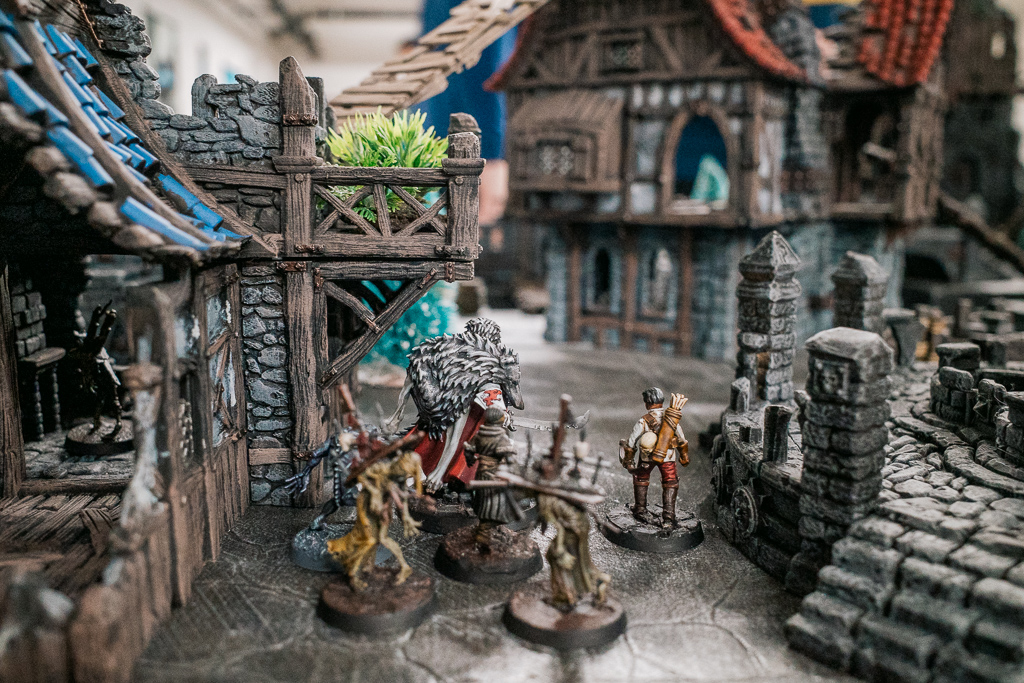
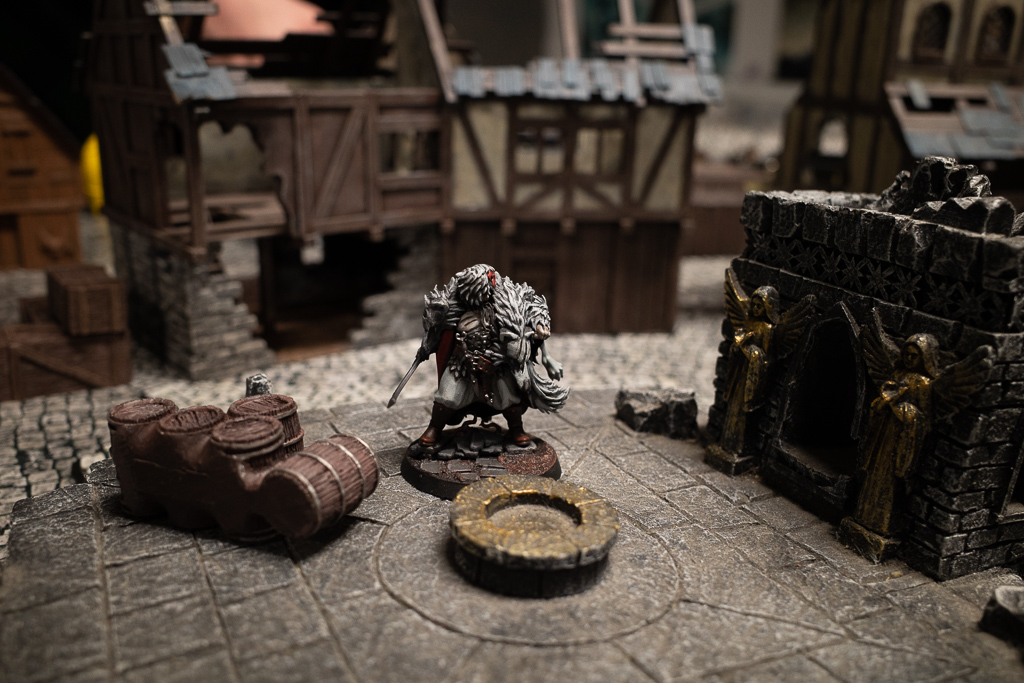
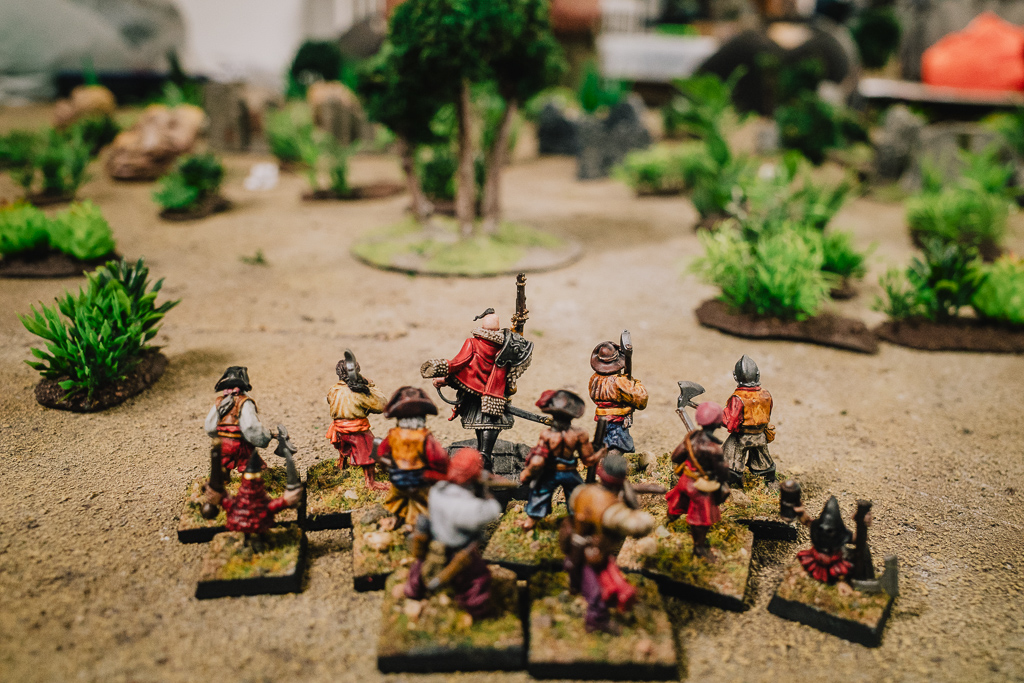
I came close to going the whole year without playing a single game of Mordheim, but a visiting gamer from Vancouver put the call out to see if anyone in our Mordheim league was free to play while he was in town. Of course I said yes. Another regular from the store’s Mordheim posse joined in, alongside someone who had never played a game of Mordehim before. We had planned to play 2-3 games, but we all forgot that multi player games usually take a while. We got through one, but it was a fun one.
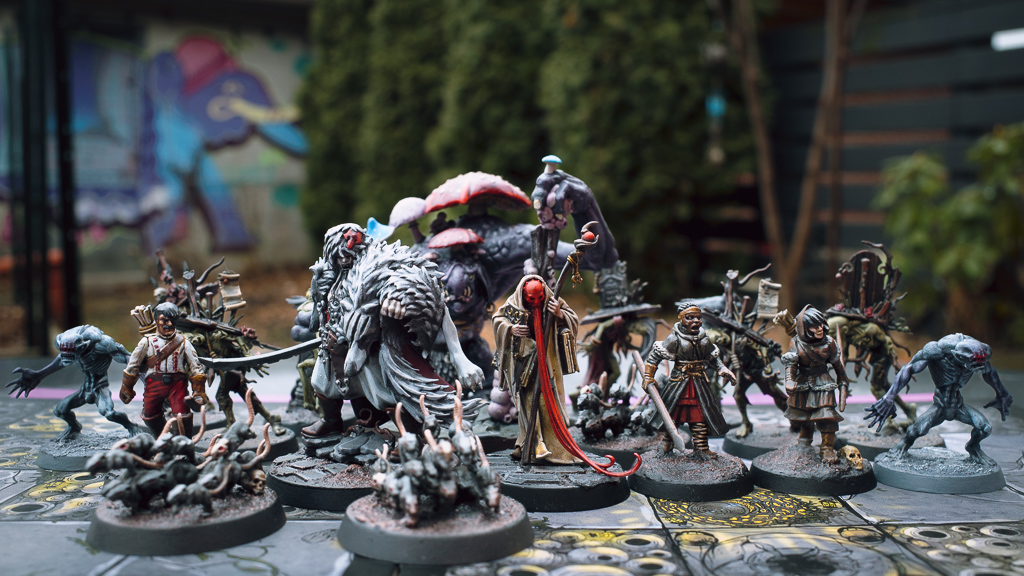
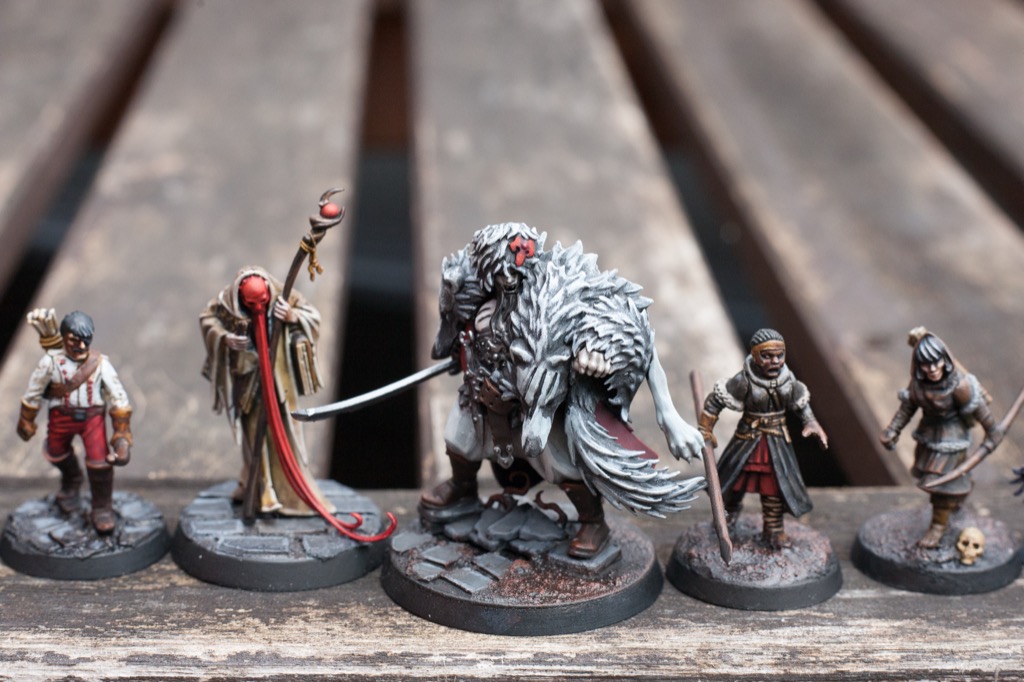
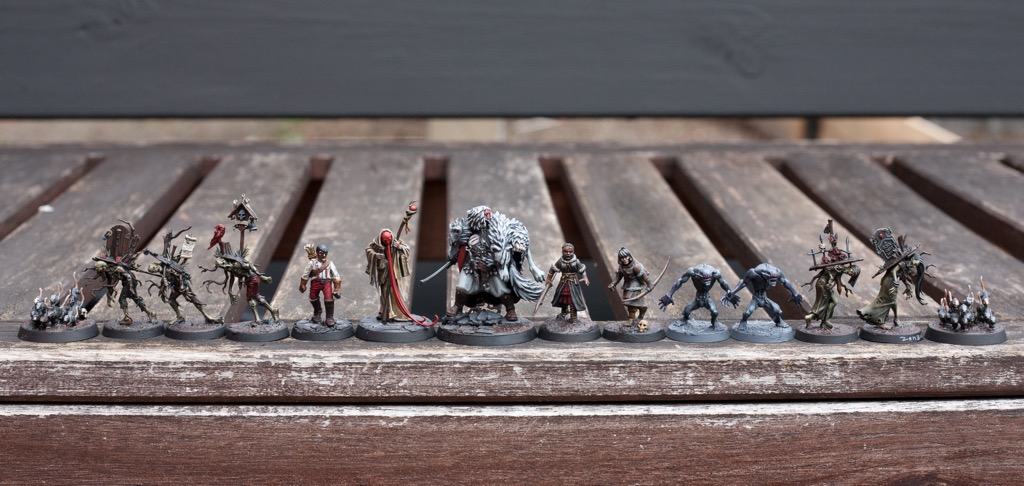
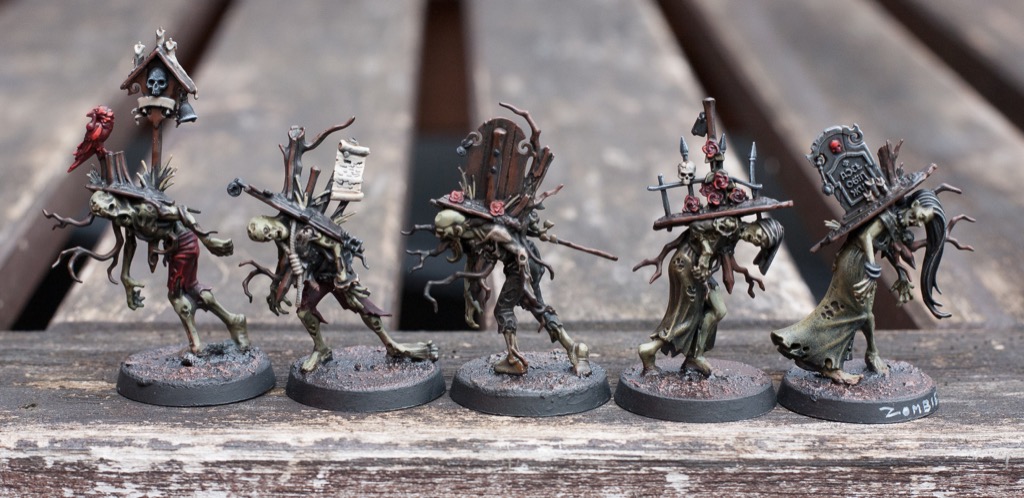
I used my undead warband again. They are the team I feel most comfortable playing. After the last campaign my vampire leader, Lord Volchyakrov, was killed. I was tempted to try and paint a new vampire before this game, but didn’t have the time. I have to assume the necromancer Gallean the Mad helped bring the vampire back to un-life. As usual, I prioritized bodies over equipment. My warband consisted of my vampire, a necromancer, and 3 dregs, who were accompanied by 2 ghouls, 7 zombies, and a dire wolf. (Though in my case my dire wolves are dire rats.) I actually have wolf models now I should build and paint. Maybe before the next big league or campaign takes place.
We played a pretty crazy scenario, themed for the holidays. There were 6 building that contained presents for us to steal. Each building was guarded by d3 peasants armed with spears. All the units in your warband were carrying a torch they could use to set these buildings on fire, after they had fist been explored (and then number of peasants inside had been determined). The game ends when all the buildings are burned down, or the last team routs. The session had some real old-school D&D energy. It felt very violent and chaotic.
The peasants proved to be surprisingly tough. In true Mordheim fashion, one peasant held off my dreg and a zombie for basically the entire game. Another peasant single handedly held off a team of dwarven slayers. That old man was only killed when my team set his home on fire and it collapsed upon him. (Killing a few dwarfs in the process.)
I hadn’t played Mordheim in ages, but I quickly remembered how it all worked. The game has lots of little edge cases, but its core is quite simple. Our new player, who had only played 40K, really loved how evocative the game and its rules were. It really is the gold standard for narrative gaming. (Though perhaps Trench Crusade will soon carry that torch?)
Hopefully we’re manage to get another game (or more) in before the holidays season is over.
Since I last wrote about Mordheim I have played through two 10-game campaigns. The first was with the Undead warband feature in my last post about the game, Volchyakrov’s Wolves. The second campaign was set in Games Workshop’s Lustria setting, their take on Amazon adventures. I played a Pirate warband, the Motley Crew. After playing several games of Mordheim I can now see its appeal. Mordheim does narrative war gaming incredible well. It is the model and inspiration for so many games that follow.
Mordheim is meant to be played as a campaign, and those campaigns begin with the creation of a warband. You start with a leader and recruit a few heroes and henchmen to join them. In most cases, your starting crew will feel underpowered. The dregs in my undead warband were incredibly crap out of the gate, as were the cabin boys of my pirates. The expectation of the game is your crew’s power will grow over the course of a campaign. (Though injury and death is a very real threat.) You’ll want as many heroes as you can take, as they can explore Mordheim after each game in search of treasure. You should round out your warband with henchmen only after recruiting a full compliment of heroes. I would prioritize bodies over equipment for your first games. Mordheim is a game that rewards ganging up on your foes.
The rules of the game are old-school: roll to hit, roll to wound, roll to save, roll to determine injury, etc, etc. Like a lot of Games Workshop games, there is often a lot of rolling to accomplish nothing. The saving grace of Mordheim is you are generally rolling 1-2 dice, rather than 10-20. Once you’re familiar with your warband the game will play fairly quickly. The core rules of the game aren’t that long: and there are some good cheat sheets out there. The rules aren’t always as clearly written as one would hope, but in the year 2024 we have 25 years of discussion to help us fill in any gaps.
Games are split into a recovery phase, movement phase, a shooting phase, and a hand-to-hand combat phase. You need to set up all your charges and reposition all your models before getting into the nitty gritty of combat. Shooting can be effective, but this feels like a game where your crews are meant to get stuck into one another. Most models have one wound. When they lose that wound, you’ll roll to see if you’ve knocked them down, stunned them, or taken them out of action. You don’t need to roll to hit a knocked down model, and if you attack a stunned model it’s automatically taken out of action. Ganging up is the name of the game. My (pretty useless) zombies ended up being surprisingly effective in that first campaign. My pirate crew consisted of a lot of mediocre men, but would often get the kill through teamwork. Most games will end with a warband routing. When you lose 25% of your team you’ll need to make rout tests, rolling under your leader’s leadership skill. You can also choose to voluntarily concede at this point. You want to avoid making injury rolls, so taking the loss may still put you ahead in the grand scheme of a campaign.
After a game you run through a post-game sequence, the beating heart of Mordheim. To start, you will check if downed models are dead, injured, or totally fine. There is a lot of flavour in the injury tables for heroes. Your out of action model might end up in a pit fight, sold to slavers, or other such nonsense. My vampire lost an inch of movement and can’t run because of leg injuries. Your models will gain experience, and in turn gain levels. The initially useless cabin boys in my pirate warband were quite effective by the end of the game. Your heroes can explore Mordheim, rolling on big tables to figure out if they discover anything exciting beyond the Wyrdstone that’s central to the game. Finally you will use the income you’ve earned to buy new equipment for your crew, recruit more models, and get ready for your next game.
The mechanics and gameplay are a small part of what makes the game really compelling. John Blanche did all the art. The various warbands are all very flavourful. This is a seriously vibes-forward game. The game lends itself to maximum creativity. There are lots of beautiful warbands and fan art out there if you go looking.
This winter the Sword & Board is running a Mordheim campaign. Mordheim is a beloved skirmish game made by Games Workshop many years ago. Players each control a warband exploring the ruins of the Mordheim, collecting the remnants of the meteor that destroy the city, Wrydstone. The game is famous for its John Blanche art, flavourful setting, and its rich detailed campaign system. As you play Mordheim your warband will grow in power game, end up maimed, likely both. I have wanted to play Mordheim for ages, and this league presents the perfect chance to do so.
To start, I needed a warband. I wanted to reuse as much stuff as I owned as possible, and settled on playing Undead. This gave me the chance to continue painting my minis from the Cursed City board game, and build a few extra people using kits and bits I owned. I ended up painting more minis than I need to start, but I have options depending on the direction the campaign takes my team.
Khaimpo the Wretched finds himself in the employ of the Vampire Lord Volchyakrov, exploring the ruins of Mordheim. He is joined by the mercenaries Vrouwer Koning, Humeurige Van Dame and the coward Peters Van der Peters: the dregs of proper society. Zombies, Dire Rats and degenerate Ghouls round out this decrepit warband.
I’ve played one practice game of Mordheim, which was a lot of fun. The rules are … old school: there are tables, lots of dice rolling, and rules scattered throughout the book. Warcry feels like it’s the stronger game, but people aren’t playing Mordheim for its tight game design. Mordhiem is a narrative game, and its the story of this campaign I’m looking forward to seeing unfold.
Getting ready to play Mordheim has been a lot of fun. I enjoy painting, and having the activity be focused around play makes me enjoy it all the more. It can be easy to lose steam with bigger painting projects. Skirmish games present a nice opportunity to build, paint, and play quickly. They are a great way to get into the hobby.