Whenever I say Warcry is the best game Games Workshop has made, someone always chirps up to reply that I am wrong, that title belongs to Blood Bowl. It was hard to argue about a game I have never played. Blood Bowl is Games Workshop’s skirmish fantasy football game. You are basically playing Jervis Johnson’s take on American Football. Now having finally played, I have to admit it is pretty wonderful.
My friends and I decided to get start a league. I grabbed the Imperial Nobles team, and a rule book. I more or less instantly regretted not just grabbing the starter set, as I could have sold one of the teams, gained a pitch and tokens, and come out ahead price wise. So, don’t make the same mistake as me. The Third Season of Blood Bowl has tweaked the composition of all the teams so you can field a reasonable team from one box. This small change is what got my friend excited about playing. It’s really what sucked us all in.
My friend had played Blood Bowl in the 90s, so helped the game move along. When I first looked at the rule book I felt there were a lot of rules to make the game go, something I mentioned to my cousin who played in twenty years ago. He scoffed and replied the game was easy! Now having played, I would agree. It’s all quite intuitive. It does feel a bit like football. There was some looking stuff up here and there, but we got into the swing of the game quite quickly.
Blood Bowl is played over two halves. One team will kick the ball to the opposing team: place the ball on a square and roll to see where it ends up and bounces. It’s then up to the other team to grab the ball and move it up the pitch. If you make it to the end of the field, the end zone, you score a touch down. You activate all your minis one by one until there is a turnover. There is a long list of cases that can cause you to lose your turn, but they all eventually boil down to: one of your models falls down or you lose the ball. When this happens play flips to the other player and they take their turn. Each half is composed of 8 turns in a normal game of Blood Bowl.
Your players can move, pass the ball, hand-off the ball, catch, block, secure the ball, and foul players who are knocked down. The actions do what they say on the box. Because you are trying to avoid turnovers, you will generally attempt safer actions first, before riskier ones.
Movement simply has you move down the pitch (a grid) a number of squares as dictated by your move stat. You can rush up to two times, letting you move an additional square each time on a roll of 2+ on a d6. But if you roll a 1 you fall over. In our game my fried Dylan’s catcher fell over getting into position. Play turned over to me, and my turn ended the exact same way. We somehow rolled 1s back to back when rushing. That’s Blood Bowl.
Adjacent players can block, attempting to attack the other player. There are custom block dice to roll that tell you what happens. Hopefully you push the person out of the way and/or knock them down. It’s possible you might get knocked down yourself. Like typical skirmish games there is an advantage gained by having more of your players adjacent to the combat. The offensive players gains strength for their friends, similarly for the defensive player. You roll one block dice if you match the opposing players strength, two if you beat it, three if you more than double it. The player with the higher strength choose the result. (So tackling stronger players is a bad idea.) A lot of the game is positioning to try and gain extra dice for your block roll.
Moving the ball down the pitch will involve passing, catching, and hand offs. The further you attempt to pass, the more difficult the dice roll required. Players have a pass stat, and need to beat their attribute score. Catching and picking up the ball require making an agility score roll. So you could make a perfect throw, but still fumble the catch. You could run to pick up a ball off the ground and fall over. That’s blood bowl.
The secure the ball action is new to this edition of the game, a way to help teams with low agility gain control of the ball in a more conservative way. You secure the ball if you roll a 2+ on a d6, it doesn’t require a roll against your agility stat. The catch is the action triggers a turn over. It never came up in our game, but I can see how it would be useful if you have strong guys who can protect the ball and move it up in the subsequent turn.
After two halves the player with the most touchdowns wins. I lost my first game. That doesn’t matter. I had a lot of fun all the same.
Blood Bowl plays more or less exactly the same as it did in the 90s. An impressive piece of game design. The game is fast and feels really dynamic. There is a lot of back and forth due. Grid movement and no line of sight to worry about helps keep everything snappy.
We were playing sevens, a smaller version of Blood Bowl. You play on a smaller pitch with a smaller team and a smaller number of turns per half. It’s a way to speed up the game. The rules are basically unchanged. Was great, no notes.
I will report back once we have started playing our league and have played more games. Like Mordheim, the campaign system for Blood Bowl is apparently a source of much fun. Is the game better than Warcry? I’m not so sure, but it is certainly one of the greats.
This isn’t the focus of your article, but it feels really good to see someone saying that their longest campaign lasted 23 sessions over roughly a year and a half. Way too many people seem to believe that the average gamer plays every week, without stopping, for years. — @vaskrag.bsky.social
It’s true! We can’t all be James. Those 23 sessions felt long and epic, and become more mythic in my head as time passes. The most successful campaign I have participated in was Pahvelorn. We managed to play weekly for the course of year and change. Even then we were imperfect, and that game hit 46 sessions before things petered out. When I ran Gradient Descent we started off strong, the first 7 sessions happened weekly, but the following 5 happened over the next 4 months! I have many stalled out campaigns under my belt. One day I’ll post about running Silent Titan, or Deep Carbon Observatory. Those games were fun, and we played for weeks … until we didn’t. There is nothing wrong trying and failing to get a game going. I appreciate when people speak plainly about their failures, along with their successes.
I always laugh when people talk about whether games support high level play, that this or that mechanic is broken past this or that level. Who are these people that play games that go long enough any of that matters? I can probably count on one hand how many characters I’ve played that have made it past level 3.
It can be challenging to keep a steady schedule, but I really do believe that the ability to do so is what leads to these campaigns that last for years and years. The game becomes a part of your life, you schedule around it the same way you might schedule around a soccer league. To quote myself:
Games stall out because people can’t get their schedules to match. Picking a schedule and sticking to it is really the only “mechanic” you need for long term play. This is The Fundamental Theorem of Gaming.
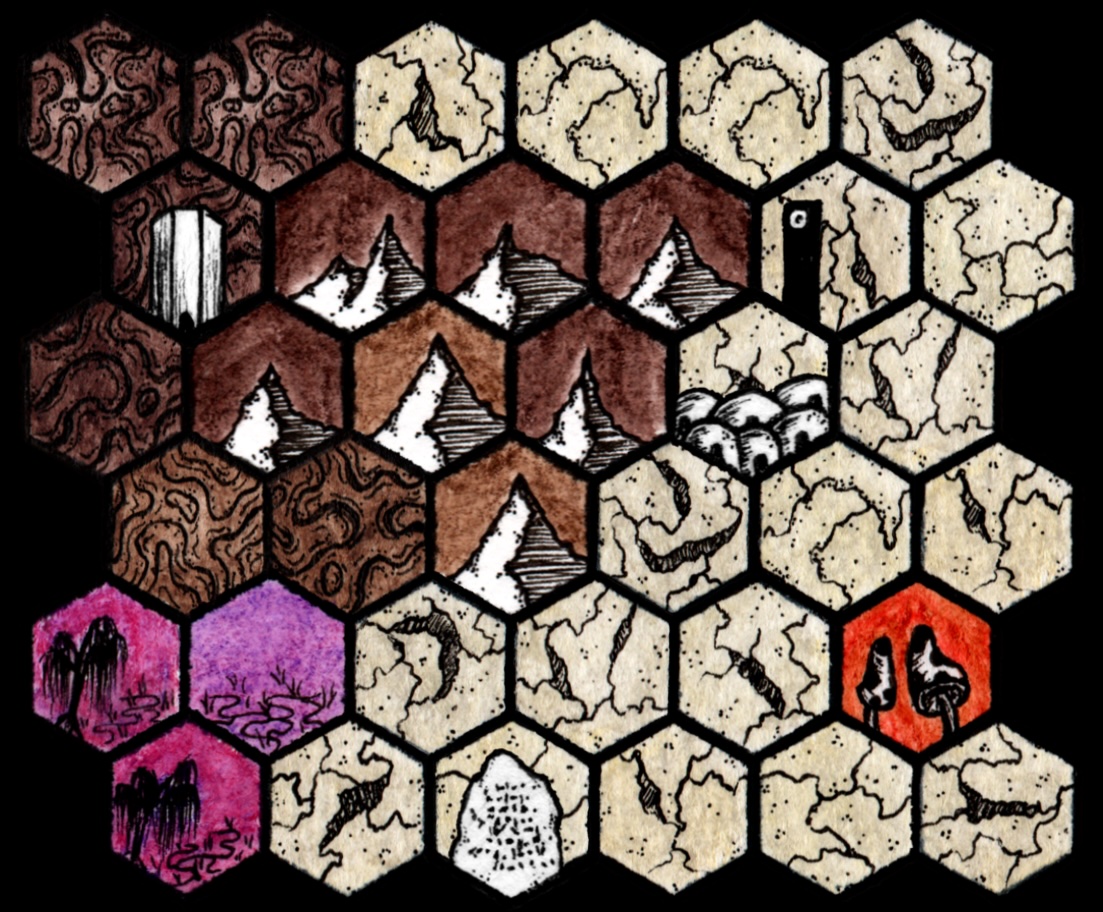
Masters of Carcosa is the longest campaign I have run. My friends and I played 23 sessions, starting at the end of 2014, ending near the start of 2016. The game began after Brendan took a break from running Pahvelorn, likely to focus on his PhD. I hadn’t run a game since I was a kid! Playing in Brendan’s Pahvelorn campaign was hugely inspirational, and has informed how I have run games since. With Pahvelorn we were exploring a megadungeon, with the occasional trips out to explore the larger world. I wanted to run a hex crawl, but wasn’t completely sure how to start. In 2014 it didn’t feel like there nearly as many resources available compared to talking about dungeon delving.
My plan was to run a game set in the world of [Carcosa][], a gonzo setting by Geoffrey McKinney, originally published as a small zine, in the style of old Judge’s Guild hex crawls. I was running from the fancier version put out by LotFP, which featured Rich Longmore’s incredible art. We learn about the setting via hex descriptions like the following:
Village of 240 Yellow Men ruled by “the Fullness of Benedictions,” a chaotic 10th-level Fighter.
2 B’yakhee.
On a natural stone outcrop is a 2 high statue of Hastur,
made of an indestructible dull black stone. In front of it is a human skeleton. If anyone touches the statue, he will be cursed to carry the 40 pound statue with him always. The only way to lift the curse is to give the statue to a willing recipient, but no one wants the vile thing.
The book was pretty polarizing for lots of reasons, one being how phoned-in some of the hex descriptions are. I loved it all the same. You would be surprised how far “2 B’yakhee” can take you in a session. I enjoyed improvising off the small hard facts presented in the book and my own notes.
At the time I wrote a second review of Carcosa, after having run the campaign for few sessions. It’s interesting to look at the review now, as it focuses almost exclusively on how I went about setting up the campaign we would play. But how do you even run a hex crawl?
Sandbox play is long term play. A hex crawl is about exploring the world, and that’s hard to do in an interesting or meaningful way in a handful of sessions. If there is one lesson to be learned about running a sandbox, it’s that whatever rules & mechanics nonsense you come up with to make your game go, none of it will matter if you don’t actually play. I was inconsistent when it came to scheduling the game, and it was likely the biggest reason we finally stopped playing. Players would regularly miss sessions because they thought we were playing the following week, miss a game because I had to push it out a week at the last minute and they already had plans, etc. People will tell you that this or that game isn’t suited for long term play. “Mothership is only good for one-shots.” Bull shit. Games don’t stall out because the levelling mechanics aren’t interesting enough, or because high level fighters become too dominant, or the wizard knows too many spells. Games stall out because people can’t get their schedules to match. Picking a schedule and sticking to it is really the only “mechanic” you need for long term play. This is the fundamental theorem of gaming.
Related to the above, running an open-table will make it easy to keep a game going when people lead busy lives and can’t commit to regular play. For those unfamiliar, an open-table simply means there are no fixed set of players participating in the game. Session to session you’ll have a different roster of players playing. Masters of Carcosa had 16 players over its 23 sessions. Eric made every single session save 1, and the one he missed was over scheduling confusion, my mistake. Gus, Nick, and Dion were other core players, making most games. If we had kept playing Chris likely would have become another core player. Everyone else played a few games and moved on with their lives, dropping in and out. Brendan would require us to return to a home base at the end of each session, and I had the same rule for my own game. The players always returned to a safe settlement at the end of each session, which made the juggling of players work in the fiction. (Mind you, I think it’s best not to be too fussed about how Dwarf Icefingers suddenly appeared when he wasn’t in the dungeon last session.)
You shouldn’t prepare too much to start. Chgowiz says this best in his classic blog post Just Three Hexes, but this blog post didn’t exist when I started playing. Lucky for me, not prepping enough is how I live my whole life. I drew a mini campaign map focused on a smaller section of Carcosa, where I expected the game to begin before the players ventured off into the wider world. The players never left. They didn’t even explore all the hexes in my mini-map! A small region can provide years of play.
There is lonely fun to be had in prep, and you can often find ways to repurpose work you’ve done that will clearly never find the light of day, but it takes a lot of energy to keep a game going for a long time, so best to spend your time wisely. Prepping too much before you’ve even played a game feels like writing an elaborate backstory for your player character before a campaign begins. Good advice for players remains good advice for game masters: let things evolve over time.
You shouldn’t front load too much. When you finish a session, take copious notes. I would write recaps of each session, so I would remember what took place. Anything important for the future I would add as notes for the given hex. A throw away NPC can suddenly become crucially important. This is a more dynamic and interesting way to run a game—both for yourself and your players. You just need enough hard facts for the choices the players take to be meaningful. You can always build upon these facts as the game moves along.
When I shared the invites for my games on Google+ I would include rumours, things the players were made newly aware of, and reminders of loose threads from previous sessions. I maintained a Google+ post of all the open threads and rumours, so they wouldn’t forget about a weirdo they met in the wilderness, or a dungeon they might want to go back and explore. There was no overarching “plot” for the campaign. Everything that happened was player driven. For that to work you need a world without enough juice that there are different avenues for the players to pursue. In Masters of Carcosa the players were obsessed with destroying the Jale Slavers. There is a parallel universe where the campaign instead focused on exploring the Putrescent Pits of the Amoeboid Gods.
I would seed information about the world and its machinations wherever I could. NPCs would tell the players about nearby settlements, or factions they encountered in the wilderness. The players would find letters on dead bodies, discussing what was happening in the wider world. In one Sages in town would trade information for gold, or send the players on little quests. I made an effort to try and always reinforce that there was a lot going on completely divorced from the players and their immediate actions.
I have written on this topic in the past, but it’s a mistake to be too coy about what’s going on in the world, what your factions are up to. There is a fine balance here. Some of the fun situations that occurred during the campaign came from my players being unaware of what was happening off camera. They set one of the villains of the game free in the first session. Many sessions later the same villain returned to recapture the base he was imprisoned within. Later still the players would liberate that base, unaware they had set this all in motion until after they had succeeded. A different faction was exploring the dungeon the players had no interest in exploring. They would find the occasional missive or hear a story about the cult looting in their place, but only if they travelled to areas where such news would be more likely to be found. I had another faction messing around in the region, Snake Men who had travelled forward in time to save their people. I was so secretive about their machinations the players never really knew they existed, just brushing up against the aftermath of their actions. If we had played longer, perhaps this would have made for a good reveal. Or perhaps the lack of information would continue to make it too difficult for players to make any meaningful choices about how to engage with them. Sometimes it’s fine for things to be a little gamey. I eventually moved to sharing what was happening off camera in my Carcosa-style recaps that featured hex descriptions and encounter tables.
I enjoyed being as surprised as my players when it came to what would happen during a session. I made extensive use of random tables to make the game go. This was perhaps partly an artifact of how terse Carcosa is, partly due to my own terse notes, and partly just my own preferences for how I like to run games. With wilderness exploration this feels like the most effective way to drive the game without relying on laborious prep. Groups of hexes would share a unique encounter table. The area around the players starting base began with: slavers and escaped slaves, a merchant caravan and their guards, bandits, Spawn of Shub-Nigguraths, and a unique spherical hunter robot that captures people in the wilderness to take back to its base. This table already tells a story about what’s happening in the region.
My secret sauce was expanding on these tables as we played the game. If an encounter with bandits was memorable, and they didn’t kill them all, they would return as a future entry on the encounter table. When the players desecrated a space alien tomb, stealing some armour, I added the Space Alien Strike Force who were trying to track down the culprits to the encounter table. This group ended up becoming an important mini-faction in the game, and close allies of the players. On multiple occasions the players released giant Spawn of Shub-Nigguraths, worshiped as gods, into the wilderness. Of course I added them to the encounter tables. It made the world feel alive when the players would bump into old friends or enemies, keep running up against factions they hated, or have to run away from giant god-monsters.
Players actions should impact their place within the world. If they are dirt bags to the slavers (as they should be) then the slavers will be dirt bags to them. I had a reputation system to track how the players were regarded by the various factions. I would give the players positive or negative reaction rolls modifiers based on their reputation, which was based on their actions in the game. I would stop rolling if it felt like their actions had firmly placed them on a faction’s good or bad side.
Factions should have their own goals, sometimes at odds with the players, sometimes at odds with other factions. They make progress towards their goals unless actively impeded by the PCs. The world should feel like it’s moving independently of the players. I was running things so long ago it didn’t feel like there was an obvious system to steal. Nowadays I would just use the rules from Mausritter. There doesn’t feel like much else to say here, they are so simple and good.
I decided from the start that in the barren wastes of Carcosa travelling through any hex would be as difficult as travelling through any other. I didn’t want to fuss around with different travel times for different types of hexes. In Carcosa they all felt roughly the same. Brendan had written a post called Solipsistic Hexes that may have been some of the inspiration for this choice. A decade later, Mythic Bastionland takes the same approach. There are interesting choices to be had if your setting has roads, or varied terrain that encourages particular routes through the wilderness, but I think you can get far just having hard barriers the players need to navigate around. In my Carcosa game I had huge valleys, mountains, toxic rivers, etc, to block the player’s way.
The rules for how I ran wilderness exploration were quite short:
There are 4 wilderness actions: move, camp, hunt & forage for food, and explore. Characters may take two actions during the day, and one at night.
The DM’s map of Carcosa is divided up into 10 mile hexes. There are no short simple trips through the wilderness. The world of Carcosa lacks proper roads, with much of the planet a rocky badland. Moving allows players to travel from hex to the next. (Some hexes, like those covered in mountains or filled with swamps, may require characters use more than one move action to get through.)
Characters generally rest at night by Camping. Skipping a camp action puts the characters at a -2 for all rolls during the following day.
Hunting and Foraging for Food can be done to attempt to find food (rations) in the wild.
Exploring will reveal a random unknown location within the hex. The players may instead attempt to find a specific location they know is somewhere in the hex. If the location is well hidden, doing so requires the character with the highest wisdom score roll under their wisdom.
Re-reading this now, it isn’t that far and away from what Chris would settle on in Mythic Bastionland. It’s a shame he hadn’t written his game at the time, I could have just started from his work. After each action the players would roll an overloaded encounter die to see what complications arise. I settled on encounters on the 1 & 2, a complication on a 3, lost on a 4, and safe on a 5 or 6. These rolls ended up being a big driver of action in the game, because as noted above, each region had their own wilderness encounter tables, and they tied back into the game world.
And that was the game! The players would plan out goals for the session. Wander off into the wilderness. Get lost. Fight bandits. Rescue slaves. This was all driven from this loose process and framework for play. I started with almost nothing, and figured it out as I went along. You shouldn’t let a fear of doing it wrong stop you from playing. It’s honestly pretty hard to play wrong.
And so we come to the end. Did I know this would be the last session of the campaign? Hard to tell, but I posted about it going on hiatus shortly afterwards. This session ended up being a fitting conclusion for the campaign. Gus and Eric were both in attendance. We ended on real cliffhanger. The whole campaign had been building towards this moment: the party decided to attack the Jale Slaves based.
I had shared a dispatch from Space Alien Strike Force after the previous session, a couple weeks before we played, which might have nudged them towards this showdown.
The session ended with a giant mass battle, which I was once again unsure how to play out. I know I was tracking how many rounds it took to win the fight, and that would tie into casualties and other post-fight shenanigans. Maybe I have notes on G+ somewhere. Oh wait.
My map of the slaver’s base is incomplete, which is pretty funny since it was obvious early on that this was the one thread the party was most interested in pursuing. As it stands, my not finishing things worked out alright in this case.
Masters of Carcosa is the longest campaign I have run. 23 sessions, starting at the end of 2014, ending near the start of 2016. Sharing all these old play reports has been a lot of fun. I haven’t thought about this campaign in some time. Revisiting it now, all these years later, has me wanting to play Carcosa once again. It really is the fucking best.
All troop movement occurs via the large “front” door. The aliens suspect there must be at least one other exit, unless the slavers are idiots.
12 raptor riding guards always patrol the exterior of the slaver base. They think there are at least 18 raptors, based on how the guards rotate in and out of their shifts. They think they can get better intel with more time.
16 Jale Slavers took a group of 28 slaves North East. There are currently 13 slaves that remain chained outside.
There have spotted one person that they suspect might be the leader. Unlike the rest of the slavers he was shirtless and wearing a large lizard’s head as a helmet.
There has been too little troop movement for them to guess at troop size. They think there must be at least 60 slavers in the base, but likely more.
Recap:
The party mills around in Invak for an extra two weeks, prepping for a big battle, thinking hard about what to do next when it comes to the slavers.
Further news from the Space Alien Strike Force reveals that some slavers have returned with additional slaves (13 Red Men), 17 Jale Men look to have come to join as new recruits, and that’s about it.
The party decides, “Fuck it, let’s just kill those mofos.”
They ride out with an army of 120!
A make shift pontoon bridge is built to cross the river.
They leave part of their force behind, and approach with the most bad ass looking laser pistol wielding men and women.
They approach the slaver citadel, and begin making demands of the guards out front.
That doesn’t go well: laser fire is exchanged.
Normangina manages to blow a hole in one of their “arrow slits”, exposing part of the base further up the mountain.
They leave their demands staked to the ground and flee.
The party makes camp, and waits for a fight that doesn’t happen. The next day they advance with their whole army on the slavers base.
A slave is sent out from the base to parlay with the party. He informs them they must flee and never return. “the Overqueen of Small Petals” is an evil women, clearly one steeped in the ways of vile sorcery.
The party isn’t having none of that. They decide there isn’t much point waiting further, and launch their big attack.
One group of their number head up through the hole Normangina created earlier. The other bust through the front door after a bazooka is fired to make the entry easier.
The army of Invak and Jahar pour into the base.
The party come face to face with a group of 6 raptors and their riders.
A vicious fight where several of their hechmen die, and Normangina is knocked out cold. (Though not before hoping onto the back of a raptor and commanding it to bite someone!)
Dion’s character (name?) is almost killed, but the injury just makes him angrier. (Hulkamania Save vs. Death Rule!)
The party is victorious after 4 rounds of combat.
Orange Julia revives Normangina with a desert lotus potion.
What will happen to our fearless heroes?!
Comments:
Ramanan S (2016-04-26 04:29): I wanted to write it out before I forgot what happened. Gus you’ve used two bazooka blasts. Everyone else who still has weapons with explicit ammo counts remember to mark off how many shots you have left. We ended in media res. Gus you can attempt to quickly tame the raptors before you end up embroiled in another fight. It took you 4 rounds to end that fight. So that effects what your next encounter will be FYI.
Chris G (2016-04-26 04:54): +1 for Hulkamania!
Ramanan S (2016-04-26 04:55): First time that’s ever happened (natural 20 when making a save vs. death).
Logan McCormack (2016-04-26 06:06): I just love to read your game reports! :D
Gus L (2016-04-26 17:24): Oh yeah totally taming the raptors! We ride to victory! Also collecting a solid mob of extra combatants.
Post-Session Post:
The bodies of Jale Slavers lay motionless on the ground, their velociraptor mounts mill about confused. Fighting rages all about. The armies of Invak and Jahar have joined forces to fight the scourge of slavery once and for all. The fighting will be vicious. This day was coming: the Rainbow connection crosses the threshold of the Jale Slaver’s mountain citadel.
To be continued …
The game is on hiatus … for now! The Rainbow Connection fights the slavers for the last time. We will have to wait till next season to find out what happens.
This session was all about trying to make friends. The players had a zany scheme: dress up a slaver in the space alien amour they had stolen from a tomb in order to convince the space aliens it was in fact the slavers that were out there desecrating their holy sites.
They once again returned to the Space Alien outpost, no longer abandoned. They had returned to their experiments, making use of the deranged, spherical, hunter robot that stakes the wastes at night. The Carcosa book has this to say about the robot, which is what I used as the seed for my ideas for the this whole space and how all the parts fit together: “It will seek to abduct stragglers and take them to a small, hidden outpost to be shackled in close proximity to radioactive waste. Each hour spent thus requires a successful saving throw to avoid mutation.”
This is the session Asha Rey dies! I remember the session, but don’t recall if this was a surprise round followed by an instant kill due to the dice. Harsh if so. In my head this game was a real meat grinder, but there weren’t actually that many player deaths over the course of the campaign.
Wish I could remember the context for, “Chris P gets 15XP for just being an all around great guy.” He really was, though.
The party puts the space alien armour on one of the Jale Slaver bodies they killed and jam the body in a barrel with some salt and rocks to try and stop the body from decomposing too much.
They travel south towards the space alien outpost, no looking much less abandoned.
A group of space aliens—those the party “freed”—have gone to work repairing the outpost and continuing their experimentation.
The spherical hunter robot exists to bring specimens to the wastes: they will consider turning it off, but promised to stop sending it West towards Jahar and Invak.
The Aliens are far stranger than the ones you have met thus far. They seem cold and emotionless.
The party gives them the heads up that people on Carcosa are fucked up, and then head on their way after learning the space alien strike force headed south east (towards their leaders tomb)
As they get closer they see the same giant translucent T-Rex they saw last time they explored the tomb. It doesn’t see them and wanders South.
The space aliens are nowhere to be seen, but look to have headed south, so they head that was as well, taking care to avoid the dinosaur.
They come upon the poisonous swamps, which stretch out for miles. The aliens are long gone, so they decide to head back and wait for them to return to the tomb.
On the way back they spot 4 savage Mi-Go who dive out of the sky.
Asha Rey is killed instantly — RIP
The fight quickly turns, as the party manage to kill the Mi-Go one after another.
They camp near the alien tomb, waiting for the space aliens.
The aliens come upon them in the middle of the night.
They show the aliens the armour on the slavers body.
The space aliens are disgusted with what was done and will join their fight against the slavers.
Led inside to sleep, but party elects to sleep outside
No overnight drama, they awake safe and sound.
The Space Alien Strike Force head North, planning to scope out the slavers.
Treasure:
The good will of the Space Alien Strike Force
Chris P gets 15XP for just being an all around great guy.
Comments
Ramanan S (2016-03-16 04:09): Let me know if i’ve missed anything. I’ll make an event thread for the next session. We can do the stuff that happens between sessions there.
Dion Williams (2016-03-16 08:57): I was tempted to draw a picture of Asha-Ray exploding with the Mi-Go coming though “Chest Burster Xenomorph” style.
Ramanan S (2016-03-17 05:27): Dion Williams do it!
More slaver killing antics, as the party heads north to investigate rumours of slaver activity. The party had liberated the Orange Man citadel North of their home base of Invak many sessions ago, but hadn’t returned in some time. This was another fairly vanilla session, but was a good setup for the next one, as they had plans for the body of one of the dead slavers.
Though the party was still completely uninterested in exploring the Putrescent Pits of the Ameboid God, I wanted to make it clear that there was another faction exploring the space in their stead. A note they find amongst the dead indicates someone out there was in search of as many slaves as they could get a hold of to explore “the pits”.
My notes for the first floor of the dungeon describe two factions. Lawful Yellow Man cultists who are trying to prevent access to the pits, and Chaotic Purple Man cultists that worship the Ameboid God and want to venture down. There were two entrances down to a level I never bothered mapping (smart!), once guarded by the Lawful cultists, the other a secret entrance discovered by the Purple Men. These Purple Men cultists were operating in the wilderness, though North of the players, so they never really encountered them.
My notes of the dungeon from that time. Maybe I’ll revisit this one day:
There are two levels of caverns above the actual Putrescent Pits of the Amoeboid God. These natural caverns were built by the Snakemen thousands of years ago to cover the actual pit that leads to the Amoeboid God.
Who is here? Ameboid God Cultists. (Two factions: one inside the pit proper, the other trying to find their way down.) Mushroom Men. Space Aliens. Irrational Space Aliens. Primordial Ones. Shohgoths
The pit travels from level 3 all the was to the lowest levels of the dungeon, terminating at the giant Ameboid God. Several entrances to other levels via the pit.
God is several (hundred?) feet below the lowest level
Rival cults distributed between levels 3,4,5
Shogoths on lower levels
Aliens on 5,6,7 fighting irrational aliens
Fungus Men distributed throughout?
Primordial ones 8, 9 battle shogotths
Yeah, that could have been a fun time too.
Players:
Eric Boyd: Orange Julia - Orange Women Fighter
Chris P.: Bone Crone - Bone Women Sorcerer
Dion: Asha-Rea, Ulfire Women Fighter
Recap:
The party leaves Invak and heads north to Investigate rumours about more slaver activity.
They are accompanied by 20 Bone Men from Invak, who will reinforce the citadel to the North.
At the ford where the party normally crosses the river they spot two fish like dinosaurs.
After some investigation it looks like they have just fed, and ignore the party
The citadel welcomes the party. They inform them of two settlements near by that are friendly to slavers: a citadel of Blue Men to the North, and a Village of Green Men to the North East (South of the Putrescent Pits of the Ameboid God)
The party decides to head to the Green Men village, along with two soldiers from the citadel.
Along the way they come upon 13 Bone Men, and 14 slaves manacled together.
The party skirts around and rolls down some rocks onto the slavers below, killing one person and somewhat blocking the path forward.
A big fight breaks out!
The Bone Crone is wounded, but manages to survive a blast from a laser gun.
The party manages to fall back and pick off the slavers in smaller groups, finally killing them all.
The party leads the captured slaves back to the citadel, where they sleep for the night.
They head to Invak in the morning.
They dig up the old space alien armour, which they plan to put on a dead slaver and present to the space aliens.
Treasure:
13 dead slavers can be claimed for the slaver bounty (1300 GP)
14 slaves freed (1400 GP)
2 Laser Rifles (“long” range, d10 ammo die, 2dCarcosa damage)
13 Obsidian Swords
13 Black / Brown “Leather” armour
14 manacles with chain and two sets of keys
200’ of strong rope
20 bone spikes
A letter requests “as many slaves as are currently available”. A price of 50GP per slave is mentioned, some sort of bulk rate. “Must be reasonably able bodied, as they are to be sent down to explore the [putrescent] pits [of the ameboid god].”
Comments:
Eric Boyd (2016-03-01 17:37): And two laser guns, d10 shot die, if I recall correctly.
Ramanan S (2016-03-01 17:38): Ah yes you are right!
Bryan Mullins (2016-03-01 19:44): Nice one you all!
Chris P. (2016-03-02 04:05): Gus L The tidbit about us finding a Jale slaver corpse and preparing to deliver it next session with the armor is probably relevant to you.
Chris P. (2016-03-02 04:09): Also of note, that letter requesting the slaves, and buying at bulk rate, some jerk is REALLY interested in exploring the pits of the amoeboid god. We should look into this. Whomever is getting the Costco discount from the Jale slavers is not somebody I think we want breathing.
Gus L (2016-03-02 06:46): Chris P. Indeed it is - with a day more notice I will certainly be there - I don’t mind giving up the armor for friendship and protection from the alien death squad.
Another session with no treasure, which was starting to become a point of tension with the players. In my mind Carcosa was really grim and grotty: rich PCs didn’t make sense to me. In hindsight, I think we could have made it all work. Dark Sun imagines the fighters raising armies and becoming warlords. This was a direction the PCs had started to think about. We could have leaned into that more. Live and learn.
The session was another zany one, with a Godzilla-esque monster destroying a town and escaping into the wilderness. Of course the monster Yog would end up on the wilderness encounter table.
Dion joined late, and caught the end of the mayhem.)
Recap:
The party heads west towards Torok, to investigate it’s relationship with the Slavers.
The trip West is uneventful.
They arrive in the evening, and decide The Bone Crone will play Queen Zelda, the Bone Men henchmen her guards, the rest of the party her slaves.
The towns people are willing to buy her story, and put up their illustrious host in what amounts to a fancy hovel.
The party visits a nearby bar and proceeds to buy boozes for the towns people.
They learn about the strange creature Yog that lives in the centre of town, that it is placated by a steady diet of slaves and the sweet singing of maidens of the village, and that the town buys slaves from the Jale Slavers.
That’s enough for the party to decide it’s time to burn this mother down!
They pay some patrons to get the word out to the militia there are free booze going around at the bar.
They investigate Yog and come up with a plan: they will torch the bar and hopefully a good chunk of the towns militia, kidnap the singing maiden, and book it.
This more or less works out: they are stopped by 6 towns people, but 2 of that group are convinced this whole Yog thing is really dumb, the remainder are vaporized, with one survivor running off into the night.
The party hops the wall and watches Yog destroy the town in the moonlight.
They head back to Invak with two wandering monster encounters worth of complications!
Comments:
Chris P. (2016-01-27 02:57): No XP, right? (Since we didn’t actually get any gold)
Ramanan S (2016-01-27 03:19): Yeah … I need to see what people do for alternate / additional means of gaining XP. I feel like treasure hunting hasn’t really been a focus of the game for a while. Though the initial slaver animosity may have been due to the bounty on their heads.
Gus L (2016-01-27 03:45): I would say Ramanan S that while treasure might not be the game’s focus neither is leveling. The rules are clear, the only thing I’d say is that when we finally sack these town we should get gp value for supplies and useful properties seized.
Chris G (2016-01-27 05:26): How about giving an XP award for discovering a new settlement? Your game has a fair amount of exploring/getting lost.
Chris P. (2016-01-27 20:03): Gus L If the reward for the game has reflected something that is no longer the focus of the game, then the reward should either be removed or changed. If the intent is to stay first level/low power forever, then we should remove all pretense otherwise and eliminate the XP mechanic entirely.
The players decide to head East, further into the territory friendly with the Jale Slavers. The town the players learn about, Joi, may have been lifted straight from an episode of Masters of the Universe. As sessions go this was pretty straight forward. Lots of chatter in town, and then an encounter in the wilderness. It feels weirdly short reading the re-cap below.
At this point I was so far behind on writing my Carcosa recaps that I stopped! I should try and do it retroactively from my notes now.
In town the Bone Crone examines the dead Bone Men bodies, brought back from the snake men ruins.
The party debates for some time on what their next course of action should be, before deciding to leave the snake me ruins alone to explore the slaver friendly towns to the East.
The journey is uneventful: the party makes it to Joi unmolested
They decide to set up a fake camp to lure people out of the town, who they hope to capture.
Sure enough, a group of 10 Orange Men and Women make their way towards the campsite.
The party wait for them to get close, than attack.
Their apparent leader is knocked out in the course of battle, their second in command vaporized. Both leaders are women.
The remaining men are captured, and marched back to Invak.
Notes:
The captured orange men reveal the following: in Joi men are forced to work as slaves in underground mines while the women live in luxury in the beautiful city above.
Comments
Ramanan S (2015-12-29 03:04): Let me know if I am missing stuff please: I waited too long to write this up.
Eric Boyd (2015-12-29 03:16): What did the Bone Crone determine again?
Ramanan S (2015-12-29 03:20): Ah yes, the dead bodies have decomposed to a point beyond what one would expect. They look and smell like they have been dead for weeks, despite being newly dead when they were brought to town. (When you guys were fighting them they appeared some what gaunt, but otherwise seemingly normal looking.)
Chris P. (2015-12-29 03:22): You forgot me. I sad now.
Ramanan S (2015-12-29 03:23): Ah yes: you beat me to my own game.
Chris P. (2015-12-29 03:23): Also, Ramanan S they had the sensation of some kind of bad magic (or the equivalent of some other unknown force) that I had no familiarity with at all.
Ramanan S (2015-12-29 03:24): Yes that’s right: the Bone Crone feels the mark of sorcery over all of this, but is aware of no such ritual.
Chris P. (2015-12-29 03:36): We also found no biological markers inside of the bones or anything, at least not that we could identify. If there was any sort of wound reflecting what turned them into the monsters, it was lost among the many wounds we inflicted upon killing them.
Chris P. (2015-12-29 03:37): Also no more radioactive than anything else.
Eric Boyd (2015-12-29 03:40): Earworms or similar parasites would be really obvious with Bone Men, one presumes.
Chris P. (2015-12-29 03:45): Hmmm, BY JOVE, Eric Boyd you may have it! MUSIC! Ramanan S were they ever humming or moving unusually, like they were rocking back and forth or something?
Beloch Shrike (2015-12-29 03:53): There was a session tonight? I never got an invite.
Ramanan S (2015-12-29 03:53): No this was from last week. I just never wrote up the recap. I’m in holiday mode.
Eric Boyd (2015-12-29 03:56): Chris P. I was thinking literally, not metaphorically: http://memory-alpha.wikia.com/wiki/Ceti_eel But you might have something there…
Chris P. (2015-12-29 04:29): Eric Boyd yup, I knew, I just will use any excuse I can get for a pun. (Bonus points if it produces a good lead.)
Ramanan S (2015-12-29 06:47): Music would be cute, but no they were basically totally stationary when encountered.
The previous session the players rolled a 1 on the Hazard Die when travelling back to town. We didn’t want to play out the encounter at midnight, so I told them it’s how the session would start. I had an idea in my head: the blue men the players had saved were actually bandits! The session opened with a fight through the town.
A circle of Bone Men stand watch around ancient Snake Men ruins. They exist in a state of undeath, and will not attack the party, but simply scream when they spot someone.
The Bone Men the players encounter were a magical trap guarding the now reoccupied Snake Men ruins. They surround the ruins and warn the Snake Men when people approach. The Bone Men were those taken from the Castle of Decline. If the campaign ran longer I think the players would have done more with this thread, but as it stands these ruins would remain unexplored.
The lack of treasure in most of this game was a running joke the entire time we played. I wouldn’t change a thing.
The 3 injured Blue Men from last session were in fact bandits!
Their leader Aboye killed the person who runs the towns infirmary, and ran off into the town to try and flee with some supplies and a new weapon.
The party aides in the capture of the bandits, killing the leader.
The town guards execute the other two bandits
You fear the incident may play into the towns already existing rampant xenophobia.
The next day the party decides to head to Invak, but travelling towards the Snake Men ruins first, to investigate the strange bone man sightings.
On the way there, they bump into the Space Alien Strike Force, which has been laying low recently.
It turns out they had been exploring to the East, in the towns the party rarely frequents.
Many towns to the East are friendly with the slavers—someone has to be buying the slaves, after all
They think the party are foolish to be heading towards the Snake Men ruins—they seem to be superstitious when it comes to the Snake Men
The party continues on, coming upon a solitary bone man standing alone.
As they try and move past him they see that there are other such bone men in the distance.
Chongo decides to investigate what’s up with these Bone Men by cutting the first one they saw down.
As he charges the man spins his head around and starts screaming—perhaps they have some sort of supernatural alertness
Chongo kills the bone man, no problem, though even in death the creature seems ‘off’
The party hide to see if anyone comes to investigate the murder, and sure enough a group of bone men sprint out to the scene, and then proceed to sprint off in search of the perpetrators.
The party attack!
In the melee Chongo is killed, but his death is avenged by Normagina!
The Bone men are all butchered in the end, their bodies piled on pack lizards as the party races off to Invak to investigate who or what they may be!
Treasure:
None! Classic Masters of Carcosa.
Monsters Killed:
6 (Mysterious) Bone Men
1 Blue Man Bandit
Post Session Notes:
Some of the Bone Men in Invak, originally from The Castle of Decline, recognize the bodies as their former friends and allies!
The two towns the Space Aliens mention to you in their travels to the East are Joi (an Orange Men village) and Torok (a Bone Men village)
Comments:
Eric Boyd (2015-12-16 01:49): Seems to me it would be easy to bait those Bone Men into a tripwire/pit trap/etc.
Chris P. (2015-12-16 02:57): So how come all of you haven’t all been strung up for murder yet?
Ramanan S (2015-12-16 03:46): They have done enough good stuff for the town people believe their story. (And it would match what the merchants shared the previous previous week.)
I forgot the man himself Daniel Dean also made an appearance during this campaign. This might have been the only session he managed to play, but the nice thing about G+ was people would sometimes drop into games if they happened to be free on a particular night.
Eric and Gus had it in their minds to start building a keep, recruiting an army, and just moving on to a sort of domain type of play as they plan to go to war with the Jale Slavers. They had discovered their hide out in an earlier session. I hadn’t really thought through what that would look like. I made notes to myself to re-read the last OD&D book the Underworld & Wilderness Adventures to see what it had to say on the topic. Not bloody much, but it does tell you how much gold it takes to build a keep.
This session the party returns to the hidden citadel they had spent a few sessions trying and failing to enter, constantly battling Mi-Go in the process. Here they finally came face to face with another faction I had active in the region: the Protector of Truths and his war with the Mi-Go on the other side of Carcosa. This is discussed in my Carcosa-style recap of the session. I hadn’t fleshed out much about what this Mi-Go war was even about, which was good because the players didn’t want to figure it out either.
We ended the session with a roll of 1 on the settlement hazard die. Next session the players would learn what transpired!
The party starts work on a small keep in Invak, recruiting some labourers to gather and repurpose materials.
The speak with the Speaker of all Graces, who agrees to let them recruit in town to form a militia. He fears an assault on slavers is too risky, but will give the idea more thought.
Nick’s Blue Man henchmen (name?) & Mr. Whyte recruiting and training a militia in town.
Hearing rumours about Mi-Go bothering the merchants the party head South to Jahar.
Encounter 3 injured Blue Men in the wilderness.
They heal them and bring them back to Jahar, who are really not too happy to be hosting random Blue Men within their walls.
They return to the citadel, and climb through a large pane window to enter the Castle.
They enter a large dorm style room, which they start to search when 6 Yellow Men walk in.
Another Yellow Man, who appears to be a commander of some sort, and a Mi-Go join the fray.
There is some talking, and then much fighting.
The Mi-Go is killed. The leader flees down some stairs!
6 more Yellow Men join the fight.
More murder, but then a call to stop fighting.
The party meets the Protector of Truths, the person in charge of this Castle.
They are fighting a war against the Mi-Go on the other side of Carcosa.
They travel to the castle via a strange crystal device.
They have been lobotomizing the Mi-Go and setting them free inside a cavern that connects to this castle, because of their leaders beliefs about killing.
They are working with a handful of Mi-Go that are also fighting against this particular group of Mi-Go, for reasons unknown.
He gives the party 1000GP gem as a ‘sorry for all the Mi-Go’ gift.
Treasure:
1 Black Gem (1000GP)
Monsters Killed:
5 Yellow Men
1 Migo
Note:
Wandering monster check at the end of the session means future drama for the party! (I know what it’ll be.)