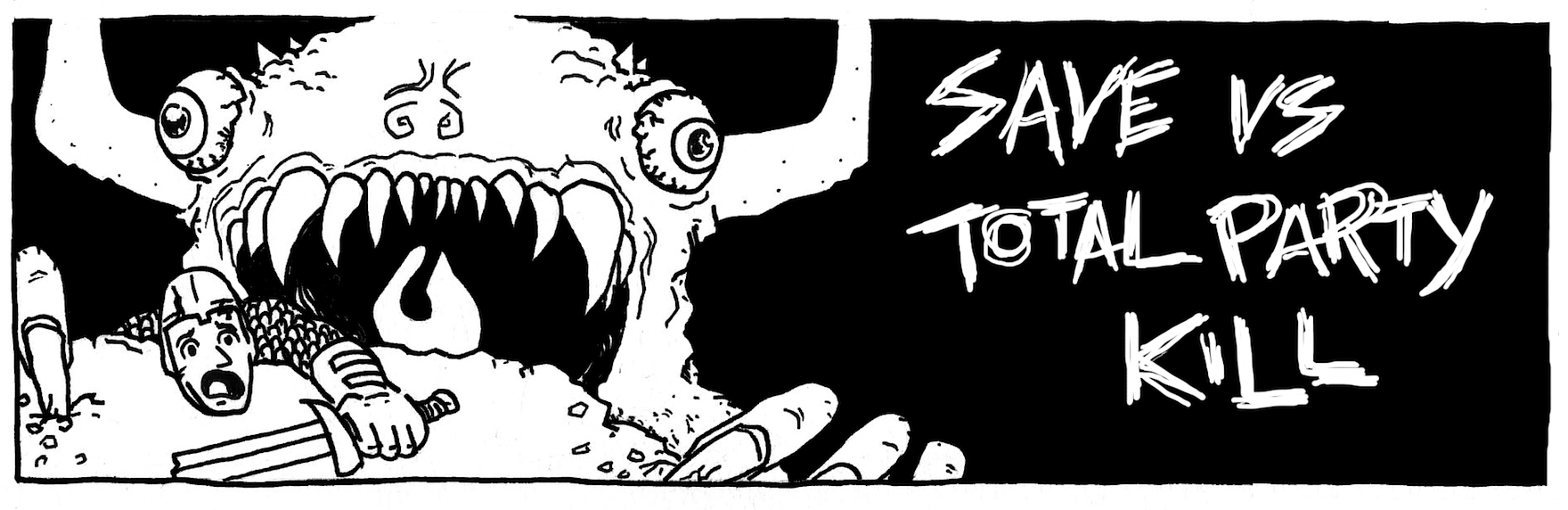
When I first started this blog I had a periodic series of posts where I would highlight blogs I thought were cool. At some point I likely switched to just linking to cool blogs on G+ (and eventually Twitter and BlueSky). Dungeons of Signs, by Gus, was one of the blogs I thought people should know about many years ago. That blog is a classic. Gus stopped updating that Dungeons of Signs a few years ago, after becoming disillusioned with both the world and the OSR. But you can’t stop a man from talking about dungeons, so he returned with a new blog, All Dead Generations. This blog is mostly long essays about how to design good dungeons. There is lots of great advice here. Most recently, he shared a post on alternative obstacles to monsters in dungeons. It’s a good sample of the sort of stuff he’s been thinking about over the last few years. There is much more to read if you enjoy this post. He goes hard.
Friend of the #TorontOSR, Jonathan Benn, writes about his approach to creating dungeons. It’s been interesting to see Jon get more and more interested in the OSR and old-school play. This blog post is nice solid advice for people new to creating your own adventures.
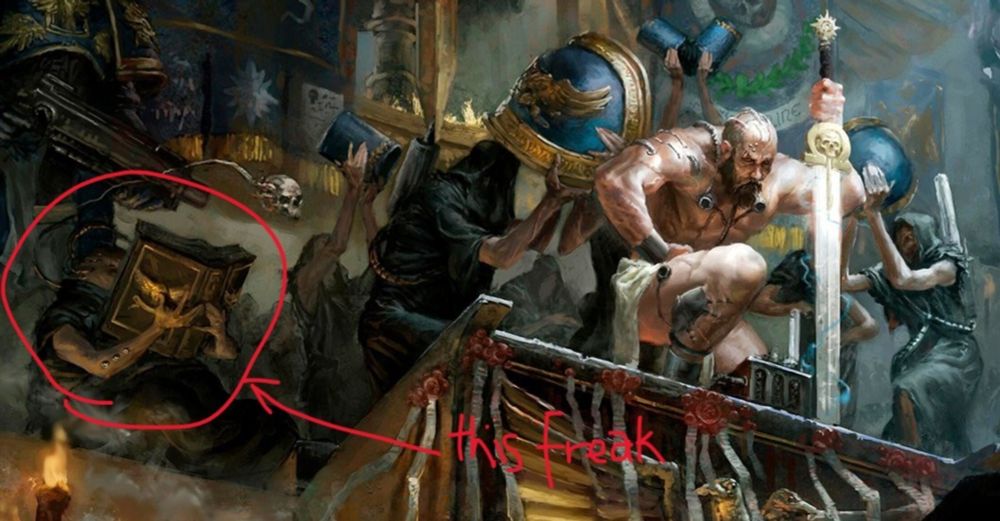
Zedeck Siew has finished his RPG about the background characters you find in the world of Warhammer 40,000. Your characters live in servitude to five Space Marines aboard the Warmask of Gloriana, where your characters are tasked to ferry them to their next engagement. Chapter Serfs is exactly the sort of RPG I love: to the point and focused. There are just enough words and no more. The setting of this ship is brought to life via a couple sentences afforded to each of the possible backgrounds for your characters, the rules themselves and what they tell you about the world, the leaders of the various factions aboard the ship and the tasks they will ask you to perform, etc. The ship is mapped out for the players to explore. This is all a self contained game, ready to be played. My friend Tim shared his thoughts about it as well for Wargamer.
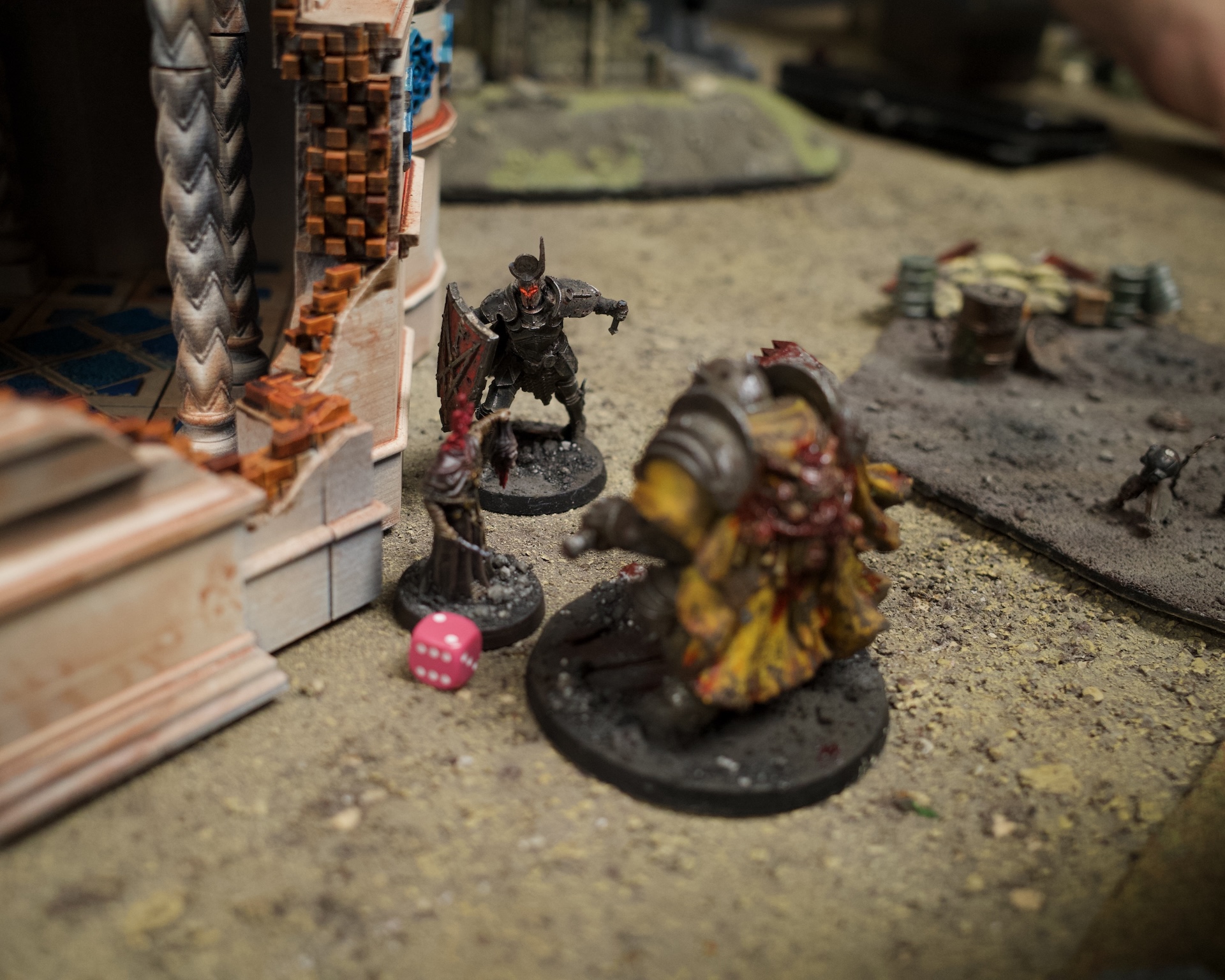
I finally took my posse of Heretic Legion models and played a game of Trench Crusade with Raff at the Sword and Board. Trench Crusade was created by Mike Franchina, the main artist for the game. The rules were designed by the legend himself, Tuomas Pirinen, of Mordheim fame. There is so much to love about this game, where to begin?
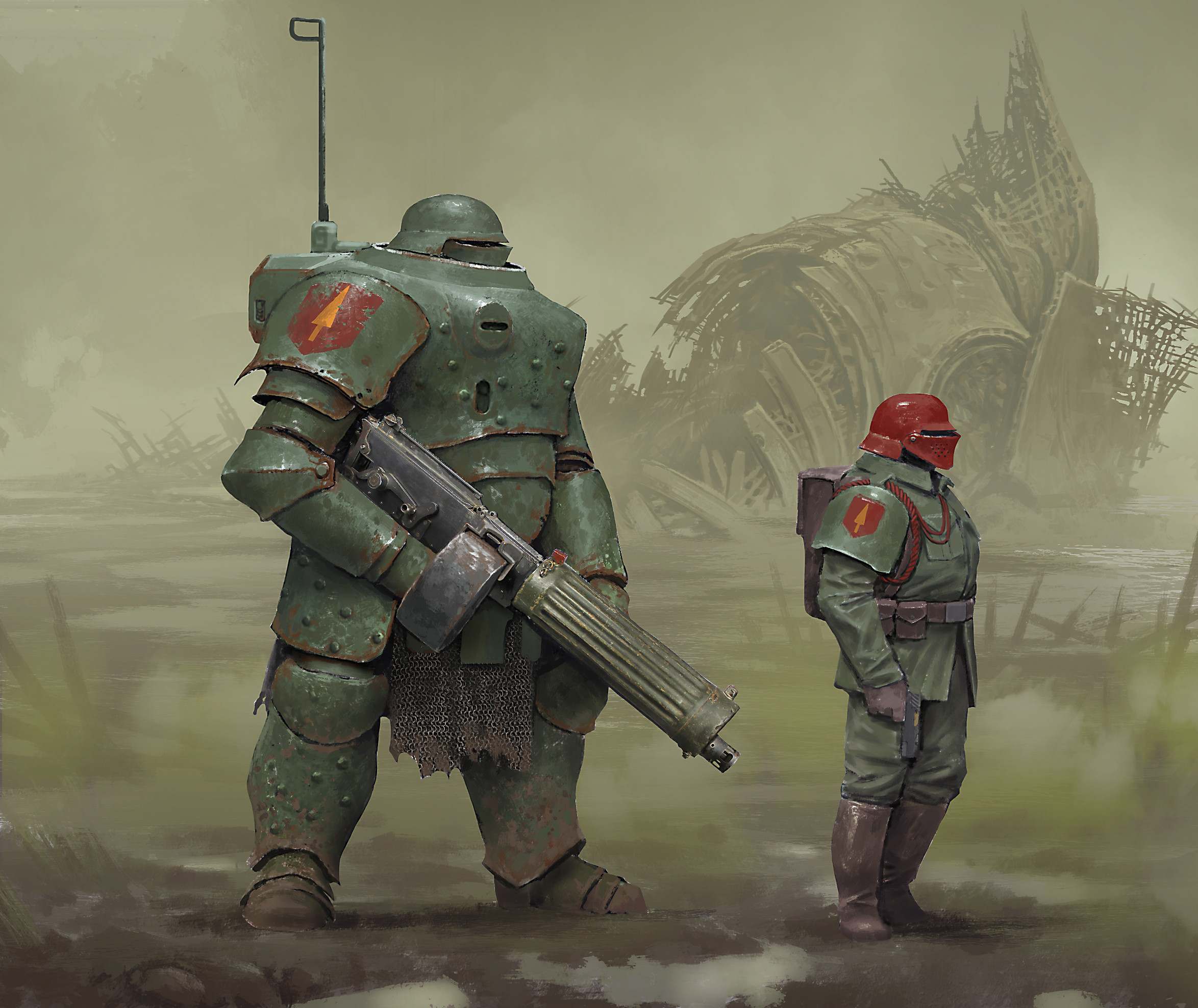
Trench Crusade takes place in an alternate version of earth where rogue Knight Templars open a gate to hell and the the next 800 years or so are all about people fighting demons and that sort of nonsense. The game’s present day is 1914, the start of our WWI, just another day in this worlds never-ending war. Mike Franchina’s artwork helps bring the setting to life, elevating it beyond just another Weird World War sort of game.
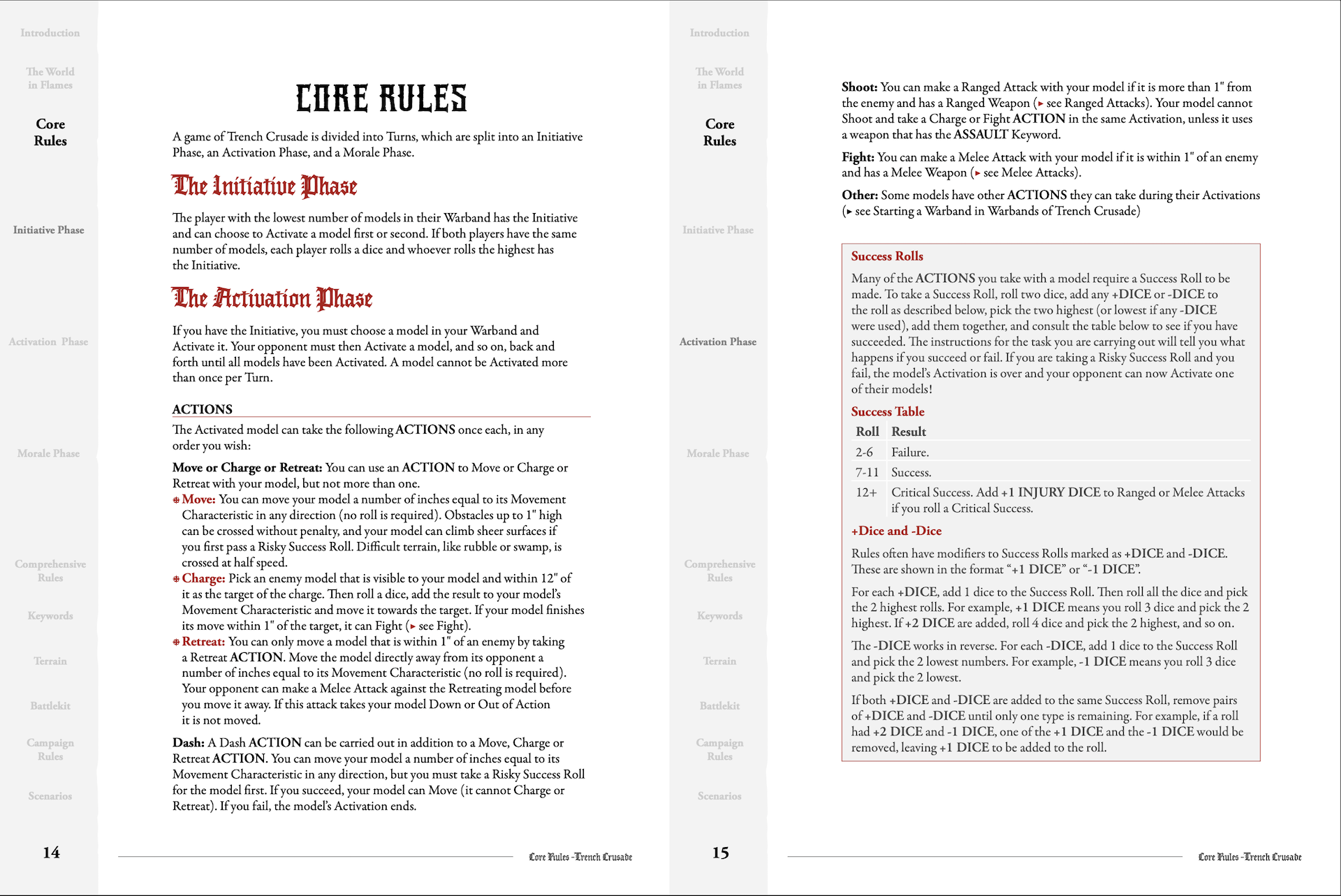
The rules for the game are nice and simple. There is a single resolution mechanic: roll 2d6 and try to score above a 7. A 12 is a critical success. The number of dice you roll can be modified based on a model’s profile, equipment, situational rules, etc. In such cases you’ll add additional dice to your dice pool. The rules refer to this as +DICE and -DICE. A +1 DICE and a -1 DICE cancel each other out, so you’ll end up with a pool that contains 0 or more +1 DICE or -1 DICE. This then works like advantage or disadvantage in D&D: you will roll all your dice and take the highest two, or the lowest two, depending on the make up of your dice pool. This is the roll you’ll make to shoot or attack. You’ll also make a roll like this when taking ‘risky actions’, like trying to climb a wall or make a diving charge. If you shooting or melee attack is successful, you will make a similar roll on an injury table. Rolling a 9+ takes a model out of action. A 7-8 will knock the model down. A 2-8 will also cause the model to gain a blood token. These can be spent to modify die roles. The opposing player can spend them to make your unit less effective in combat, or make their own units more effective when targeting that model. All in all it’s a nice and tidy system: it’s fast to play.
There is almost no looking anything up, no complicated tables, etc. There is far less rolling lots of dice to accomplish nothing, a common feature of Mordheim. You don’t have to track wounds, as there is no hit points. Tougher units will have an armour score that reduces the results of the injury die, making them more likely to survive. The blood tokens act a little like wound markers, as a unit with blood tokens will be easier to kill in subsequent attacks, but it’s dynamic and not a sure thing. In our game we I was constantly spending the tokens I had inflicted on Raff’s elite demon monsters to make them less effective in combat, trying hard to keep my little heretic troopers alive. I also managed to get some lucky rolls, resulting in one of troopers almost killing Raff’s super-demon. That model is Tough, so when it would be taken out of action the first time it’s simply knocked down. It got back up and demolished that little trooper on its next turn.
We played a one-shot, but as soon as it was done I wanted to start a campaign. The rules look very similar to Mordheim. The models in your warband can get injured, explore, level up, buy new equipment, etc. I’ll need to dig into all of that later. The book also has a healthy set of scenarios that look quite good. The default assumption is players will play 12 games in a sort of escalation league, the last game being the final free for all conclusion to the campaign. You start the campaign with a 700 ducats spending limit, and a limit of 10 models on your team. You end the campaign with a limit of 1800 and 22 models. You could field quite the platoon.
The rules are available online for free—fantastic. The digital rule book takes advantage of the format, with hyperlinks to help you navigate through the document with ease. There is way finding in the left side margin of each page, to help orient your place in the book, but which also serve as hyperlink navigation through the book. The layout and design is lovely. The rules are well written and clear. There is a simple presentation of the rules that takes up about 8 pages and explains the whole game. This is followed up by a longer presentation of the rules which goes into a little more detail, providing additional clarity and examples. The simple rules are likely all you’ll need to read to play if you’re familiar with war-games, or need to refresh yourself on how the game works. Seeing a rulebook like this from a small indie company makes Games Workshop’s “we only sell you overpriced hardcover books that are out of date when you buy them” stance extra annoying.
I currently have enough models to do about 800 points. Evan kitbashed a Commando for me, which I’ll need to prime and paint. I want to try and kitbash more troops as well. Get to a point I could field a bigger posse for a bigger game.
I’m hopefully we will start a campaign in the city, and I can experience the fuller game. This game certainly is meant to be experienced as a long running campaign. That said, as it stands the rules work well for a fast standalone game. This is a solid skirmish game. Well worth checking out. I mean, it’s free!
I participated—and I use that term most loosely—in Sam’s epic online play-by-post “war-game”Over/Under is officially over. I look forward to all the dissertations about the game in the years to come. There were thousands of players, no doubt everyone experienced the games in ways that are unique to them. I would engage as I did at the start, showing up when I see we’ve all been tagged and posting a salute emojis. I also had a small running personal gag of joining people’s semi-private threads (like the Tempest’s Master of Arms’s office) and excusing myself when people started having private conversations. Other people went all in, playing the game non-stop for basically a month.
I jokingly described the game to friends as follows: [Over/Under] was basically a giant free form LARP, where everyone was gay for each other. And then deep in the background … a war-game—way, way deep. Obviously there was lots going on, but it’s wild just how much the game seems to have gotten away from its creator’s original vision. I picture myself as the player Sam likely imagined: I would check in a few minutes a day; vote when I needed to vote on the bosses initiatives; post random in-game messages here and there. There wasn’t really anything to do if you weren’t a boss. The players that dominated the game went a completly different route. They filled the giant void left by Sam with so much stuff. There were gambling dens, bars, tabloids, cage fights, new unofficial factions, Ponzi schemes … and lots and lots of doomed romance. The mod announcements as the game progressed were mostly about the doomed romance.
It’s kind of incredible this game worked at all. Lots of cooperation from lots of people to essentially not break Kayfabe. Early in the game someone set one of the bars on fire. One of the few times I was around to help with something happening in the game. Except, you couldn’t actually set a bar on fire in the game, restrain or injure another player, etc. Everyone just had to agree, this is what’s happening, let’s see how it all plays out.
Despite morphing into this free-form RPG LARP thing, it does feel like there is something essentially OSR about this whole affair: the void left by the rules was the game. I am curious if the game would have worked if Sam had tried to provide mechanical incentives for the plebeians on the side-lines, versus just the bosses. I don’t think you get the magic of this game without the rules void. Is Over/Under the best argument for System Doesn’t Matter™? Someone else can make that case!
It’s been a while since I’ve updated my Random Character Generator. I had promised my friend Nick I’d make him something that spits out the random grimoires from Errant, and finally got around to it last night: Random Grimoire. I’ll probably try and add random Errant characters next. There are several games I want to this generator. One day.
My friends were over to kitbash minis and play Warcry to celebrate our friend Richard’s birthday. There was a small posse of us, so Richard came up with a simple and ingenious way to play mutli-player co-op Warcry that matches the random spirit of the game. We wanted to play a 3 vs 3 game. Each of us took our warbands and split them up into the Dagger, Hammer, Shield groups as usual. We then randomly assigned each group to each player, so each player would bring one of the groups for their team. (For a 2 vs 2 game, you could just one player from each team bring two of their groups, rather than one.) In our game the ways things shook out ended up giving a slight advantage to our opponents, they had a few more points than us, but I don’t think it skewed things thast much. You could grant the underdog team bonus wild dice based on the point differential, though how many is left as an exercise for the reader. Since by the rules you must make your groups with as even a split of minis as possible, and with this format you don’t know which group you’ll take, it likely will lead to fairly even splits anyway. Playing this way means you don’t need to mess with any other rules or the balance of the game. Each team had about 1000 points of minis, would roll initiative dice for their team as usual, etc.
For Mothership Month—a crowdfunding campaign extravaganza—Sean decided to spend some of his marketing budget funding a crazy giant digital LARP. Sam Sorensen is running Over/Under, a 100% bananas play-by-post “war-game”. There are over 1000 players! A much smaller subset are ‘bosses’ who get to make actual decisions and interact with Sam to direct the energies of the various factions in play. I had originally planned to avoid the game, it seemed so overwhelming (and honestly still is), but how often does stuff like this happen? I joined the Tempest Mercenary squad, because Amanda is the person in charge, and have been a loyal soldier ever since. The bulk of my “playing” consist of showing up when I see we’ve all been tagged and posting a salute emojis. I don’t think you really need to spend more effort than that if you want to play as well. If I had more time, I probably would have tried to ply my trade as a misinformation broker. Another time. I still don’t really understand what’s happening half the time. It’s still fun & weird experience nevertheless.
I really enjoyed this sort of meta-review from Paul, The New Novely. Paul writes very deep meaningful reviews of the games he plays. We also have very different interests or goals when it comes to gaming.
Stuff coming out of the Forge movement either interested me or repelled me. But at least it was novel! Polaris might not have landed for me but Dust Devils sure as shit did. Dogs in the Vineyard was great and Carolina Death Crawl was upsetting. And the new ideas just kept coming. A solid decade-plus of envelope-pushing. … I can’t tell you the last truly new, engaging idea that hit me out of game design. … Looking forward at the next 20ish years of play and it’s all gonna be pretty much the same? Not a great feeling.
Maybe it’s cliche that OSR fans aren’t that obsessed with rulesets, but I’m not that obsessed with rulesets. I have so many variations of D&D, and will honestly buy more before I die. I like whisky, and have so many different bottles in my pantry. They are all unique, interesting in their own ways, enjoyable to drink. I don’t need stuff to be wildly different. I enjoy subtle refinement. But Paul’s point is a good one: where are people doing wildly different stuff right now? Jay Dragon is one person that comes to mind. Who are the other people trying to do something novel?
The “you don’t need to play to review” folks are just wrong if you want anything deeper.
I don’t think Paul is wrong here, you will certainly be able to tell a more complete story about a game or adventure after you’ve run it. I make more of an effort now to play the games I write about before I write about them, but the net result of doing that is I write less reviews. Some games and adventures do benefit from my having sat down and played them. My Night Witches review after having played the game is far better than the one I wrote before playing. But what I wrote about Another Bug Huntbefore I played it isn’t so far off from how I felt after I played it. And I still haven’t gone back to write about Another Bug Hunt. I try and write when I have the energy and thoughts to write, not when I think what I’ll produce is perfect. This is a blog, not A Survey of Game and Adventure Design, 2020-2025 from MIT Press. There is a lot of good criticism and writing of games that comes from solely from people reading things carefully and thinking deeply.
A recent episode of Between Two Cairns opened with a discussion on what to do when a reaction role doesn’t jive with the idea you have in your head for the situation. Yochai’s sentiment more or less mirrors my own: if you roll the dice, you should just go with what the roll says. There is something chaotic and fun in trying to figure out why the troll in the middle of the dungeon is actually excited to see you. But what if the roll doesn’t make any fictional sense whatsoever? In that case I would question why you are rolling in the first place! I try and assign modifiers to creatures encountered when I want them to have a default disposition that is more negative or positive than a plain 2d6 spread. I also only include any charisma modifiers where it would make fictional sense for a characters charisma to come into play. Finally some monsters are truly mindless and will always want to eat the players, like zombies, perhaps. It’s easy to fall into the trap of rolling dice for the sake of rolling dice. I like Chris’s post on this topic: Information, Choice, Impact.